5th Water Hot Springs Hike: Complete Trail Guide for 2026
The 5th Water Hot Springs hike is a short, moderate walk through Diamond Fork Canyon that ends at a set of milky-blue soaking pools fed by a natural waterfall. I’ve hiked to plenty of Utah hot springs, and this one earns its reputation. This guide covers the distance, the driving directions, the parking fee, the winter road closure, and a water-quality warning you need to read before you soak.
On This Article
- How long is the 5th Water Hot Springs hike?
- Where is 5th Water Hot Springs?
- What the trail is actually like
- What the hot springs are like
- The water-quality warning you should read first
- Parking, fees, and passes
- Best time to hike 5th Water Hot Springs
- Can you camp near the springs?
- Is the 5th Water Hot Springs hike worth it?
- FAQs on 5th Water Hot Springs Hike
- Final tips before you go
How long is the 5th Water Hot Springs hike?
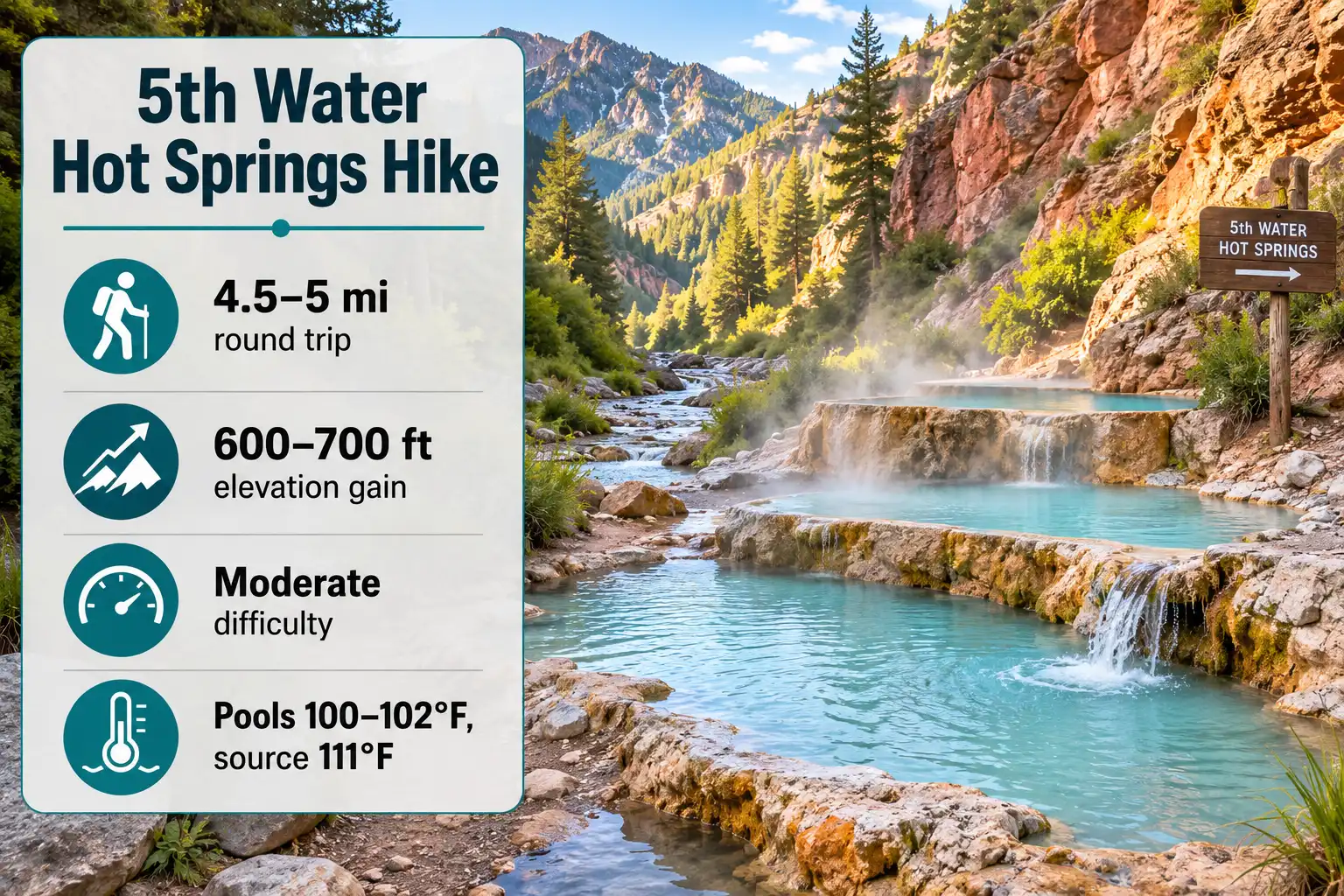
The hike runs about 4.5 to 5 miles round trip from the Three Forks Trailhead, with roughly 600 to 700 feet of elevation gain. It’s rated moderate, and most people finish in 2 to 4 hours depending on how long they soak.
Here’s the part people forget. You walk gently downhill toward the creek on the way in, so the whole return trip climbs back out. It’s never steep, but save some energy for the way home.
Where is 5th Water Hot Springs?
The pools sit in Diamond Fork Canyon inside the Uinta-Wasatch-Cache National Forest, near Spanish Fork, Utah. You’ll see the spot called Diamond Fork Hot Springs online too. Same place, two names.
From Salt Lake City, plan on an hour to an hour and fifteen minutes of driving. From Provo it’s about 40 minutes, and from Spanish Fork you’re only 30 minutes out.
Driving directions to the trailhead
Take I-15 south, then merge onto US-6 East toward Price. After a few miles, turn left onto Diamond Fork Road (Forest Road 029) and follow it about 10 miles to the Three Forks Trailhead. The road is paved the whole way, so any car makes it fine.
Cell service dies in the canyon, so download your map before you leave. I’ve watched people at the trailhead trying to load directions with zero bars, and it doesn’t work.
What the trail is actually like
-
Start at the trailhead
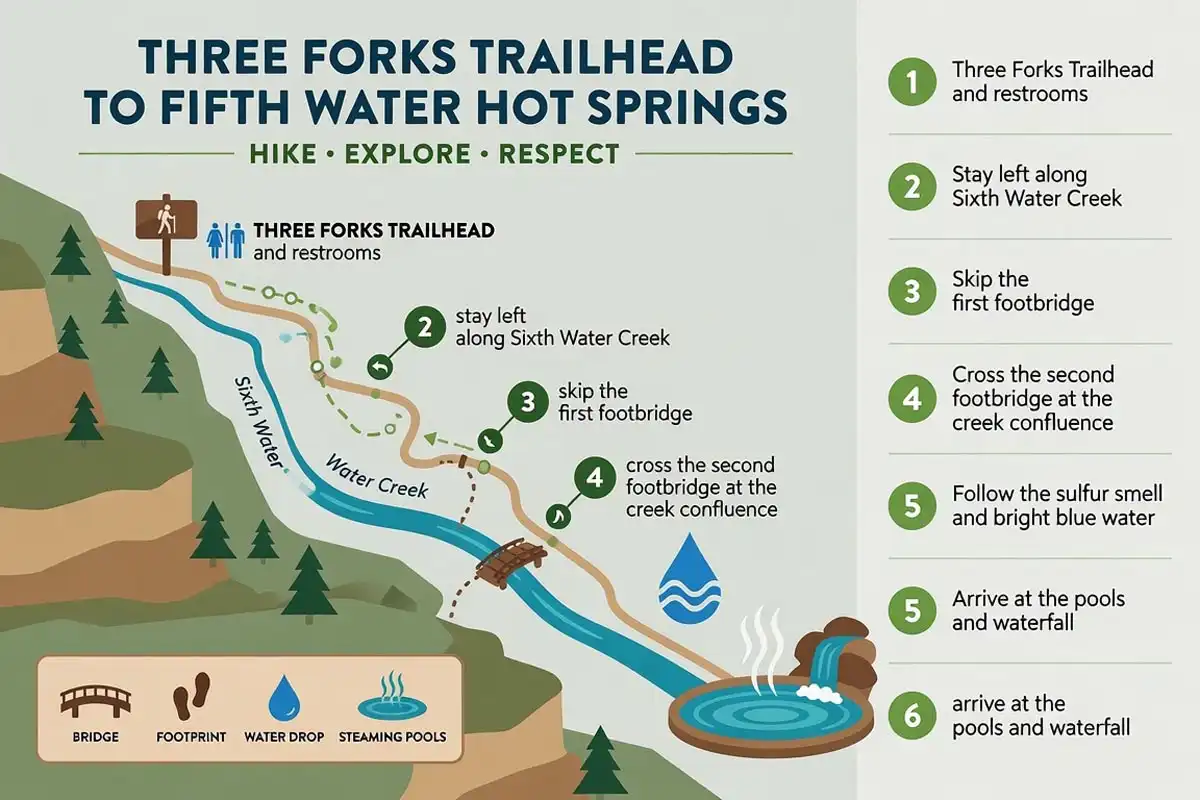
The path passes the restrooms and heads up the side canyon. Stay left right away and follow the trail along Sixth Water Creek.
-
Reach the creek crossings (~1 mile in)
Skip the first footbridge. Cross the second one, where Sixth Water Creek meets Fifth Water Creek, then keep heading upstream.
-
Watch for the color change
Soon the creek water shifts to a brighter blue and you catch the first hint of sulfur. That smell tells you you’re close.
-
Take the higher trail at the split
The trail splits at one point. Both routes reconnect, but take the higher left path — it’s better maintained and keeps you above the steeper drop-offs near the water.
-
Arrive at the pools
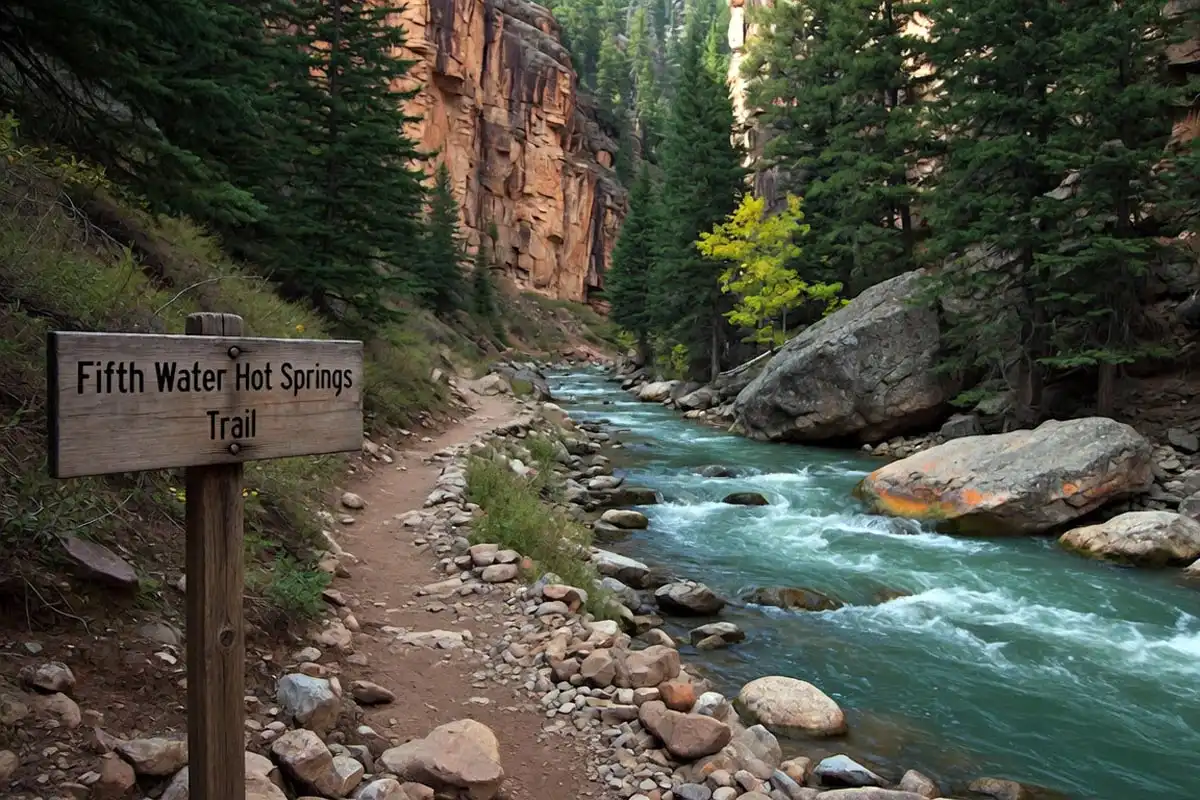
Footing is mostly dirt with rocky and sandy stretches, plus a few narrow spots along the creek. Nothing technical, but solid hiking footwear beats sneakers here, especially for the climb out.
What the hot springs are like
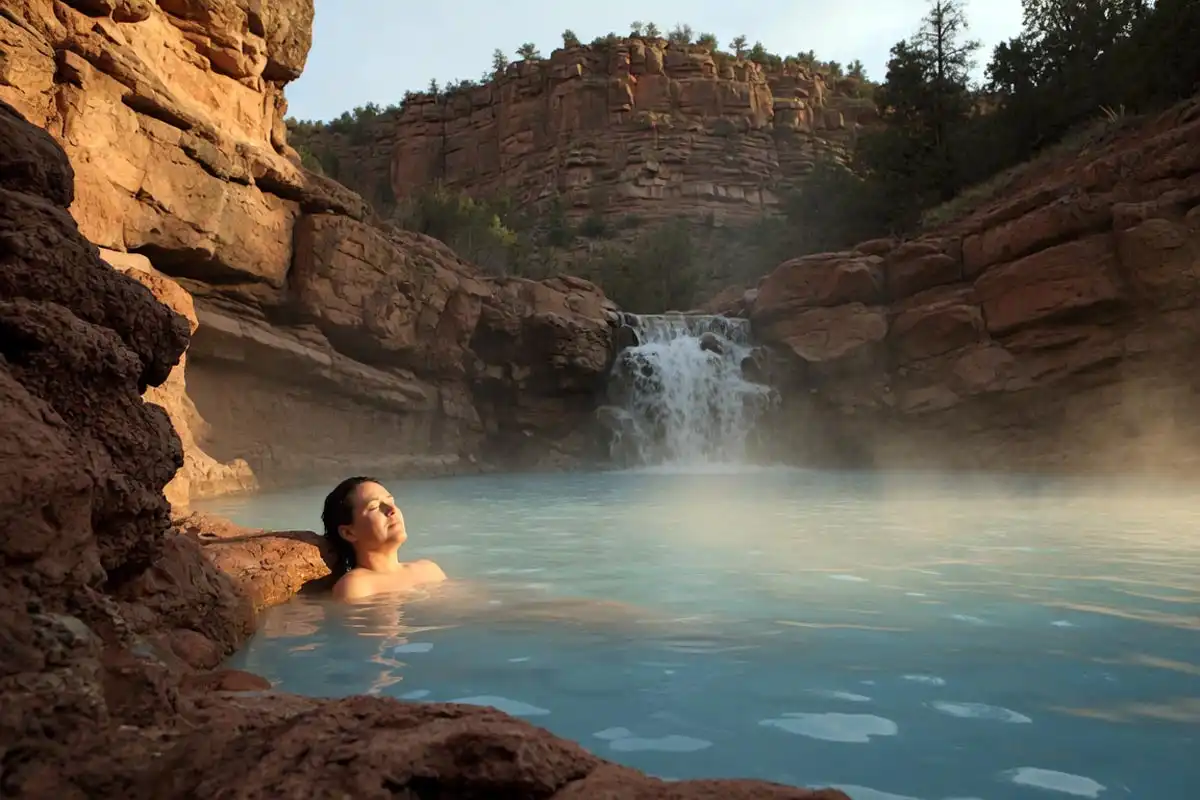
This is why you came. The springs are a series of rock-walled pools stacked along the creek, and each one holds a different temperature. Where the source water enters, it hits about 111°F, which is too hot to sit in. As it flows down through the pools and mixes with creek water, it cools off, so the lower pools run cooler and the upper ones stay hotter. You pick your spot.
The water carries that famous milky blue-green color, and there’s a small waterfall you can stand under near the top pools. The sulfur smell hangs in the air but fades once you’re settled in, so don’t let it put you off.
One honest heads-up: this place gets crowded. On weekends the pools fill up fast, and quiet is not the word I’d use. Go on a weekday morning if you want any real peace.
The water-quality warning you should read first
The pools have tested positive for harmful cyanobacteria (blue-green algae) in the past, and some visitors have come away with skin rashes. The Utah Department of Environmental Quality monitors the springs for exactly this reason.
- Keep your head above the water. Don’t dunk your face.
- Don’t swallow the water.
- Avoid the benthic mats, the greenish algae layers on the pool bottoms.
- Shower as soon as you get home.
- Keep dogs out of the water completely.
Before you drive out, check the current status on the Utah DEQ monitoring page or call the Forest Service at (801) 798-3571. Conditions shift through the season, so a quick check is worth it.
Rattlesnakes also show up along this trail, so watch your step, especially in warm weather. And people sometimes leave broken glass near the pools, so pack sandals for walking between them.
Parking, fees, and passes
There’s a $10 day-use fee per vehicle at the Three Forks Trailhead, good for three days. If you carry an America the Beautiful interagency pass, you park free. Bring cash, because payment up there is unreliable.
| Pass Type | Price | Valid For |
|---|---|---|
| Day-Use Fee | $10 | 3 days |
| Weekly Pass | $20 | 7 days |
| Season Pass | $60 | Full season |
| America the Beautiful Pass | Free entry | Interagency, per pass terms |
The lot is small, around twenty cars, and it fills early. On weekends it’s often full by 8 a.m. You can park in roadside pull-offs only where a sign says parking is allowed — rangers ticket cars parked anywhere else, so don’t chance it.
Best time to hike 5th Water Hot Springs
Fall, winter, and spring beat summer for this hike, mainly because of crowds and heat. The pools stay popular year-round, but each season changes the experience.
Fall
Canyon colors turn, the air cools, and a warm soak feels perfect after the walk.
Spring
Snowmelt makes the canyon lush but leaves muddy, slippery patches on the trail.
Summer
The busiest and hottest season — start early if you go.
Winter
Quietest and prettiest, with snow framing the blue pools, but comes with a road closure.
The winter road closure
From roughly November through April or May, the Forest Service gates Diamond Fork Road before the trailhead. When it’s closed, you park at the lower gate and walk the extra road distance, which adds about 3 miles round trip and pushes your total to around 7.5 miles. Bring microspikes if there’s any chance of ice, and dress warm. Storms can also close the road on short notice, so confirm access before you commit to the drive.
Can you camp near the springs?
You can camp nearby, but not at the pools themselves, which are off-limits to camping to protect the area. Developed campgrounds line Diamond Fork Road, including Diamond Fork Campground and Three Forks Campground, and there are dispersed backcountry sites along the trail if you want to stay closer.
Is the 5th Water Hot Springs hike worth it?
You get a short, scenic canyon hike, a warm soak with a waterfall, and that unreal blue water, all within an hour or so of Salt Lake City. Go on a weekday morning, bring cash for parking, check the water advisory, keep your head above the surface, and rinse off afterward. Do that, and you’ll walk away understanding why this is one of the most popular spots in Utah.
FAQs on 5th Water Hot Springs Hike
Is the 5th Water Hot Springs hike hard?
No, it’s moderate and fine for most hikers. The only real effort is the uphill return, since you descend toward the pools on the way in.
Do you need a reservation?
No. You just pay the $10 trailhead parking fee or show a valid America the Beautiful pass.
Are dogs allowed?
Yes, on leash along the trail. But keep them out of the pools, since the water is too hot for them and can carry harmful bacteria.
How hot is the water?
The soaking pools sit around 100 to 102°F, while the source water reaches about 111°F, which is too hot to enter directly.
Can you visit in winter?
Yes, but the road gate closes in the colder months, adding about 3 miles round trip. Bring microspikes for ice and check road conditions first.
Final tips before you go
The 5th Water Hot Springs hike is one of Utah’s most rewarding easy soaks, and a little planning makes it far better.
- Go early on a weekday to dodge crowds and parking headaches
- Check the water quality advisory before you leave
- Keep your head above the surface while soaking
- Rinse off as soon as you get home
- Bring cash for the parking fee
- Pack out your trash
- Confirm the road is open before driving out in winter
Bottom line
Do those few things, and you’ll enjoy the pools the way they’re meant to be enjoyed.