Best Hikes in the Winter: A Beginner’s Guide to Hiking Safely When It’s Cold
Winter changes everything about a trail. I’ve hiked through snow in the Sierra, walked sunny desert paths in December, and soaked in a hot spring while snow fell around me.
Not every trail works once temperatures drop, so this guide covers what actually makes a hike good in winter, where to find the best hikes in the winter across the US, and how to stay safe doing it.
What makes a good winter hike?
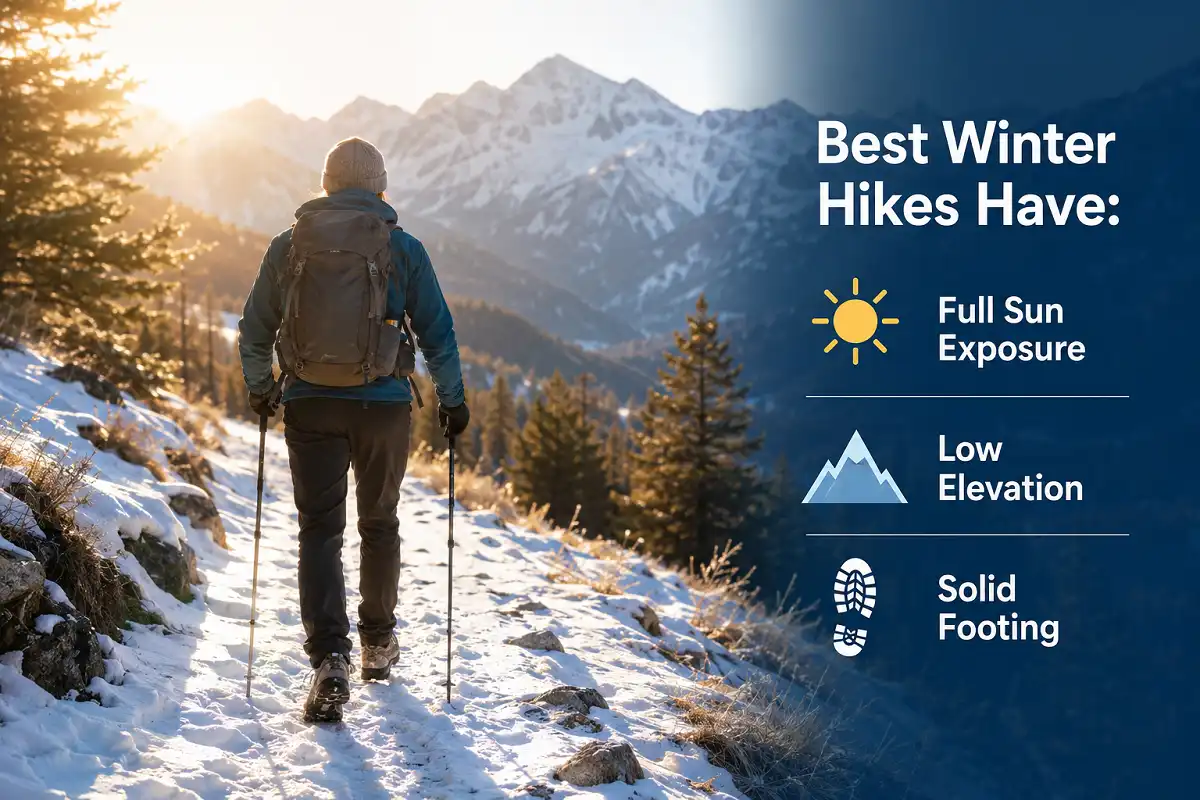
The best hikes in the winter share three traits: low elevation, good sun exposure, and solid footing. Desert trails in places like Palm Springs stay hikeable year-round. Snowshoe-friendly forest paths in the Rockies and Pacific Northwest work well too, as long as you’ve got the right gear. Avoid high-elevation routes with avalanche risk unless you’re trained for it.
What Makes a Hike Good for Winter?
A winter-friendly hike keeps you safe and comfortable in cold, short-daylight conditions. Elevation matters most. Trails below 5,000 feet usually stay clear of heavy snow, so they’re easier for beginners. Sun exposure matters too. South-facing trails melt off faster and stay drier underfoot.
Lower trails are generally easier to access and less likely to hold deep snow.
South-facing trails often melt faster and stay drier underfoot.
Packed dirt and gravel are easier to manage than slick exposed surfaces.
Choose routes you can finish comfortably before winter sunset.
Always check current weather and official trail status before leaving.
Trail surface also plays a role. Packed dirt and gravel handle ice better than exposed rock or wooden boardwalks, which turn slick fast. Finally, look at daylight hours. Winter days are short, so pick a trail you can finish well before sunset. I always plan for the hike to take longer than it would in summer, because cold slows everyone down.
Weather stability matters too, and it’s easy to overlook. A trail that’s fine on Monday can be closed by Wednesday after a storm rolls through.
Check Conditions Twice
I check both the forecast and the land manager’s website before committing to a route, since official closures don’t always show up on trail apps right away.
When conditions look uncertain, I pick a backup trail at a lower elevation so I’m not stuck deciding on the drive out.
Best Types of Winter Hikes for Beginners
Not every hiker wants to deal with snow gear. Here’s how to match a hike type to your comfort level.
Low-Elevation Desert Trails
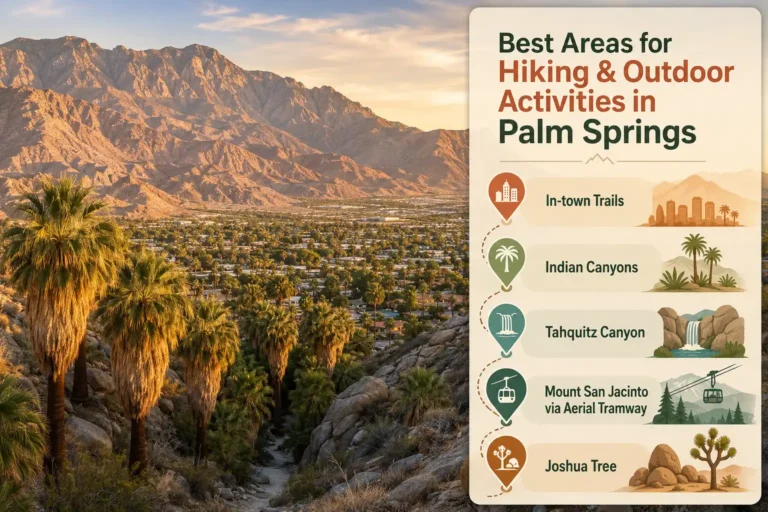
Desert hikes are some of the best hikes in the winter because summer heat is gone and the trails are empty. Places with mild winter climates, like the areas around Palm Springs, offer sunny days and cool nights that make for comfortable hiking.
Mornings can still feel chilly, so I usually start with a light jacket I can shed once the sun climbs higher.
If you want a warm-weather winter escape, I wrote about some of the best spots near Palm Springs for outdoor activities, and several of those trails stay open and pleasant all winter.
Desert trails also tend to be less crowded in winter than during their busy spring wildflower season, so you’ll often have long stretches of trail to yourself.
Snowshoe-Friendly Forest Trails
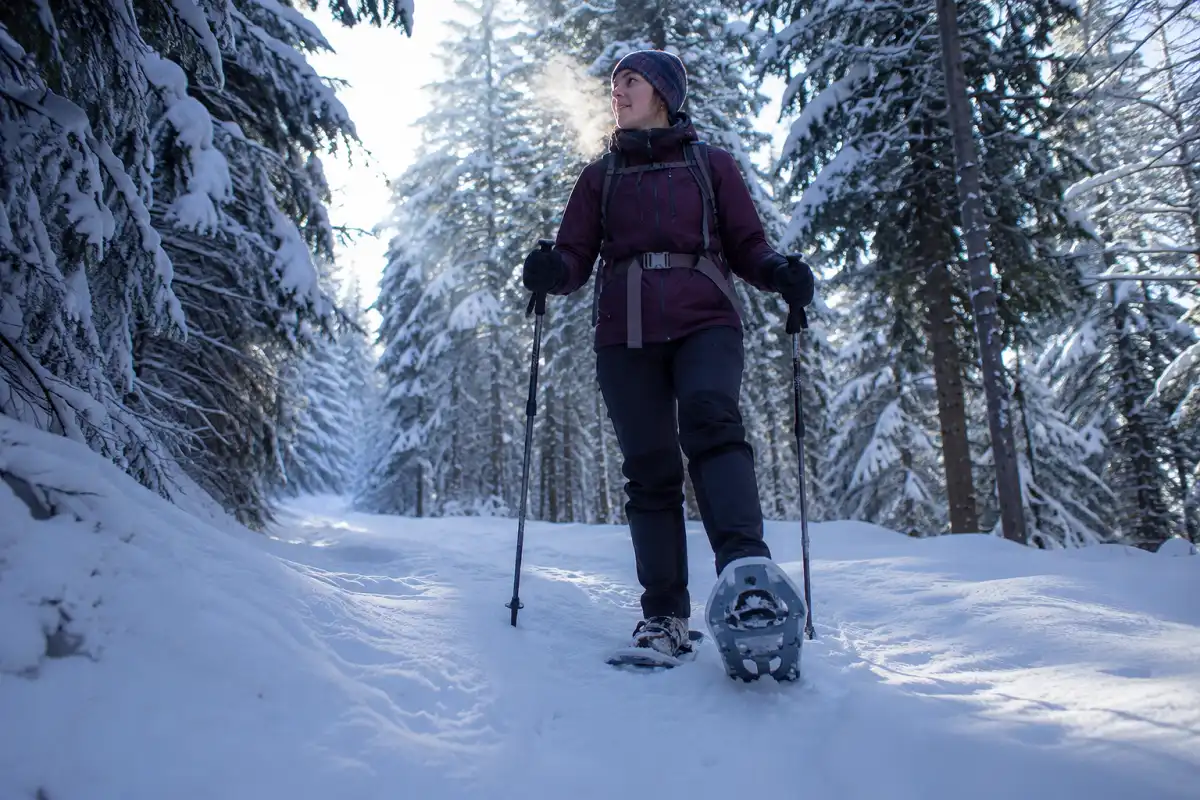
If you live somewhere with real snow, snowshoeing opens up trails that would otherwise be closed. Flat or gently rolling forest paths work best for beginners.
You don’t need technical skill, just snowshoes, trekking poles, and a willingness to move slower than usual.
Hot Springs Hikes
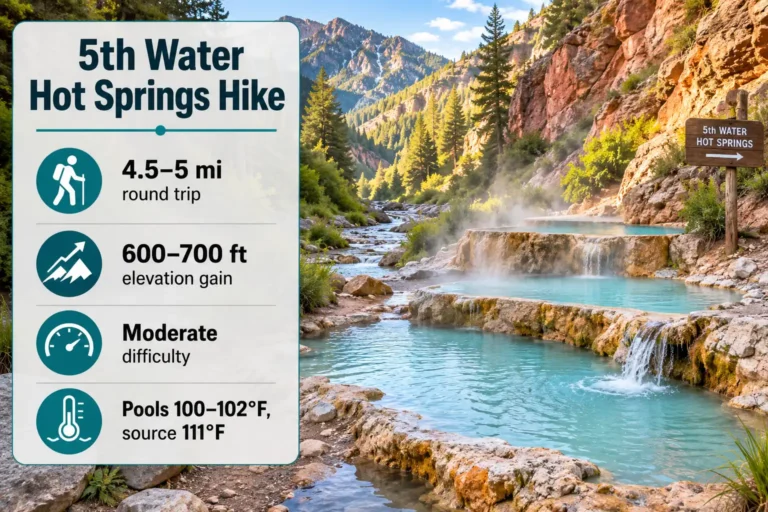
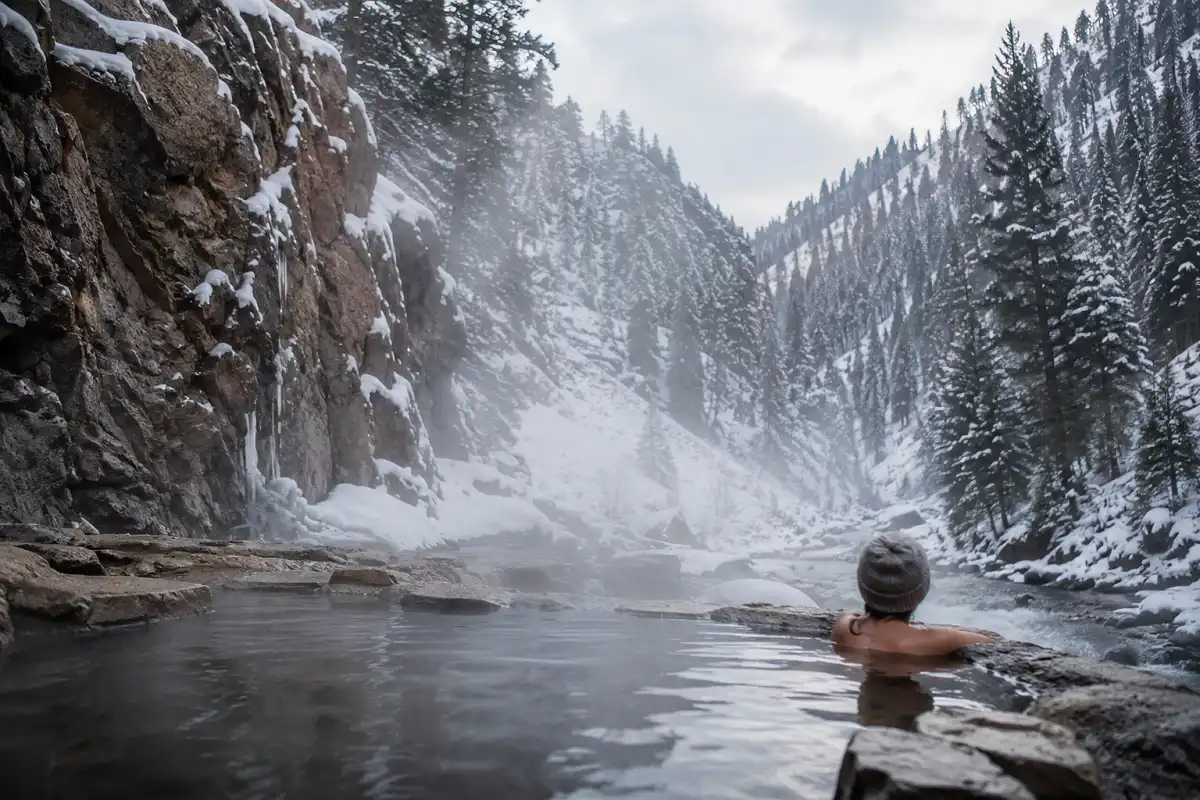
There’s something special about hiking through cold air to soak in warm water. Trails that lead to natural hot springs make for some of the most rewarding winter hikes I’ve done.
I still think about my hike to the trail leading to the hot springs near Diamond Fork, with steam rising off the water while snow sat on the banks.
Just check trail conditions first, because access roads to these spots often close in heavy snow.
Top Winter Hiking Destinations in the US
Here’s a regional breakdown of where to find reliable winter hiking across the country.
Arizona, Southern California, and parts of Nevada offer some of the best hikes in the winter because summer’s brutal heat is gone.
Washington and Oregon lowland trails can remain accessible below the snow line, although rain and mud are common.
Colorado and Utah offer countless snowshoe-friendly routes with quiet, snow-covered scenery.
Short daylight hikes near cities like Anchorage can be excellent winter options when conditions and daylight are carefully managed.
Snow is often shallow enough for regular boots with traction devices, while leafless trees can open up winter views.
Southwest Desert Regions
Arizona, Southern California, and parts of Nevada offer some of the best hikes in the winter because summer’s brutal heat is gone. Daytime temperatures often sit in the 60s and 70s, which is close to perfect for hiking.
Trails around Palm Springs, Joshua Tree, and Sedona stay accessible through the coldest months.
Pacific Northwest Lowland Trails
Washington and Oregon get plenty of rain in winter, but lowland forest trails below the snow line stay open. Bring waterproof layers instead of snow gear, since mud and rain are the bigger challenges here, not ice.
Rocky Mountain Snowshoe Trails
Colorado and Utah have countless snowshoe-friendly routes once you get above the dry lower valleys. These trails demand more gear and more planning, but the payoff is quiet, snow-covered scenery you won’t see in summer.
For Beginners
Stick to marked, low-avalanche-risk trails and check conditions before heading out.
Alaska’s Winter Day Hikes
Alaska might surprise you as a winter hiking destination, but short daylight hikes near cities like Anchorage are popular for a reason.
I put together a full breakdown of winter day hike options around Anchorage if you want specific trail recommendations and tour options for that area.
Appalachian and Midwest Trails
The Appalachian region and much of the Midwest sit in a middle ground during winter. Snow cover is common but usually shallow enough for regular boots with traction devices instead of snowshoes.
Leafless trees also open up views you won’t get in summer, since the forest canopy is gone. These trails tend to be quieter too, so if you like solitude, winter is a good season to visit popular Appalachian routes without the crowds.
What to Wear and Pack for a Winter Hike
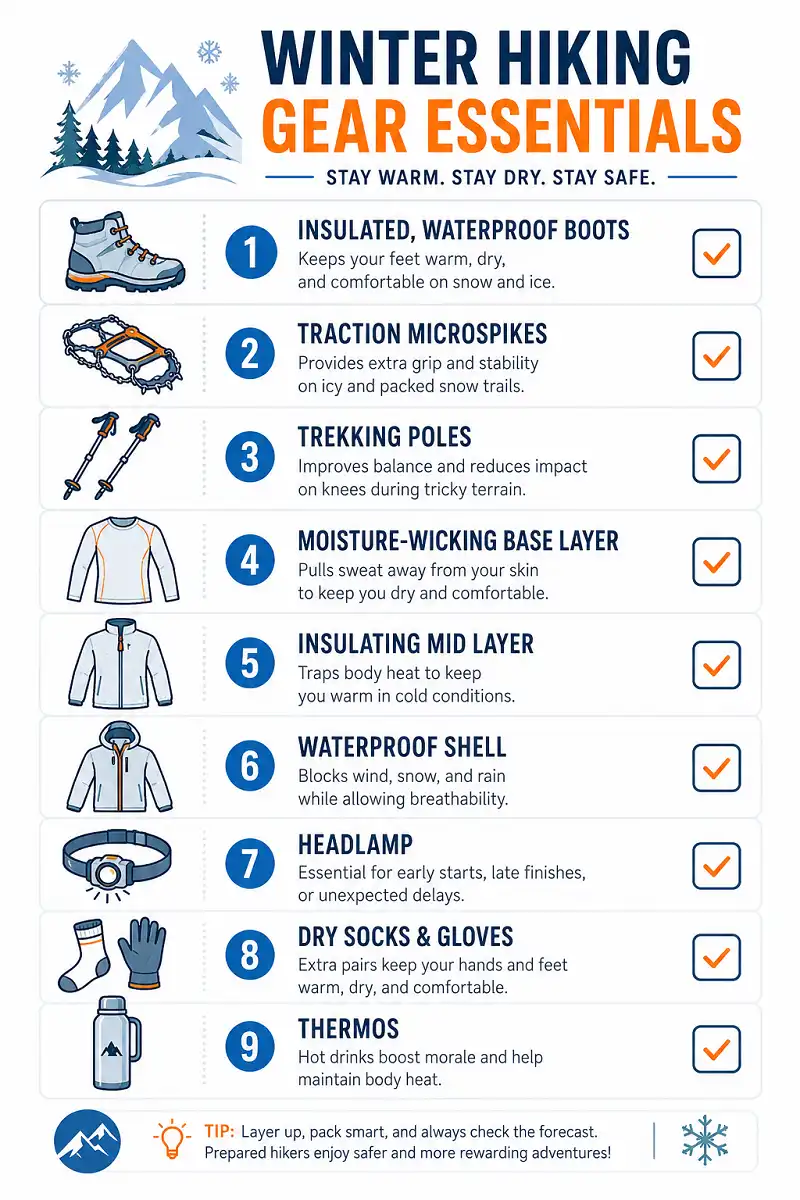
Layering is the single most important skill for winter hiking. Start with a moisture-wicking base layer, add an insulating mid layer, then finish with a waterproof or windproof shell. Avoid cotton entirely, since it holds moisture and pulls heat from your body.
For a deeper breakdown of what actually works in the cold, my winter layering and clothing guide covers fabric choices and fit in more detail.
Base Layer
- Moisture-wicking fabric
- Helps move sweat away
- Avoid cotton
Warmth + Shell
- Insulating mid layer
- Waterproof or windproof shell
- Adjust layers as activity changes
Footwear Matters
Footwear matters just as much. Insulated, waterproof boots with solid tread keep your feet dry and warm on icy trails.
I get asked often whether budget boot brands hold up in winter conditions, and I actually broke that down in my piece on whether Columbia hiking boots perform well for cold-weather trails.
Winter Hiking Gear Checklist
Traction Devices
Microspikes or crampons help on icy sections.
Trekking Poles
Extra stability on uneven or slick ground.
Dry Extras
Pack an extra pair of dry socks and gloves.
Headlamp
Winter daylight disappears quickly, so carry reliable lighting.
Hot Drink
A thermos with a hot drink adds comfort and warmth on cold outings.
For a full rundown of what belongs in your pack, I keep an updated winter hiking gear roundup that goes through what’s actually worth buying versus what you can skip.
Winter Hiking Safety Tips
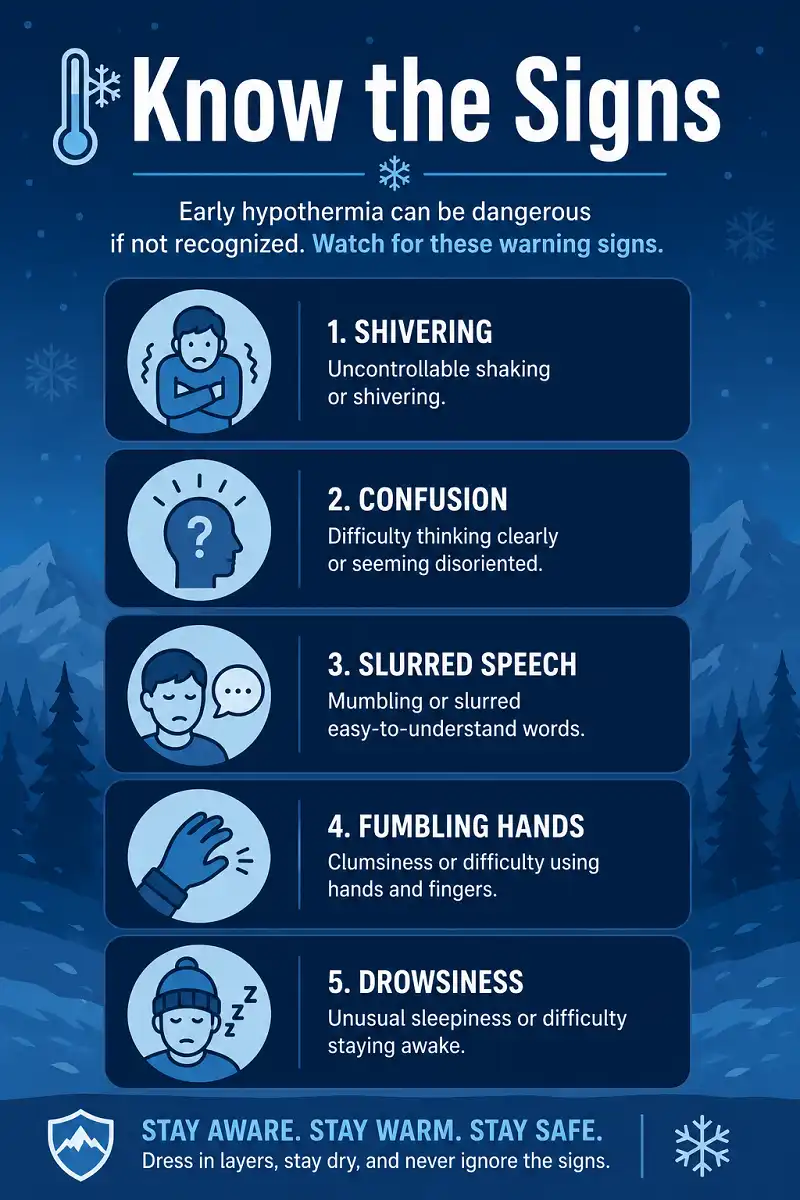
Cold weather adds real risk that summer hiking doesn’t have, so a few precautions go a long way.
Conditions change fast in winter. Check a current forecast and recent trail reports, not just the weekly outlook.
Share your route and expected return time with a friend or family member.
Shivering, confusion, and slurred speech are early warning signs that your body is losing heat faster than it can replace it.
Winter daylight disappears fast, and icy trails become more dangerous after sunset.
Snow reflects sunlight strongly, so sunscreen and sunglasses still matter in winter.
Fingers, toes, ears, and noses are most at risk. Numbness or waxy, pale skin should be taken seriously.
According to Wikipedia’s overview of hypothermia, the condition can become dangerous once core body temperature drops below 95°F, so treat symptoms seriously and turn back early if you notice them in yourself or a hiking partner.
Turn back before it gets dark. Winter daylight disappears fast, and hiking in the dark on icy trails multiplies your risk. I always build in extra buffer time before sunset.
Protect your skin and eyes from sun and snow glare. Snow reflects sunlight far more than dirt or grass, so sunscreen and sunglasses still matter in winter, even on cloudy days.
Watch for frostbite on exposed skin. Fingers, toes, ears, and noses are most at risk. Numbness or a waxy, pale look on the skin are early signs. If you notice either, warm the area gradually and head back to shelter instead of pushing on.
When in Doubt, Turn Back
None of these precautions require special skill. They just require attention, and a little extra caution goes a long way once temperatures drop.
Common Winter Hiking Mistakes Beginners Make
I’ve made most of these mistakes myself, so I’ll save you the trouble.
Do This
- Use multiple breathable layers.
- Carry microspikes or other traction.
- Add 25–50% extra time.
- Check official trail status.
- Carry enough water and a hot drink.
Avoid This
- Relying on one thick jacket.
- Ignoring short icy sections.
- Planning with summer hiking times.
- Ignoring seasonal closures.
- Assuming cold weather means you need less water.
Overdressing instead of layering. One thick jacket traps sweat and leaves you cold once you stop moving. Layers let you adjust as your body heat changes throughout the hike.
Skipping traction devices. Even a short icy patch can cause a bad fall. Microspikes weigh almost nothing and prevent most slips.
Underestimating hike time. Cold, snow, and short daylight all slow your pace. Add 25 to 50 percent more time than your usual summer estimate.
Ignoring trail closures. Some trails close seasonally for good reason, whether that’s avalanche risk or impassable mud. Always check current status before you drive out.
Forgetting hydration in cold weather. Cold air tricks people into thinking they don’t need water, but your body still loses fluid through breathing and effort. I bring the same amount of water in winter as I would on a warm-weather hike, plus a hot drink for extra warmth.
Winter Hiking: Plan Smart, Hike Happy
Winter hiking rewards the hikers who plan ahead. Pick a trail that matches your skill level, layer up properly, and always check conditions before you go.
Start with shorter, lower-elevation trails while you build confidence, then work your way toward snowshoe routes or higher terrain once you’re comfortable with the gear and pace.
Whether you’re chasing sunny desert paths or snowshoeing through quiet forest trails, the best hikes in the winter are the ones where you come home warm, dry, and already planning your next trip.
FAQs
Is it safe to hike alone in winter?
Solo winter hiking carries more risk than solo summer hiking because help is farther away and conditions change quickly. If you do hike alone, stick to well-traveled, low-elevation trails and always share your plan with someone.
What temperature is too cold for hiking?
There’s no strict cutoff, but most hikers find anything below 20°F uncomfortable without serious cold-weather gear. Wind chill matters more than the raw temperature, so check both before deciding.
Do I need snowshoes for every winter hike?
No. Snowshoes only help once snow gets deep enough to sink into, usually around six inches or more. For lower-elevation or desert trails, regular hiking boots work fine.
Can beginners hike in the winter?
Yes, as long as they choose appropriate trails. Low-elevation, well-maintained routes with good sun exposure are manageable for beginners who dress in proper layers and check conditions beforehand.
How do I keep my water from freezing on a winter hike?
Insulated water bottle sleeves help, and storing your bottle upside down keeps ice from blocking the opening, since ice forms at the surface first. On longer hikes, an insulated hydration bladder tube also helps prevent freezing, especially if you tuck it under a layer close to your body.