Are Wool Socks Good for Hiking? Benefits, Drawbacks & Buying (Guide)
Wet, cold, blistered feet can ruin a great hike faster than almost anything else. A solid pair of wool socks can make a surprisingly big difference, especially when you spend hours on the trail. But are wool socks actually better than cotton or synthetic options? Here’s what matters before you buy.
Are Wool Socks Good for Hiking?
Yes. Merino wool is one of the best sock materials for hiking because it manages moisture, regulates temperature, resists odor, and provides soft cushioning. The trade-offs are a higher price and slower drying than synthetic socks.
If you want one dependable hiking sock, start with a lightweight or midweight merino blend. It gives you the comfort and moisture control of wool without the durability problems of pure wool.
Are Wool Socks Good for Hiking?
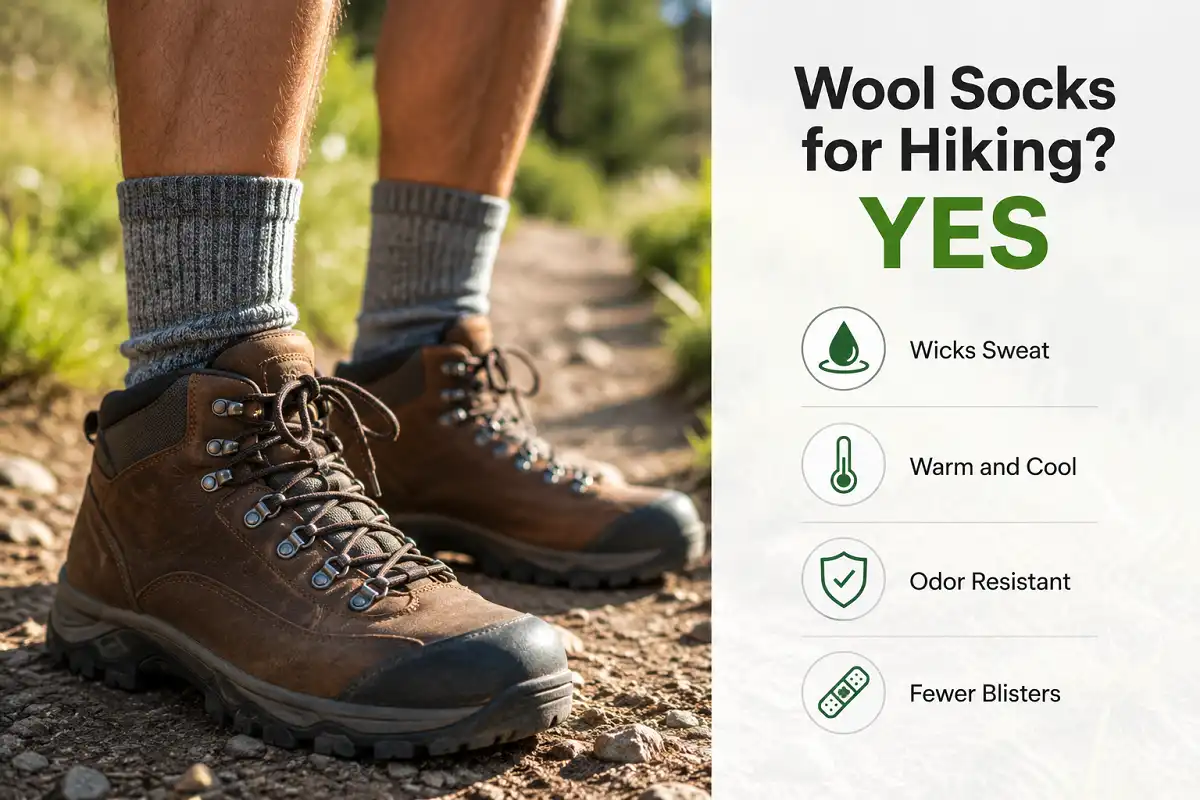
Are wool socks good for hiking? Yes, and for most hikers they are one of the best choices you can put on your feet. Wool, especially merino wool, helps move sweat away from your skin, keeps your feet at a more comfortable temperature, and naturally resists the odor that builds up during long days outside.
Unlike the thick, scratchy wool many people remember from old sweaters, modern hiking socks usually use much finer merino fibers. That makes them considerably softer and more comfortable against your skin.
What Makes Wool Socks Work So Well on the Trail?
Wool addresses three of the biggest problems hikers deal with: moisture, temperature, and odor. It also adds cushioning that can help reduce friction during long days on rocky trails.
Moisture Management
Merino wool wicks sweat away from your skin and moves moisture toward the outer surface where it can evaporate. Wool can hold a significant amount of moisture before feeling wet, helping your feet stay comfortable for longer.
Temperature Control
Wool works in both cold and warm conditions. Its natural fibers trap tiny pockets of air for insulation while moisture movement helps your feet stay cooler when you’re sweating.
Natural Odor Resistance
Merino wool naturally resists the bacteria responsible for foot odor. That’s especially useful on backpacking trips when you want to carry fewer spare pairs of socks.
Cushioning & Blister Protection
Wool adds a soft layer between your foot and footwear. Combined with moisture control and a good fit, that can reduce friction and help prevent hot spots and blisters.
The Honest Drawbacks of Wool Hiking Socks
Wool isn’t perfect. Before spending more money on hiking socks, there are a few disadvantages worth knowing.
Higher Price
Quality wool hiking socks generally cost more than basic cotton socks.
Slower Drying
Synthetic fabrics generally dry faster after getting soaked.
Pure Wool Wears Faster
100% wool can wear through faster, which is why quality blends add nylon.
Possible Itchiness
Fine merino is much softer than traditional wool, but some people remain sensitive to the fibers.
For most hikers, yes. A quality pair costs more upfront, but durability and comfort can make the cost worthwhile over many hikes.
Merino Wool vs Regular Wool: What to Look For
Merino wool is finer, softer, and generally less itchy than traditional wool. Fiber thickness is measured in microns, with lower numbers indicating finer fibers. Merino commonly falls in the roughly 16–24 micron range.
Look for “merino wool” rather than simply “wool” when shopping for hiking socks. Fine fibers are designed to feel much softer against your skin.
If the label specifically says merino wool, you’re already looking in the right category for a hiking sock.
Wool vs Synthetic vs Cotton for Hiking
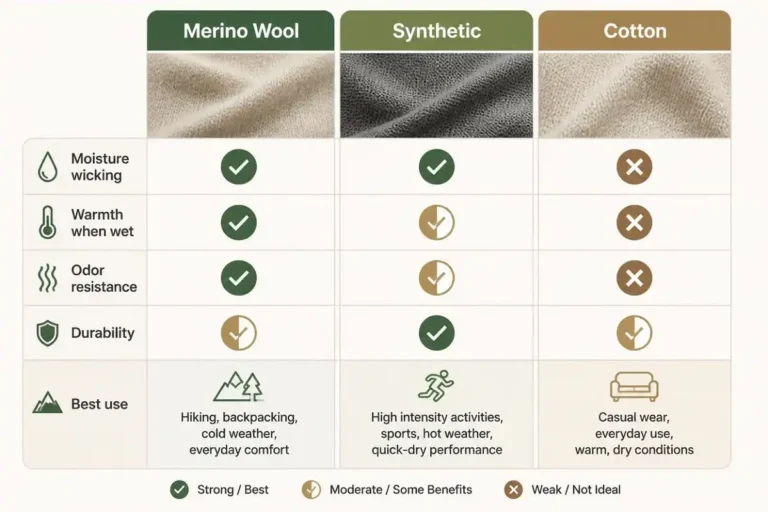
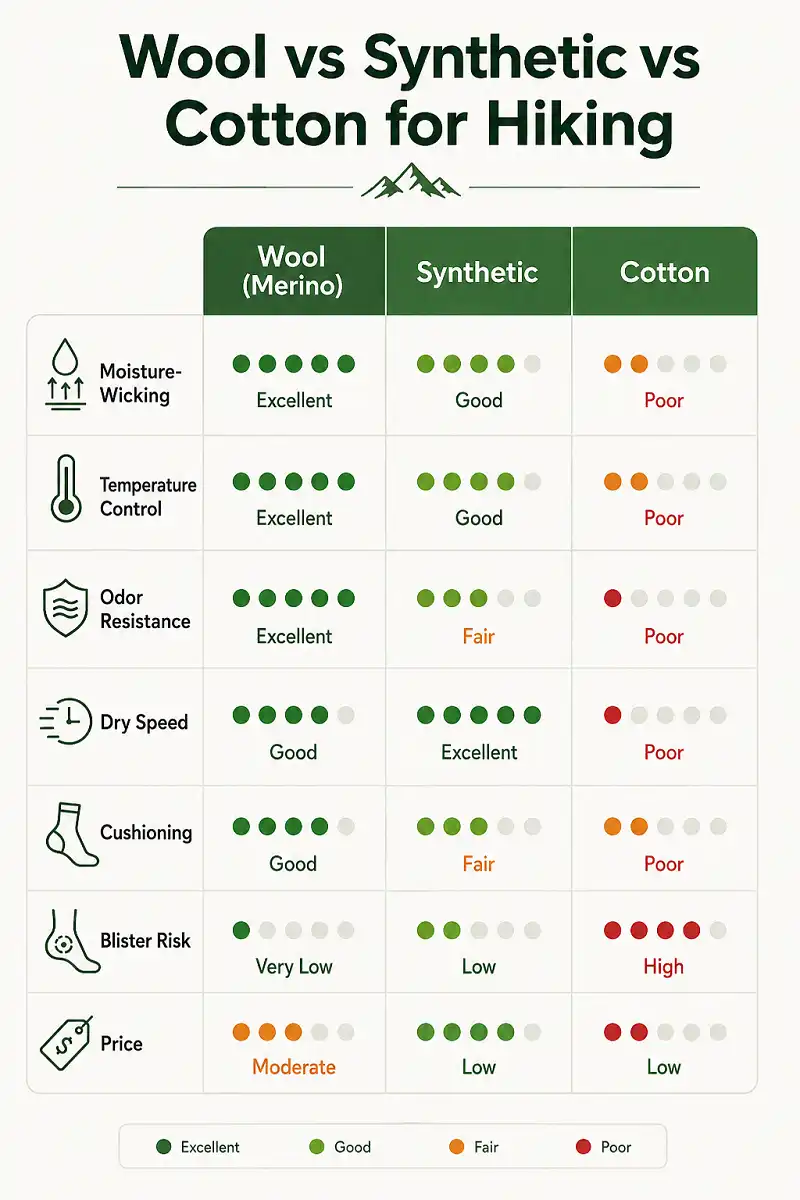
Wool is a strong all-around choice, but synthetic socks still have one major advantage: they dry faster. Cotton, meanwhile, performs poorly when moisture and long hours on the trail are involved.
Merino wool
Synthetic
Cotton
How to Choose Wool Hiking Socks
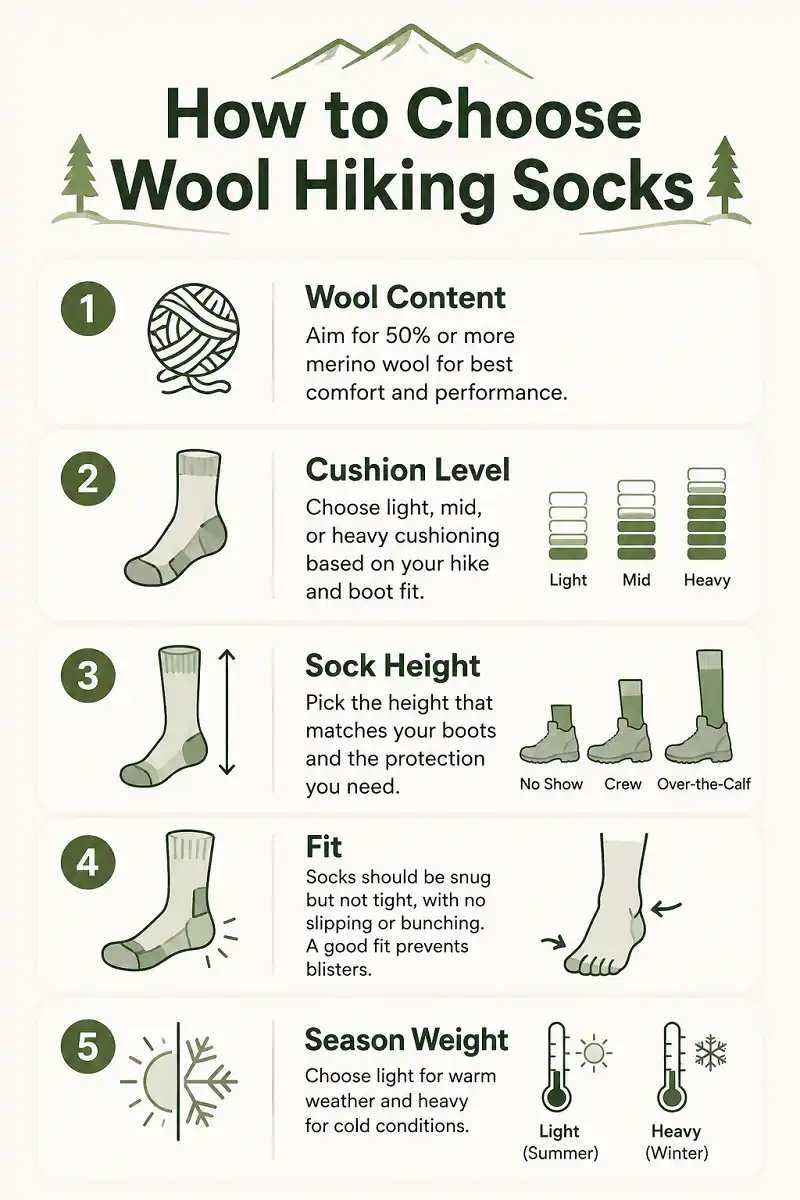
Picking the right pair comes down to five things: wool content, cushion, height, fit, and season weight. Get these right and one or two pairs can cover most of your hiking.
Check the Wool Content
Look for at least 50% merino wool blended with nylon and spandex. The blend provides wool’s benefits while improving durability.
Match the Cushion to Your Hike
Light cushion works well for hot-weather hiking and faster day hikes. Midweight suits most trail hiking, while heavyweight works better for winter and rough terrain.
Get the Right Sock Height
Low socks work with trail runners. Crew height is the versatile choice for hiking boots and helps keep dirt and debris out.
Focus on the Fit
Your sock should fit snugly without bunching. Loose material can move around inside your shoe and create friction.
Think About Season Weight
Lightweight socks breathe better during summer. Heavier socks provide additional warmth during colder months.
Which Cushion Level Should You Choose?
Fast day hikes and warm trails.
Everyday trail hiking and loaded packs.
Winter conditions and rough terrain.
How to Care for Wool Hiking Socks
Proper washing can help wool socks last for years. Turn them inside out and wash them in cold or warm water on a gentle cycle. Use a mild detergent and avoid fabric softener because it can coat the fibers and interfere with moisture management.
Reduce wear during washing.
Use cold or warm water.
Protect the wool fibers.
Air dry or tumble dry low.
Thanks to wool’s natural odor resistance, airing your socks out between shorter trips can sometimes be enough. Always store them clean and dry.
Are Wool Socks Good for Hiking If You’re Just Starting Out?
Absolutely. In fact, quality socks can matter even more when you’re new to hiking because beginners often deal with blisters while they learn how to dial in their footwear.
Start With Your Feet
You don’t need a huge collection of expensive hiking gadgets. A properly fitting pair of boots or trail shoes plus quality merino socks gives you a strong foundation before you start upgrading the rest of your gear.
What About Hiking Sock Brands?
You don’t need to obsess over brands when buying your first pair. The article highlights Darn Tough and Smartwool as two reliable U.S. names that many hikers trust.
Darn Tough
Known for its Vermont-made socks and unconditional lifetime guarantee.
Smartwool
A long-established merino sock brand known for soft-feeling pairs.
Buy one or two pairs, hike in them, and pay attention to how your feet feel. Once you know what cushion, height, and weight work for you, buying more becomes much easier.
Wool Hiking Socks: Common Questions
Quick answers to the questions hikers ask before switching to wool.
Are wool socks good for hiking?
Yes. Merino wool manages moisture, regulates temperature, resists odor, and provides comfortable cushioning, making it an excellent hiking sock material.
Is merino wool better than regular wool for hiking?
Merino is generally finer and softer than traditional wool, making it much more comfortable against the skin.
Are wool socks good for hiking in hot weather?
Yes. Choose a thin, lightweight merino pair for warm-weather hikes so your feet can breathe while still benefiting from wool’s moisture management.
Are synthetic socks better than wool?
Synthetic socks can be the better choice when fast drying is the priority. For overall comfort, temperature regulation, and odor resistance, merino wool has the advantage.
Should hiking socks be tight or loose?
Hiking socks should fit snugly without bunching. Loose material can slide around and create friction that contributes to blisters.
What percentage of wool should hiking socks have?
The article recommends looking for at least 50% merino wool, blended with nylon and spandex for added durability.
Can you wash wool hiking socks in a washing machine?
Yes. Use a gentle cycle with cold or warm water and mild detergent. Avoid fabric softener and high heat.
Do wool hiking socks prevent blisters?
Good wool socks can help reduce blister risk by managing moisture and friction, but proper footwear fit remains essential.
Yes, Wool Socks Are Worth It for Hiking
Merino wool keeps your feet drier, helps regulate temperature, and resists odor better than most common sock materials. The main compromises are price and slower drying, but for everyday hiking those trade-offs are usually worth it.
If you’re going to make one simple upgrade for your feet this hiking season, a solid pair of merino wool socks is a very good place to start.