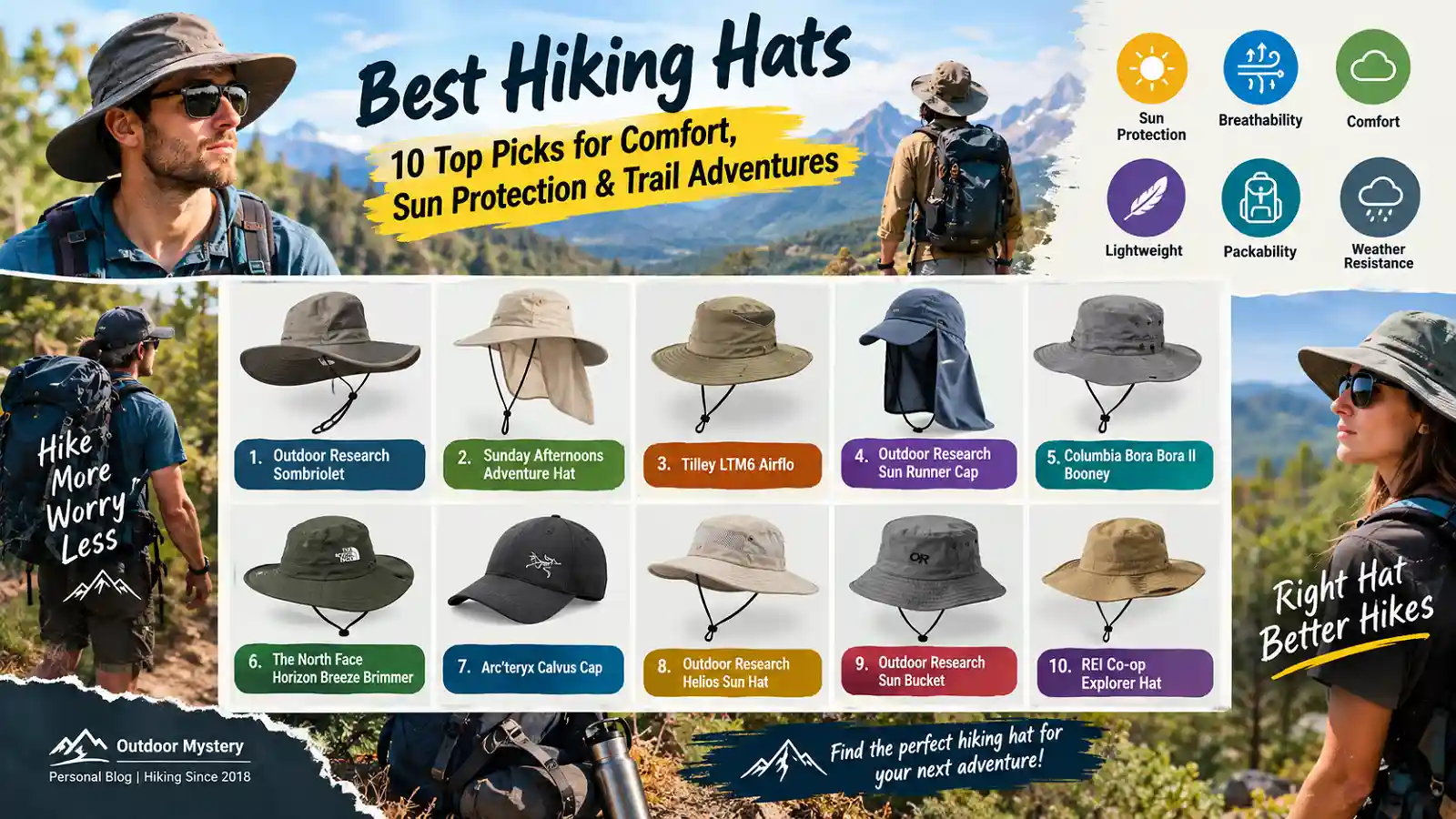
Best Hiking Hats: 10 Top Picks for Comfort, Sun Protection & Trail Adventures
I have been hiking and camping since 2018, out of Bakersfield, California, and I’ve learned that the small pieces of gear can sometimes make the biggest difference on a long trail. I made plenty of rookie mistakes early on — wrong boots, a pack that was far too heavy, and heading out without thinking enough about the weather. Each one taught me something.
A hiking hat was one of those things I didn’t think much about at first. Then I started spending longer days on exposed trails, dealing with California sun, heat, wind, and changing conditions. I realized that the right hat isn’t just something that looks good in a trail photo. It can keep the sun off your face and neck, help manage sweat, reduce glare, and make a long day outside noticeably more comfortable.
That experience is what shaped the way I looked at the best hiking hats for this guide. I wasn’t interested in simply finding the most expensive options or listing hats because they are popular. I wanted to look at the things that actually matter when you’re wearing one for hours: sun protection, ventilation, comfort, fit, brim coverage, weight, packability, and how well it suits different types of hiking.
Some of the hats below are the kind of gear I would consider for my own trail kit, while others are included because their design and features make sense for a particular type of hiker. When I haven’t personally used something, I don’t pretend that I have.
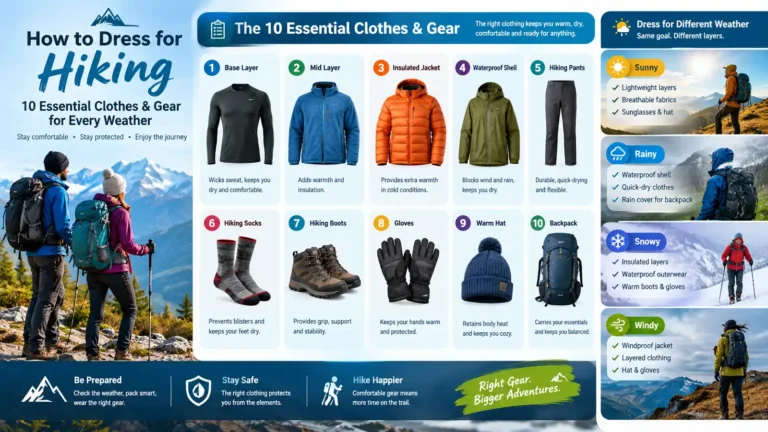
If you’re also building out the rest of your hiking setup, you may want to read my guide to the 10 essentials every hiker should carry and my guide to clothing for hiking in warm weather . Both are useful starting points when you’re preparing for long, sunny trail days.
With that in mind, here are the hiking hats I’d look at first.
Outdoor Research Sombriolet Best Overall Hiking Hat
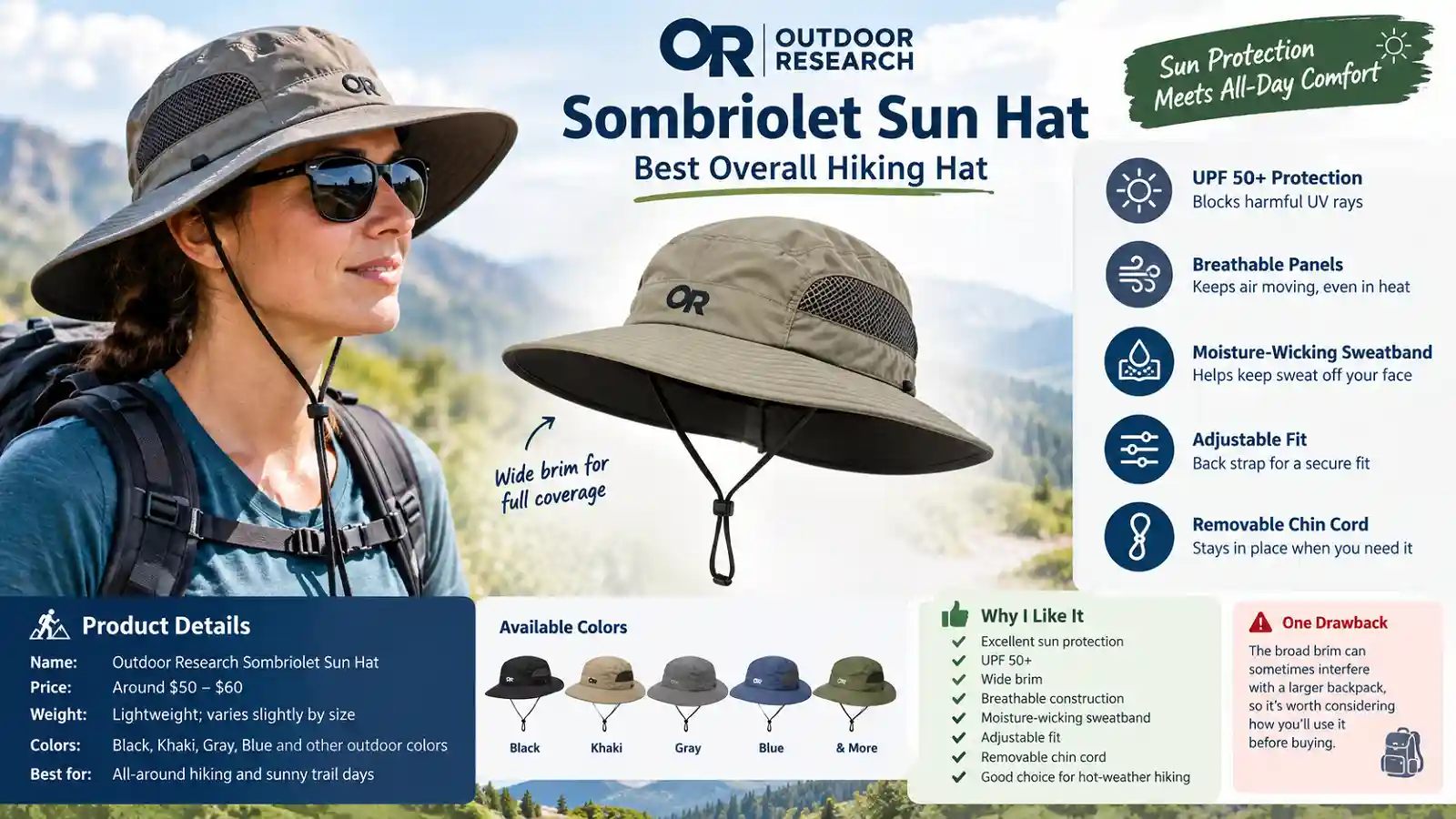
If I had to choose one hiking hat for a wide range of sunny trail conditions, the Outdoor Research Sombriolet would be near the top of my list.
Its biggest strength is the balance between protection and ventilation. The wide brim provides substantial coverage around the face and neck, while mesh ventilation helps keep air moving when temperatures rise. It also uses a sweat-wicking headband and offers UPF 50+ protection.
I particularly like the darker underside of the brim because it can help reduce glare while you’re hiking under bright sunlight. An adjustable back strap and removable chin cord also make it easier to get a secure fit.
- Excellent sun protection
- UPF 50+
- Wide brim
- Breathable construction
- Moisture-wicking sweatband
- Adjustable fit
- Removable chin cord
- Good choice for hot-weather hiking
The main drawback is that the broad brim can sometimes interfere with a larger backpack, so it’s worth considering how you’ll use it before buying.
Sunday Afternoons Adventure Hat Best for Maximum Sun Protection
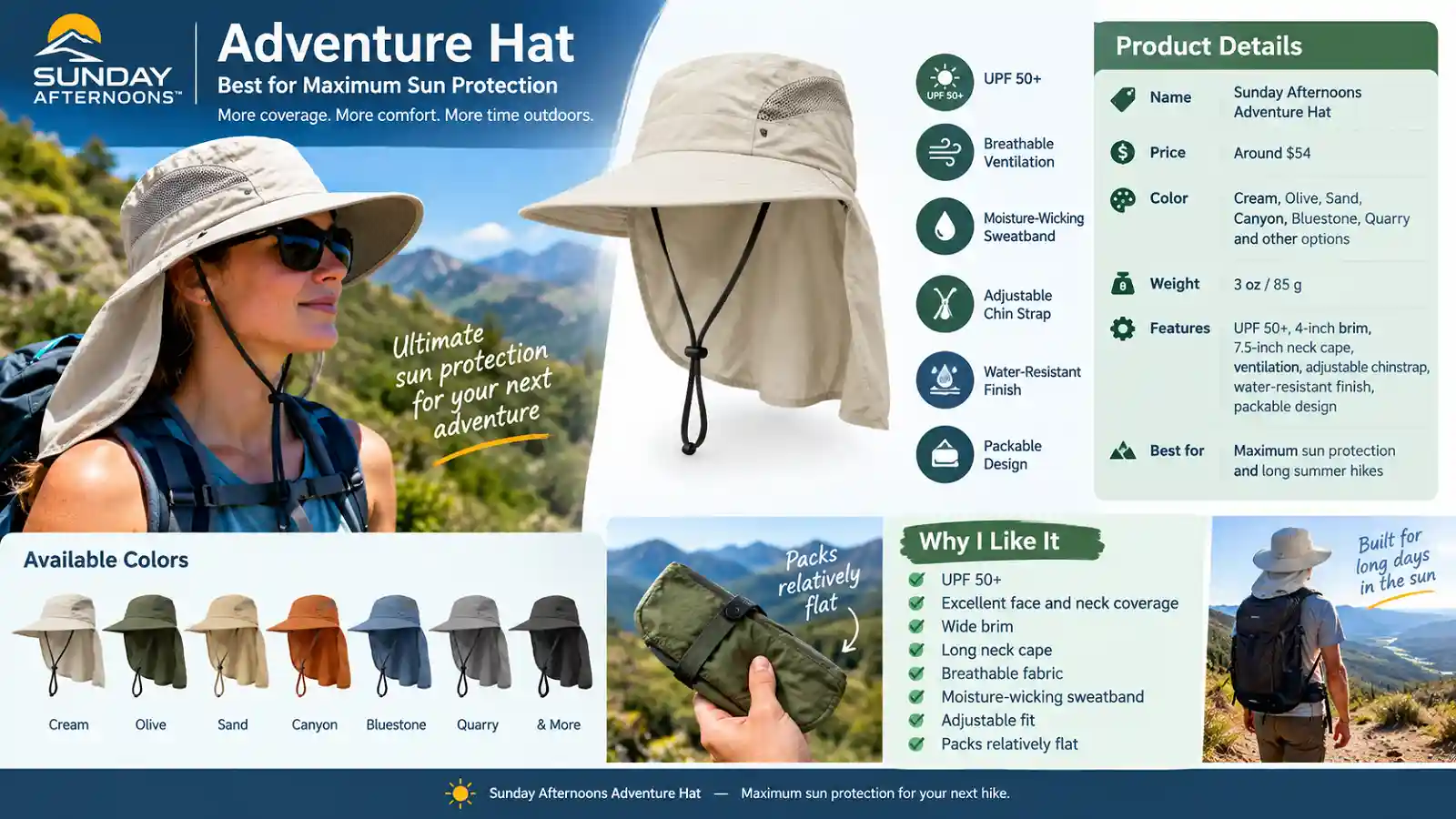
Some hikers care more about sun protection than anything else. If that’s you, the Sunday Afternoons Adventure Hat is an excellent option.
This hat takes coverage seriously. It combines a broad brim with a long neck cape, helping protect areas that a normal baseball cap simply leaves exposed.
The UPF 50+ fabric, ventilation, moisture-wicking sweatband, adjustable chin strap, and structured brim make it particularly useful for long days in strong sunlight.
- UPF 50+
- Excellent face and neck coverage
- Wide brim
- Long neck cape
- Breathable fabric
- Moisture-wicking sweatband
- Adjustable fit
- Packs relatively flat
It isn’t the most minimalist-looking hat on this list, but when you’re hiking under intense sun, functionality matters more than appearance.
Tilley LTM6 Airflo Best Premium Hiking Hat
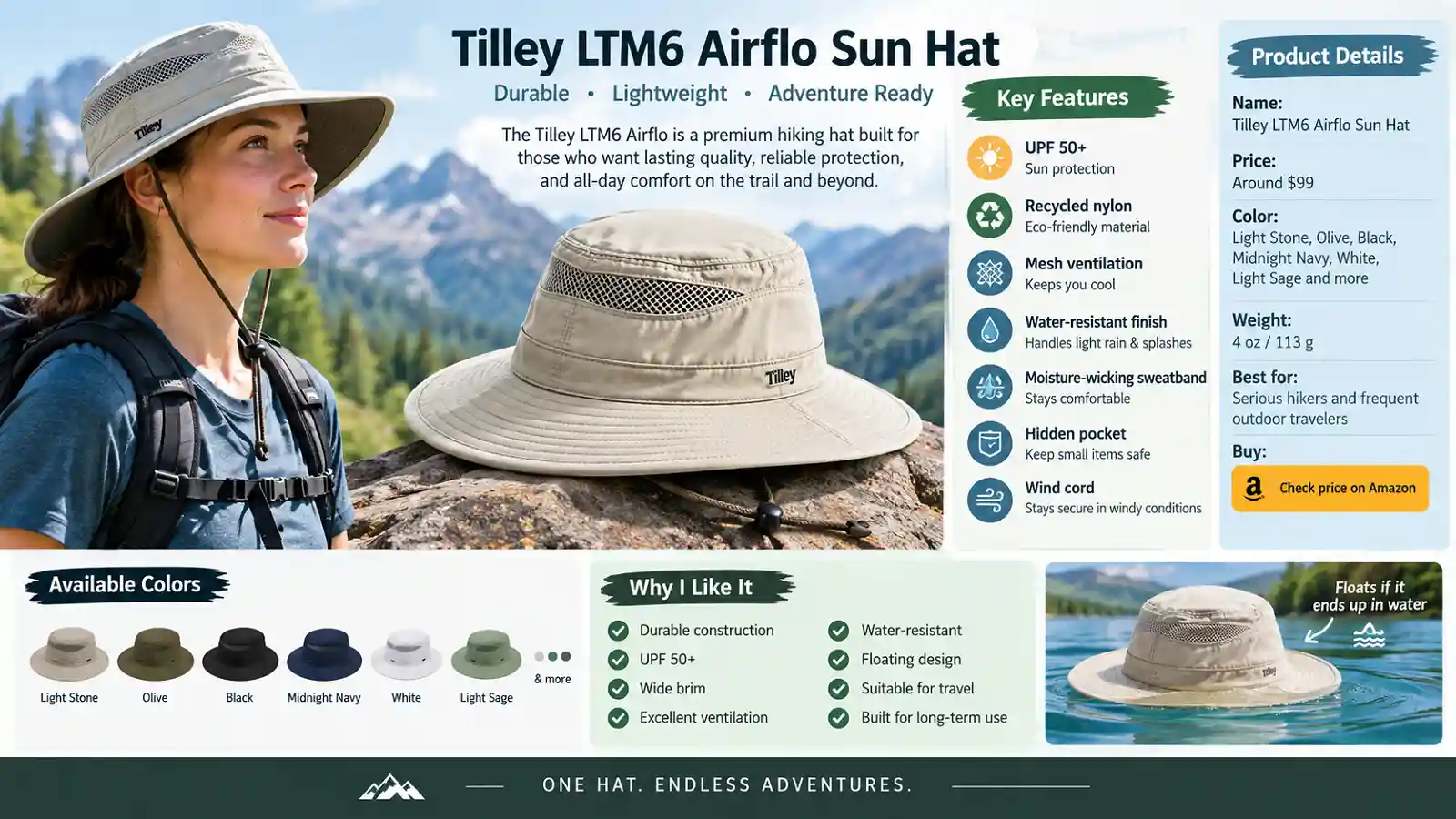
The Tilley LTM6 Airflo is the kind of hiking hat designed for people who want something they can use for years rather than just one season.
Its durable nylon construction, wide brim, ventilation around the crown, water-resistant treatment, and UPF 50+ protection give it a strong outdoor focus. It also includes a foam insert that helps the hat float if it ends up in water.
Another reason it stands out is its classic appearance. It looks appropriate on a mountain trail but doesn’t look out of place while traveling or exploring a town afterward.
- Durable construction
- UPF 50+
- Wide brim
- Excellent ventilation
- Water-resistant
- Floating design
- Suitable for travel
- Built for long-term use
The higher price makes it less attractive if you’re simply looking for an inexpensive summer hiking hat, but it makes sense for serious outdoor use.
Outdoor Research Sun Runner Cap Best for Versatility
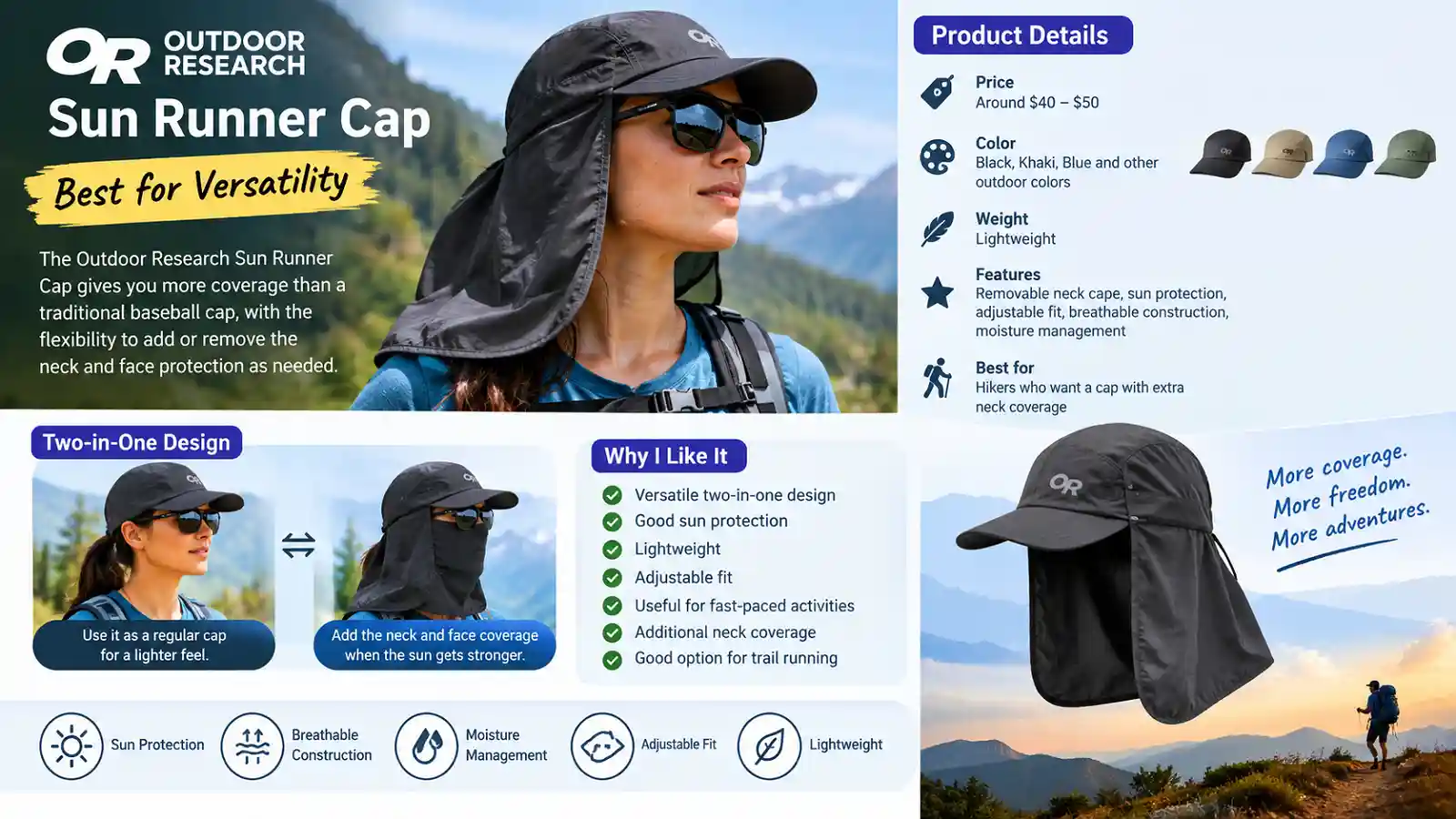
The Outdoor Research Sun Runner Cap is an interesting choice because it gives you more coverage than a traditional baseball cap without forcing you to wear a full wide-brim hat all the time.
The removable neck and face coverage makes it adaptable. You can use it like a regular cap when you want a lighter feel and add the extra protection when the sun becomes stronger.
That versatility makes it especially useful for hikers who move between shaded and exposed sections of trail.
- Versatile two-in-one design
- Good sun protection
- Lightweight
- Adjustable fit
- Useful for fast-paced activities
- Additional neck coverage
- Good option for trail running
If you prefer a traditional cap but occasionally need more protection, this style is worth considering.
Columbia Bora Bora II Booney Best Value
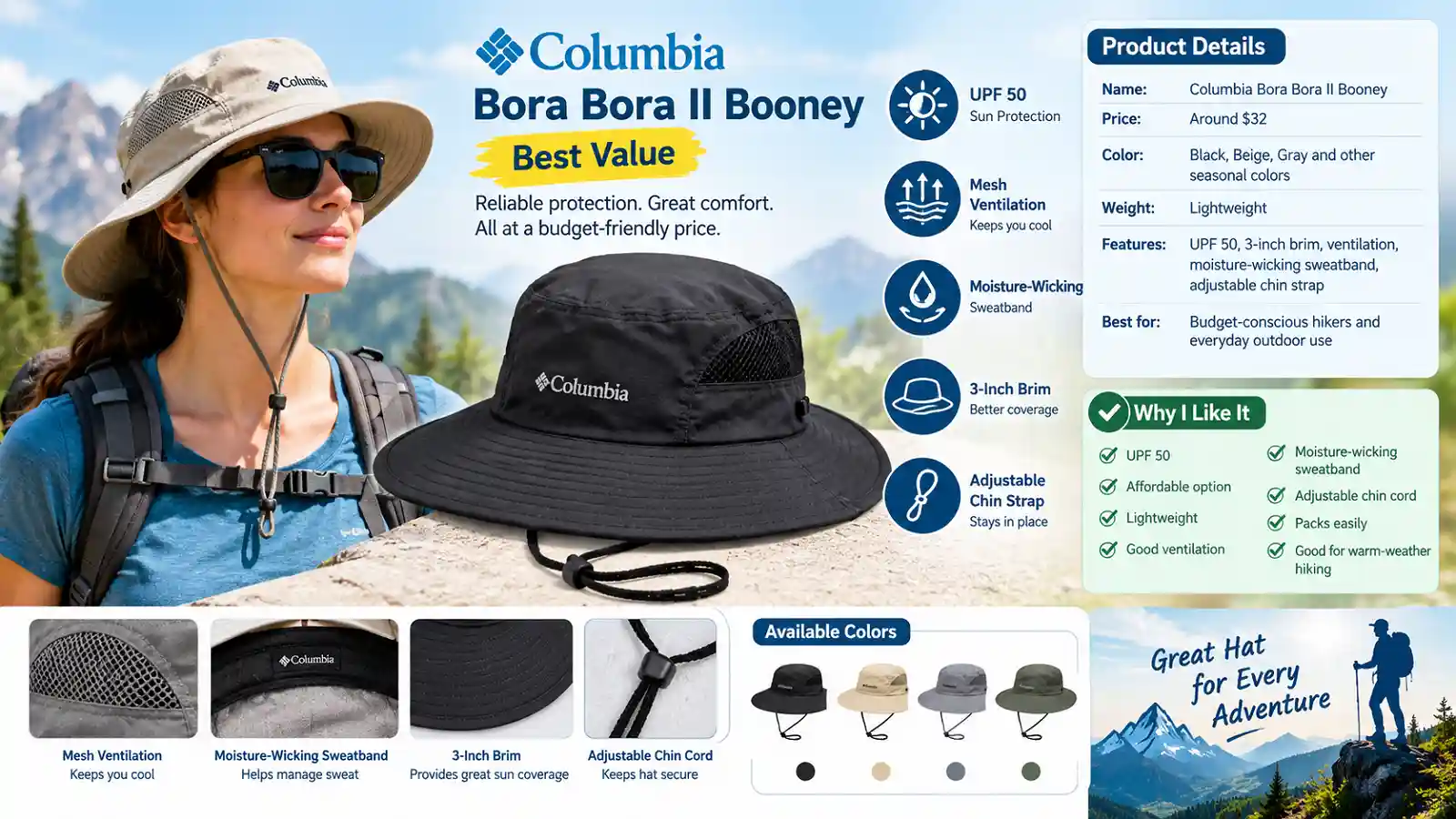
You don’t necessarily have to spend a lot to get a useful hiking hat. The Columbia Bora Bora II Booney is a good example.
It combines UPF 50 sun protection with mesh ventilation and a moisture-managing sweatband. The lightweight construction makes it comfortable for warm-weather hiking, while the chin cord helps keep it in place.
Its brim is somewhat softer than some premium hiking hats, but that can actually make it easier to pack.
- UPF 50
- Affordable option
- Lightweight
- Good ventilation
- Moisture-wicking sweatband
- Adjustable chin cord
- Packs easily
- Good for warm-weather hiking
For hikers who want reliable basic protection without spending premium-hat money, this is one of the easiest options to recommend.
The North Face Horizon Breeze Brimmer Best Eco-Friendly Option
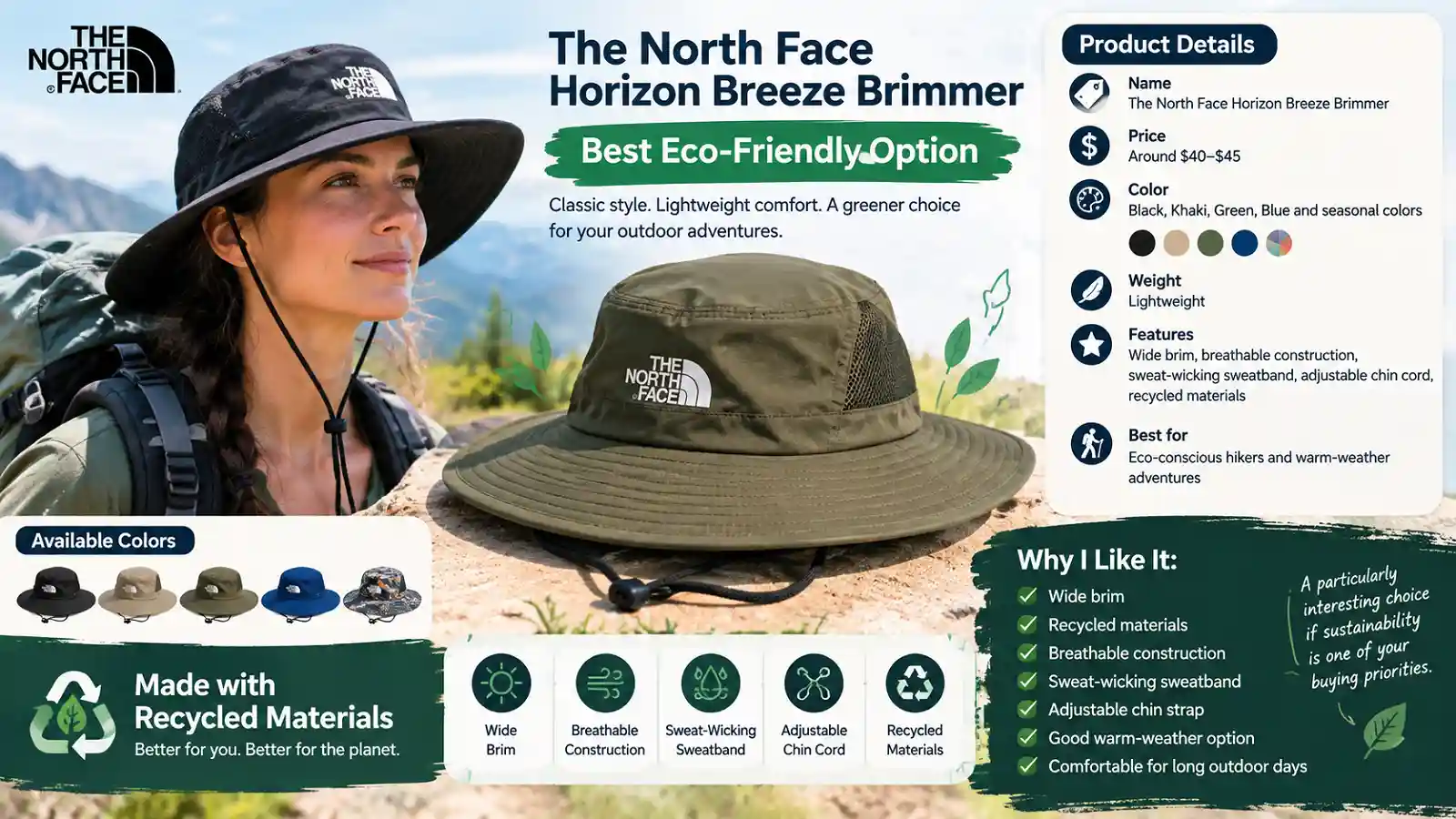
The North Face Horizon Breeze Brimmer combines a classic wide-brim design with lightweight outdoor construction.
Its broad brim provides coverage around the face and neck, while ventilation helps prevent the hat from becoming uncomfortable during warmer hikes. It also uses recycled materials, making it appealing to hikers who pay attention to the materials used in their outdoor gear.
- Wide brim
- Recycled materials
- Breathable construction
- Sweat-wicking sweatband
- Adjustable chin strap
- Good warm-weather option
- Comfortable for long outdoor days
It’s a particularly interesting choice if sustainability is one of your buying priorities.
Arc’teryx Calvus Cap Best Hiking Cap
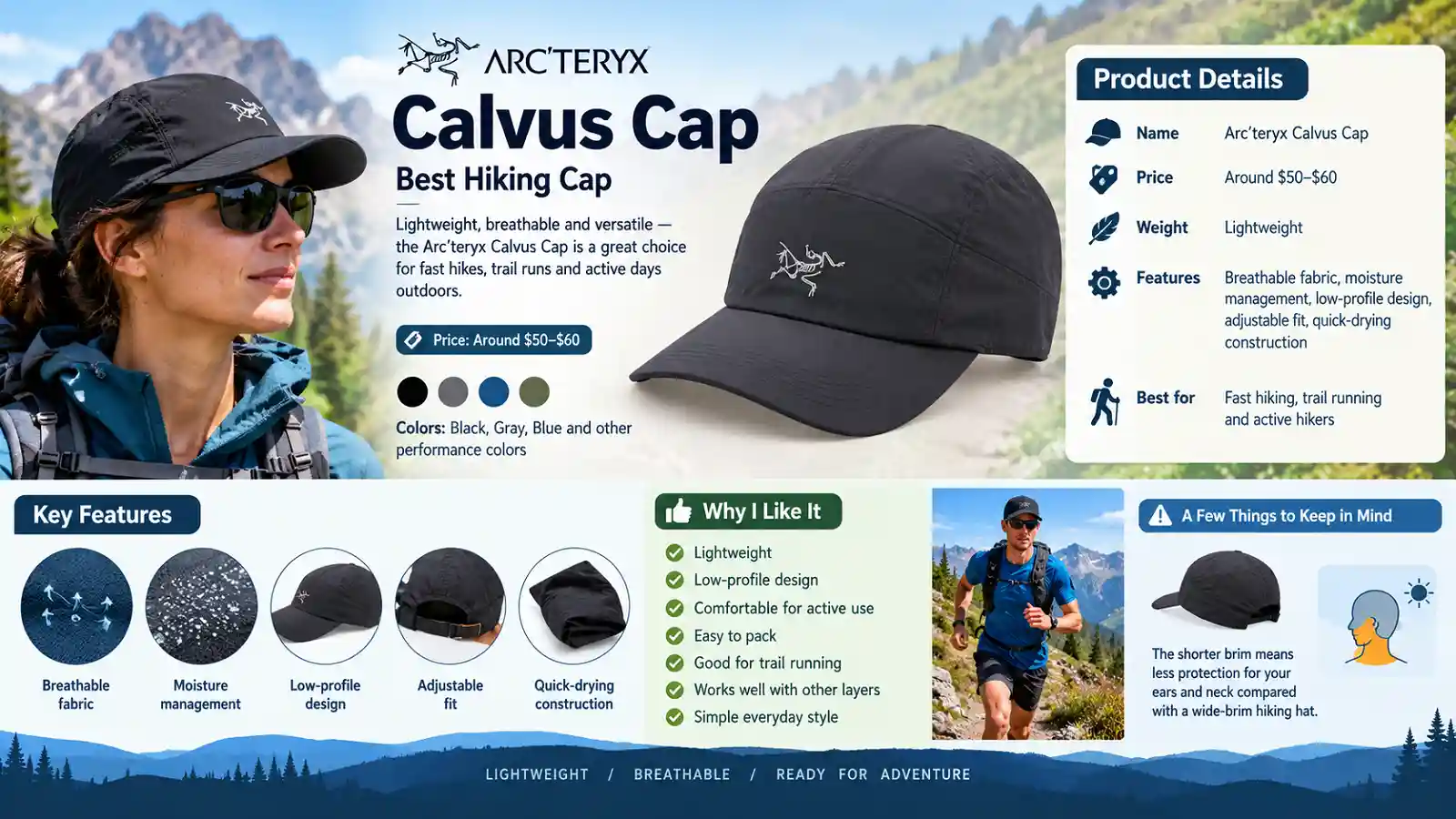
Not everyone likes wearing a wide-brim hat. If you prefer the familiar feel of a baseball-style cap, the Arc’teryx Calvus Cap is a strong choice.
A cap won’t provide the same level of coverage as a wide-brim or neck-cape hat, but it has some important advantages. It’s lightweight, low profile, easy to wear with other layers, and particularly suitable for faster activities.
That makes it a good match for trail running, fast hiking, or anyone who finds traditional sun hats too bulky.
- Lightweight
- Low-profile design
- Comfortable for active use
- Easy to pack
- Good for trail running
- Works well with other outdoor layers
- Simple everyday style
Just remember that the shorter brim means less protection for your ears and neck compared with a wide-brim hiking hat.
Outdoor Research Helios Sun Hat Best Lightweight Sun Hat
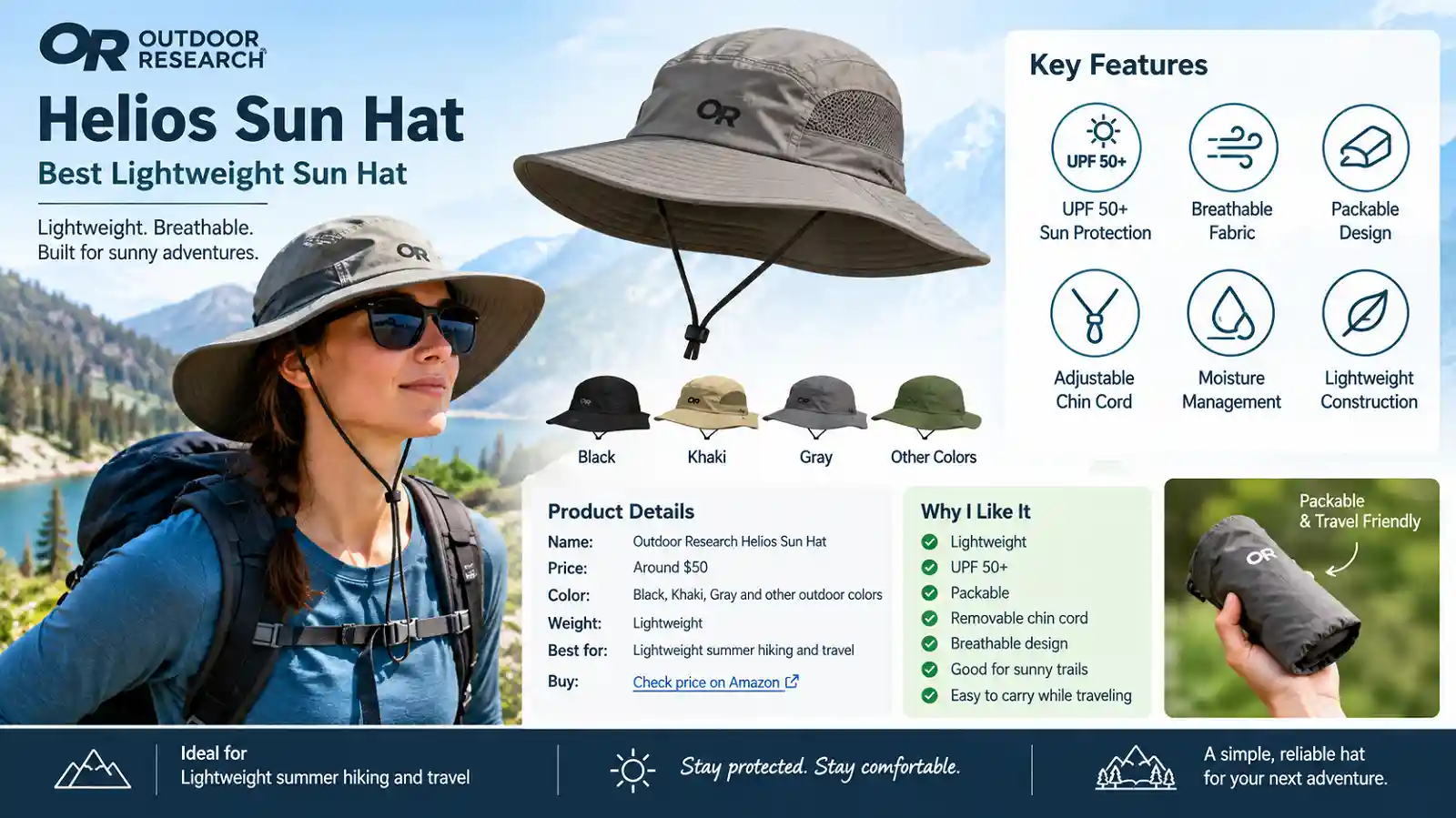
For hikers who don’t want to feel like they’re wearing a heavy piece of gear on their head, the Outdoor Research Helios is worth a look.
It is designed around lightweight construction and sun protection, with a relatively modest brim that provides coverage without feeling excessively large.
A removable chin cord helps keep it secure, while its packable design makes it convenient to carry when you’re traveling between trailheads.
- Lightweight
- UPF 50+
- Packable
- Removable chin cord
- Breathable design
- Good for sunny trails
- Easy to carry while traveling
Its brim isn’t as extensive as some of the larger sun hats, but that can be an advantage if you prefer a more streamlined design.
Outdoor Research Sun Bucket Best Bucket Hat
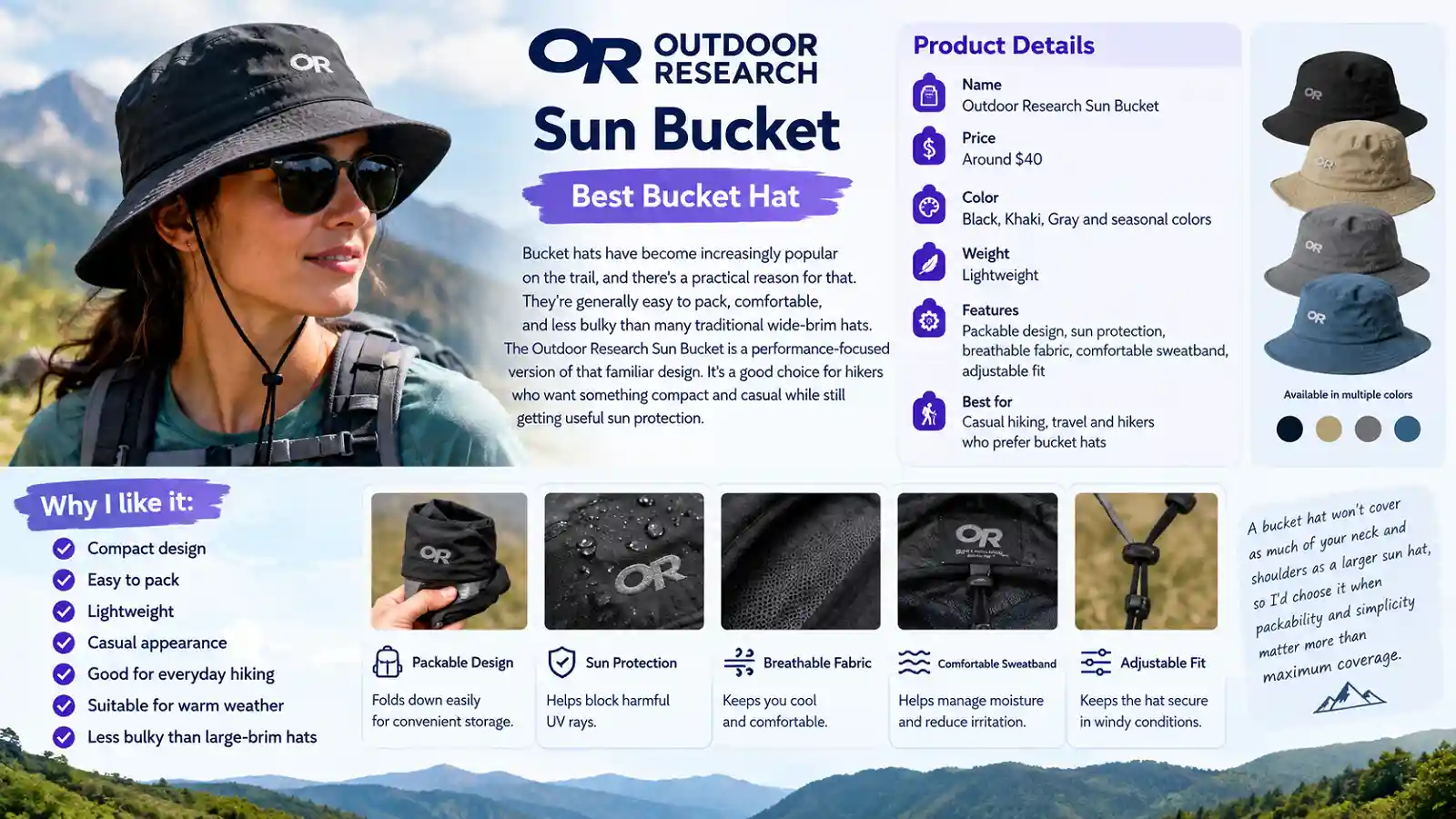
Bucket hats have become increasingly popular on the trail, and there’s a practical reason for that. They’re generally easy to pack, comfortable, and less bulky than many traditional wide-brim hats.
The Outdoor Research Sun Bucket is a performance-focused version of that familiar design. It’s a good choice for hikers who want something compact and casual while still getting useful sun protection.
- Compact design
- Easy to pack
- Lightweight
- Casual appearance
- Good for everyday hiking
- Suitable for warm weather
- Less bulky than large-brim hats
A bucket hat won’t cover as much of your neck and shoulders as a larger sun hat, so I’d choose it when packability and simplicity matter more than maximum coverage.
REI Co-op Explorer Hat Best for Everyday Trail Use
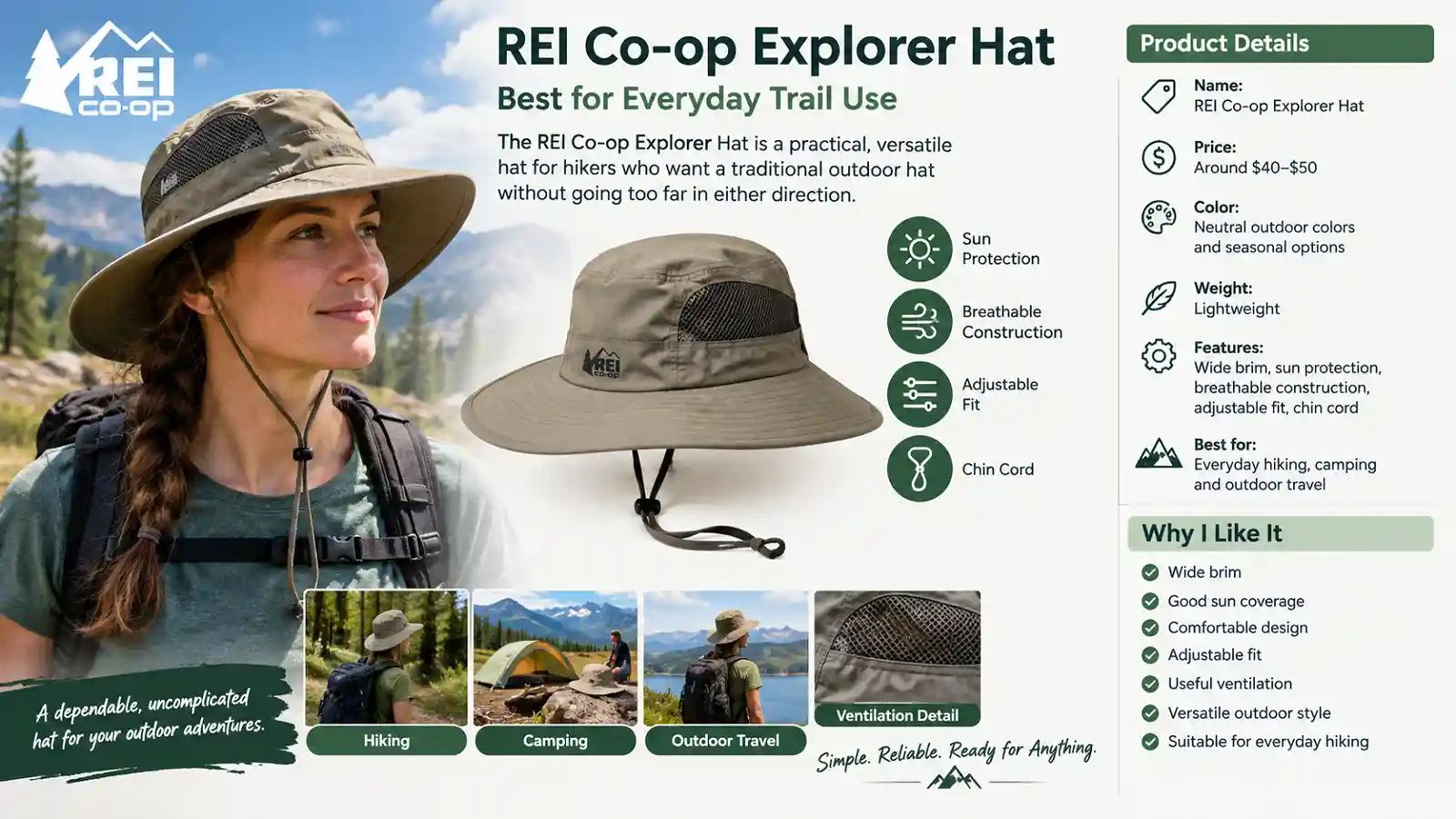
The REI Co-op Explorer Hat is another practical option for hikers who want a traditional outdoor hat without going too far in either direction.
It combines a wide brim with features designed for hiking, including ventilation and an adjustable fit. It’s the kind of hat that can work for a morning trail hike, a camping trip, or a day spent exploring outdoors.
- Wide brim
- Good sun coverage
- Comfortable design
- Adjustable fit
- Useful ventilation
- Versatile outdoor style
- Suitable for everyday hiking
It may not be the most specialized option here, but that’s part of its appeal. Sometimes a dependable, uncomplicated hiking hat is exactly what you need.
How to Choose the Best Hiking Hat
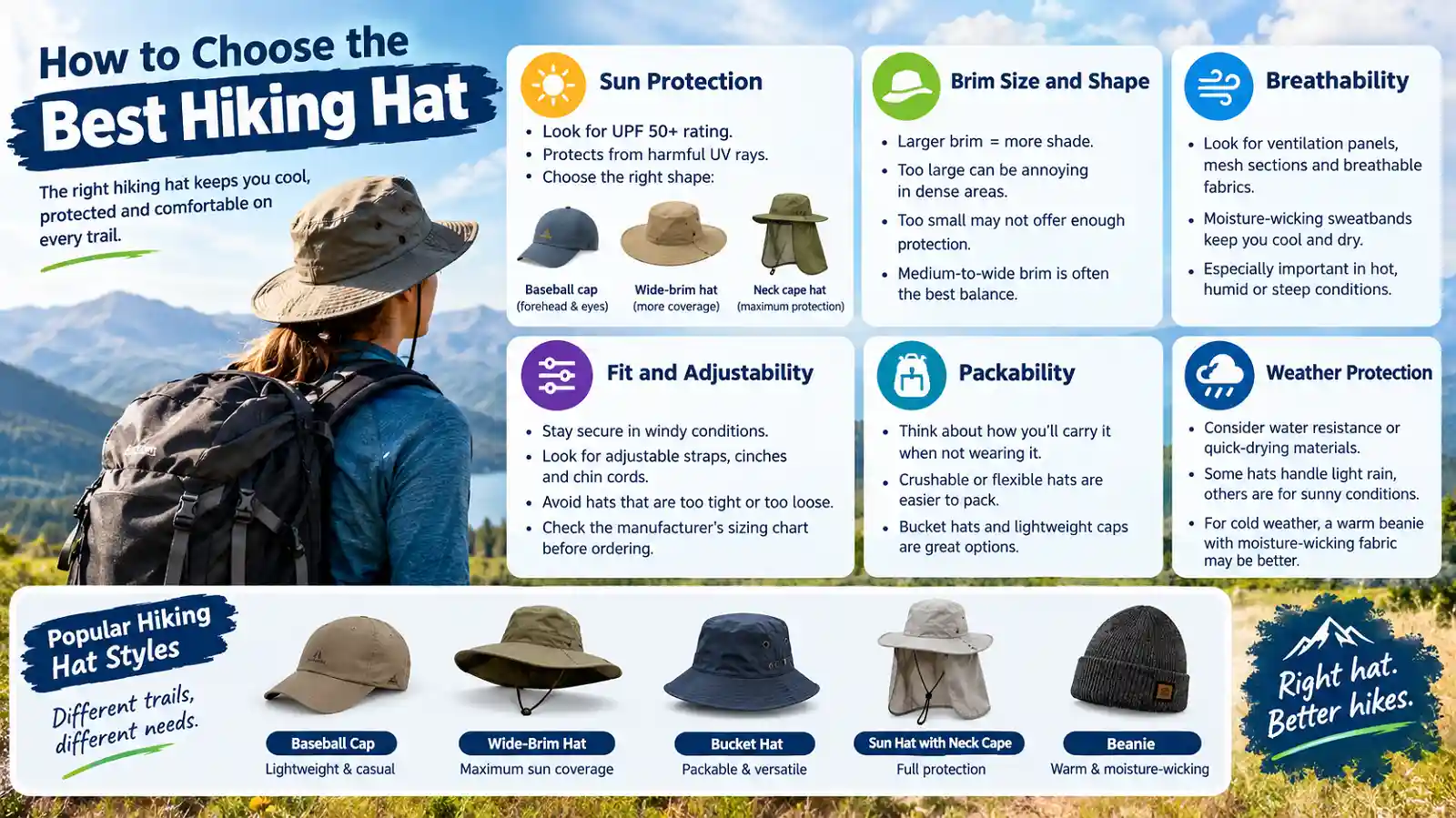
Choosing between hiking hats can be confusing because they can look similar while performing very differently on the trail. I would focus on a few important features before making a decision.
Sun Protection
Sun protection should be one of your first considerations.
Look for a hat with a strong UPF rating, particularly if you’re going to spend several hours hiking in direct sunlight. UPF describes how much UV radiation can pass through the fabric, and UPF 50+ is commonly favored for serious sun protection.
The shape of the hat also matters. A baseball cap protects your forehead and eyes but leaves your ears and neck exposed. A wide-brim hat provides much broader coverage, while a hat with a neck cape can offer even more protection.
Brim Size and Shape
A larger brim generally means more shade, but bigger isn’t always better.
A brim that’s too large can become annoying when you’re moving through dense vegetation or wearing a backpack. A brim that’s too small, on the other hand, may not provide enough protection.
For many hikers, a medium-to-wide brim offers a good balance between coverage and practicality.
Breathability
A hot head can quickly make a comfortable hike feel miserable.
Look for ventilation panels, mesh sections, breathable fabrics, and moisture-wicking sweatbands. These features help move heat and moisture away from your head during warm-weather activity.
This is especially important if you’re hiking in humid conditions or climbing steep trails.
Fit and Adjustability
A hiking hat should stay on your head when the wind picks up.
Adjustable straps, cinches, chin cords, and flexible sizing can make a big difference. A hat that’s too tight can become uncomfortable over several hours, while one that’s too loose may constantly move around.
If possible, check the manufacturer’s sizing chart before ordering.
Packability
Think about how you’ll carry the hat when you’re not wearing it.
If you travel frequently or have limited backpack space, a crushable or flexible hat can be much easier to live with. Bucket hats and lightweight caps are often particularly convenient for this reason.
Weather Protection
Sun isn’t the only thing you may encounter on the trail.
If you hike in unpredictable weather, consider whether your hat offers water resistance or quick-drying materials. Some specialized hiking hats are designed to handle light rain, while others are primarily intended for sunny conditions.
For colder hikes, a warm beanie made from a moisture-managing material may be more appropriate than a summer sun hat.
Which Hiking Hat Style Is Right for You?
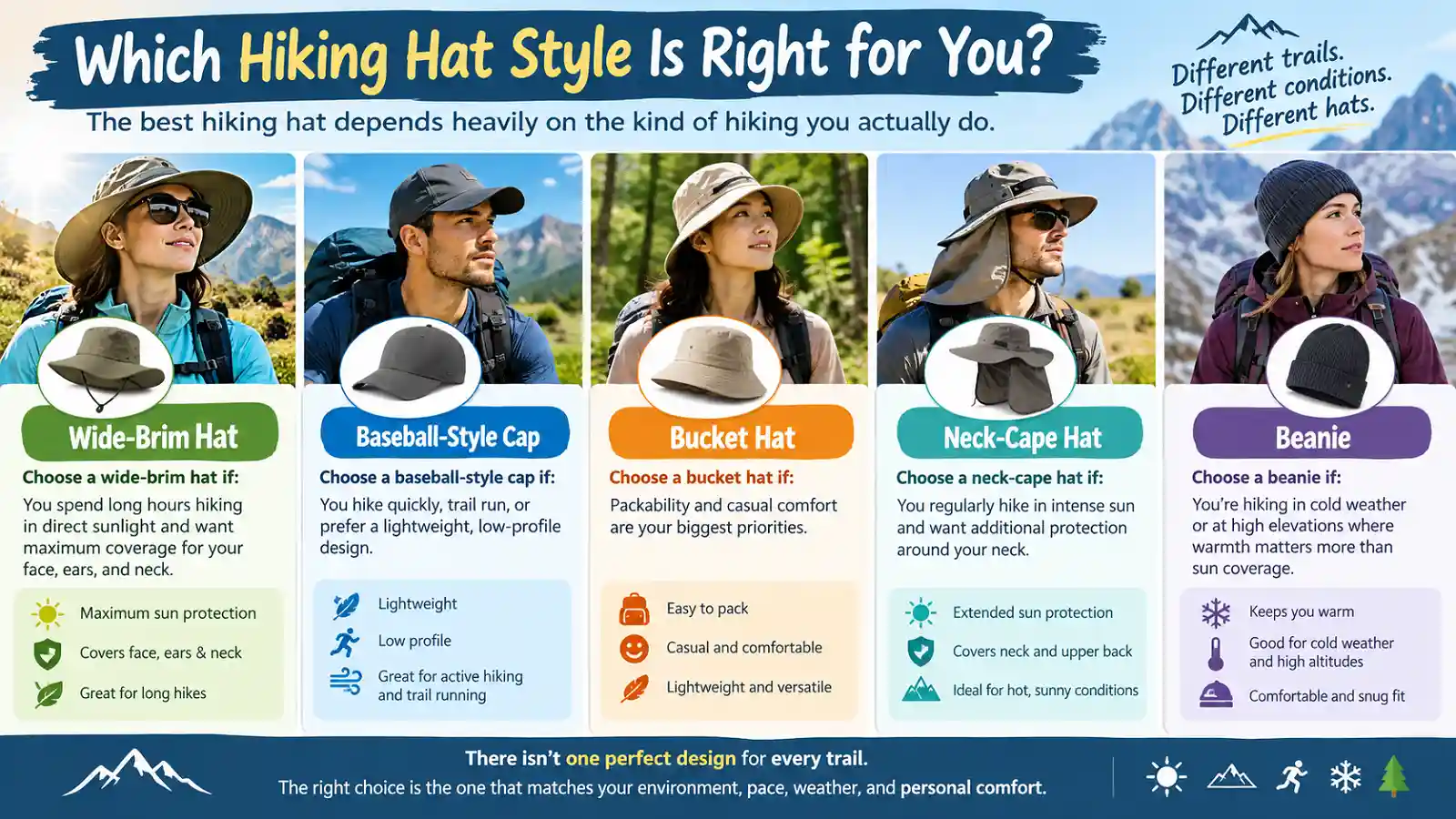
The best hiking hat depends heavily on the kind of hiking you actually do.
Choose a wide-brim hat if you spend long hours hiking in direct sunlight and want maximum coverage for your face, ears, and neck.
Choose a baseball-style cap if you hike quickly, trail run, or prefer a lightweight, low-profile design.
Choose a bucket hat if packability and casual comfort are your biggest priorities.
Choose a neck-cape hat if you regularly hike in intense sun and want additional protection around your neck.
Choose a beanie if you’re hiking in cold weather or at high elevations where warmth matters more than sun coverage.
There isn’t one perfect design for every trail. The right choice is the one that matches your environment, pace, weather, and personal comfort.
The Hat I Would Actually Take on the Trail
After spending years learning what works and what doesn’t I don’t think the best hiking hat is necessarily the one with the longest feature list. It’s the one you’ll actually keep on your head for the entire hike.
For me, that starts with comfort. A hat can have excellent sun protection, but if it feels hot, tight, floppy, or awkward with a backpack, you’re probably going to take it off when you need it most. That’s why I like looking at the whole package: coverage, ventilation, fit, weight, and how the hat behaves once you’re several miles into a hike.
For broad all-around use, the Outdoor Research Sombriolet is one of the strongest choices in this guide. If maximum sun coverage is your priority, I’d look closely at the Sunday Afternoons Adventure Hat. For something built with long-term use and travel in mind, the Tilley LTM6 Airflo is hard to ignore.
The more affordable Columbia Bora Bora II Booney is also worth considering if you don’t want to spend a lot, while hikers who prefer the feel of a traditional cap may be happier with something like the Arc’teryx Calvus Cap.
One final thing I always remind myself of after making those early hiking mistakes: gear should make the trail easier, not become another thing you have to fight with.
Choose the amount of coverage you actually need, make sure the fit is comfortable, and think about the conditions you’ll encounter rather than simply choosing the hat with the most features. If you’re hiking in strong sun, don’t underestimate how useful a good brim can be.
For additional visual reference on different hat styles and headwear, you can also browse Wikimedia Commons’ hat collection , which includes a wide range of hat types and examples.
After enough miles, I’ve found that the best gear is usually the gear I stop thinking about once I’m on the trail. A good hiking hat should be exactly that — comfortable, dependable, and there when you need it without getting in the way of the hike.
FAQs
What is the best type of hat for hiking?
A wide-brim hat is generally the best choice when sun protection is your main priority because it covers more of your face, ears, and neck. For fast hiking or trail running, a lightweight cap may be more comfortable.
Is a UPF 50 hat good for hiking?
Yes. UPF 50+ provides a high level of UV protection and is a useful feature to look for when choosing a hat for long sunny hikes.
Are wide-brim hats better than baseball caps for hiking?
They provide more overall sun coverage, particularly around the ears and neck. However, baseball caps are lighter, lower profile, and often more comfortable for fast-paced activities.
Should a hiking hat have a chin strap?
A chin strap can be very useful, especially if you hike in windy areas. It helps keep the hat secure when strong gusts could otherwise blow it away.
What material is best for a hiking hat?
Lightweight nylon and polyester are popular choices because they can provide good durability, moisture management, breathability, and sun protection. For cold-weather hiking, wool and performance synthetic materials can be better suited to maintaining warmth.
Are bucket hats good for hiking?
Yes. Bucket hats can be excellent for hikers who prioritize lightweight comfort and packability. Their coverage is generally better than a simple baseball cap but less extensive than a large wide-brim hat.
How do I keep my hiking hat from blowing away?
Choose a hat with an adjustable fit and, ideally, a chin cord. Make sure the hat fits securely without being uncomfortably tight. A properly adjusted hat is much less likely to move around when you’re hiking in windy conditions.