Best Camping Lanterns for Every Outdoor Adventure
A good camping lantern can make a surprisingly big difference once the sun goes down. It can light a cooking area, brighten a tent, help you find your gear, or simply make a campsite feel more comfortable.
I have been hiking and camping since 2018, mostly around Bakersfield, California. What started as weekend trips eventually became something I plan my year around. Along the way, I have made plenty of beginner mistakes: carrying too much weight, choosing the wrong gear, and underestimating how quickly conditions can change after sunset.
Lighting is one of those pieces of camping gear that is easy to overlook until you actually need it.
For this guide, I compared OutdoorGearLab’s extensive lantern testing with current product information from REI. OutdoorGearLab tested 25 lanterns side by side, looking at brightness, battery life, ease of use, features, and weight. The testing also included measured battery runtime rather than relying only on manufacturer claims.
Outdoor Mystery is my personal blog, not a company. I write these guides myself. When I recommend gear, it is either equipment I have personally used or something I have researched carefully. If I have not personally tested a particular product, I will not pretend that I have.
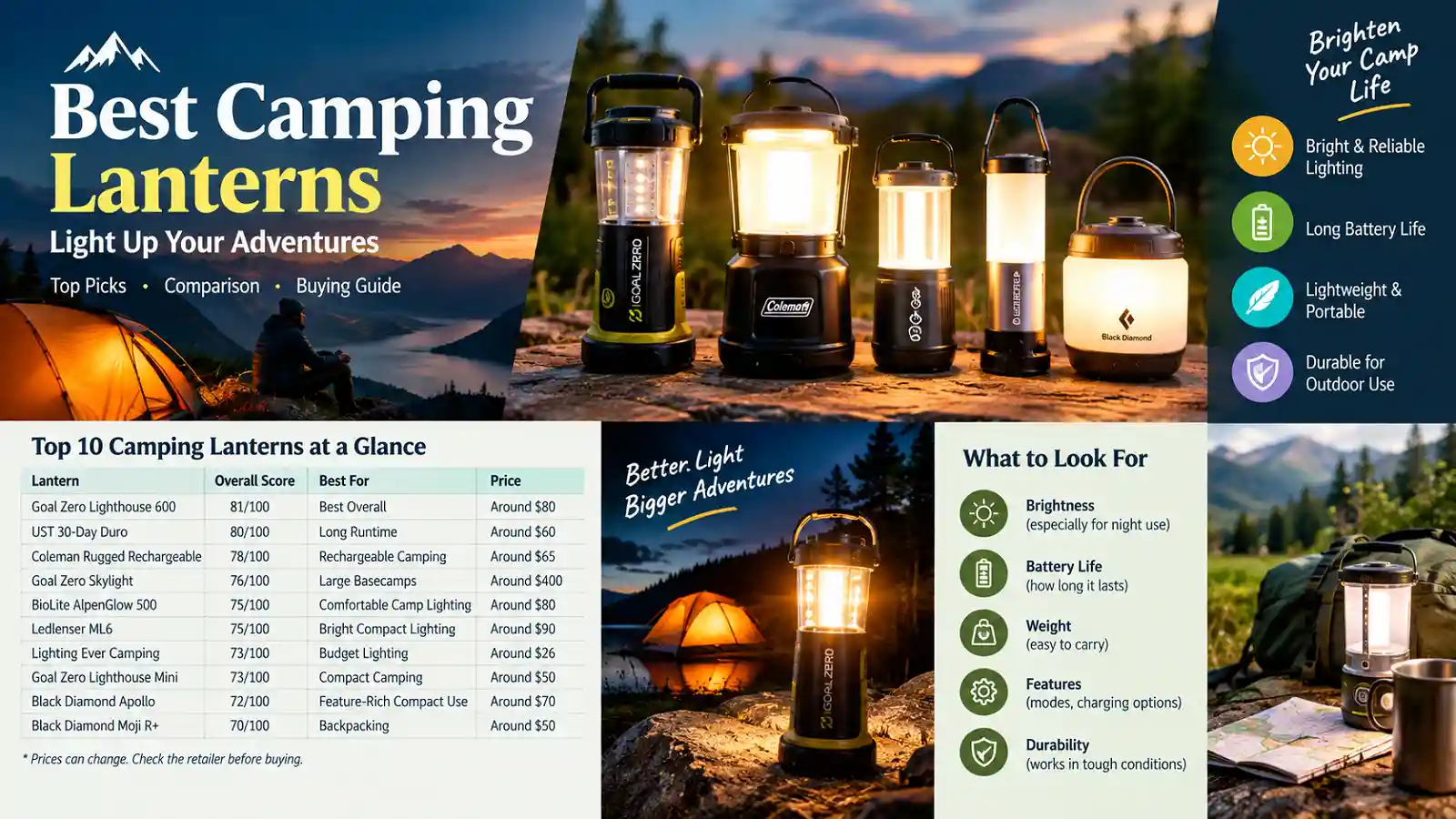
Best Camping Lanterns at a Glance
| Lantern | Overall Score | Best For | Price |
|---|---|---|---|
| Goal Zero Lighthouse 600 | 81/100 | Best Overall | Around $80 |
| UST 30-Day Duro | 80/100 | Long Runtime | Around $60 |
| Coleman Rugged Rechargeable | 78/100 | Rechargeable Camping | Around $65 |
| Goal Zero Skylight | 76/100 | Large Basecamps | Around $400 |
| BioLite AlpenGlow 500 | 75/100 | Comfortable Camp Lighting | Around $80 |
| Ledlenser ML6 | 75/100 | Bright Compact Lighting | Around $90 |
| Lighting Ever Camping | 73/100 | Budget Lighting | Around $26 |
| Goal Zero Lighthouse Mini | 73/100 | Compact Camping | Around $50 |
| Black Diamond Apollo | 72/100 | Feature-Rich Compact Use | Around $70 |
| Black Diamond Moji R+ | 70/100 | Backpacking | Around $50 |
Prices can change. Check the retailer before buying.
Camping Lantern Comparison Table
One thing I wanted to keep consistent throughout this guide is the testing methodology. Instead of creating my own arbitrary product scores, the performance ratings below follow OutdoorGearLab’s published testing data.
The weight figures include batteries, and the runtime figures refer to measured high-setting performance where OutdoorGearLab provided it.
| Product | Overall | Brightness | Battery Life | Ease of Use | Features | Weight | Tested Runtime | Max Output |
|---|---|---|---|---|---|---|---|---|
| Goal Zero Lighthouse 600 | 81 | 9.0 | 6.0 | 9.0 | 8.0 | 6.5 | 3.2 hrs | 600 lm |
| UST 30-Day Duro | 80 | 9.0 | 9.0 | 7.0 | 6.0 | 4.8 | 9.0 hrs | 1,000 lm |
| Coleman Rugged Rechargeable | 78 | 8.0 | 8.0 | 9.0 | 6.0 | 6.1 | 6.4 hrs | 400 lm |
| Goal Zero Skylight | 76 | 10.0 | 7.0 | 5.0 | 8.0 | 1.0 | 3.1 hrs\* | 6,000 lm |
| BioLite AlpenGlow 500 | 75 | 7.0 | 7.0 | 9.0 | 8.0 | 7.5 | 5.1 hrs | 500 lm |
| Ledlenser ML6 | 75 | 8.0 | 7.0 | 7.0 | 6.0 | 8.1 | 4.25 hrs | 750 lm |
| Lighting Ever Camping | 73 | 7.0 | 9.0 | 7.0 | 6.0 | 7.4 | 10.5 hrs | 1,000 lm |
| Goal Zero Lighthouse Mini | 73 | 7.0 | 6.0 | 9.0 | 7.0 | 8.5 | 3.75 hrs | 210 lm |
| Black Diamond Apollo | 72 | 7.0 | 5.0 | 9.0 | 9.0 | 8.1 | 2.75 hrs | 250 lm |
| Black Diamond Moji R+ | 70 | 6.0 | 8.2 | 8.0 | 6.0 | 8.9 | 5.3 hrs | 200 lm |
The Goal Zero Skylight result was tested using its external battery configuration.
How We Evaluated These Camping Lanterns
OutdoorGearLab’s scoring system gives the greatest importance to brightness because the main purpose of a lantern is to provide useful illumination.
The published methodology considers:
- Brightness — 45%
- Battery Life — 20%
- Ease of Use — 10%
- Features — 15%
- Weight — 10%
That makes the comparison more useful than simply sorting lanterns by their advertised lumen numbers.
Battery life is particularly important because manufacturers often quote the longest runtime using the lowest brightness setting. A lantern that claims dozens of hours of runtime may run for only a few hours when used at maximum output.
1. Goal Zero Lighthouse 600
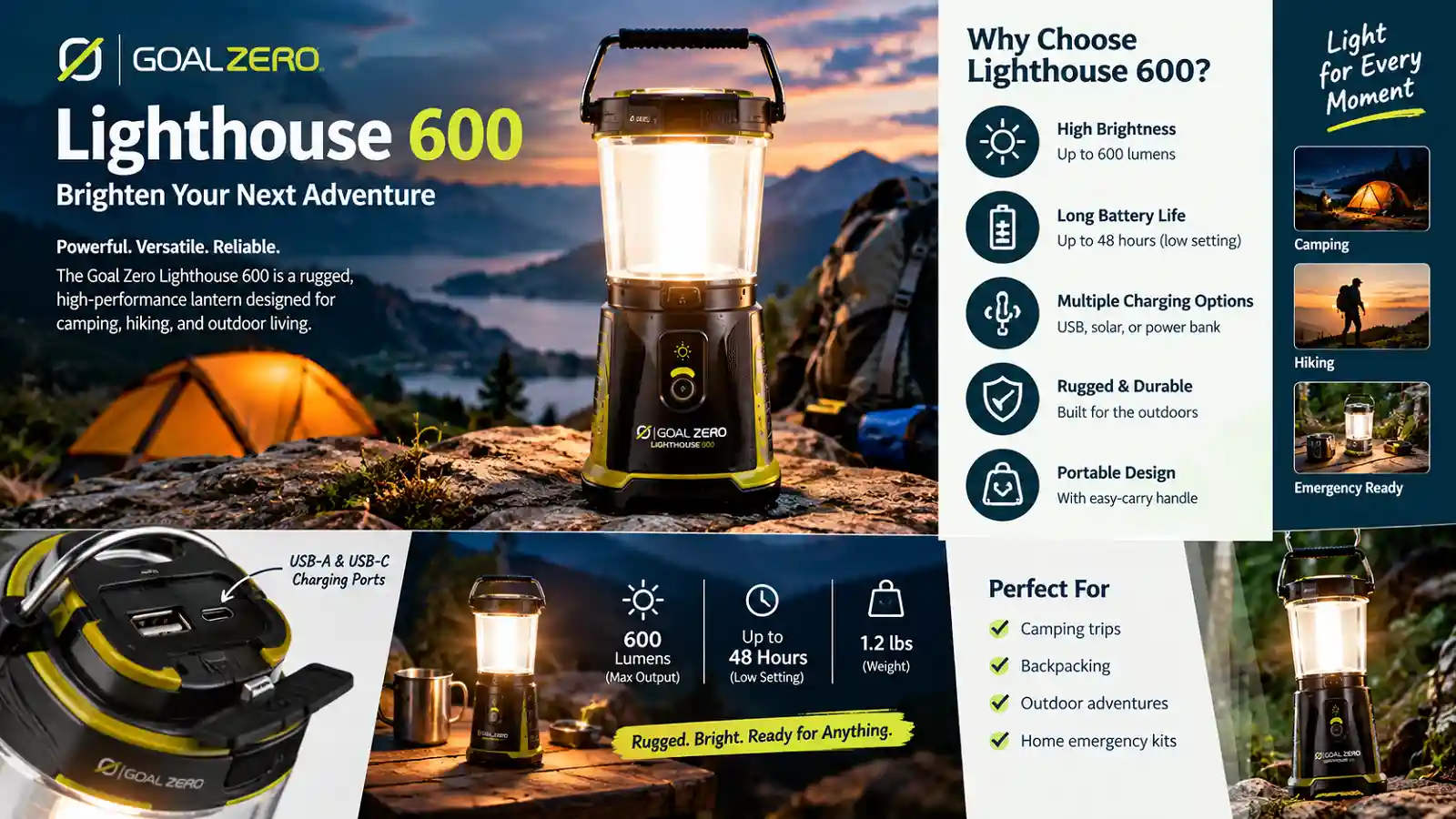
Goal Zero Lighthouse 600 for Camping and Outdoor Adventures
Best Overall Camping Lantern
Overall Score: 81/100
The Goal Zero Lighthouse 600 is the most versatile option in this comparison.
It produces up to 600 lumens and combines rechargeable power with USB charging, USB output and a hand-crank backup. That makes it useful for normal camping as well as unexpected power outages.
OutdoorGearLab measured approximately 3.2 hours at maximum output, while REI’s 2026 testing lists the lantern at 600 lumens with a 5,200mAh rechargeable battery.
Testing Scores
- Brightness: 9.0/10
- Battery Life: 6.0/10
- Ease of Use: 9.0/10
- Features: 8.0/10
- Weight: 6.5/10
- Overall: 81/100
Specifications
- Weight with battery: 19.8 oz
- Maximum output: 600 lumens
- Tested high runtime: 3.2 hours
- Battery: Rechargeable
- USB output: Yes
- Hand-crank backup: Yes
Pros
- Bright
- Rechargeable
- USB power output
- Hand-crank backup
- Easy controls
Cons
- Heavier than backpacking lanterns
- More expensive than basic models
- High brightness drains the battery faster
Price vs. Value
At around $80, the Lighthouse 600 isn’t the cheapest lantern, but its combination of brightness, charging flexibility and emergency features gives it a lot of practical use.
Car camping, family camping, emergencies and general outdoor use.
2. UST 30-Day Duro
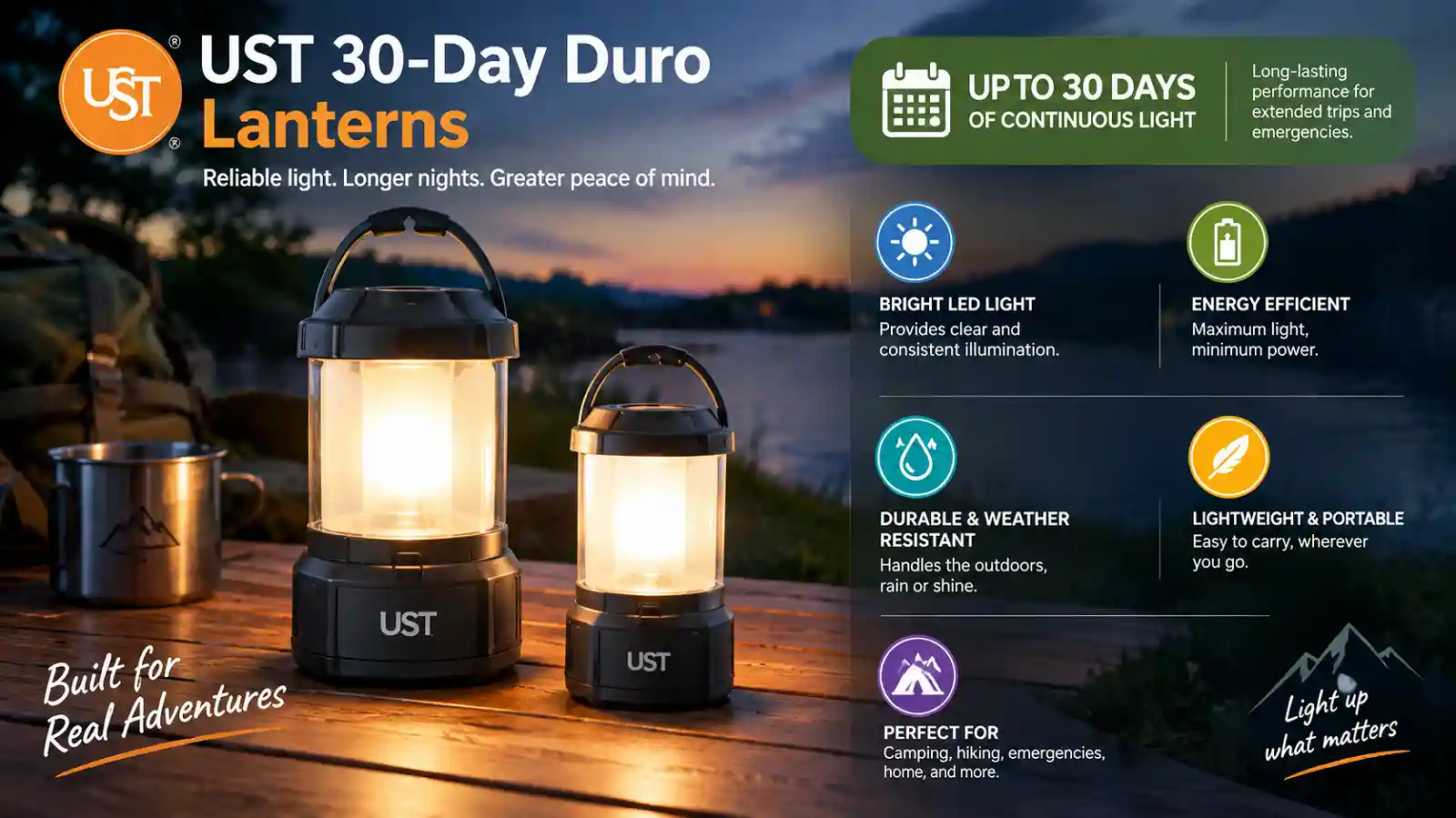
UST 30-Day Duro Lanterns offer dependable, long-lasting illumination for camping, outdoor adventures, and emergency use.
Best for Long Battery Life
Overall Score: 80/100
The UST 30-Day Duro is an interesting choice if you care more about runtime than having a rechargeable battery.
It produces up to 1,000 lumens and uses three D batteries. OutdoorGearLab measured about 9 hours at maximum brightness, while its lowest setting can last dramatically longer.
Testing Scores
- Brightness: 9.0/10
- Battery Life: 9.0/10
- Ease of Use: 7.0/10
- Features: 6.0/10
- Weight: 4.8/10
- Overall: 80/100
Specifications
- Weight with batteries: 29.3 oz
- Maximum output: 1,000 lumens
- Tested high runtime: 9 hours
- Battery: 3 × D
- Rechargeable: No
- Water resistance: IPX4
Pros
- Excellent runtime
- Very bright
- Affordable
- Good for emergencies
- Multiple brightness options
Cons
- Heavy
- Uses disposable batteries
- Less convenient for backpacking
Emergency kits, RVs and car camping.
3. Coleman Rugged Rechargeable
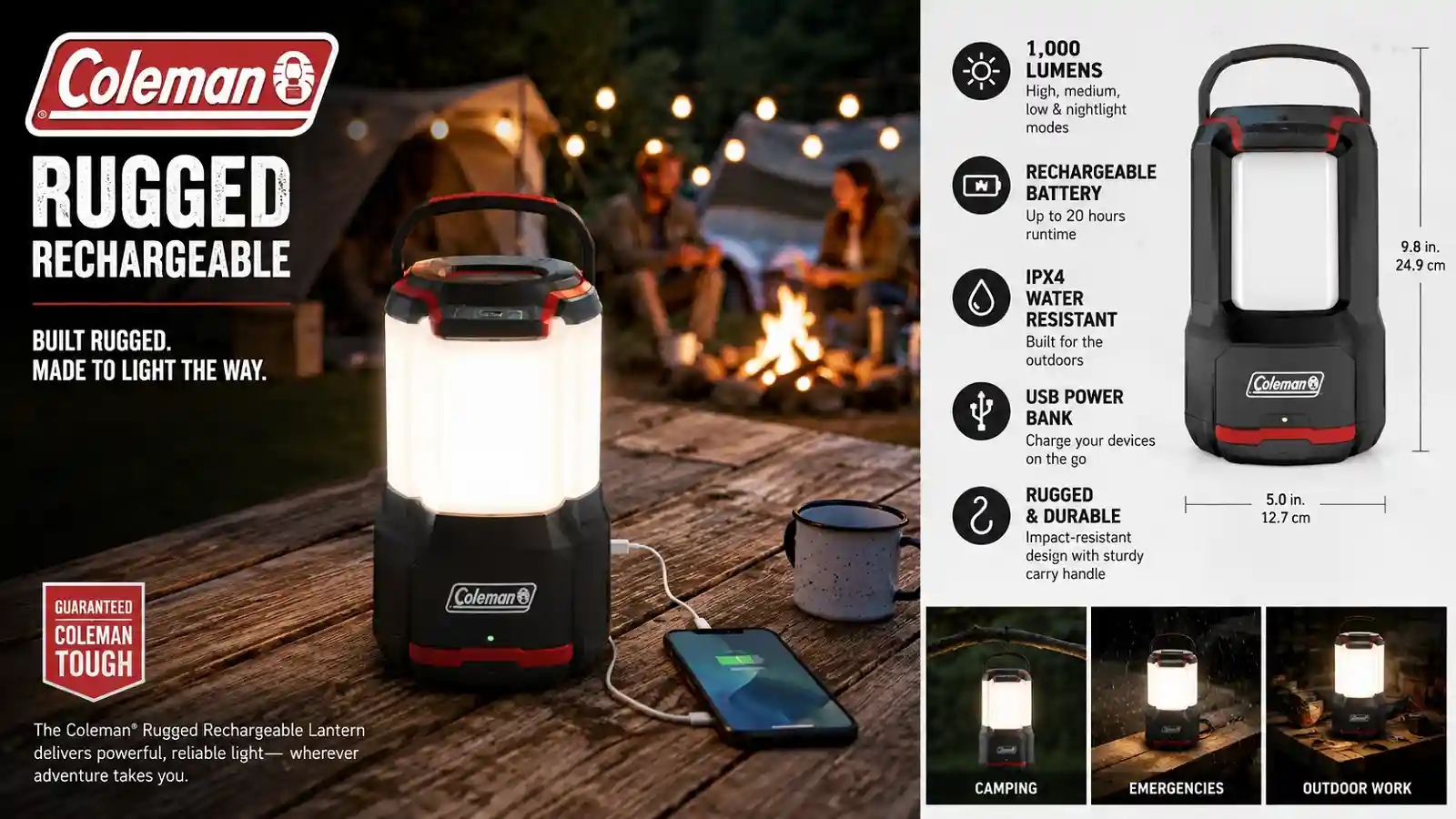
Coleman Rugged Rechargeable Lantern for reliable outdoor lighting
Best Rechargeable Camping Lantern
Overall Score: 78/100
The Coleman Rugged Rechargeable focuses on straightforward operation.
Its 400-lumen output is enough for a normal campsite, and the rechargeable battery eliminates the need to carry multiple sets of disposable batteries.
OutdoorGearLab measured approximately 6.4 hours at maximum output.
Testing Scores
- Brightness: 8.0/10
- Battery Life: 8.0/10
- Ease of Use: 9.0/10
- Features: 6.0/10
- Weight: 6.1/10
- Overall: 78/100
Specifications
- Weight: 22 oz
- Maximum output: 400 lumens
- Tested runtime: 6.4 hours
- Battery: Rechargeable lithium-ion
- Water resistance: IPX4
Pros
- Easy controls
- Rechargeable
- Good battery life
- Solid camping design
Cons
- Relatively bulky
- Not the lightest option
- Less powerful than 600–1,000-lumen models
Regular camping and emergency lighting.
4. Goal Zero Skylight
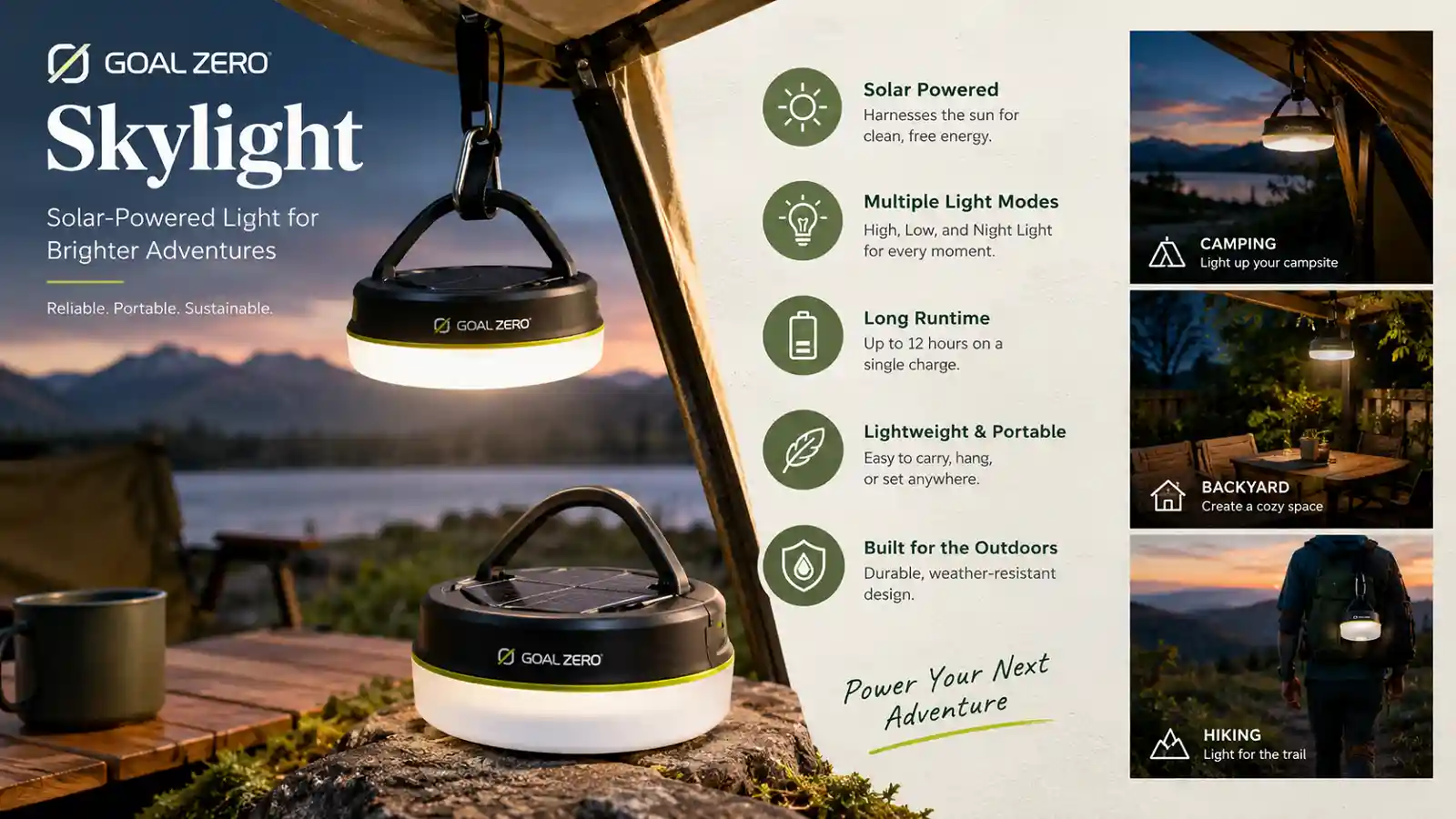
Goal Zero Skylight solar lantern for camping and outdoor adventures.
Best for Large Basecamps
Overall Score: 76/100
The Goal Zero Skylight is in a completely different category from a normal camping lantern.
It can produce up to 6,000 lumens and extends to around 12 feet using its tripod. OutdoorGearLab gave it a perfect brightness score.
This isn’t something I would recommend carrying on a backpacking trip. It’s designed for large camps, basecamps, emergency areas and situations where maximum coverage matters.
Testing Scores
- Brightness: 10.0/10
- Battery Life: 7.0/10
- Ease of Use: 5.0/10
- Features: 8.0/10
- Weight: 1.0/10
- Overall: 76/100
Specifications
- Weight: 14.1 lb
- Maximum output: 6,000 lumens
- Tested runtime: 3.1 hours
- Height: Up to 12 feet
- Water resistance: IPX4
Pros
- Extremely bright
- Huge coverage area
- Tall tripod
- Excellent for basecamp
Cons
- Extremely heavy
- Expensive
- Not backpacking equipment
Basecamps, large groups and emergency lighting.
5. BioLite AlpenGlow 500
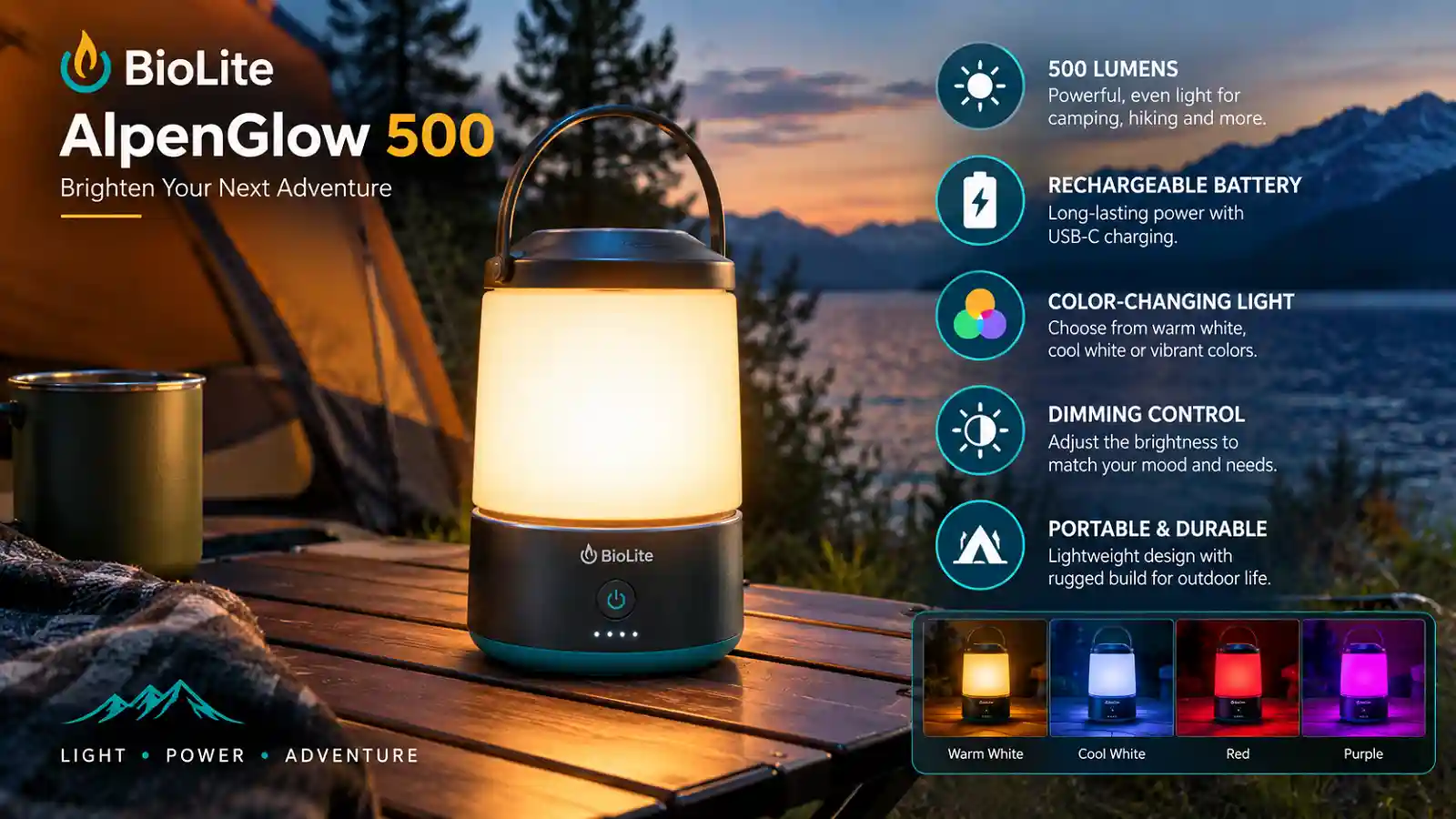
BioLite AlpenGlow 500 lantern providing bright, versatile light for camping.
Best for Comfortable Campsite Lighting
Overall Score: 75/100
The BioLite AlpenGlow 500 is aimed at campers who care about the quality and feel of the light, not just raw brightness.
It offers multiple lighting modes, color options and a rechargeable battery. OutdoorGearLab measured about 5.1 hours at maximum output.
Testing Scores
- Brightness: 7.0/10
- Battery Life: 7.0/10
- Ease of Use: 9.0/10
- Features: 8.0/10
- Weight: 7.5/10
- Overall: 75/100
Specifications
- Weight: 13.8 oz
- Maximum output: 500 lumens
- Tested runtime: 5.1 hours
- Battery: Rechargeable
- Water resistance: IPX4
Pros
- Comfortable light
- Multiple modes
- Rechargeable
- Easy controls
- Good campsite ambience
Cons
- More expensive than basic lanterns
- Not the lightest option
- Some features are primarily for ambience
Family camping, outdoor dinners and comfortable campsites.
6. Ledlenser ML6
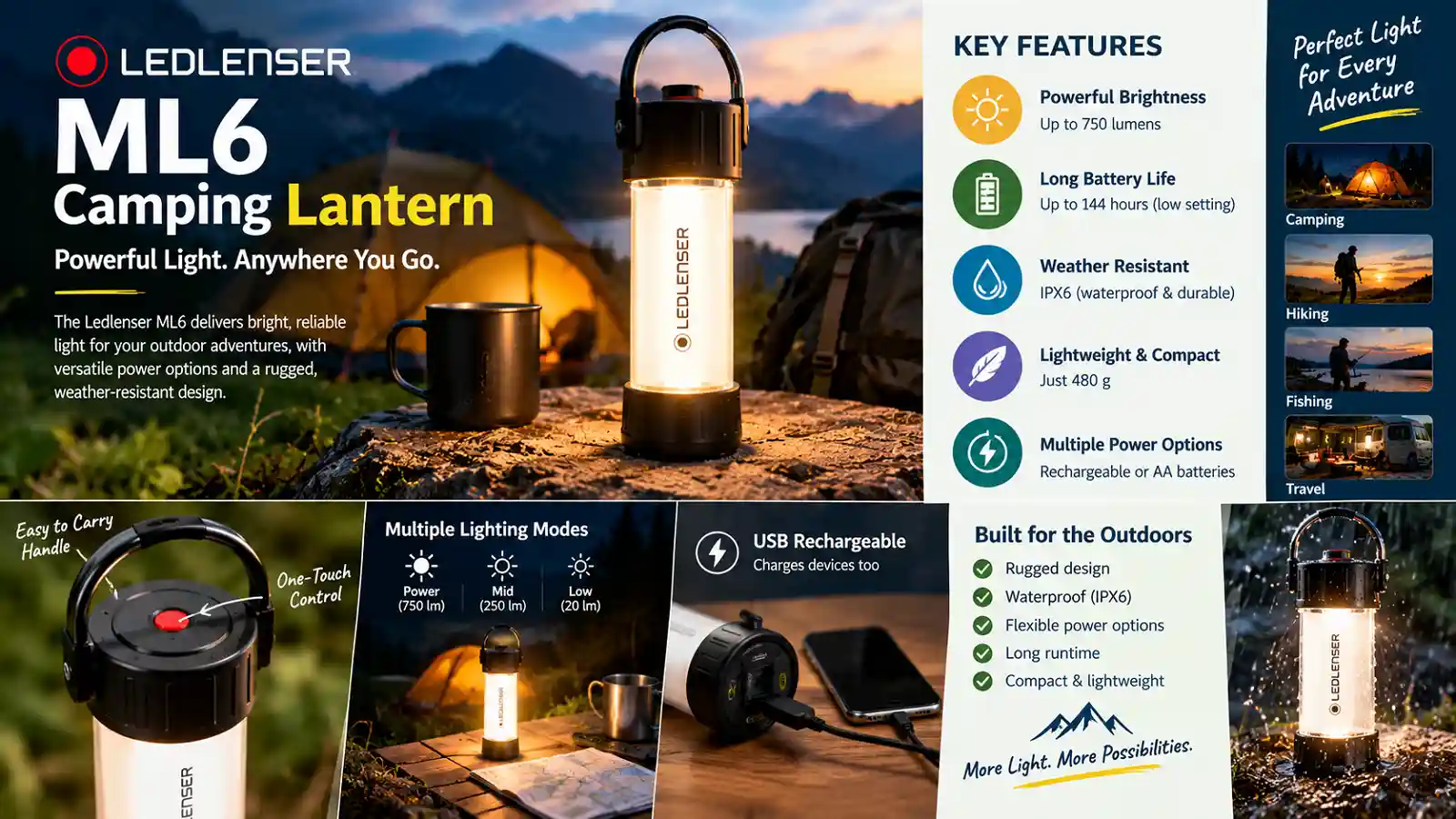
Ledlenser ML6 Camping Lantern for Outdoor Adventures
Best Bright Compact Lantern
Overall Score: 75/100
The Ledlenser ML6 offers a useful balance between brightness and portability.
It produces up to 750 lumens while weighing less than 10 ounces. OutdoorGearLab measured around 4.25 hours at maximum brightness.
Testing Scores
- Brightness: 8.0/10
- Battery Life: 7.0/10
- Ease of Use: 7.0/10
- Features: 6.0/10
- Weight: 8.1/10
- Overall: 75/100
Specifications
- Weight: 9.9 oz
- Maximum output: 750 lumens
- Tested runtime: 4.25 hours
- Battery: Rechargeable
- Water resistance: IP54
Pros
- Bright
- Relatively lightweight
- Rechargeable
- Compact
- Useful light modes
Cons
- Expensive
- Controls take some learning
- Not as small as minimalist lanterns
Campers who want high brightness without a huge lantern.
7. Lighting Ever Camping Lantern
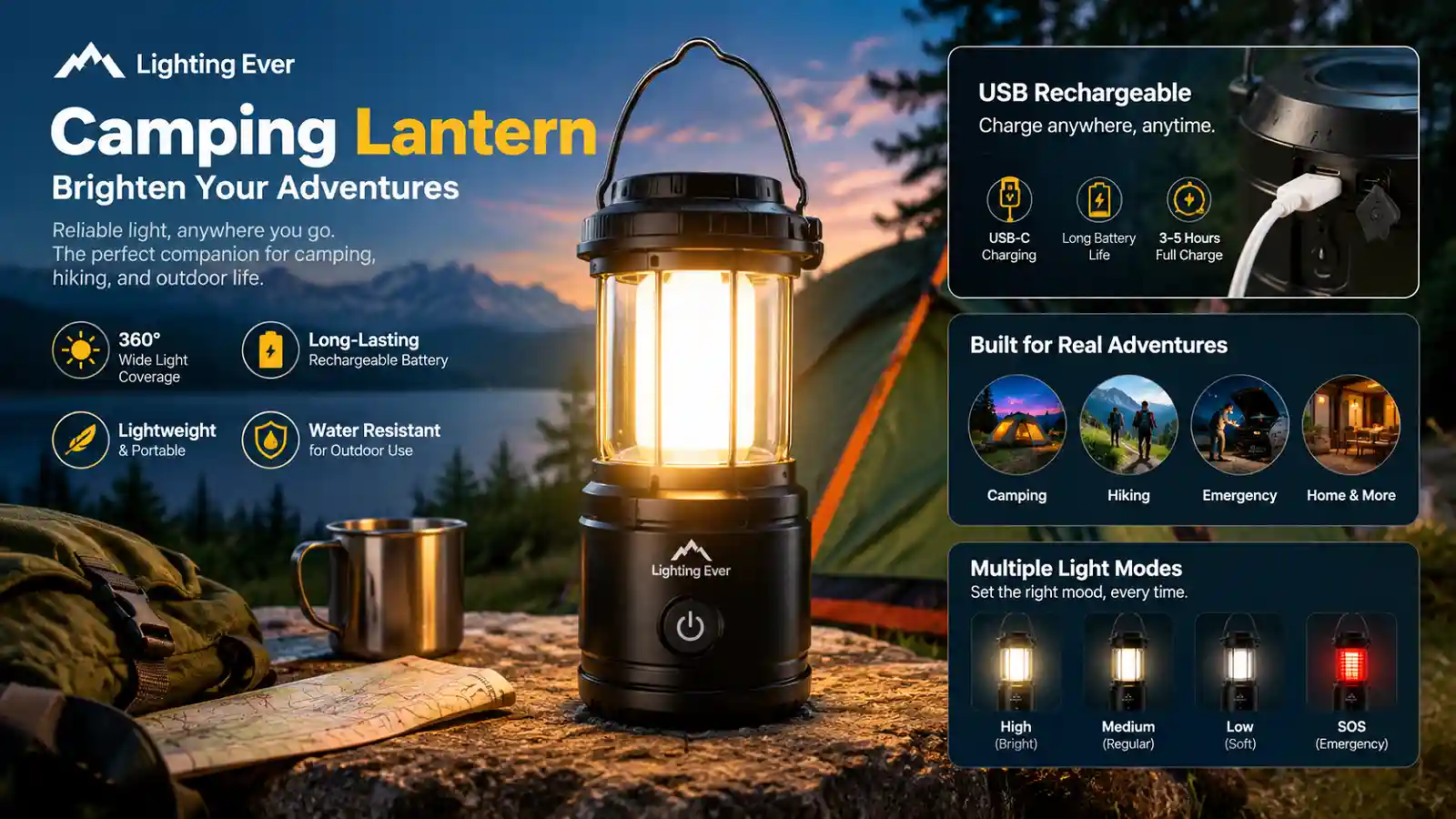
Lighting Ever Camping Lantern providing bright, portable lighting for camping and outdoor adventures.
Best Budget Option
Overall Score: 73/100
If you don’t want to spend a lot, the Lighting Ever Camping Lantern is worth looking at.
It offers up to 1,000 lumens and OutdoorGearLab measured approximately 10.5 hours at maximum output.
That’s a particularly interesting combination when you consider its relatively low price.
Testing Scores
- Brightness: 7.0/10
- Battery Life: 9.0/10
- Ease of Use: 7.0/10
- Features: 6.0/10
- Weight: 7.4/10
- Overall: 73/100
Specifications
- Weight: 14 oz
- Maximum output: 1,000 lumens
- Tested runtime: 10.5 hours
- Battery: 3 × D
- Water resistance: IPX4
Pros
- Bright
- Excellent runtime
- Low price
- Multiple lighting modes
Cons
- Not rechargeable
- Requires D batteries
- Limited advanced features
Budget camping and emergency use
8. Goal Zero Lighthouse Mini
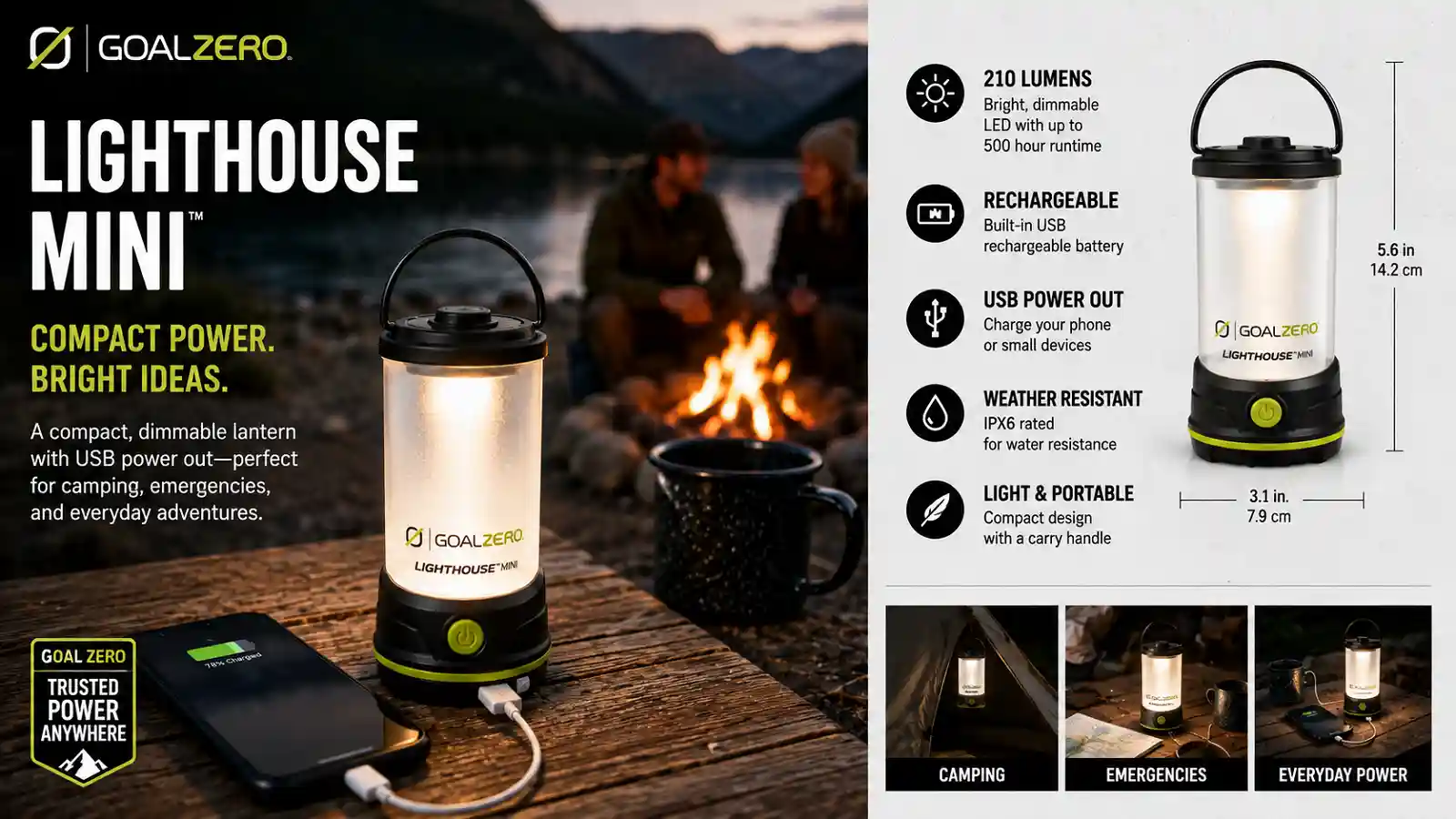
Goal Zero Lighthouse Mini provides compact lighting and portable USB power for camping.
Best Compact Rechargeable Lantern
Overall Score: 73/100
The Lighthouse Mini is a smaller version of the Lighthouse concept.
It produces up to 210 lumens and weighs only around 8 ounces. Its USB output is also useful when you need to give a small device a little extra power.
Testing Scores
- Brightness: 7.0/10
- Battery Life: 6.0/10
- Ease of Use: 9.0/10
- Features: 7.0/10
- Weight: 8.5/10
- Overall: 73/100
Specifications
- Weight: 8 oz
- Maximum output: 210 lumens
- Tested runtime: 3.75 hours
- Battery: Rechargeable
- USB output: Yes
Pros
- Lightweight
- Compact
- Rechargeable
- Easy to operate
- USB output
Cons
- Not bright enough for large camps
- No solar charging
- Limited coverage
Backpacking, small tents and emergency kits.
9. Black Diamond Apollo
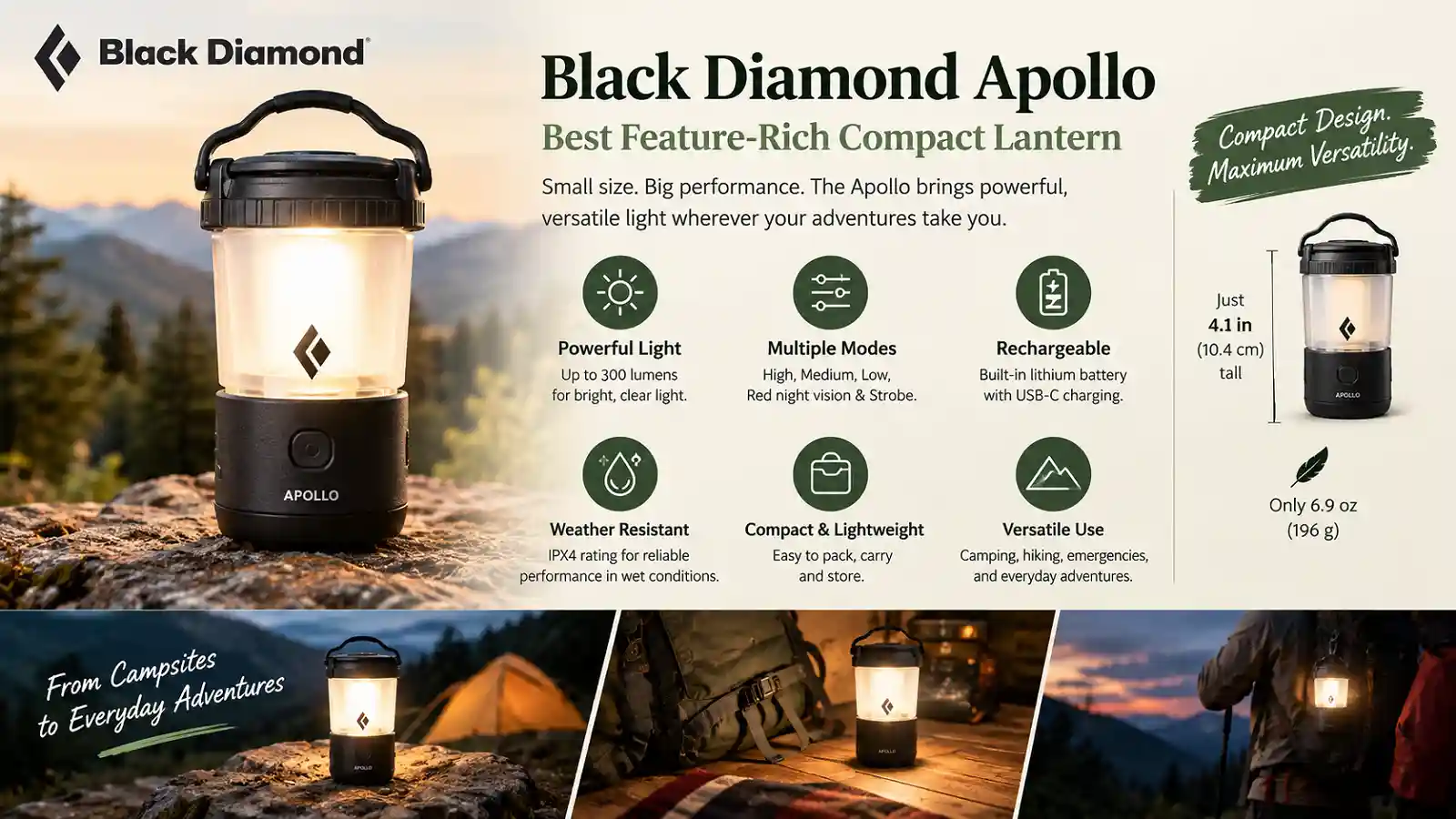
Black Diamond Apollo — a feature-rich compact lantern for camping and outdoor adventures.
Best Feature-Rich Compact Lantern
Overall Score: 72/100
The Black Diamond Apollo is small but practical.
It has a compact tripod-style base, dimming, hanging options and a rechargeable battery system. Its strong ease-of-use and feature scores make it particularly useful for campers who don’t want complicated controls.
Testing Scores
- Brightness: 7.0/10
- Battery Life: 5.0/10
- Ease of Use: 9.0/10
- Features: 9.0/10
- Weight: 8.1/10
- Overall: 72/100
Specifications
- Weight: 10.2 oz
- Maximum output: 250 lumens
- Tested runtime: 2.75 hours
- Battery: 3 × AA
- Water resistance: IPX4
Pros
- Excellent controls
- Compact
- Good hanging system
- Durable
- Useful features
Cons
- Limited brightness
- Runtime is shorter at maximum output
- Not intended for large camps
Small campsites and tents.
10. Black Diamond Moji R+
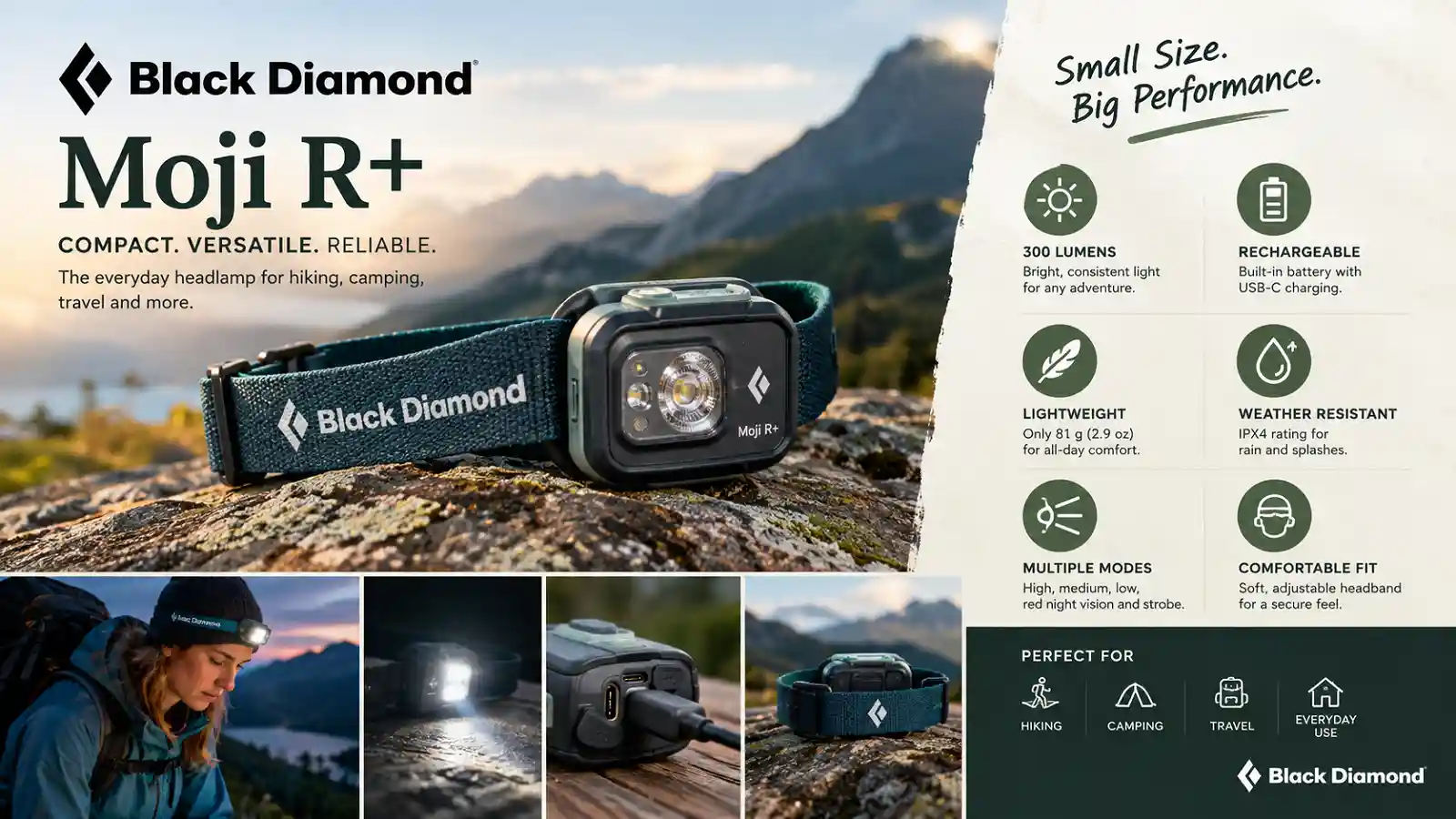
Black Diamond Moji R+ headlamp with key features for outdoor adventures.
Best for Backpacking
Overall Score: 70/100
If you care about keeping your pack light, the Black Diamond Moji R+ deserves a look.
It weighs only about 5.8 ounces and produces up to 200 lumens. OutdoorGearLab measured around 5.3 hours at maximum brightness.
That’s enough for personal lighting and small campsite use without carrying a large lantern.
Testing Scores
- Brightness: 6.0/10
- Battery Life: 8.2/10
- Ease of Use: 8.0/10
- Features: 6.0/10
- Weight: 8.9/10
- Overall: 70/100
Specifications
- Weight: 5.8 oz
- Maximum output: 200 lumens
- Tested runtime: 5.3 hours
- Battery: Rechargeable
- Water resistance: IPX4
Pros
- Very lightweight
- Compact
- Rechargeable
- Good battery performance
- Easy to hang
Cons
- Lower maximum brightness
- Small coverage area
- Not ideal for large groups
Backpackers, solo campers and minimalist gear setups.
Price vs. Value
The cheapest lantern isn’t automatically the best value.
For example, the Lighting Ever Camping Lantern costs much less than the Goal Zero Lighthouse 600, but the Lighthouse 600 adds rechargeable power, USB output and a hand-crank backup.
Likewise, the Goal Zero Skylight costs dramatically more than a normal camping lantern, but its 6,000-lumen output and tall tripod put it into a completely different category.
I would think about value according to how you camp:
| Budget | What to Look For | Good Option |
|---|---|---|
| Under $40 | Basic high-output lighting | Lighting Ever |
| $40–$70 | Compact or long-runtime lantern | UST / Moji R+ |
| $70–$100 | Rechargeable premium lantern | Lighthouse 600 / AlpenGlow 500 |
| $300+ | Large-area lighting | Goal Zero Skylight |
Important: These are price ranges, not overall product rankings. The right value depends on what you actually need from the lantern.
Useful Outdoor Mystery Guides
A good lantern is only one part of a useful camping setup.
If you’re building your hiking and camping kit, I’d also recommend reading **Are Hiking Poles Worth It? A Practical Guide for Beginners**. That guide explains when trekking poles actually help, when they are unnecessary, and how to choose and use them.
You can also browse the Outdoor Mystery gear guides for more articles about packs, poles, water filtration and other hiking essentials.
When putting together your gear, I prefer to think in terms of what solves a real problem rather than simply buying more equipment.
How Many Lumens Do You Need?
You probably need fewer lumens than you think.
50–100 Lumens
Good for:
- Personal lighting
- Reading
- Tent ambience
- Emergency backup
100–250 Lumens
Good for:
- Small tents
- Backpacking
- Solo or two-person camps
- Basic cooking
250–600 Lumens
Good for:
- Family camping
- Cooking areas
- Picnic tables
- Larger tents
600–1,000 Lumens
Useful for:
- Large campsites
- Group camping
- Emergency lighting
1,000+ Lumens
Best reserved for situations where you genuinely need substantial area illumination.
You don’t need a 6,000-lumen lantern simply because it is available. For most campers, that would mean carrying unnecessary weight and spending more money.
Rechargeable vs. Battery-Powered Lanterns
Rechargeable
Rechargeable lanterns are convenient and reduce the need to carry spare batteries.
They work particularly well if you already bring a power bank on longer trips.
Disposable Batteries
Battery-powered lanterns can make sense for emergency kits because you can store spare batteries separately.
The UST 30-Day Duro and Lighting Ever Camping lanterns are examples of models where replaceable batteries contribute to long runtime.
Solar
Solar charging can be useful on longer trips, especially when you have reliable sunlight.
However, I wouldn’t depend on solar alone for an important trip. Weather and tree cover can make charging unpredictable.
Don’t Forget a Headlamp
A lantern and a headlamp do different jobs.
A lantern lights your campsite.
A headlamp helps you walk away from it.
I would rather carry a compact lantern plus a lightweight headlamp than depend on one device for everything.
If you are already trying to reduce the weight of your hiking kit, this is another reason to think carefully about lantern size. The same principle applies to other gear: the best setup is usually the one that gives you the function you need without unnecessary weight.
Camping Lantern Safety
A few simple rules are worth remembering.
Keep fuel lanterns outside
Never use a fuel-burning lantern inside a tent.
Keep hot lanterns away from fabric
Traditional fuel lanterns can become extremely hot.
Don’t stare directly into high-output LEDs
A very bright LED can be uncomfortable and potentially harmful to your eyes.
Protect glass components
If you use a traditional lantern with glass, pack it carefully.
Recharge before every trip
Don’t assume a rechargeable lantern is full just because you charged it weeks ago.
Carry a backup light
A headlamp or small flashlight can be extremely useful if your primary lantern stops working.
Our Take on the Best Camping Lanterns
After years of hiking and camping, I’ve learned that good outdoor gear isn’t necessarily the gear with the biggest numbers.
The best camping lantern for you depends on what you’re actually doing.
If I were setting up a general-purpose campsite, the Goal Zero Lighthouse 600 would make a lot of sense because it combines strong brightness with rechargeable power, USB output and emergency backup features.
If runtime matters most, the UST 30-Day Duro is worth considering.
For backpacking, I’d pay much more attention to weight. That’s where the Black Diamond Moji R+ becomes appealing.
For comfortable campsite lighting, the BioLite AlpenGlow 500 offers more than just raw brightness.
And if you’re trying to spend as little as possible, the Lighting Ever Camping Lantern provides an interesting combination of brightness and measured runtime.
The important thing is not to buy the biggest or brightest lantern just because it looks impressive on a product page.
Think about weight, brightness, battery life, charging method, durability and how you actually camp.
That’s usually enough to narrow the list down quickly.
And before your next trip, don’t forget the rest of your gear. A lantern can make camp much more comfortable, but practical equipment such as hiking poles, a reliable water system and basic safety gear can matter just as much once you’re away from the trailhead.
Frequently Asked Questions About Camping Lanterns
Here are quick answers to common questions based on the information covered in this guide.
How many lumens do I need for camping?
For personal lighting and small tents, 50–250 lumens can be enough. Around 250–600 lumens works well for family camping, cooking areas and picnic tables, while 600–1,000 lumens can be useful for larger campsites and group camping.
Are rechargeable camping lanterns better for regular camping?
Rechargeable lanterns are convenient because they reduce the need to carry spare disposable batteries. They can work particularly well when you already bring a power bank on longer trips.
Are battery-powered lanterns useful for emergencies?
Yes. Battery-powered lanterns can make sense for emergency kits because spare batteries can be stored separately. The UST 30-Day Duro and Lighting Ever Camping lantern are examples discussed in this guide.
Should I carry a lantern and a headlamp?
They serve different purposes. A lantern lights your campsite, while a headlamp helps you move away from camp. The guide recommends thinking of them as complementary rather than relying on one device for everything.
Do I need a 1,000-lumen or brighter lantern?
Not necessarily. Higher output is useful when you need substantial area illumination, but most campers should choose brightness according to the size of the campsite and the tasks they actually need to perform.
Can I use a fuel-burning lantern inside a tent?
No. The camping safety section states that fuel-burning lanterns should be kept outside the tent. Traditional fuel lanterns can also become extremely hot, so they should be kept away from fabric.
Should I rely on solar charging alone on a camping trip?
The guide advises against depending on solar alone for an important trip because weather and tree cover can make charging unpredictable.