10 Best Waterproof Jackets for Hiking, Camping & Everyday Rainy Days
Rain has a funny way of exposing bad decisions.
I know that feeling from other parts of life, too. Five years ago, I was the person who could set seven alarms, hit snooze on every one, and finally stumble out of bed at 7:15 feeling like I had already lost the day.
Then March 2020 changed my routine completely. No commute. No rushing out the door. Suddenly, I had time to experiment.
I tried cold showers, 5 a.m. wake-ups, journaling, lemon water, yoga in pajamas, and pretty much every other “perfect morning” habit the internet could offer. Most of them disappeared after a few weeks. A handful actually stuck.
I take the same approach with outdoor gear.
A waterproof jacket can have an impressive feature list, but that doesn’t automatically make it the right jacket for a wet hike, a windy campsite, or a rainy day around town. What matters is how it performs when you actually need it whether it keeps rain out, lets sweat escape, moves comfortably, packs easily, and holds up after more than a couple of trips.
I’ve been hiking and camping since 2018, and I’ve learned plenty of gear lessons the less convenient way. So instead of simply repeating a list of specifications, I wanted this guide to focus on what actually matters when you’re choosing a waterproof jacket.
I’ve compared popular shells based on waterproof protection, breathability, ventilation, weight, durability, fit, packability, and overall practicality.
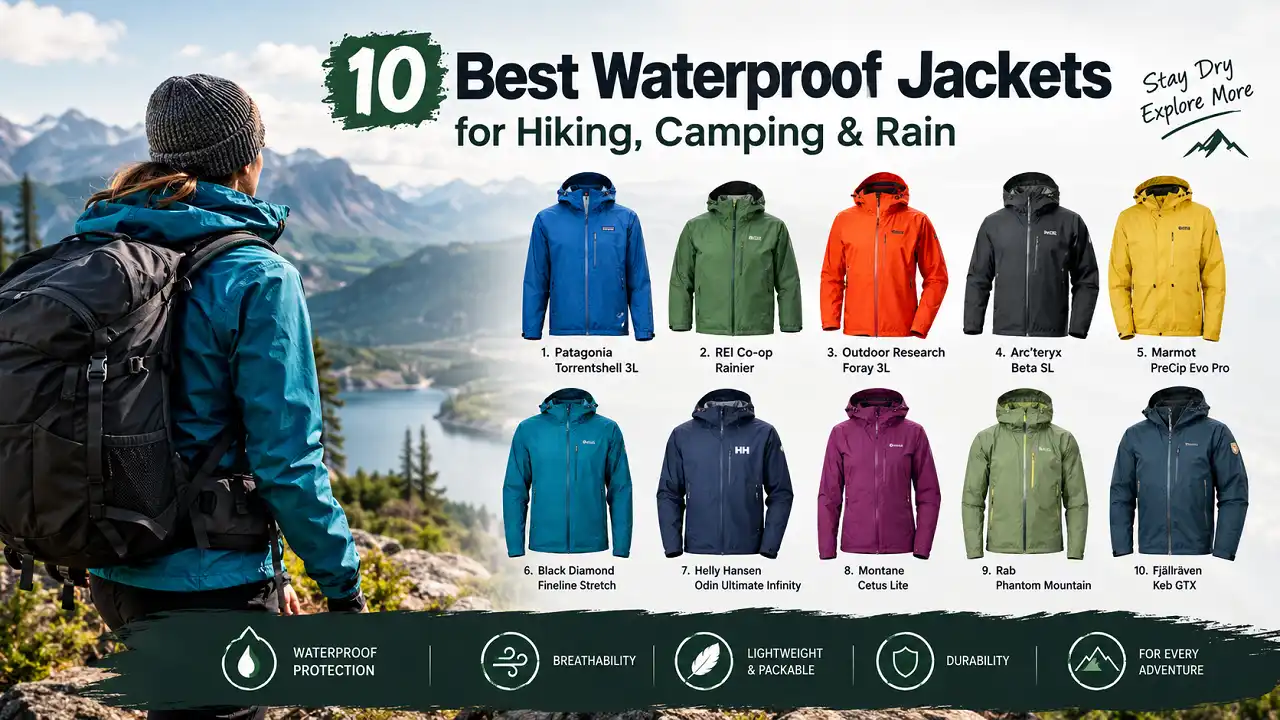
Here are the 10 best waterproof jackets to consider for hiking, camping, backpacking, and everyday rainy weather.
10 Best Waterproof Jackets to Consider
Patagonia Torrentshell 3L — Best Overall Waterproof Jacket
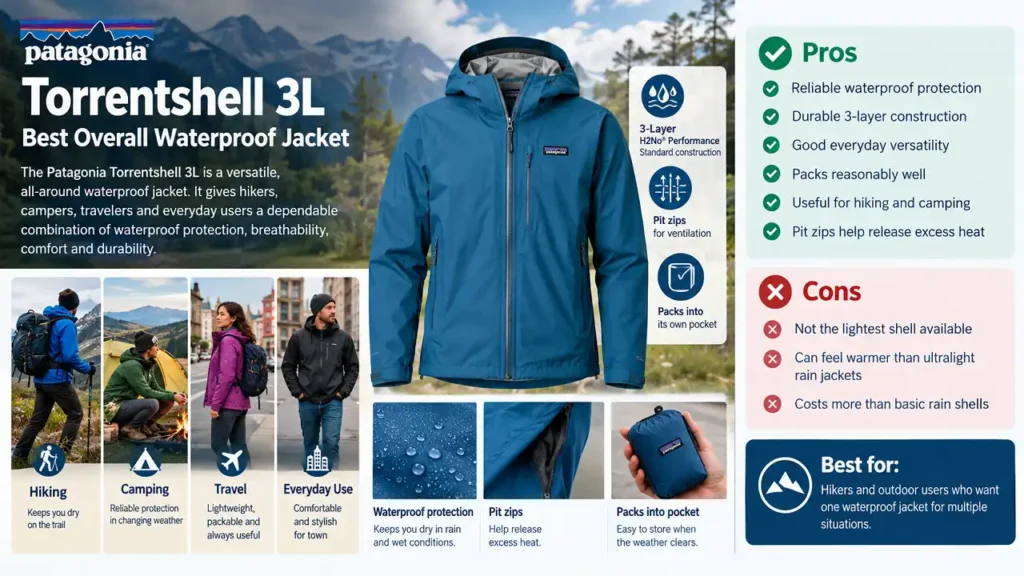
Patagonia Torrentshell 3L: a versatile waterproof jacket for hiking, camping, travel, and everyday outdoor use.
The Patagonia Torrentshell 3L is the kind of jacket that makes sense for a wide range of outdoor use.
It isn’t designed around one extremely specific activity. Instead, it gives hikers, campers, travelers, and everyday users a dependable combination of waterproof protection, breathability, comfort, and durability.
The current Torrentshell 3L uses Patagonia’s 3-layer H2No Performance Standard construction and includes pit zips for ventilation. It can also pack into its own pocket, which is handy when the weather is unpredictable.
That’s one of the reasons I like this style of jacket.
You don’t necessarily need one shell for hiking, another for camping, and another for walking around town. A good all-purpose waterproof jacket can handle all three.
Pros
- Reliable waterproof protection
- Durable 3-layer construction
- Good everyday versatility
- Packs reasonably well
- Useful for hiking and camping
- Pit zips help release excess heat
Cons
- Not the lightest shell available
- Can feel warmer than ultralight rain jackets
- Costs more than basic rain shells
Best for: Hikers and outdoor users who want one waterproof jacket for multiple situations.
Check the Patagonia Torrentshell 3L on Patagonia →REI Co-op Rainier — Best Budget Waterproof Jacket
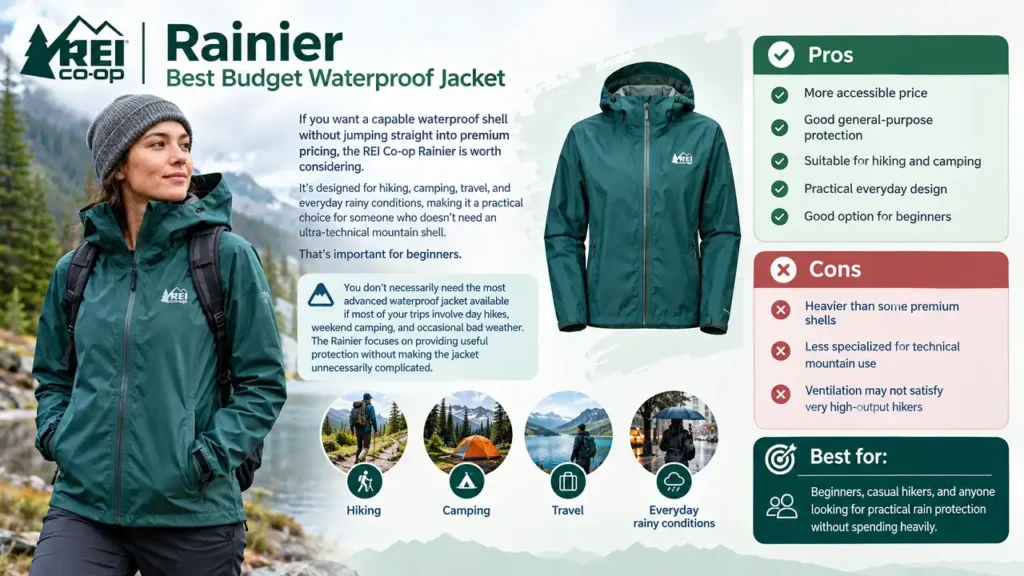
REI Co-op Rainier: a practical budget waterproof jacket for hiking, camping, travel, and everyday rainy conditions.
If you want a capable waterproof shell without jumping straight into premium pricing, the REI Co-op Rainier is worth considering.
It’s designed for hiking, camping, travel, and everyday rainy conditions, making it a practical choice for someone who doesn’t need an ultra-technical mountain shell.
That’s important for beginners.
You don’t necessarily need the most advanced waterproof jacket available if most of your trips involve day hikes, weekend camping, and occasional bad weather.
The Rainier focuses on providing useful protection without making the jacket unnecessarily complicated.
Pros
- More accessible price
- Good general-purpose protection
- Suitable for hiking and camping
- Practical everyday design
- Good option for beginners
Cons
- Heavier than some premium shells
- Less specialized for technical mountain use
- Ventilation may not satisfy very high-output hikers
Best for: Beginners, casual hikers, and anyone looking for practical rain protection without spending heavily.
Check the REI Co-op Rainier on REI →Outdoor Research Foray 3L — Best for Ventilation
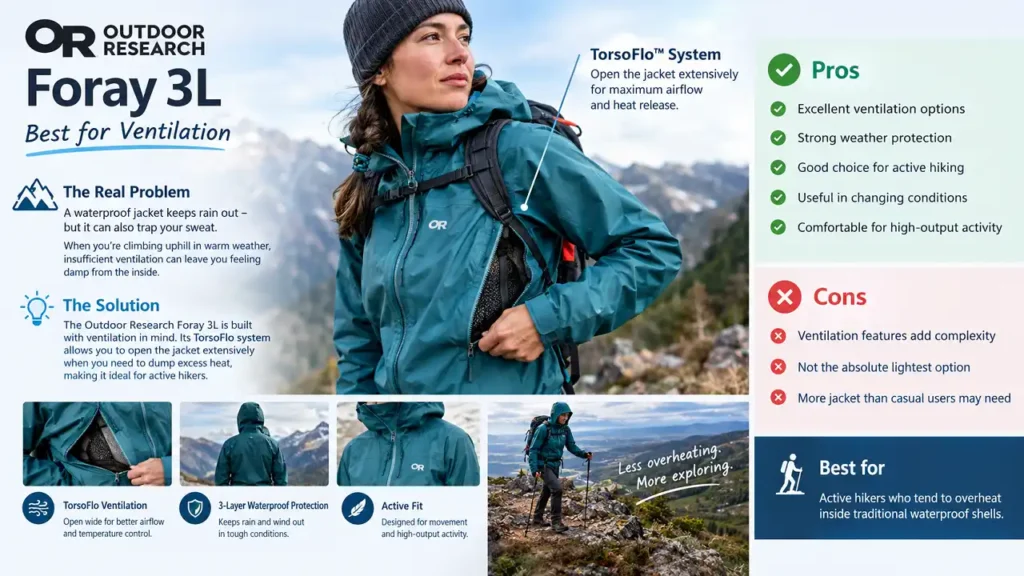
Outdoor Research Foray 3L offers strong weather protection with extensive TorsoFlo ventilation for active hikers who tend to overheat.
One of the biggest problems with waterproof jackets isn’t always rain.
Sometimes it’s your own sweat.
You can wear a highly waterproof shell, but if you’re climbing uphill in warm weather and the jacket can’t release enough heat, you’ll eventually feel damp from the inside.
That’s where ventilation becomes important.
The Outdoor Research Foray 3L is built with ventilation in mind. Its TorsoFlo system allows you to open the jacket extensively when you need to dump excess heat, making it particularly interesting for active hikers.
If you’ve ever stopped halfway up a climb just to take your rain jacket off because you were overheating, you’ll understand why this matters.
Pros
- Excellent ventilation options
- Strong weather protection
- Good choice for active hiking
- Useful in changing conditions
- Comfortable for high-output activity
Cons
- Ventilation features add complexity
- Not the absolute lightest option
- More jacket than casual users may need
Best for: Active hikers who tend to overheat inside traditional waterproof shells.
Check the Outdoor Research Foray 3L on Amazon →Arc’teryx Beta SL — Best Premium Lightweight Jacket
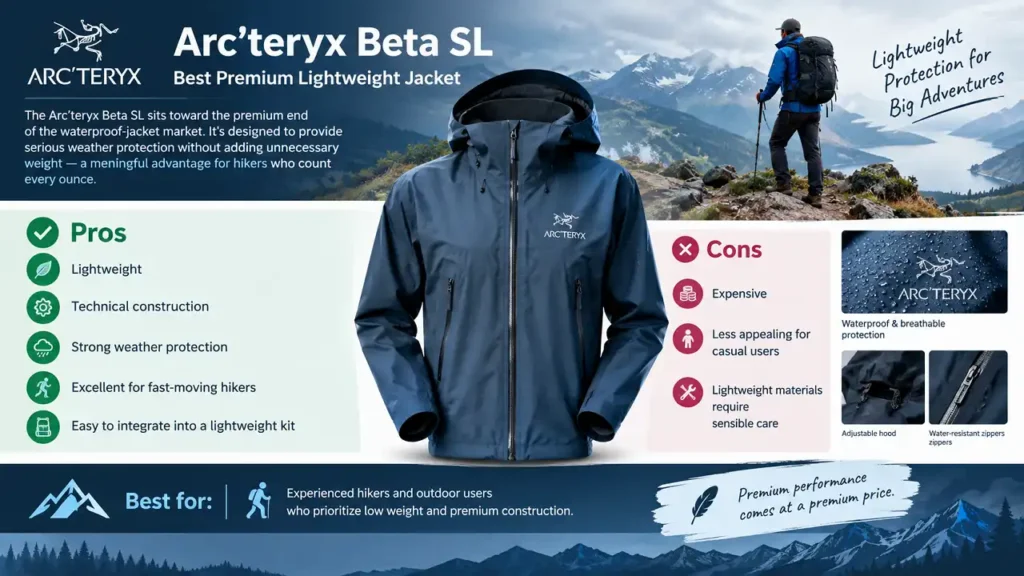
Arc’teryx Beta SL: a premium lightweight waterproof jacket designed for experienced hikers who prioritize low weight and technical weather protection.
The Arc’teryx Beta SL sits toward the premium end of the waterproof-jacket market.
The appeal is straightforward: it’s designed to provide serious weather protection without adding unnecessary weight.
For hikers who count every ounce, that’s a meaningful advantage.
The Beta SL is particularly suited to people who spend a lot of time moving through changing mountain conditions and want a technical shell that doesn’t feel bulky.
The downside is equally straightforward: premium construction comes with a premium price.
If you’re mostly walking around town during light rain, this is probably more jacket than you need.
Pros
- Lightweight
- Technical construction
- Strong weather protection
- Excellent for fast-moving hikers
- Easy to integrate into a lightweight kit
Cons
- Expensive
- Less appealing for casual users
- Lightweight materials require sensible care
Best for: Experienced hikers and outdoor users who prioritize low weight and premium construction.
Check the Arc’teryx Beta SL on Amazon →Marmot PreCip Evo Pro — Best Value Alternative
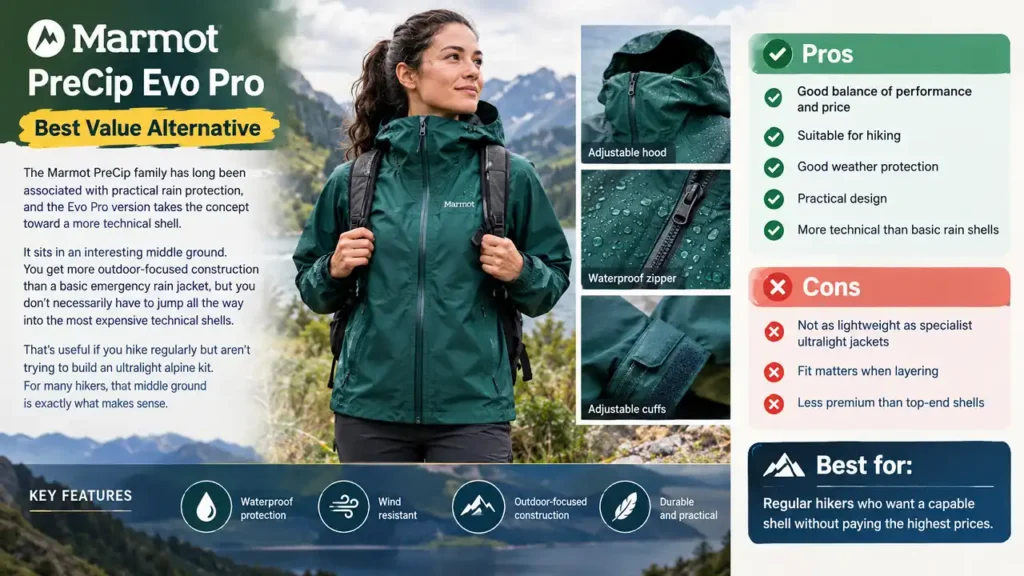
Marmot PreCip Evo Pro: a practical rain shell offering a strong balance of outdoor performance and price for regular hikers.
The Marmot PreCip family has long been associated with practical rain protection, and the Evo Pro version takes the concept toward a more technical shell.
It sits in an interesting middle ground.
You get more outdoor-focused construction than a basic emergency rain jacket, but you don’t necessarily have to jump all the way into the most expensive technical shells.
That’s useful if you hike regularly but aren’t trying to build an ultralight alpine kit.
For many hikers, that middle ground is exactly what makes sense.
Pros
- Good balance of performance and price
- Suitable for hiking
- Good weather protection
- Practical design
- More technical than basic rain shells
Cons
- Not as lightweight as specialist ultralight jackets
- Fit matters when layering
- Less premium than top-end shells
Best for: Regular hikers who want a capable shell without paying the highest prices.
Check the Marmot PreCip Evo Pro on Amazon →Black Diamond Fineline Stretch — Best for Mobility
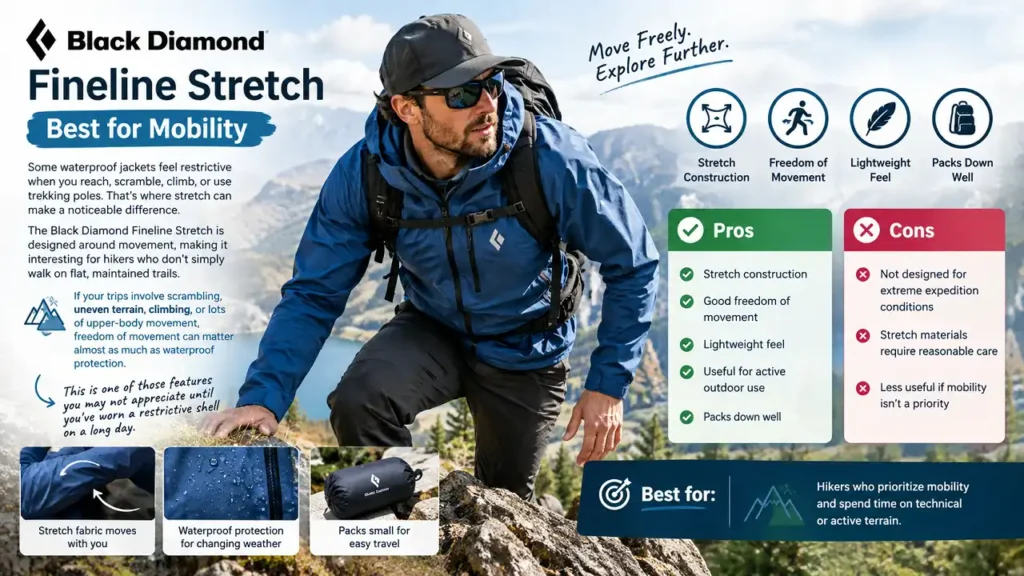
Black Diamond Fineline Stretch: designed for hikers who prioritize freedom of movement on technical and active terrain.
Some waterproof jackets feel restrictive when you reach, scramble, climb, or use trekking poles.
That’s where stretch can make a noticeable difference.
The Black Diamond Fineline Stretch is designed around movement, making it interesting for hikers who don’t simply walk on flat, maintained trails.
If your trips involve scrambling, uneven terrain, climbing, or lots of upper-body movement, freedom of movement can matter almost as much as waterproof protection.
This is one of those features you may not appreciate until you’ve worn a restrictive shell on a long day.
Pros
- Stretch construction
- Good freedom of movement
- Lightweight feel
- Useful for active outdoor use
- Packs down well
Cons
- Not designed for extreme expedition conditions
- Stretch materials require reasonable care
- Less useful if mobility isn’t a priority
Best for: Hikers who prioritize mobility and spend time on technical or active terrain.
Check the Black Diamond Fineline Stretch on Amazon →Helly Hansen Odin Ultimate Infinity — Best for Mountain Weather
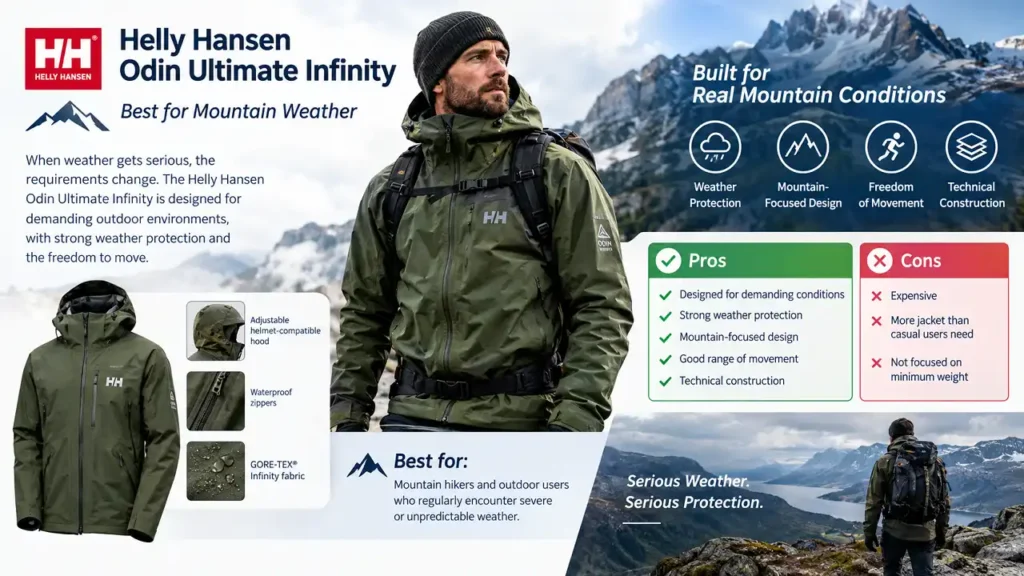
Helly Hansen Odin Ultimate Infinity: a technical mountain jacket designed for demanding and unpredictable weather conditions.
When weather gets serious, the requirements change.
A jacket that works perfectly for a rainy city walk doesn’t necessarily provide the protection or construction you want in exposed mountain conditions.
The Helly Hansen Odin Ultimate Infinity is aimed more directly at demanding outdoor environments.
It’s designed around weather protection while still allowing the movement needed for active use.
This is the type of jacket that makes more sense when your trips regularly involve exposed terrain, unpredictable forecasts, or rougher conditions.
Pros
- Designed for demanding conditions
- Strong weather protection
- Mountain-focused design
- Good range of movement
- Technical construction
Cons
- Expensive
- More jacket than casual users need
- Not focused on minimum weight
Best for: Mountain hikers and outdoor users who regularly encounter severe or unpredictable weather.
Check the Helly Hansen Odin Ultimate Infinity on Amazon →Montane Cetus Lite — Best for Breathability
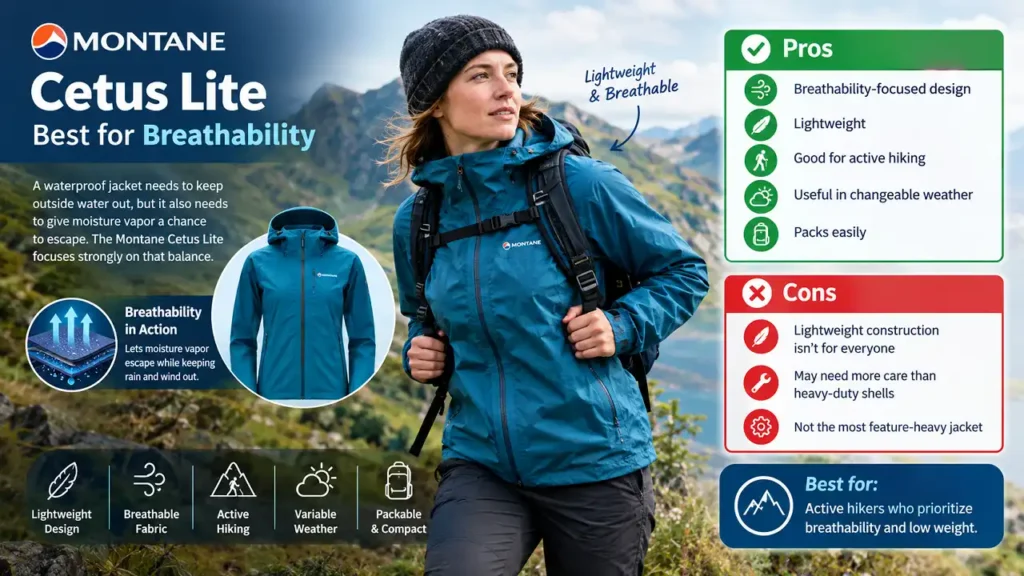
Montane Cetus Lite: a lightweight waterproof jacket designed for hikers who prioritize breathability and low weight.
Breathability is one of those specifications that sounds simple until you’re halfway up a steep trail.
A waterproof jacket needs to keep outside water out, but it also needs to give moisture vapor a chance to escape.
The Montane Cetus Lite focuses strongly on that balance.
It’s particularly interesting for hikers who move quickly, hike in variable weather, or simply dislike the clammy feeling that some waterproof jackets create.
If you regularly find yourself opening your jacket halfway through a climb because you’re overheating, breathability should be high on your shopping list.
Pros
- Breathability-focused design
- Lightweight
- Good for active hiking
- Useful in changeable weather
- Packs easily
Cons
- Lightweight construction isn’t for everyone
- May need more care than heavy-duty shells
- Not the most feature-heavy jacket
Best for: Active hikers who prioritize breathability and low weight.
Check the Montane Cetus Lite on Amazon →Rab Phantom Mountain — Best Ultralight Waterproof Jacket
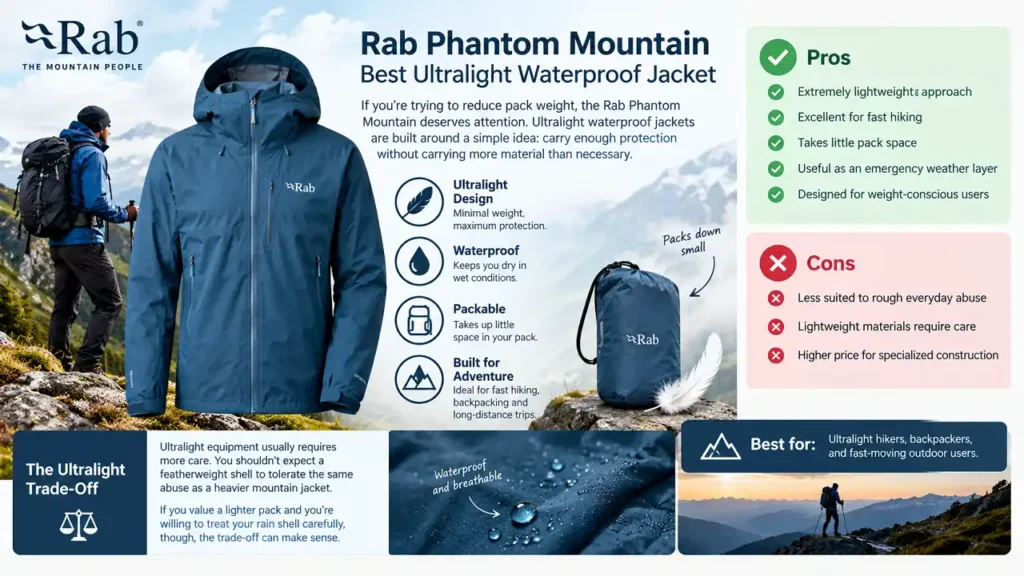
Rab Phantom Mountain: an ultralight waterproof jacket designed for fast hiking, backpacking, and weight-conscious outdoor adventures.
If you’re trying to reduce pack weight, the Rab Phantom Mountain deserves attention.
Ultralight waterproof jackets are built around a simple idea: carry enough protection without carrying more material than necessary.
That’s particularly useful on long-distance hikes, fast-and-light trips, and backpacking adventures where every item in your pack gets counted.
The compromise is that ultralight equipment usually requires more care.
You shouldn’t expect a featherweight shell to tolerate the same abuse as a heavier mountain jacket.
If you value a lighter pack and you’re willing to treat your rain shell carefully, though, the trade-off can make sense.
Pros
- Extremely lightweight approach
- Excellent for fast hiking
- Takes little pack space
- Useful as an emergency weather layer
- Designed for weight-conscious users
Cons
- Less suited to rough everyday abuse
- Lightweight materials require care
- Higher price for specialized construction
Best for: Ultralight hikers, backpackers, and fast-moving outdoor users.
Check the Rab Phantom Mountain on Amazon →Fjällräven Keb GTX — Best Durable All-Rounder
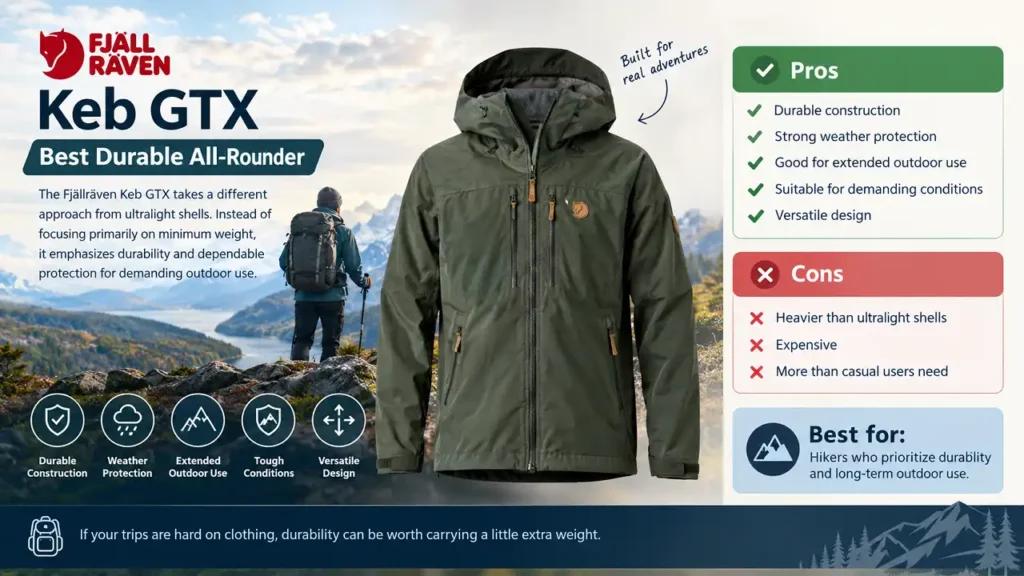
Fjällräven Keb GTX: a durable, weather-protective jacket designed for demanding outdoor use and long-term durability.
The Fjällräven Keb GTX takes a different approach from ultralight shells.
Instead of focusing primarily on minimum weight, it emphasizes durability and dependable protection for demanding outdoor use.
That makes it interesting for hikers who spend a lot of time outside and don’t want to baby their gear.
It’s also the kind of jacket that can make sense for people who value long-term usability over having the lightest possible pack.
If your trips are hard on clothing, durability can be worth carrying a little extra weight.
Pros
- Durable construction
- Strong weather protection
- Good for extended outdoor use
- Suitable for demanding conditions
- Versatile design
Cons
- Heavier than ultralight shells
- Expensive
- More than casual users need
Best for: Hikers who prioritize durability and long-term outdoor use.
Check the Fjällräven Keb GTX on Amazon →How to Choose the Best Waterproof Jacket
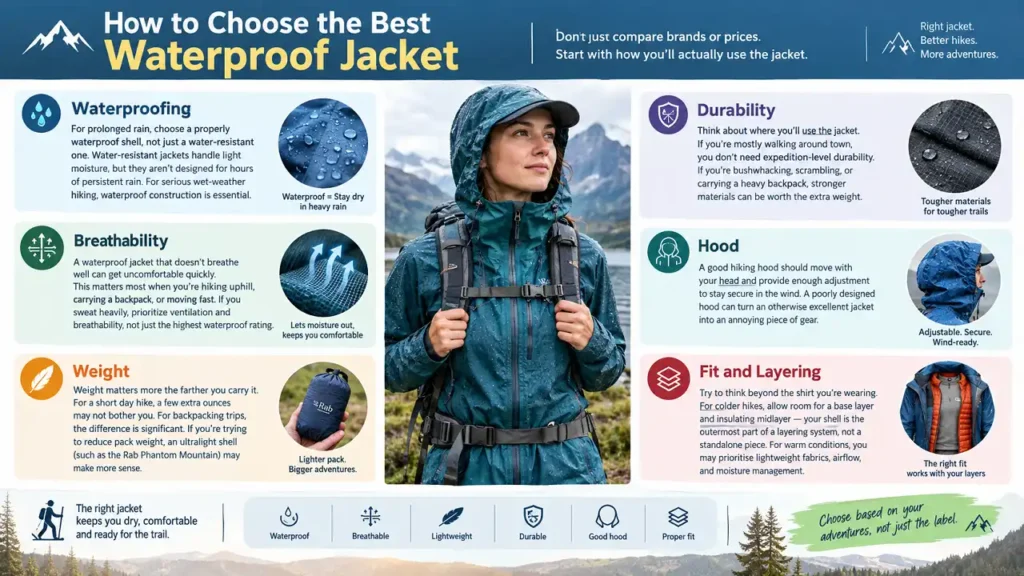
How to Choose the Best Waterproof Jacket: Focus on waterproofing, breathability, weight, durability, hood, and fit.
The easiest mistake is to compare waterproof jackets by brand name or price alone.
Instead, start with the way you’re actually going to use the jacket.
Waterproofing
If you’re hiking in prolonged rain, look for a properly waterproof shell rather than something described only as water-resistant.
Water-resistant jackets can handle light moisture, but they aren’t necessarily designed to keep you dry through hours of persistent rain.
For serious wet-weather hiking, waterproof construction should be your starting point.
Breathability
A waterproof jacket that doesn’t breathe well can become uncomfortable surprisingly quickly.
This matters most when you’re hiking uphill, carrying a backpack, or moving at a fast pace.
If you tend to sweat heavily, prioritize ventilation and breathability rather than simply buying the jacket with the highest waterproof rating.
Weight
Weight matters more the farther you carry the jacket.
For a short day hike, an extra few ounces may not bother you.
For backpacking trips where you’re carrying everything on your back for days, the difference becomes much more noticeable.
If you’re already trying to reduce pack weight, an ultralight shell such as the Rab Phantom Mountain may make more sense.
Durability
Ask yourself where you’ll use the jacket.
If you’re mostly walking around town, you don’t necessarily need expedition-level durability.
If you’re bushwhacking, scrambling, or carrying a heavy backpack, stronger materials can be worth the additional weight.
Hood
Don’t overlook the hood.
A good hiking hood should move with your head and provide enough adjustment to stay secure when the wind picks up.
A poorly designed hood can turn an otherwise excellent rain jacket into an annoying piece of gear.
Fit and Layering
Try to think beyond the shirt you’re wearing when you try on a waterproof jacket.
If you’re buying it for colder hiking, you may want enough room for a base layer and insulating midlayer underneath.
Your shell is usually the outermost part of a layering system, not a standalone piece.
For a deeper look at building a proper cold-weather system, see my guide to clothes for hiking in winter . It covers base layers, insulation, shells, socks, footwear, and other cold-weather essentials.
For warmer conditions, your priorities change. You may care more about lightweight fabrics, airflow, and moisture management than insulation. My guide to clothing for hiking in warm weather covers those choices in more detail.
Waterproof vs. Water-Resistant: What’s the Difference?
The terms sound similar, but they shouldn’t be treated as interchangeable.
Generally means a material can resist some moisture, such as light rain or splashes.
Means the garment is designed specifically to prevent water from passing through under more demanding conditions.
For an occasional walk around town, water resistance may be enough.
For hiking in a persistent downpour, a proper waterproof shell is the more appropriate choice.
The important thing is to think about the weather you actually expect to encounter rather than buying based on the label alone.
How to Take Care of a Waterproof Jacket
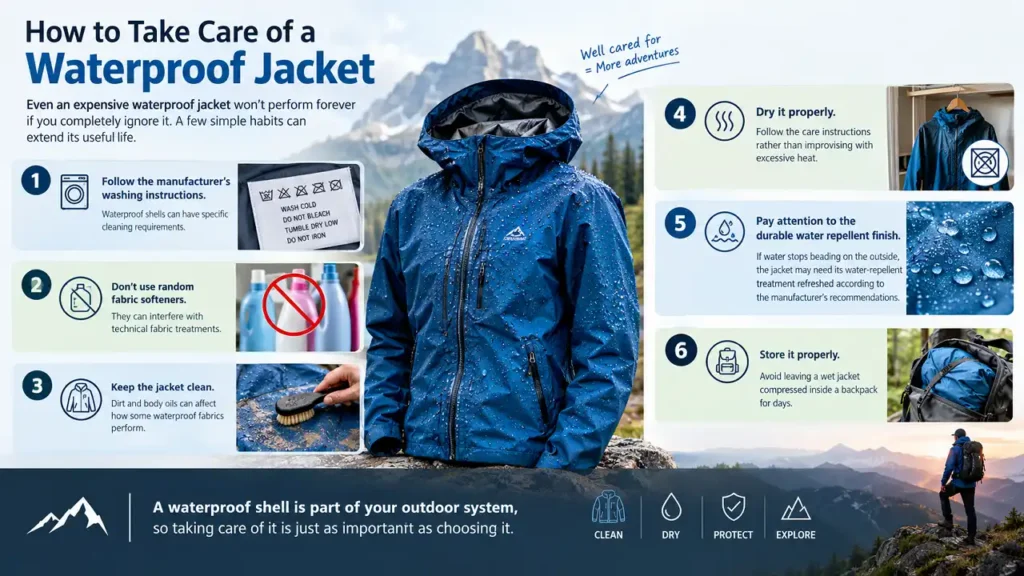
How to Take Care of a Waterproof Jacket: Simple care habits that help maintain waterproof performance and extend the jacket’s useful life.
Even an expensive waterproof jacket won’t perform forever if you completely ignore it.
A few simple habits can extend its useful life.
- Follow the manufacturer’s washing instructions. Waterproof shells can have specific cleaning requirements.
- Don’t use random fabric softeners. They can interfere with technical fabric treatments.
- Keep the jacket clean. Dirt and body oils can affect how some waterproof fabrics perform.
- Dry it properly. Follow the care instructions rather than improvising with excessive heat.
- Pay attention to the durable water repellent finish. If water stops beading on the outside, the jacket may need its water-repellent treatment refreshed according to the manufacturer’s recommendations.
- Store it properly. Avoid leaving a wet jacket compressed inside a backpack for days.
A waterproof shell is part of your outdoor system, so taking care of it is just as important as choosing it.
What Else Should You Wear in Wet Weather?
A waterproof jacket is only one part of staying comfortable outside.
Your base layer matters because it sits directly against your skin. Your midlayer matters because it provides insulation. Your pants and footwear matter because rain doesn’t only fall from above.
I’ve learned this the same way I’ve learned most outdoor lessons: one uncomfortable trip at a time.
If you’re building a complete hiking clothing system, don’t think about your rain jacket in isolation. Your base layer, insulation, footwear, and accessories all affect how comfortable you are when conditions change.
For colder trips, my guide to the best hiking jackets for cold weather goes deeper into insulation, activity level, layering, and choosing between down, synthetic, and hybrid jackets.
Which Waterproof Jacket Should You Buy?
There isn’t one waterproof jacket that makes sense for every person.
That’s something I’ve become much more comfortable saying after years of making my own gear mistakes.
If you want one versatile shell for hiking, camping, and everyday rain, the Patagonia Torrentshell 3L is a sensible place to start.
If keeping the price down matters most, look at the REI Co-op Rainier.
If you tend to overheat while hiking, the Outdoor Research Foray 3L deserves attention because ventilation becomes a much bigger deal once you’re working hard.
For lightweight premium gear, consider the Arc’teryx Beta SL.
If mobility is your priority, the Black Diamond Fineline Stretch is worth investigating, while the Rab Phantom Mountain makes more sense for hikers who care deeply about keeping pack weight down.
For more demanding mountain weather, the Helly Hansen Odin Ultimate Infinity and Fjällräven Keb GTX are designed with tougher outdoor conditions in mind.
The important thing is not to buy the jacket with the longest list of impressive specifications.
Buy the one that matches the weather you actually face, the trails you actually hike, and the way you actually move.
What I Learned About Buying Outdoor Gear
I started this article talking about mornings for a reason.
When I began experimenting with my routine, I tried a lot of things because they sounded like they were supposed to work. Five a.m. wake-ups. Cold showers. Journaling. Lemon water. Yoga before breakfast.
Some worked for me.
Most didn’t.
The useful part wasn’t discovering a magical morning routine. It was learning to pay attention to what actually worked in my real life instead of what looked impressive in someone else’s routine.
I’ve carried that lesson into hiking.
The best gear isn’t necessarily the most expensive. It isn’t always the lightest. It isn’t automatically the jacket with the most features or the highest technical specifications.
Choose for the Problem You Actually Have
It’s the piece of gear that solves the problem you actually have.
If you’re heading into a wet forecast, that might mean a durable shell that you can trust for hours in the rain. If you’re climbing hard, it might mean better ventilation. If you’re counting every gram, it might mean choosing an ultralight jacket and accepting that you’ll need to treat it more carefully.
That’s why I wouldn’t tell you to buy a waterproof jacket simply because somebody called it “the best.”
Then choose the jacket that makes sense for you.
That’s a much better way to build an outdoor kit and it’s the same lesson I’ve learned from pretty much every piece of gear I’ve gotten wrong over the years.