Clothing for Hiking in Warm Weather: A Complete Guide
I learned the hard way that clothing for hiking in warm weather makes or breaks a trip. A few summers back, I wore a heavy cotton shirt on a ridge outside Bakersfield and sweated through it within the first mile. By mile four, that shirt clung to my back like a wet towel, and I felt drained for the rest of the hike. The right clothing solves that problem before it starts, and this guide walks through exactly what works.
What is the best clothing for hiking in warm weather?
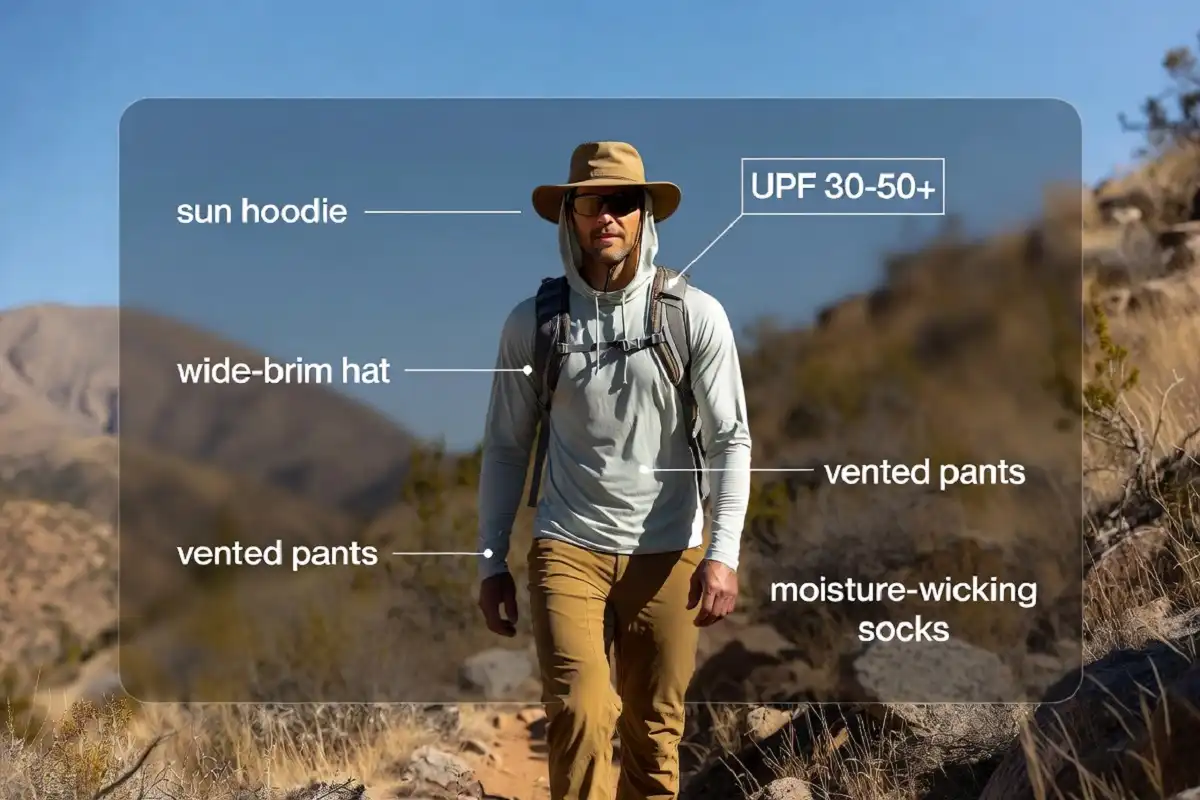
The best clothing for hiking in warm weather is lightweight, moisture-wicking, and rated for UV protection. That usually means a breathable sun shirt or hoodie, quick-dry shorts or vented pants, a wide-brim hat, and synthetic or merino socks. Skip cotton entirely, since it holds sweat and takes hours to dry.
Move sweat away from your skin and dry quickly.
Choose fabrics rated UPF 30 or higher.
Look for airflow, mesh panels, and loose fits.
Avoid heavy materials that trap heat.
Fast-drying fabrics stay comfortable longer.
Why Clothing for Hiking in Warm Weather Matters
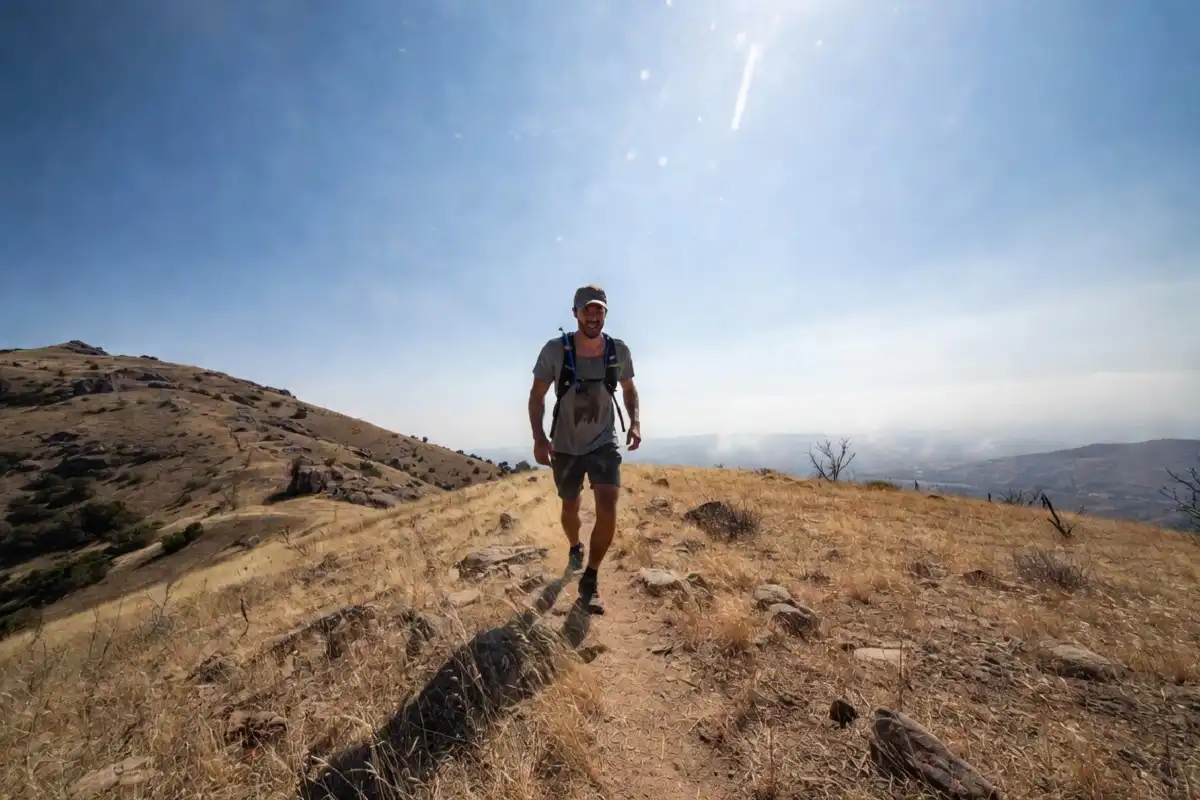
Your body cools itself through sweat evaporation. When your clothing traps that sweat instead of letting it evaporate, your internal temperature climbs faster than it should. That’s how a mild afternoon can turn into heat exhaustion, a condition that shows up fast: sudden fatigue, a pounding headache, dizziness, and sweat that won’t quit.
Because it can happen quicker than most hikers expect, especially on exposed trails with little shade, your clothing choice is part of your safety plan, not just your comfort. This is also why a looser fit tends to beat a snug one in the heat. Airflow next to your skin speeds up evaporation, which is the main way your body sheds extra heat on a climb.
Sun exposure adds another layer of risk. Every hour on an unshaded trail exposes your skin to UV radiation, and the wrong fabric barely slows that down. So the goal with warm weather hiking clothes is simple: manage sweat, block UV rays, and stay cool enough to keep moving comfortably.
Pick the Right Fabric First
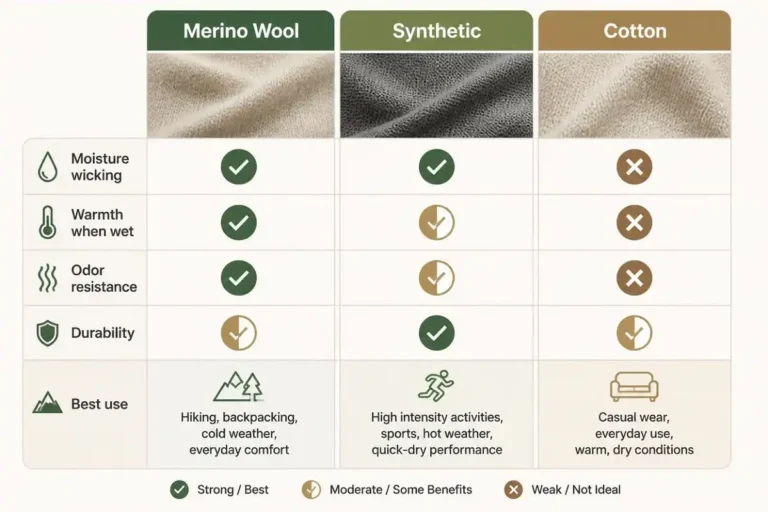
The fabric you choose is the foundation of any clothing for hiking in warm weather, more than any single accessory. Three main options show up on trail: cotton, synthetic, and merino wool. Only two of them belong in your pack.
Why Cotton Fails on a Hot Trail
Cotton soaks up sweat instead of moving it away from your skin. Once it’s wet, cotton can take eight to twelve hours to dry, so it stays damp against your body for the rest of your hike. That damp fabric chafes more, and it holds onto odor faster than technical fabrics do.
Synthetic Fabrics: Fast Drying, Built for Output
Polyester and nylon wick moisture to the fabric’s surface, where it evaporates quickly. That makes synthetic fabric the fastest-drying option on this list, and it’s a strong pick for high-output days when you’re sweating heavily.
The tradeoff is odor. Synthetic fibers can pick up smell faster than merino, so a scheduled wash, or an odor-treated version, helps if you’re out for multiple days.
Merino Wool: Slower to Dry, Naturally Fresh
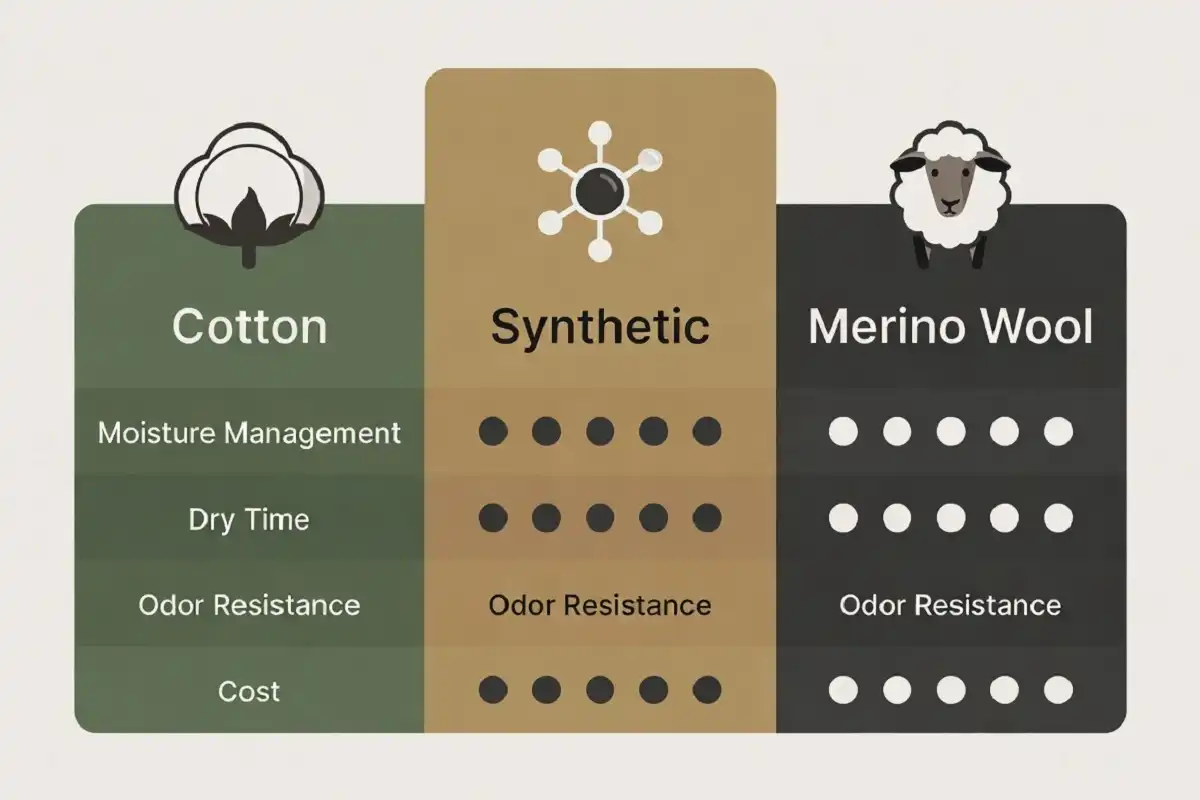
Merino wool wicks moisture well and resists odor on its own, which makes it a favorite for multi-day trips where laundry isn’t an option. It also holds some warmth even when damp.
The downside is dry time, since merino takes longer than synthetic and costs more per garment. A day hike in dry heat works fine with either fabric. Add multiple days in humid conditions, though, and merino often wins on comfort.
| Fabric | Moisture Management | Dry Time | Odor Resistance | Typical Cost |
|---|---|---|---|---|
| Cotton | Poor, absorbs and holds sweat | Very slow (8 to 12 hours) | Poor | Low |
| Synthetic | Excellent, wicks fast | Fast | Fair, can smell quickly | Low to moderate |
| Merino wool | Very good, wicks and regulates temperature | Moderate | Excellent | Higher |
How Much UPF Sun Protection Do You Need?
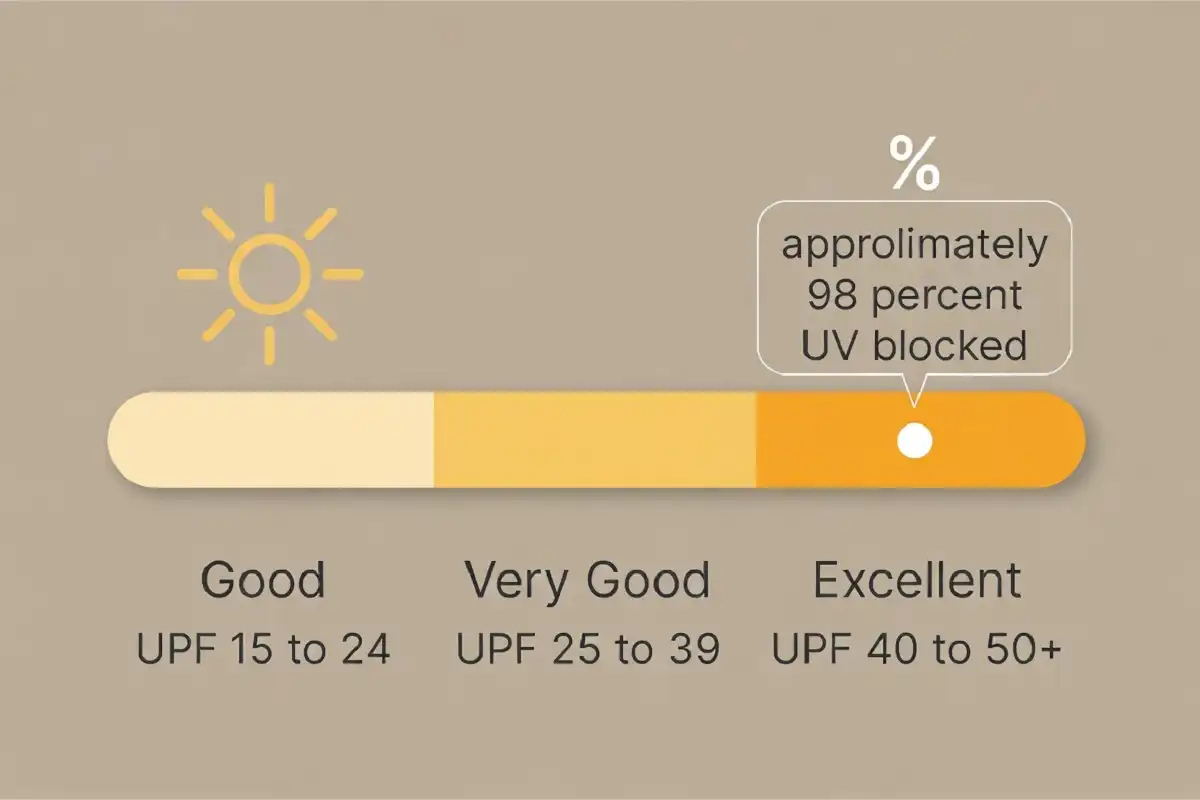
Look for a UPF rating of at least 30 on your main layers, and 50+ if you’ll be exposed for several hours. UPF, or Ultraviolet Protection Factor, measures how much UV radiation gets through a fabric to reach your skin.
To put that in perspective, a plain white cotton t-shirt often rates around UPF 5 to 7. Once that shirt gets wet from sweat, its protection drops even further. A UPF 50 garment, on the other hand, blocks roughly 98 percent of UV radiation, letting only about 2 percent through.
The Sun Hoodie: One Piece That Handles Almost Everything
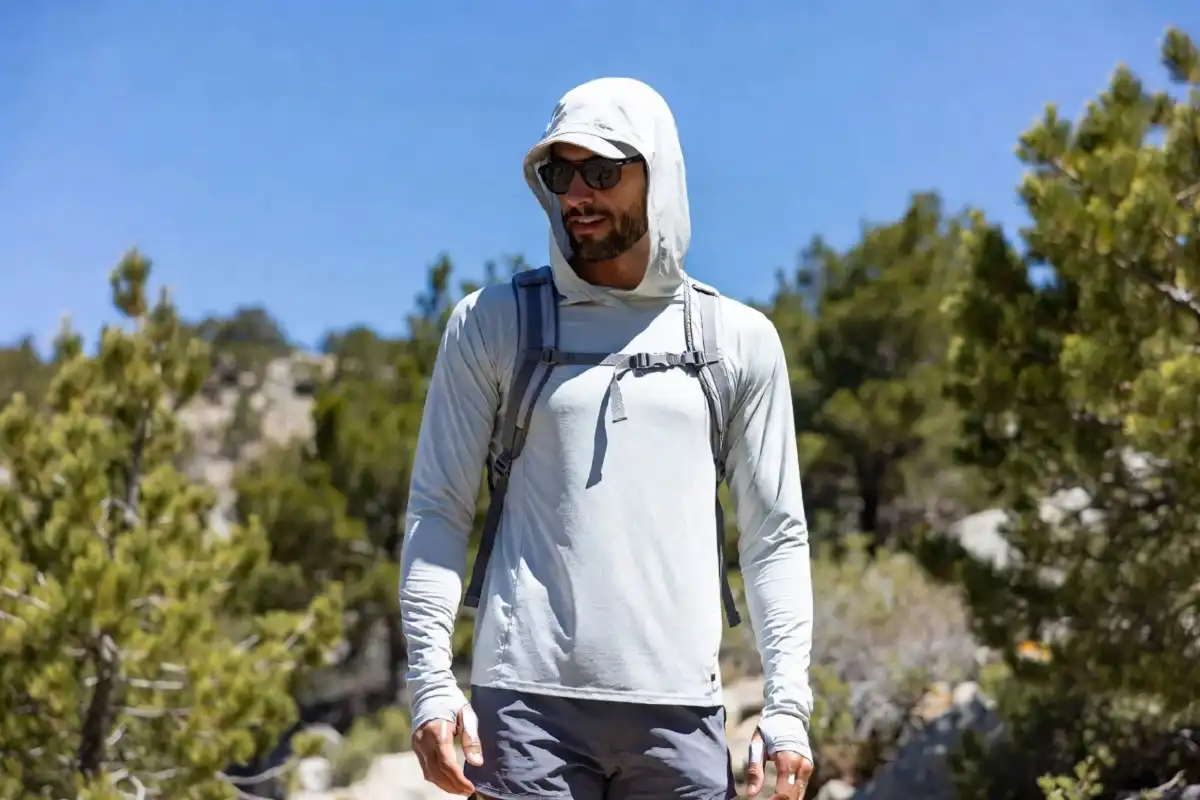
A sun hoodie is a lightweight, long-sleeve, hooded shirt built for sun protection, moisture management, and airflow. I switched to one a few seasons ago and rarely hike without it now, even on shorter trips.
More Sun Coverage
It covers your arms and neck, reducing exposed skin and sunscreen use.
Lightweight Protection
The hood keeps sun off your ears without the bulk of a jacket.
Better Fabric Choice
Synthetic or synthetic-merino blends are better for hot, sweaty climbs.
Most sun hoodies carry a UPF rating between 30 and 50+, and the better ones stay breathable enough that you barely notice the extra coverage.
One thing worth knowing before you buy: some sun hoodies use plant-based fabrics like modal, bamboo, or Tencel because they feel soft against skin. Those fabrics dry slowly, similar to cotton, and they tend to carry lower UPF ratings than synthetic blends.
What to Wear on Your Legs
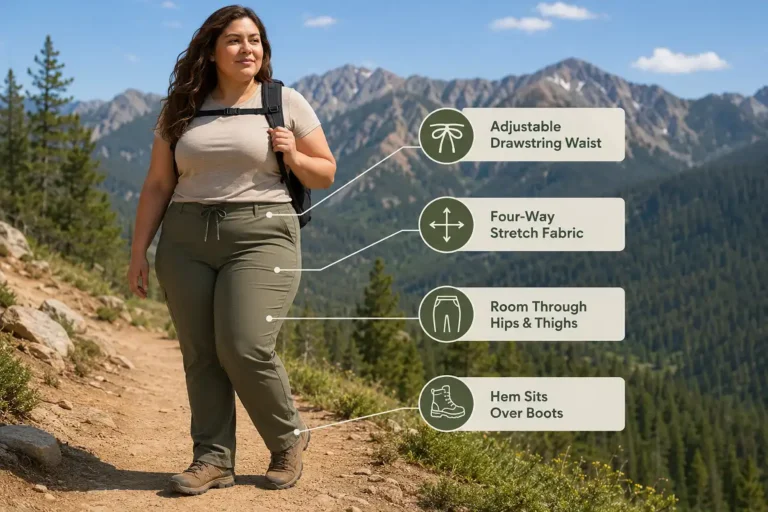
Three main options cover your legs on a hot trail, and each solves a different problem. Shorts offer the most airflow and work well on maintained trails with little brush. Convertible pants let you zip off the legs when it heats up, which is useful if your hike starts cool and warms fast.
Lightweight long pants protect against sun, scratchy brush, and ticks, and a vented pair with mesh panels or zippered vents keeps them from feeling like an oven.
Best airflow for maintained trails with limited brush.
Useful when temperatures change throughout the day.
Best for sun, brush, ticks, and exposed trails.
If you’re headed somewhere with long stretches of open, shadeless trail, like the desert terrain around Palm Springs, long pants with real ventilation usually beat shorts for comfort.
Low gaiters help on brushy or rocky routes too, keeping debris and ticks out of your socks without adding much extra heat.
Don’t Forget Your Head, Neck, and Eyes
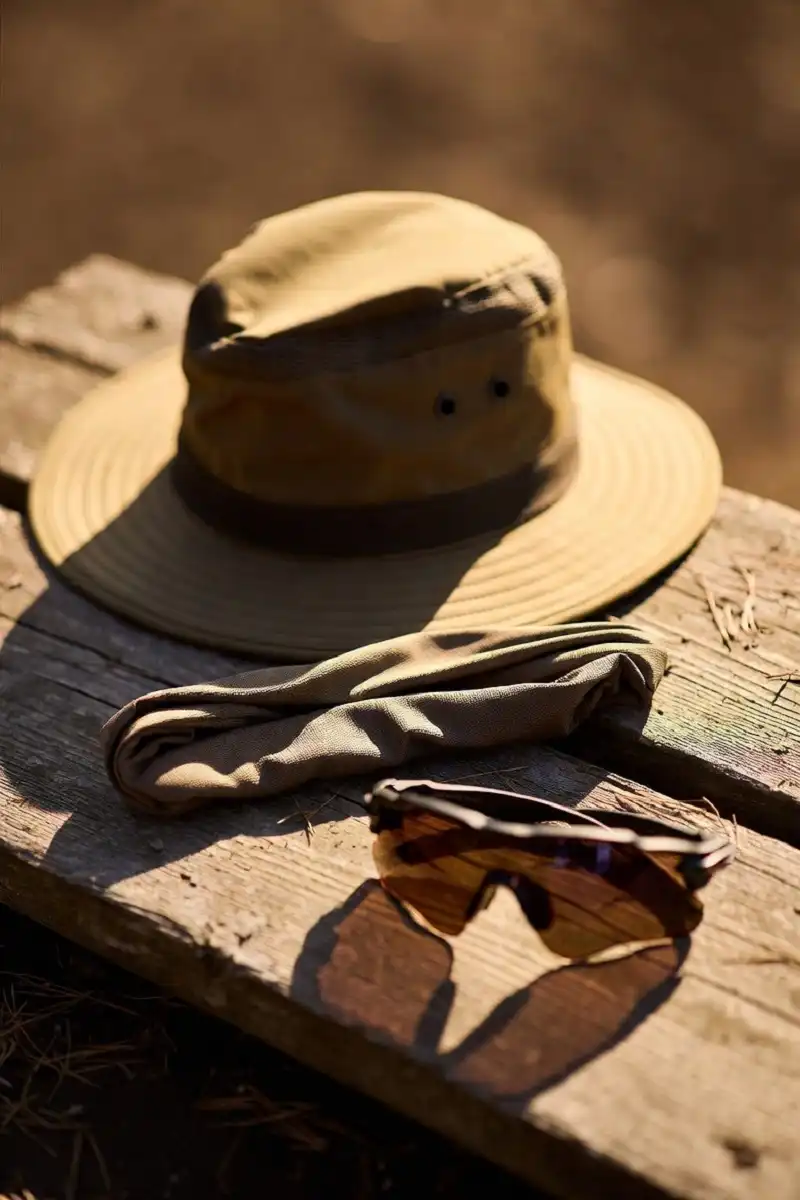
A wide-brim hat protects your face, ears, and the back of your neck all at once, which a baseball cap can’t match.
If you prefer a cap, pair it with a neck gaiter or a cap with a built-in neck flap to cover the gap. Sunglasses with real UV protection matter too, since squinting for hours in bright conditions strains your eyes and can bring on a headache.
Your hands are easy to forget as well. Thin, breathable sun gloves show up more often on desert and high-altitude trails these days, mostly among hikers who want to avoid additional sun exposure on the backs of their hands.
Socks and Footwear in the Heat
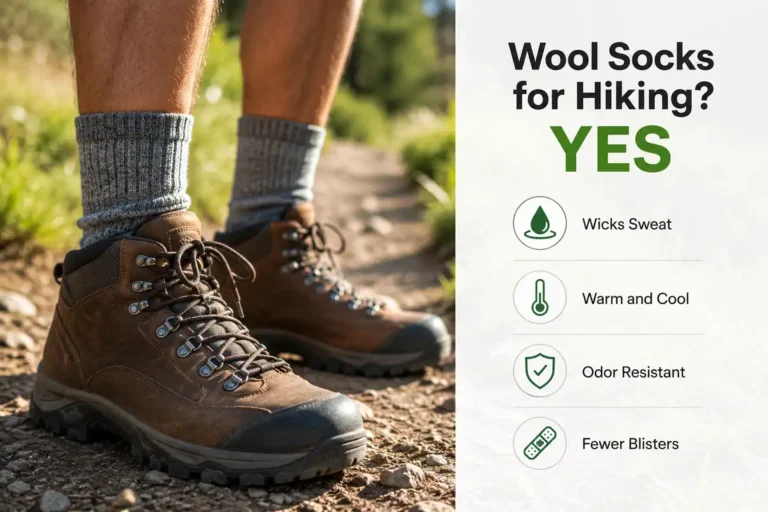
Your feet sweat more in warm weather, so synthetic or merino hiking socks matter just as much as your shirt. Cotton socks trap moisture against your skin and raise your blister risk fast.
Pair the right socks with breathable, well-ventilated shoes or boots, and give your feet a break at rest stops to let them air out.
Choosing Warm-Weather Footwear
If you’re still deciding on footwear for the season, it’s worth browsing a few options built for hot-weather comfort before you commit.
Does Clothing Color Make a Real Difference?
Yes, but not always in the direction people expect. Light colors reflect more sunlight and generally feel cooler in direct sun, especially in loose, breathable fabric. Darker and more saturated colors absorb more UV radiation, which can mean better sun protection, just at the cost of feeling warmer.
In practice, the weave and UPF rating of a fabric matter more than color alone. A tightly woven, UPF-rated light shirt can outperform a loosely woven dark one.
Fabric & UPF
- Tightly woven fabric
- UPF-rated material
- Breathable construction
- Good airflow
Color
- Light colors often feel cooler
- Darker colors may absorb more radiation
- Color alone isn’t enough
- Fit and airflow also matter
One often-cited desert study measured heat gain in people wearing black robes versus white robes under direct sun and found the total heat absorbed ended up nearly the same, since the black robe trapped a layer of warm air that moved away from the body before it reached the skin.
It’s a good reminder that airflow and fit often matter as much as the color you pick. So instead of chasing one specific color, look for a UPF label first and treat color as a secondary comfort choice.
Layering for Temperature Swings on Warm Weather Trails
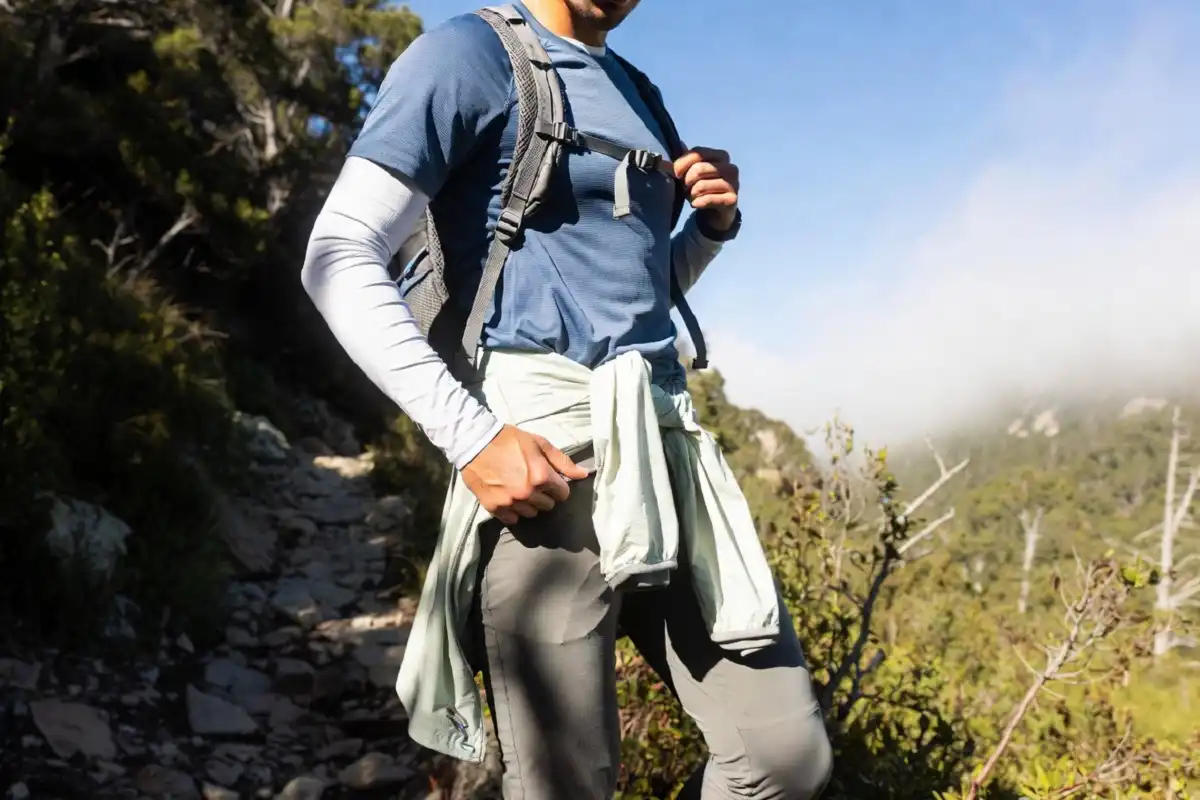
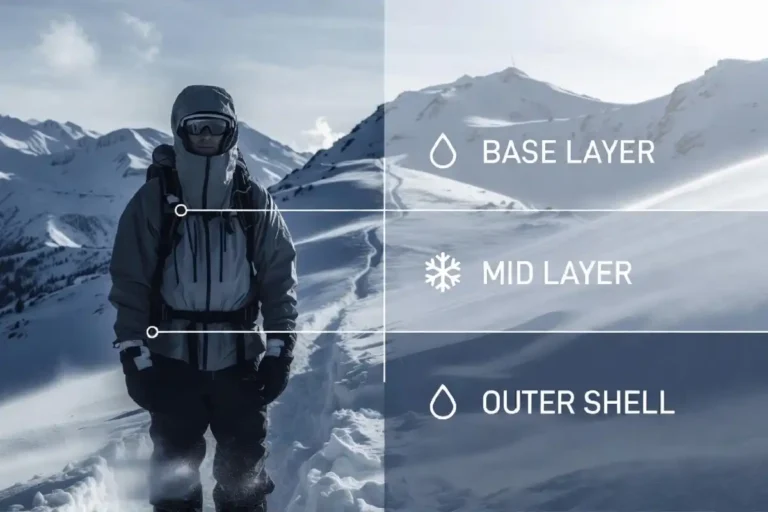
Good clothing for hiking in warm weather still needs to handle mornings, since “warm” rarely means the same thing at 6 a.m. as it does at 2 p.m.
Plan for Temperature Swings
Mornings can start cool, especially at elevation, while temperatures can rise dramatically by afternoon. Carry a lightweight layer that can be removed and packed away easily.
A hike through high-elevation terrain like the trails around Breckenridge in summer often starts near freezing at sunrise and climbs into the 70s by midday.
Packing a light long-sleeve layer you can tie around your waist or stuff into a pack solves this without adding much weight.
Desert destinations bring a different version of the same challenge. A spot like Hot Springs National Park can feel mild in the morning, then turn intensely hot by early afternoon.
What to Look for When You Shop
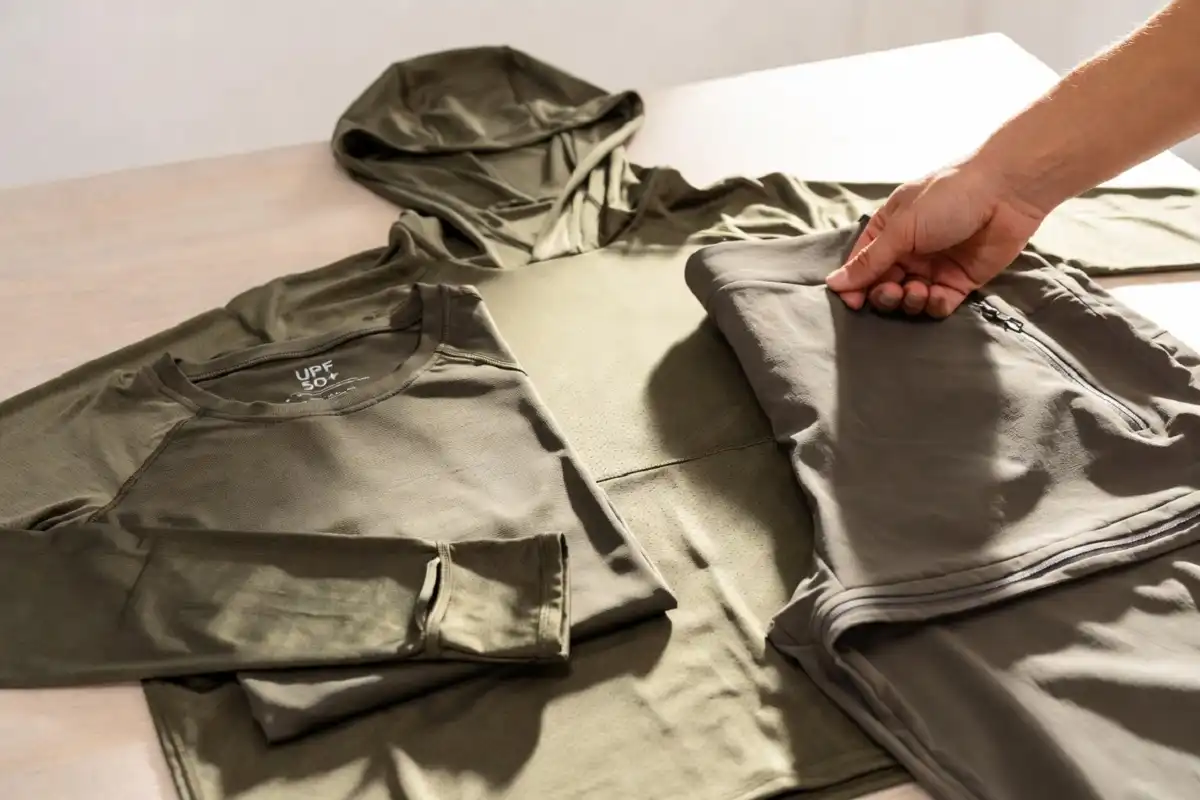
Don’t assume a light, thin fabric blocks UV well just by feel. Look for a stated UPF number on the tag.
Mesh panels or zippered vents move more air than a plain, unvented cut.
Fabric that isn’t pressed against your skin lets sweat evaporate faster.
They help keep sleeves down and protect the backs of your hands.
A stiff or snagging zipper is a bigger problem on trail than it seems in the store.
Common Mistakes to Avoid
Avoid These
- Wearing cotton on long, hot hikes
- Skipping a hat
- Choosing clothing that fits too tight
- Forgetting UV-rated sunglasses
- Ignoring your socks
- Not testing new gear before a long hike
Better Approach
- Choose synthetic or merino fabrics
- Cover your head and neck
- Prioritize airflow
- Protect your eyes from UV
- Use moisture-managing socks
- Test gear on shorter walks first
While you’re auditing your kit, it’s also a good time to check whether trekking poles are worth adding, since they reduce leg fatigue on longer, hotter days when your body is already working harder to stay cool.
Quick Warm Weather Hiking Clothing Checklist
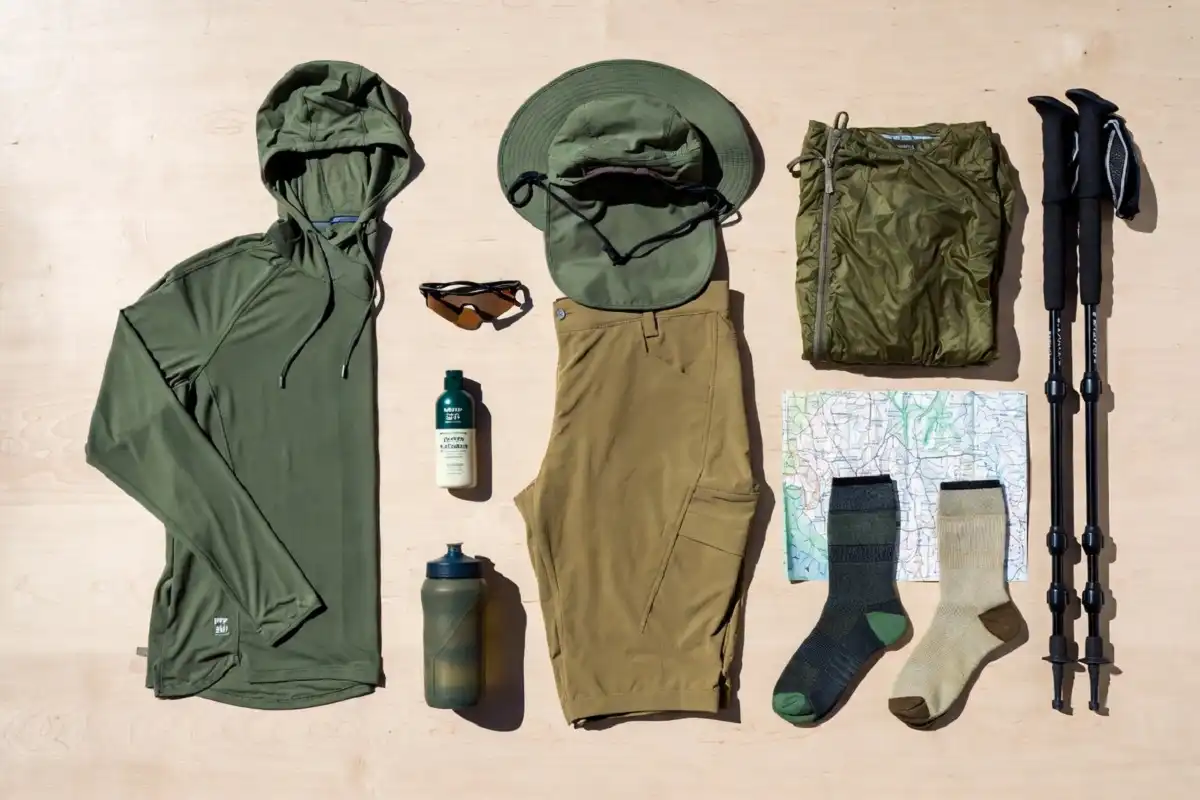
Your Warm-Weather Checklist
- UPF-rated sun shirt or hoodie (30+ minimum, 50+ for long exposure)
- Quick-dry shorts, convertible pants, or vented long pants
- Wide-brim hat or cap with a neck flap
- UV-protective sunglasses
- Synthetic or merino socks
- Lightweight layer for temperature drops
- Sunscreen for any skin the clothing doesn’t cover
Keep this list handy before your next trip, and you’ll have your clothing for hiking in warm weather sorted before you even reach the trailhead.
Smart Clothing Choices for Warm-Weather Hiking
Good clothing for hiking in warm weather comes down to a handful of decisions: skip cotton, choose a UPF-rated fabric, cover your head and neck, and pack a light layer for temperature swings.
Get those right, and you’ll spend your hike enjoying the trail instead of fighting your own gear.
FAQs
Should I wear long sleeves or short sleeves hiking in the heat?
Long sleeves in a lightweight, breathable, UPF-rated fabric usually win, since they cut sunscreen use and sun exposure without trapping much extra heat.
Is cotton ever okay for a hot weather hike?
For a short walk under an hour with easy access to water and shade, cotton is fine. Beyond that, the risk of chafing and prolonged dampness outweighs the comfort.
What color should I wear hiking in the sun?
Light colors generally feel cooler, but a UPF rating matters more than color. Pick the rating first, then choose a color you like.
Do I still need sunscreen if I wear UPF clothing?
Yes, for any skin your clothing doesn’t cover, including your face, hands, and neck if you’re not wearing a hood or gaiter.
Does humid heat need different clothing than dry heat?
Somewhat. Humid heat calls for the fastest-wicking fabric you own, since sweat has a harder time evaporating in damp air. Dry heat is more forgiving and gives merino wool’s slower evaporation less of a downside.