How Do I Start Hiking? A Beginner’s Guide That Actually Works
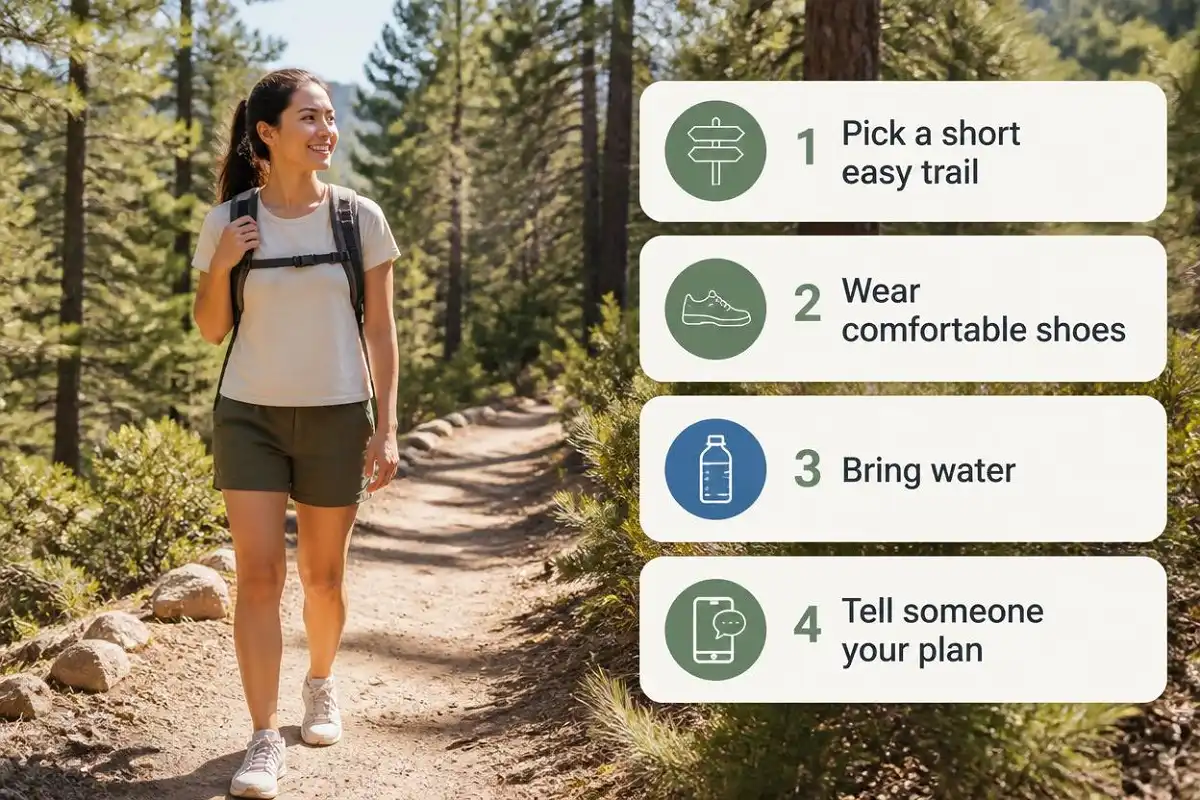
If you’re asking “how do I start hiking,” the short answer is this: pick a short, flat, well marked trail near you, wear comfortable closed-toe shoes, bring water, and go.
You don’t need expensive gear or a mountain to begin. You just need a plan that matches your current fitness and a little patience while you build experience.
I’ve been hiking for years, and I still remember my first real trail. I showed up in the wrong shoes and ran out of water halfway through. It wasn’t a disaster, but it taught me what beginners actually need to know. This guide covers exactly that, so you can skip my early mistakes and figure out how do I start hiking the right way from your very first outing.
How Do I Start Hiking?
Start with a short, easy, well-marked trail. Wear comfortable shoes, carry enough water, check the weather, tell someone where you’re going, and keep your first few hikes slow and manageable.
Choose a short, flat and well-marked route for your first hike.
Sturdy sneakers or trail shoes are enough for easy terrain.
Carry enough water for the expected hiking time and conditions.
Review the weather, daylight and recent trail conditions.
Share your route, start time and expected return time.
How Do I Start Hiking as a Complete Beginner?
You start hiking by choosing a short trail, usually under three miles, with low elevation change. Beginners do best on trails rated “easy” on apps like AllTrails. Walk at a pace where you can still talk in full sentences. If you’re breathing too hard to speak, slow down.
Before your first hike, check the weather and daylight hours. Tell someone where you’re going and when you expect to be back. This single habit solves most safety problems before they start.
Start with one hike per week for the first month. Your body needs time to adapt to uneven ground, and rushing this stage is how new hikers get discouraged or hurt.
A short trail gives you room to learn your pace without exhausting yourself.
Low elevation gain and maintained trails make the learning curve much easier.
One easy hike each week gives your body time to adjust to uneven terrain.
How Long Does It Take to Get Comfortable Hiking?
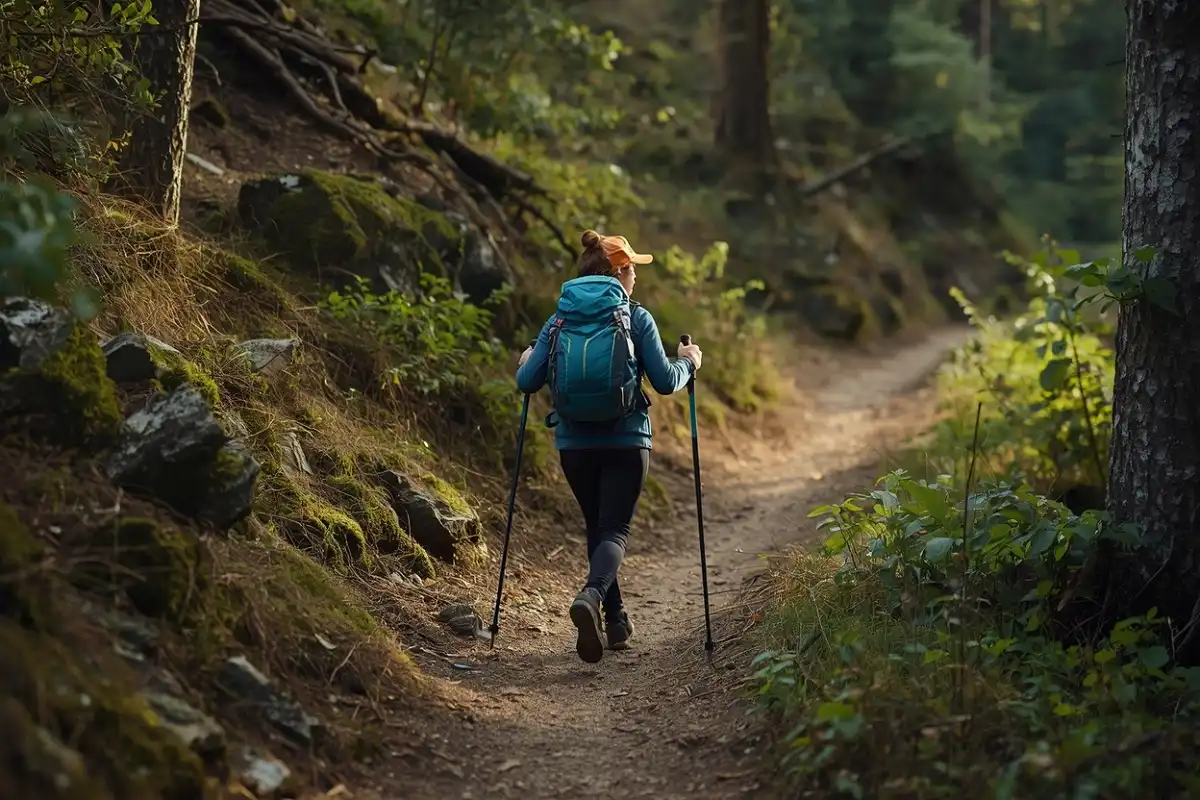
Most beginners feel noticeably more comfortable after four to six hikes. That’s usually enough time for your legs, lungs, and feet to adjust to uneven terrain and sustained walking. If you’re still asking yourself how do I start hiking without feeling wiped out afterward, the honest answer is that early fatigue is normal. It fades quickly with consistency.
Give yourself permission to go slow in the beginning. Progress in hiking isn’t measured by speed. It’s measured by how far and how often you’re willing to keep showing up. After a month of weekly hikes, most people are ready to add distance or elevation without much trouble.
What Gear Do I Need When I Start Hiking?
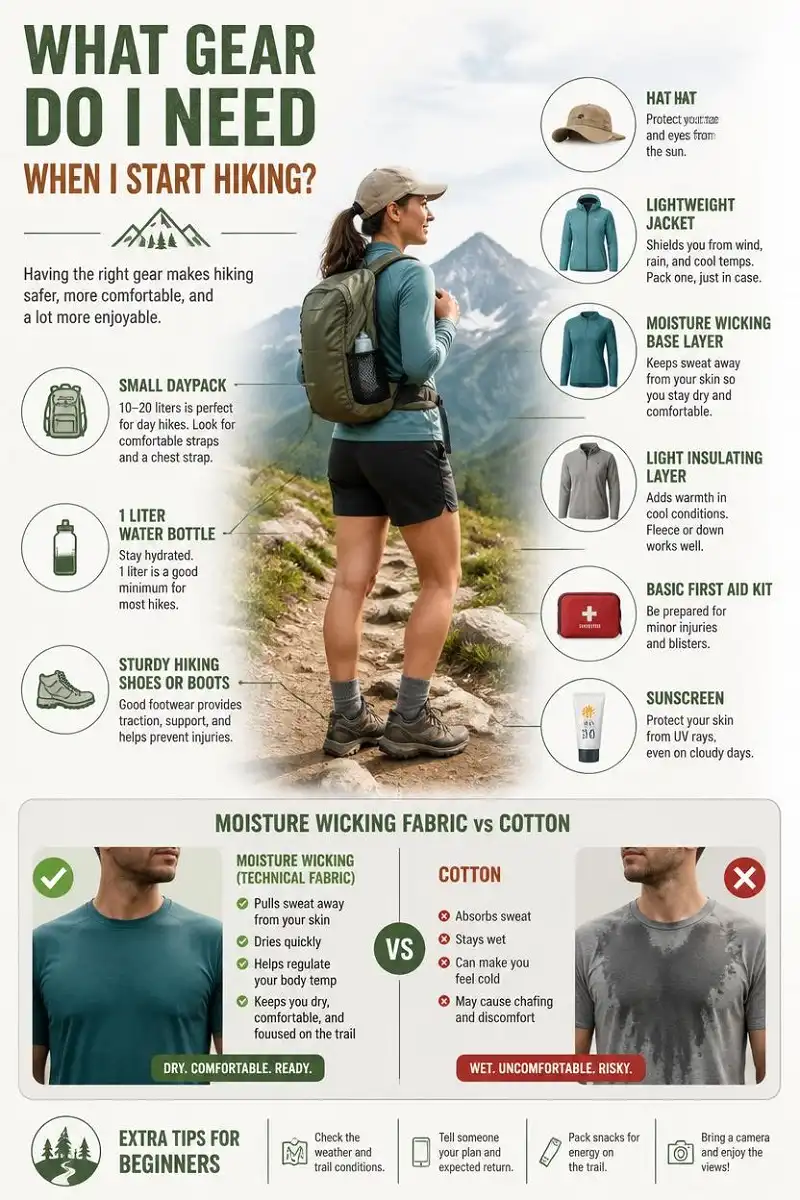
You don’t need much gear for your first few hikes. A pair of sturdy shoes, a small backpack, water, and sunscreen will cover most short trails.
Simple Beginner Gear
- Comfortable closed-toe shoes or boots with good ankle support
- A small daypack, 10 to 20 liters is plenty
- At least one liter of water for every two hours on trail
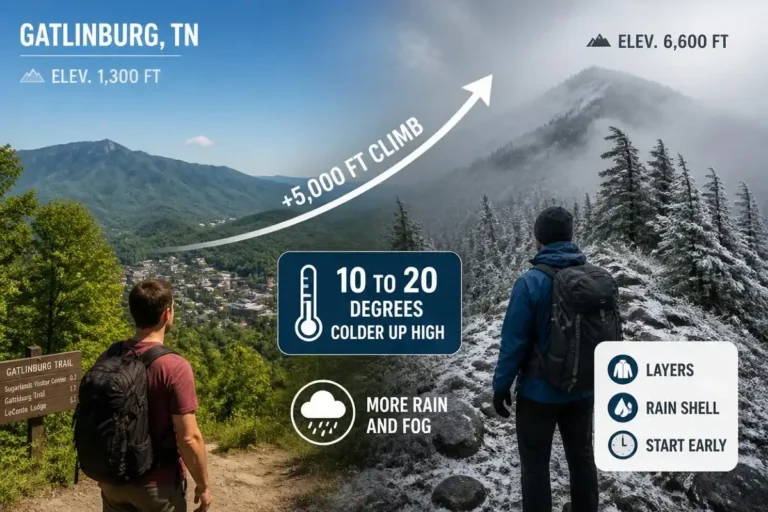
- A light jacket, even in summer, since weather changes fast at elevation
- A basic first aid kit
- Sunscreen and a hat
Layering matters just as much as footwear when you start hiking. A moisture-wicking base layer keeps sweat off your skin, and a light insulating layer traps warmth without adding bulk. Skip cotton shirts. They stay wet once you sweat, and wet cotton cools your body down fast, especially at higher elevation or once the sun drops.
Do I Need Hiking Boots to Start Hiking?
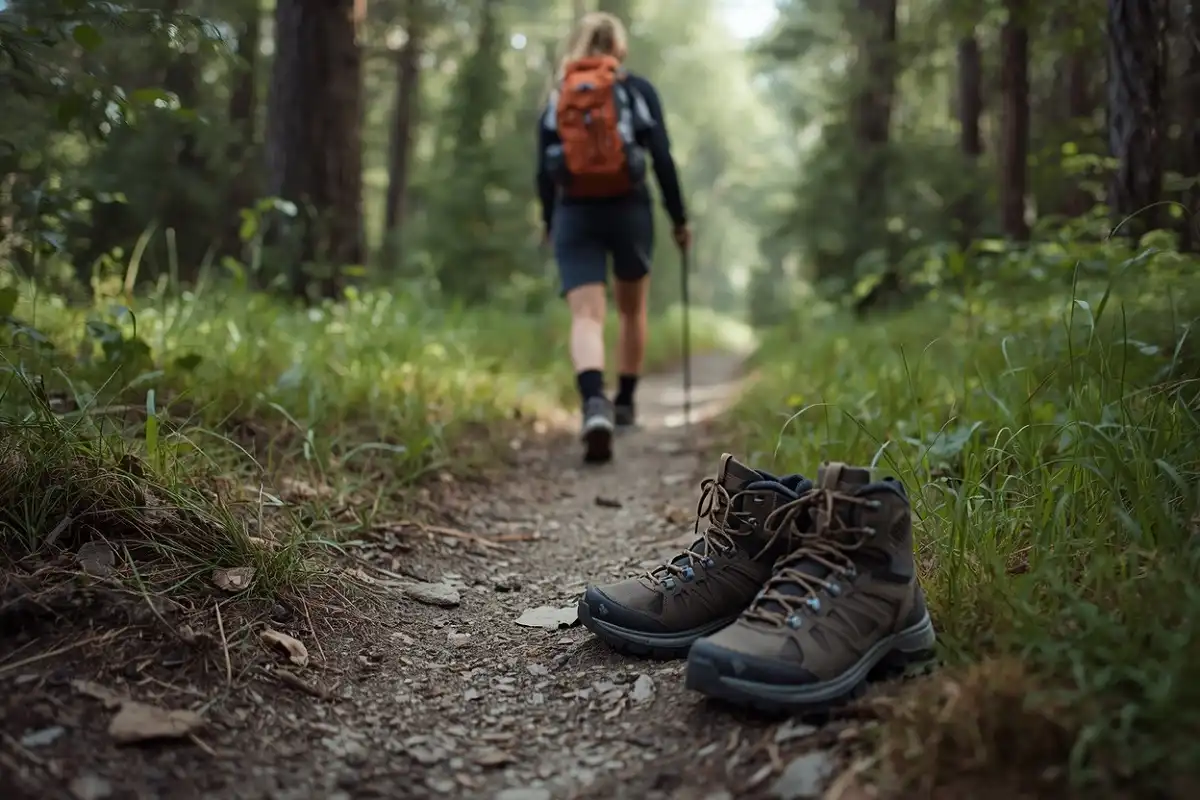
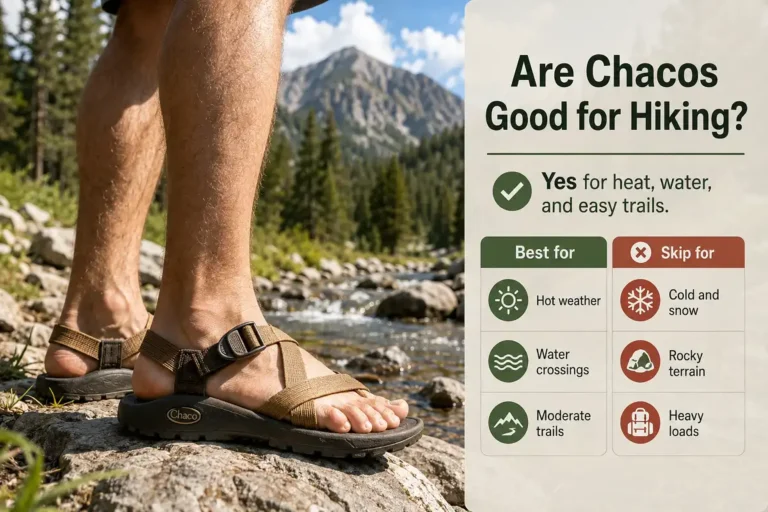
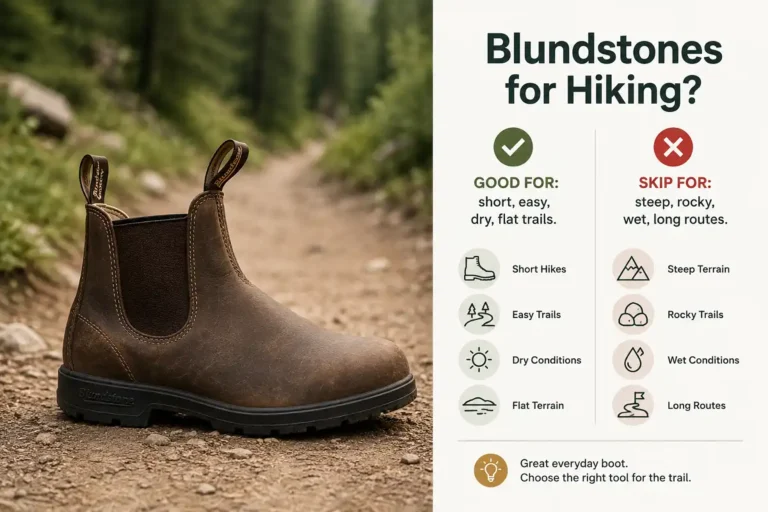
No, you don’t need dedicated hiking boots to start hiking. Trail runners or sturdy sneakers work fine for flat, dry, well maintained trails. I actually wrote a full breakdown on whether sturdy trail footwear holds up for everyday walking, since a lot of new hikers ask this exact question. Once you’re covering rougher or wetter terrain, boots with more ankle support and traction start to matter more.
Socks matter more than most beginners expect too. Cotton socks hold moisture and cause blisters fast. I go into more detail on why the right pair of socks changes your hike in my piece on that exact topic.
Trail Shoes
- Lightweight
- Good for dry terrain
- Comfortable for beginners
- Easy to use for everyday walking
Hiking Boots
- More support
- Better traction
- Useful in rough terrain
- Helpful in wet conditions
How Do I Choose My First Trail?
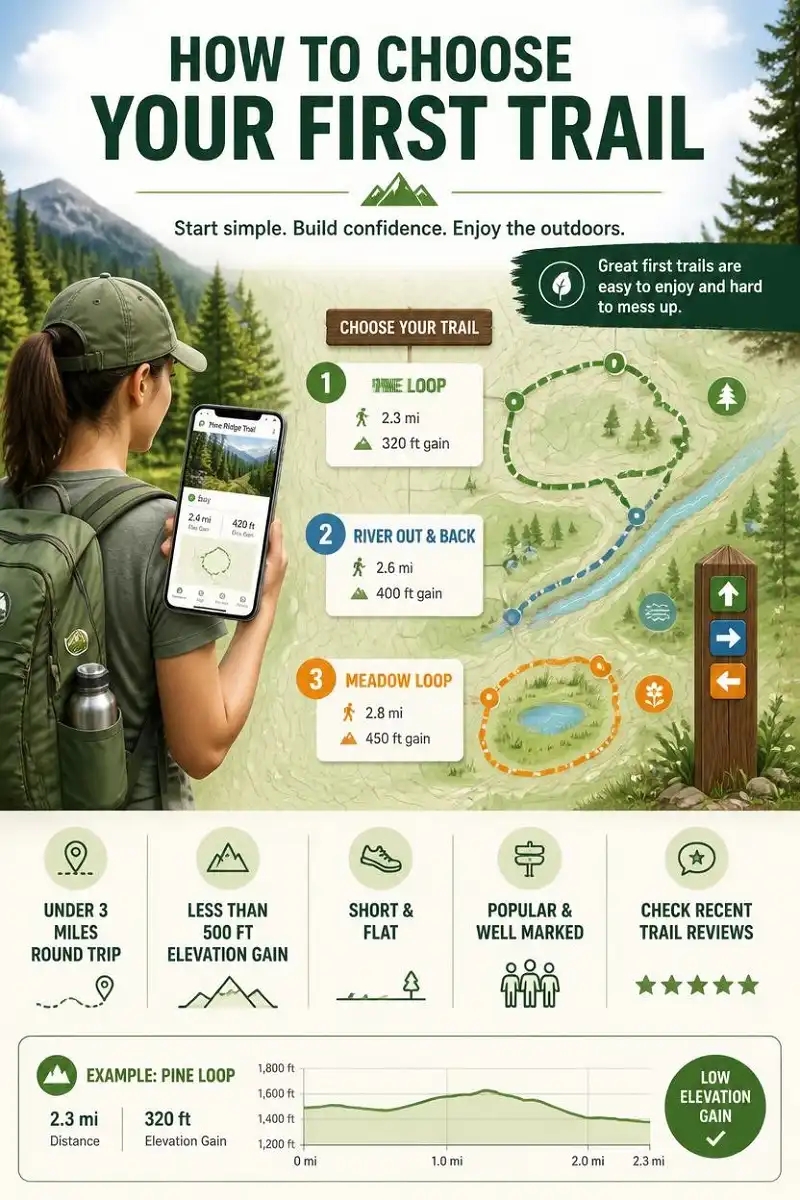
Choose a trail that’s short, flat, and popular. Popular trails are usually well marked and busy enough that help isn’t far away if something goes wrong. Look for trails under 3 miles round trip with less than 500 feet of elevation gain for your first outing.
Apps like AllTrails, and your local park service website, list difficulty ratings, distance, and recent trail conditions from other hikers. Read a few recent reviews before you go. Trail conditions change with weather and season, so a review from six months ago might not reflect what you’ll actually find.
If you’re wondering how much climbing is too much for a beginner, I covered that question directly in my article on what counts as a steep or difficult climb for new hikers.
Loop trails are a good pick when you’re figuring out how do I start hiking without backtracking the same path twice. Out-and-back trails work too, and they’re often easier to judge for time, since you simply turn around at the halfway point.
How Do I Start Hiking Safely?
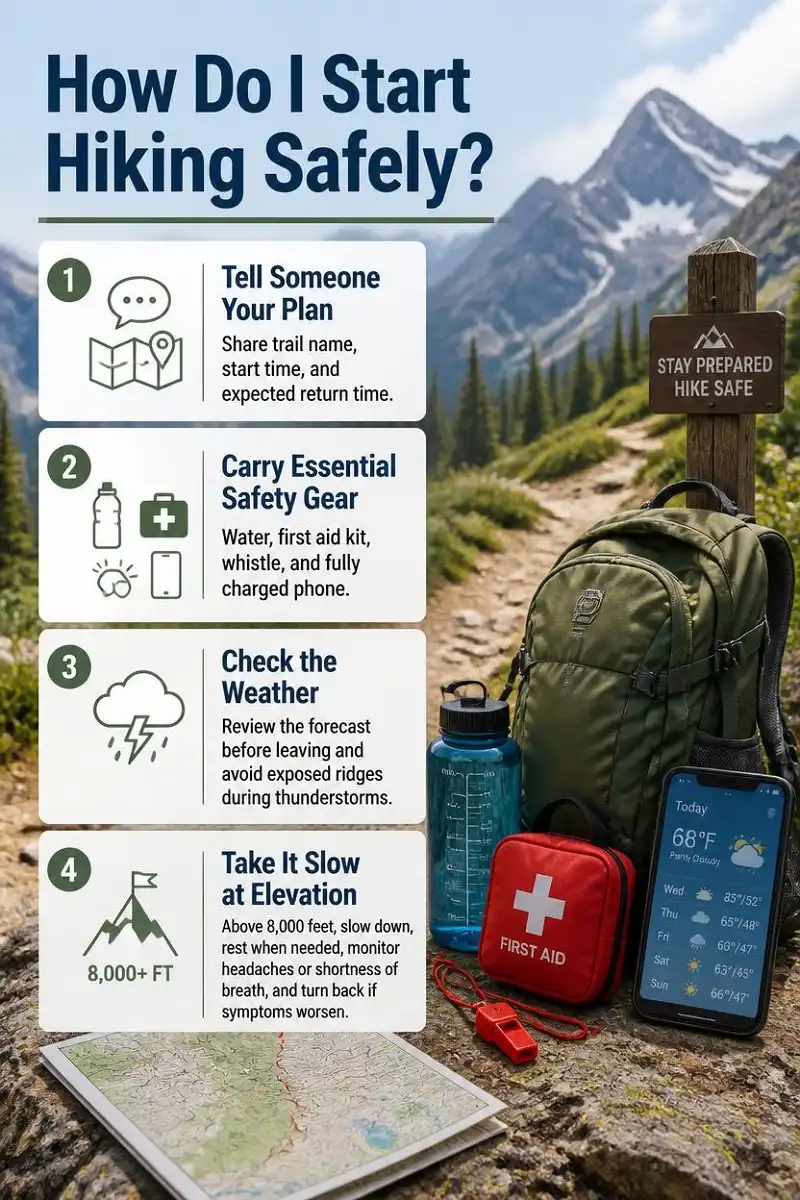
Hiking safely starts with telling someone your plan. Share your trail name, start time, and expected return time with a friend or family member. This is the single most important safety step, and it costs nothing.
Tell someone your trail name, start time and expected return time.
Carry more water than you think you’ll need, especially in hot weather.
Review the latest forecast immediately before your hike.
Take it easy at higher elevations and turn back if symptoms worsen.
Carry more water than you think you need. A common guideline is half a liter per hour of moderate hiking, more in hot weather. Also pack a small first aid kit, a whistle, and a fully charged phone.
Check the weather forecast right before you leave, not the night before. Mountain and desert weather in the United States can shift fast, and a clear morning can turn windy or stormy by afternoon. If thunderstorms are forecast, plan to be off any exposed ridge or peak well before they arrive.
If your first hikes take you above 8,000 feet, go slower than you think you need to. Mild headaches or shortness of breath at elevation are common signs your body is still adjusting. Rest, drink water, and turn back if symptoms get worse instead of pushing through.
How Do I Start Hiking Without Getting Lost?
Stay on Marked Trails
Download an offline map before leaving. Pay attention at trail junctions, and if a fork isn’t clearly marked, backtrack rather than guess.
Stick to marked, well traveled trails and pay attention to trail junctions. Download an offline map of the trail before you leave, since cell service often disappears in canyons and forests. If a trail forks and isn’t marked clearly, backtrack rather than guess.
According to Wikipedia’s overview of hiking, the activity has roots in simple countryside walking, which is a good reminder that hiking doesn’t have to be complicated to be enjoyable or safe.
How Do I Start Hiking Alone vs With a Group?
Hiking with others is safer for beginners, but hiking alone is fine on busy, well marked trails if you take precautions. If you hike solo, stick to daylight hours, popular routes, and always share your plan beforehand.
Group Hiking
- Built-in safety net
- Someone can help with pacing
- Easier for learning trail skills
- More comfortable for nervous beginners
Solo Hiking
- Choose busy, well-marked trails
- Stay within daylight hours
- Share your plan beforehand
- Carry navigation and emergency basics
Group hikes give you a built-in safety net and someone to help pace you. Many local outdoor clubs and gear shops organize beginner-friendly group hikes, which is a low-pressure way to learn from experienced hikers.
How Do I Start Hiking With Kids or a Dog?
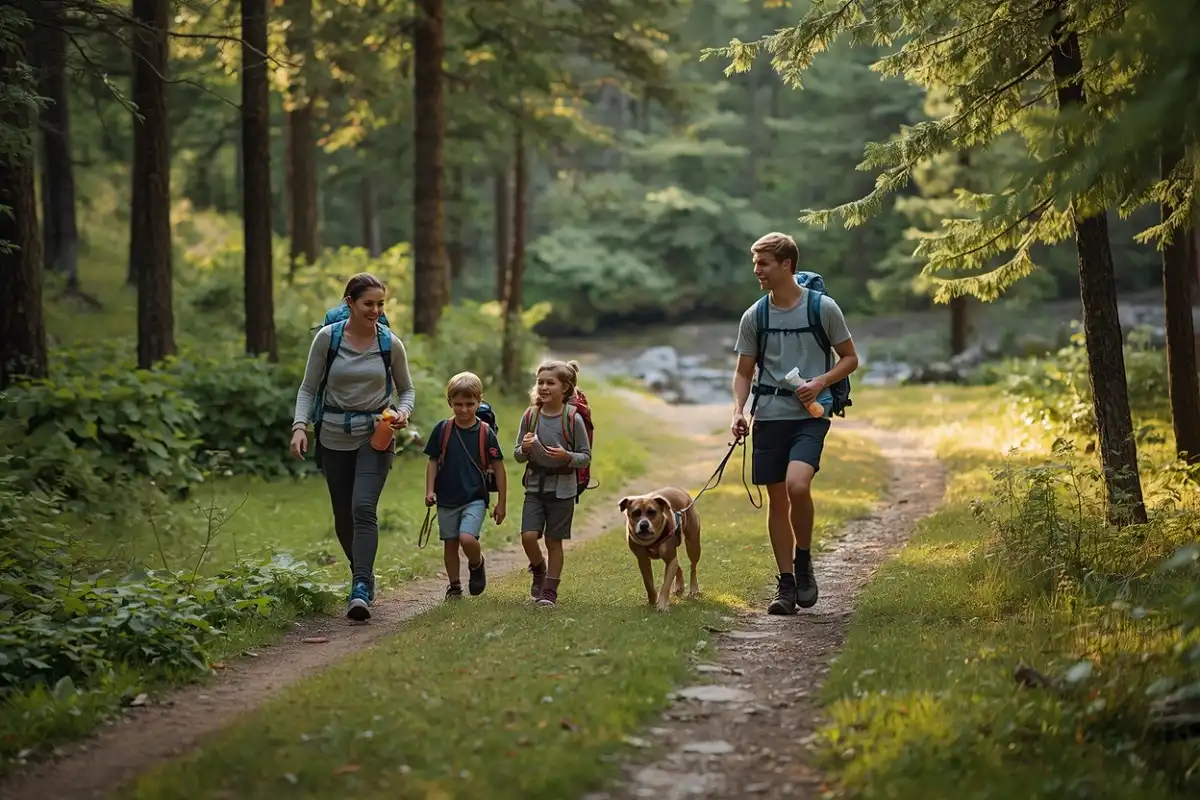
Hiking with kids works best on short, flat trails with a clear reward at the end, like a viewpoint or a stream. Bring extra snacks and water, plan for a slower pace, and let them set some of the stops. A frustrated kid on a trail usually means the hike was too long or too fast, not that hiking itself was a bad idea.
Hiking with a dog is similar. Start with trails under two miles, check that dogs are allowed on that specific trail, and pack water and a collapsible bowl for your dog too. Watch your dog’s paws on rocky terrain, since hot pavement or sharp rock can cause real discomfort over a longer walk.
Choose an easy trail with something interesting to see.
Extra snacks and water make a big difference.
Confirm that dogs are allowed before heading out.
Watch for hot pavement and sharp or rough surfaces.
Pack water and a collapsible bowl for your dog.
How Do I Train My Body Before I Start Hiking?
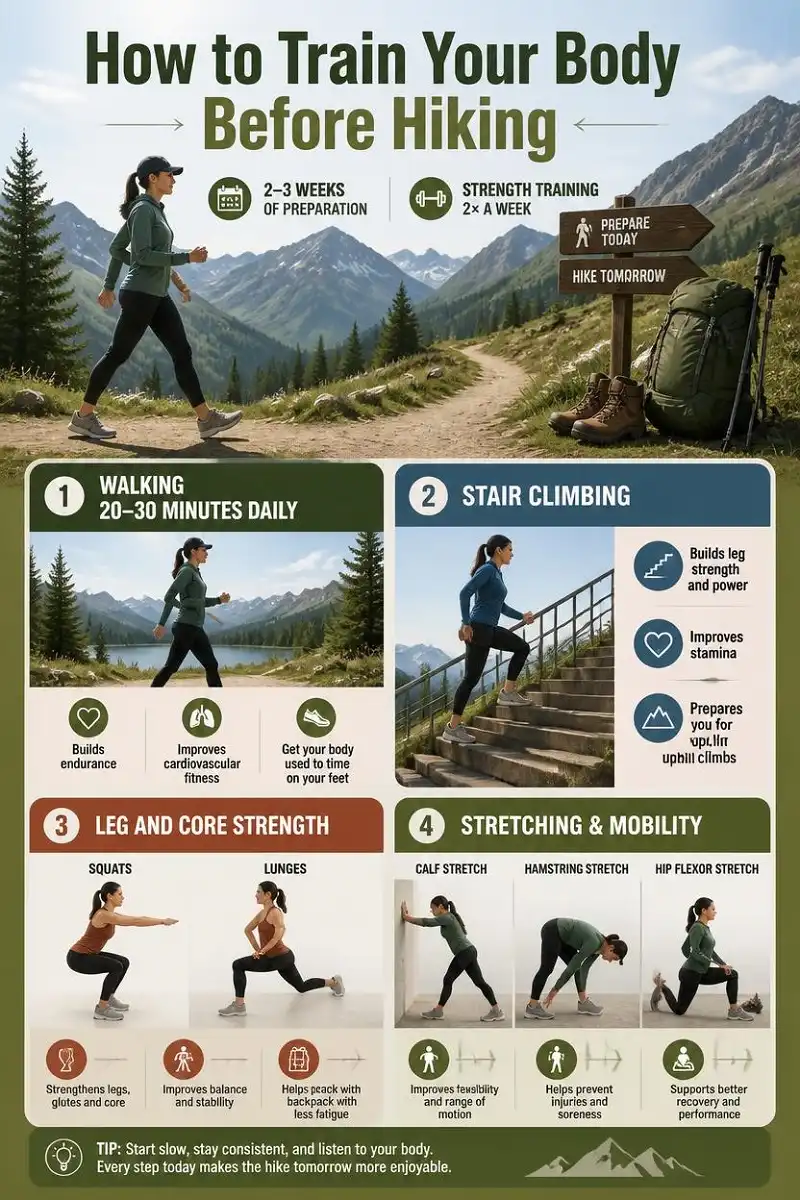
You can train for hiking with regular walking, stair climbing, and light strength work for your legs and core. Two to three weeks of consistent walking, 20 to 30 minutes a day, prepares most beginners for an easy trail.
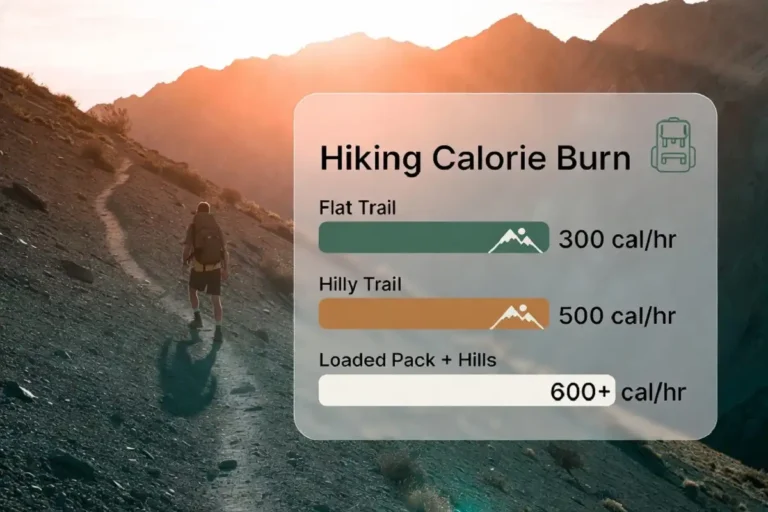
If weight management is part of your motivation for getting outside, I wrote about how consistent trail time affects your fitness in my article on using regular trail outings as part of a fitness routine.
Walk for 20–30 minutes regularly before your first hike.
Use stairs to prepare your legs for elevation changes.
Squats, lunges and stair climbs build useful hiking strength.
Stretch your calves, hamstrings, and hips before and after hiking. Uneven terrain uses muscles that flat walking doesn’t, so a little mobility work goes a long way toward avoiding soreness.
Building leg strength also answers a big part of how do I start hiking longer distances without your knees or hips complaining afterward. Bodyweight squats, lunges, and stair climbs twice a week build the specific strength hiking demands, especially on descents.
How Do I Start Hiking in Different Seasons?
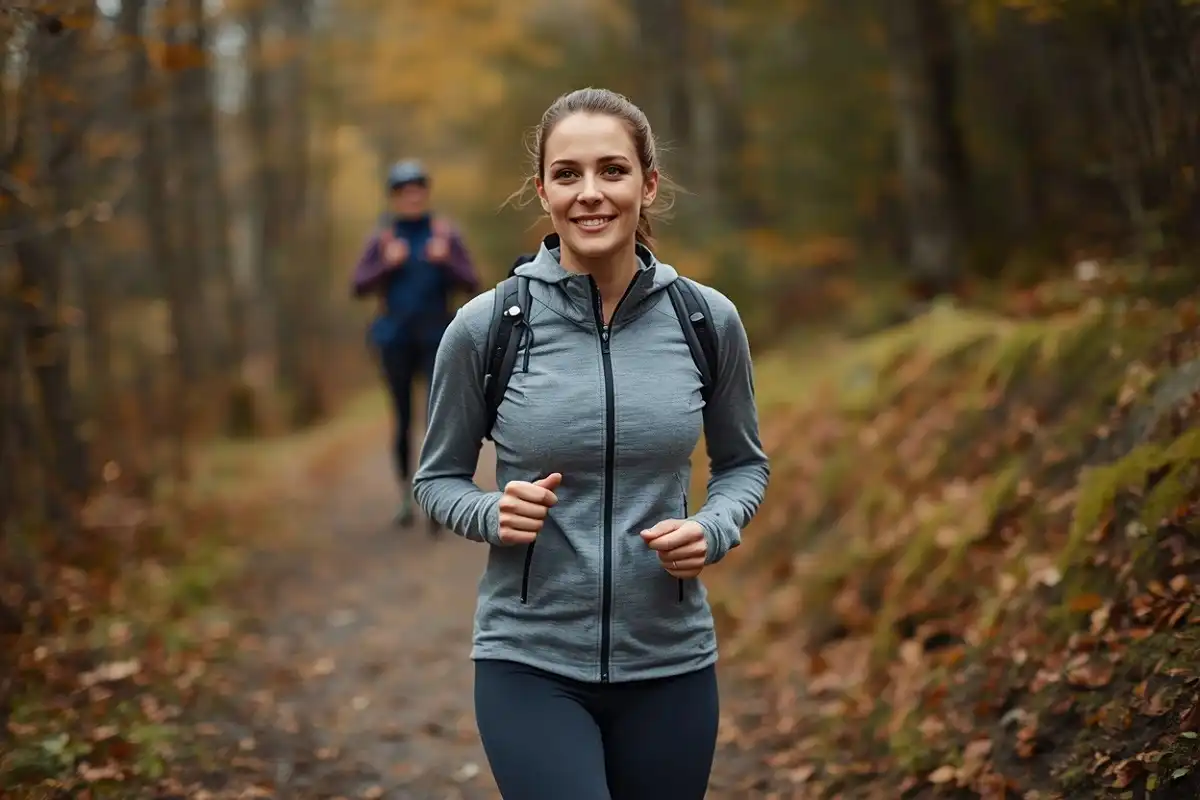
Summer
Start early to beat the heat, carry extra water, and choose shaded or higher elevation trails when possible.
Cold weather hiking calls for layers, since your body temperature swings a lot between climbs and rest stops. I put together a full layering breakdown in my guide to dressing correctly for cold trail conditions, which covers base layers, insulation, and waterproof outer shells.
Beat the heat and carry extra water.
Use layers to manage temperature changes.
Snowmelt can make trails wet and muddy.
Cooler temperatures often make comfortable hiking.
Trail conditions can change with weather and season.
Spring trails can be muddy from snowmelt, so waterproof footwear helps. Fall usually offers the most stable, comfortable hiking weather in most of the United States, with cooler temperatures and fewer bugs.
If cold weather is holding you back from getting started, don’t let it. Winter hiking is often quieter and more scenic than people expect, and plenty of easy, beginner-friendly routes stay accessible year round.
Should I Use Trekking Poles When I Start Hiking?
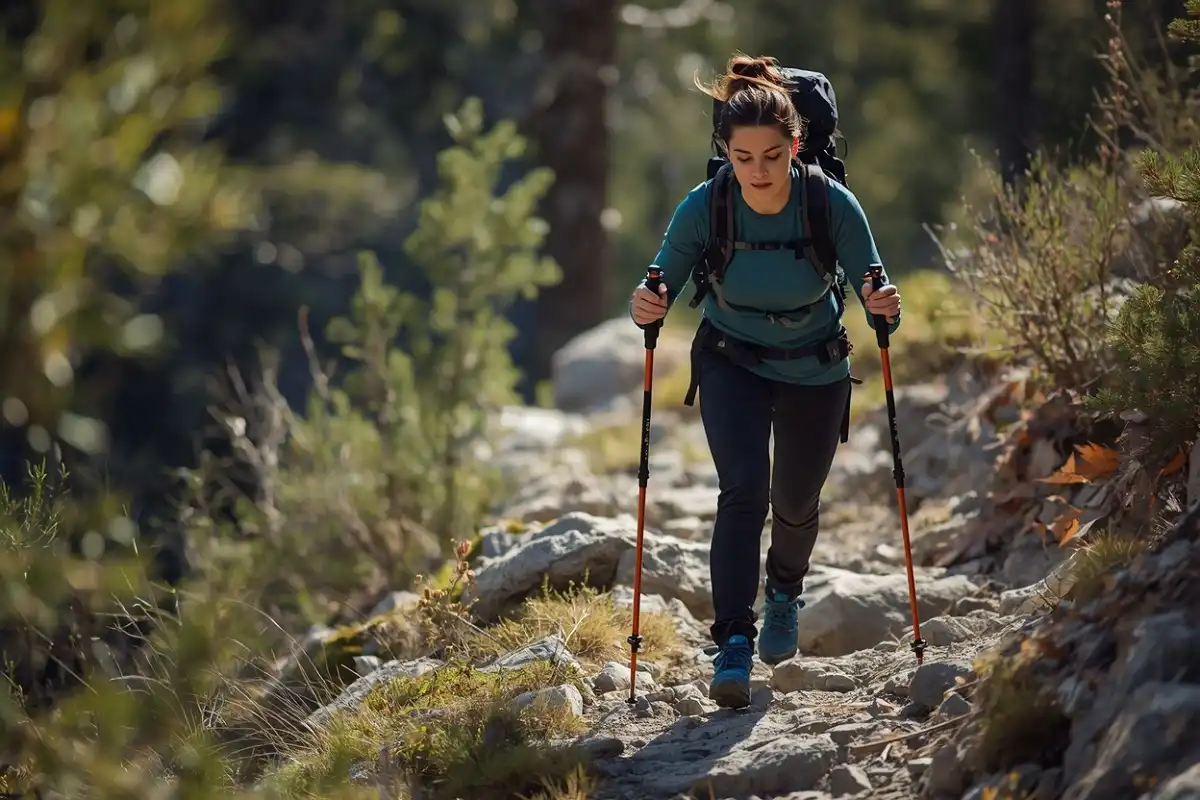
Trekking poles aren’t required for flat, easy trails, but they help with balance on uneven ground and reduce strain on your knees during descents. I broke down exactly when they’re worth carrying in my article on whether poles are worth adding to your pack.
Do You Need Trekking Poles?
Not for your first flat, easy trail. Consider them when you begin hiking uneven terrain, steeper descents or routes where extra balance would help.
What Should I Pack When I Start Hiking?
Pack based on the “ten essentials” concept that experienced hikers use: navigation, sun protection, insulation, illumination, first aid, fire starter, repair kit, extra food, extra water, and emergency shelter.
For a short beginner hike, you can scale this down, but water, a map, sun protection, and a first aid kit should always come with you. This list alone answers most of how do I start hiking prepared instead of caught off guard by weather or a longer-than-expected trail.
Beginner Hiking Essentials
Food matters more than beginners expect. Bring snacks with protein and carbs, like trail mix or a sandwich, even for short hikes. Low blood sugar makes fatigue and poor decisions more likely on trail.
A packing checklist is one of the simplest ways to answer how do I start hiking without forgetting something important. Lay your gear out the night before, check it against a short list, and you’ll rarely leave something essential at home.
Common Mistakes New Hikers Make
New hikers often overestimate how far they can comfortably walk.
Carry enough water for the trail, weather and expected hiking time.
Break in new footwear around the neighborhood before taking it onto a trail.
Slow down and give your body time to warm up.
Always let someone know when you expect to return.
Address small hot spots before they become painful blisters.
Finally, some beginners quit after one hard hike instead of adjusting the difficulty. If your first trail felt miserable, that usually means it was too long, too steep, or too hot, not that hiking isn’t for you. Pick an easier route next time and you’ll likely have a completely different experience.
Your First Hike Can Be Simple
You don’t need expensive equipment, advanced fitness or a mountain summit. Start with a short, easy trail and focus on learning how your body responds.
Starting to hike doesn’t require special skills or expensive gear. Pick a short, easy trail, wear comfortable shoes, carry water, and tell someone your plan.
Once you’ve got a few easy hikes behind you, you’ll naturally want to go farther, and that’s when gear and trail choices start to matter more.
If you’re still not sure how do I start hiking today, the honest answer is simple: pick a trail near you and go.
Frequently Asked Questions
How do I start hiking if I’m out of shape?
Start with short, flat walks in your neighborhood, then move to easy, short trails. Fitness builds quickly with consistency, and hiking itself is one of the best ways to build the exact fitness it requires.
How do I start hiking with no experience at all?
Pick a popular, short, easy trail, tell someone your plan, wear comfortable shoes, and bring water. That combination covers almost everything a true beginner needs for a safe first hike, and it’s honestly the same answer I give anyone who asks me how do I start hiking from zero experience.
How do I start hiking on a small budget?
Use shoes and clothes you already own if they’re comfortable and weather appropriate. Water, sunscreen, and a small backpack are the only real requirements to begin.
What’s the best time of day to start hiking as a beginner?
Morning is usually best. Trails are cooler, less crowded, and you’ll have more daylight left as a safety buffer if the hike takes longer than planned.
Do I need a fitness tracker or GPS watch to start hiking?
No. A phone with a downloaded offline map covers most beginner needs. A GPS watch is a nice upgrade later, but it’s not required for your first hikes.
How do I start hiking if I’m scared of wildlife or getting hurt?
Stick to busy, well marked trails during daylight hours, and hike with a friend if wildlife concerns you. Most trail animals avoid people, and sticking to popular routes with other hikers around lowers your risk significantly.