Are Blundstones Good for Hiking? What You Need to Know Before You Hit the Trail
You bought a pair of Blundstones. They feel great around town, and now a weekend hike is coming up. So you wonder if you can skip buying hiking boots and just wear the pair you already own. That is a fair question, and plenty of new hikers ask it. Are Blundstones good for hiking, or do you really need a dedicated boot? Below, I break down where these boots work on the trail, where they fall short, and how to choose for your own hikes.
Are Blundstones good for hiking?
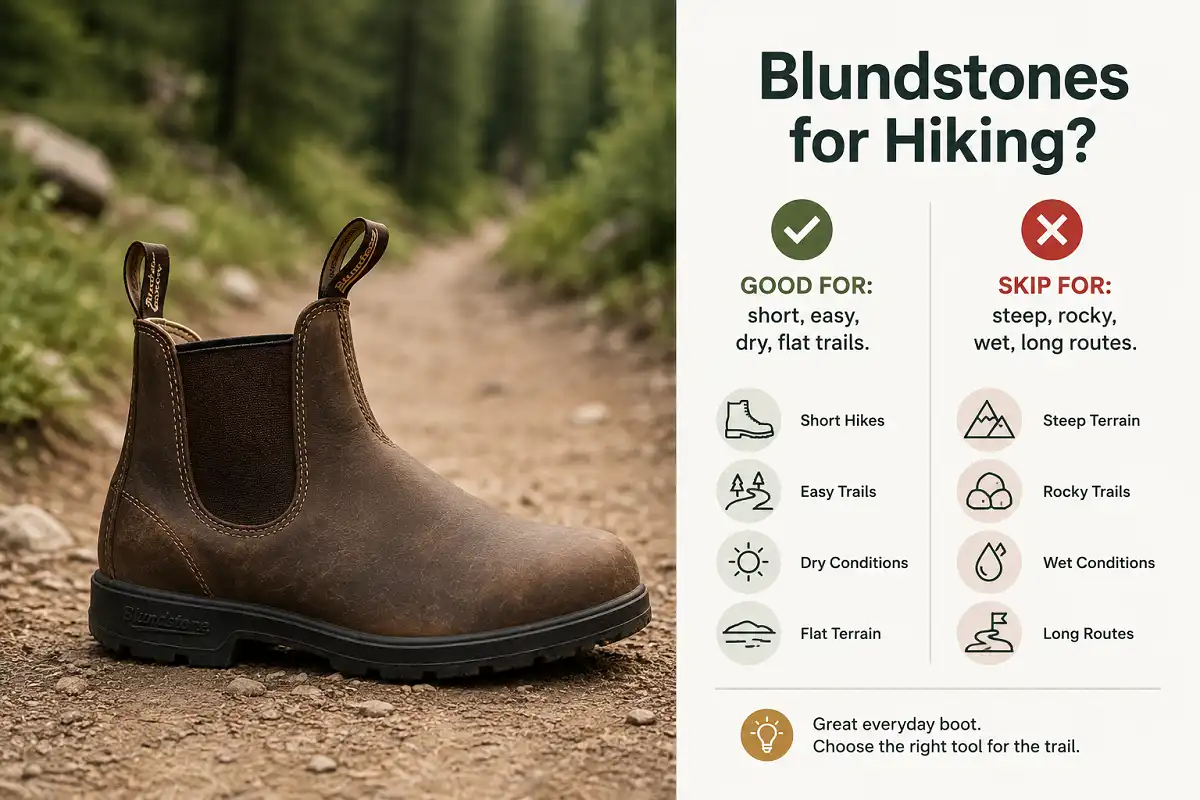
Yes, for short, easy, dry hikes on flat or packed trails. No, for steep, rocky, wet, or long routes. They have no laces for ankle support, and most soles are not built for technical ground. For casual trail days, though, they hold up fine.
What Are Blundstones, Exactly?
Blundstones are pull-on Chelsea boots with elastic side panels and no laces. The company started in Hobart, Tasmania, back in 1870, and it built its name on tough work boots for farmers and factory crews. Today people call them “Blunnies,” and you spot them everywhere from cafes to campsites. Most pairs use a full-grain leather upper over a durable outsole. You can read more through this history of the Australian boot maker if you want the full backstory. Because they slip on in seconds and last for years, they became a daily favorite for many. Still, comfort around town does not always carry over to grip on a mountain.
The design matters here. A Chelsea boot slides on with a pull tab and stretches to fit through the elastic gussets. Many Blundstone models also include a supportive shank for midfoot stability. So that setup feels great for standing, walking, and light work. However, it leaves out the one feature hikers lean on most, which is a lace-up system that locks the ankle in place.
So, Are Blundstones Good for Hiking? The Honest Answer
When people ask, “Are Blundstones good for hiking?” the honest answer is that it depends on the hike. For short strolls on packed dirt, they perform well. However, for rough or steep terrain, they leave gaps that a proper hiking boot fills. Four things decide it: traction, ankle support, weather protection, and cushioning over distance. So let me walk through each factor, then compare Blundstones to dedicated boots.
When Blundstones Work Well on the Trail
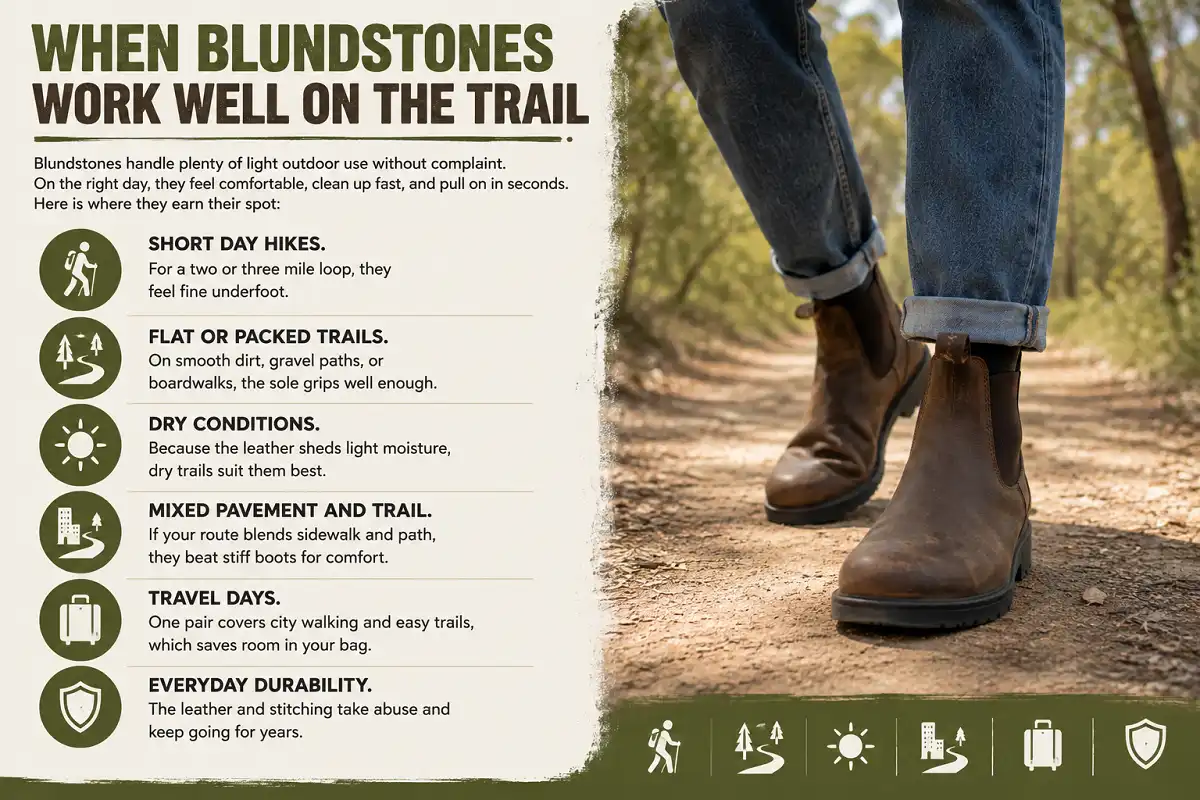
Blundstones handle plenty of light outdoor use without complaint. On the right day, they feel comfortable, clean up fast, and pull on in seconds. Here is where they earn their spot:
For a two or three mile loop, they feel fine underfoot.
On smooth dirt, gravel paths, or boardwalks, the sole grips well enough.
Because the leather sheds light moisture, dry trails suit them best.
If your route blends sidewalk and path, they beat stiff boots for comfort.
One pair covers city walking and easy trails, which saves room in your bag.
The leather and stitching take abuse and keep going for years.
I have worn mine on flat lakeside paths near home, and they did the job with no complaints. For that kind of outing, are Blundstones good for hiking? Absolutely, yes. Also, the comfort alone makes them a smart pick for easy miles, and you never have to fuss with laces.
When to Leave the Blunnies at Home
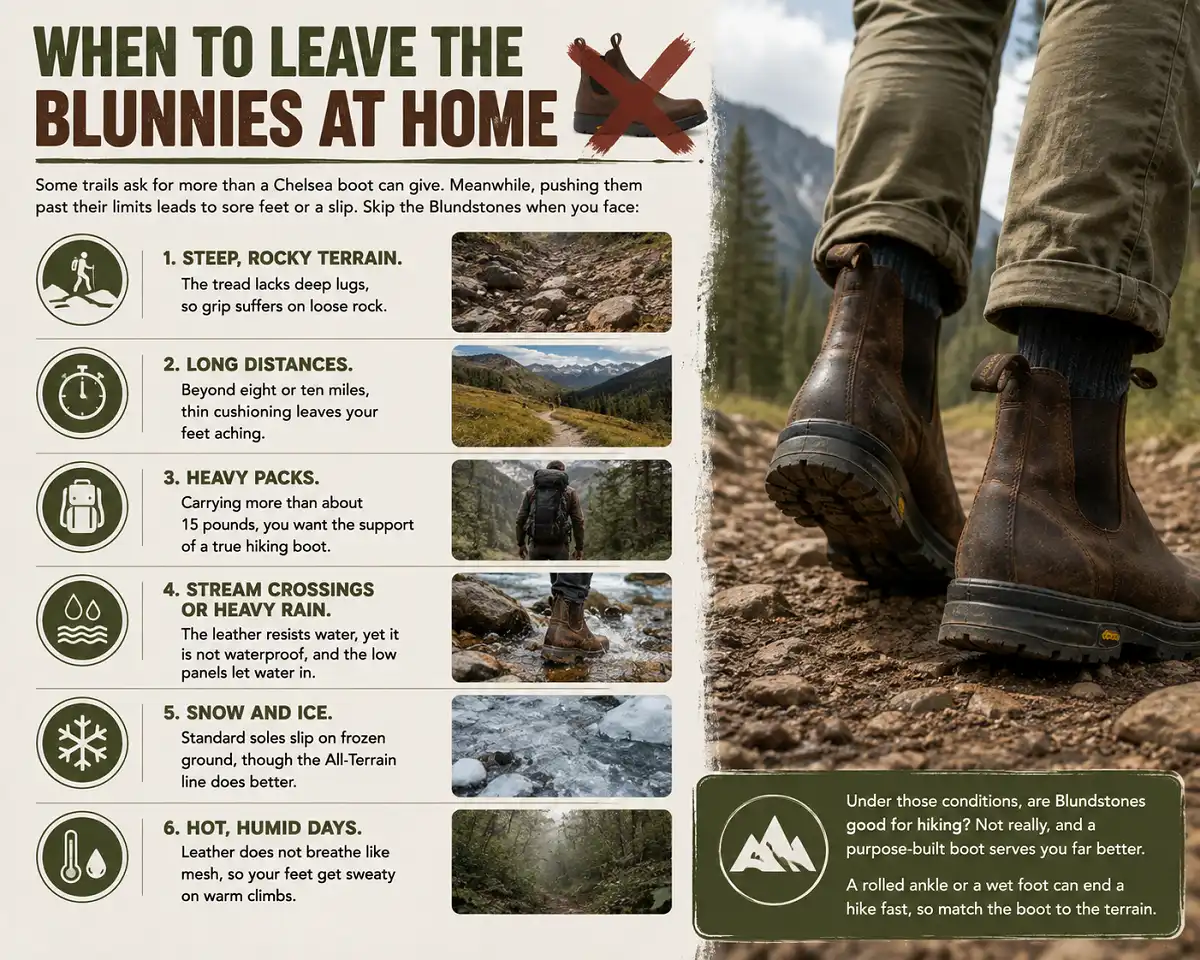
Some trails ask for more than a Chelsea boot can give. Meanwhile, pushing them past their limits leads to sore feet or a slip. Skip the Blundstones when you face:
The tread lacks deep lugs, so grip suffers on loose rock.
Beyond eight or ten miles, thin cushioning leaves your feet aching.
Carrying more than about 15 pounds, you want the support of a true hiking boot.
The leather resists water, yet it is not waterproof, and the low panels let water in.
Standard soles slip on frozen ground, though the All-Terrain line does better.
Leather does not breathe like mesh, so your feet get sweaty on warm climbs.
Under those conditions, are Blundstones good for hiking? Not really, and a purpose-built boot serves you far better. A rolled ankle or a wet foot can end a hike fast, so match the boot to the terrain.
The Four Things That Decide It
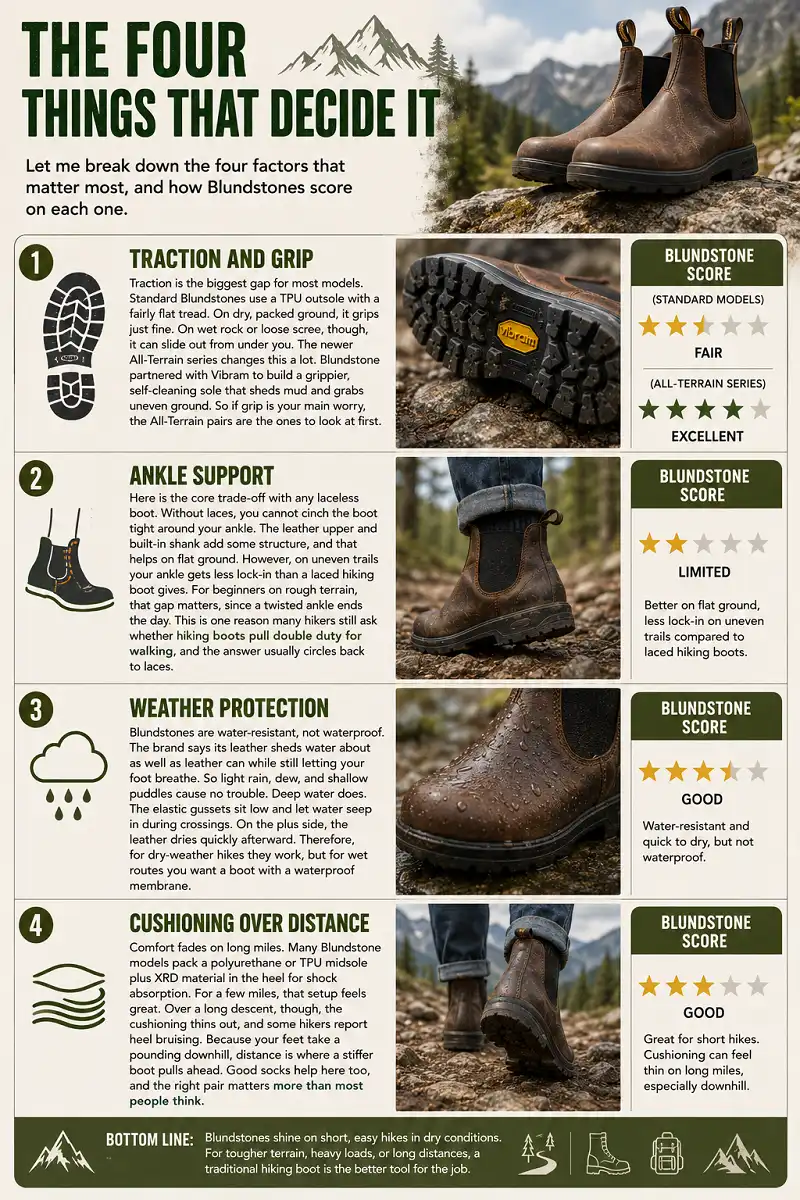
Let me break down the four factors that matter most, and how Blundstones score on each one.
Traction and Grip
Traction is the biggest gap for most models. Standard Blundstones use a TPU outsole with a fairly flat tread. On dry, packed ground, it grips just fine. On wet rock or loose scree, though, it can slide out from under you. The newer All-Terrain series changes this a lot. Blundstone partnered with Vibram to build a grippier, self-cleaning sole that sheds mud and grabs uneven ground. So if grip is your main worry, the All-Terrain pairs are the ones to look at first.
Ankle Support
Here is the core trade-off with any laceless boot. Without laces, you cannot cinch the boot tight around your ankle. The leather upper and built-in shank add some structure, and that helps on flat ground. However, on uneven trails your ankle gets less lock-in than a laced hiking boot gives. For beginners on rough terrain, that gap matters, since a twisted ankle ends the day. This is one reason many hikers still ask whether hiking boots pull double duty for daily walking, and the answer usually circles back to laces.
Weather Protection
Blundstones are water-resistant, not waterproof. The brand says its leather sheds water about as well as leather can while still letting your foot breathe. So light rain, dew, and shallow puddles cause no trouble. Deep water does. The elastic gussets sit low and let water seep in during crossings. On the plus side, the leather dries quickly afterward. Therefore, for dry-weather hikes they work, but for wet routes you want a boot with a waterproof membrane.
Cushioning Over Distance
Comfort fades on long miles. Many Blundstone models pack a polyurethane or TPU midsole plus XRD material in the heel for shock absorption. For a few miles, that setup feels great. Over a long descent, though, the cushioning thins out, and some hikers report heel bruising. Because your feet take a pounding downhill, distance is where a stiffer boot pulls ahead. Good socks help here too, and the right pair matters more than most people think.
Blundstones vs. Dedicated Hiking Boots
Here is a quick side-by-side so you can see the gaps at a glance.
Blundstones
- Flat TPU tread, with Vibram on All-Terrain
- Low ankle support with no laces
- Water-resistant leather
- Great cushioning for short walks
- Light and easy to wear
- Slip on in seconds
- Best for easy, short, dry trails
Dedicated Hiking Boots
- Deep, aggressive lugs
- High collar with lacing
- Often available with waterproof membranes
- Built for long miles
- Slightly heavier
- Lacing takes more time
- Best for steep, wet, long and technical trails
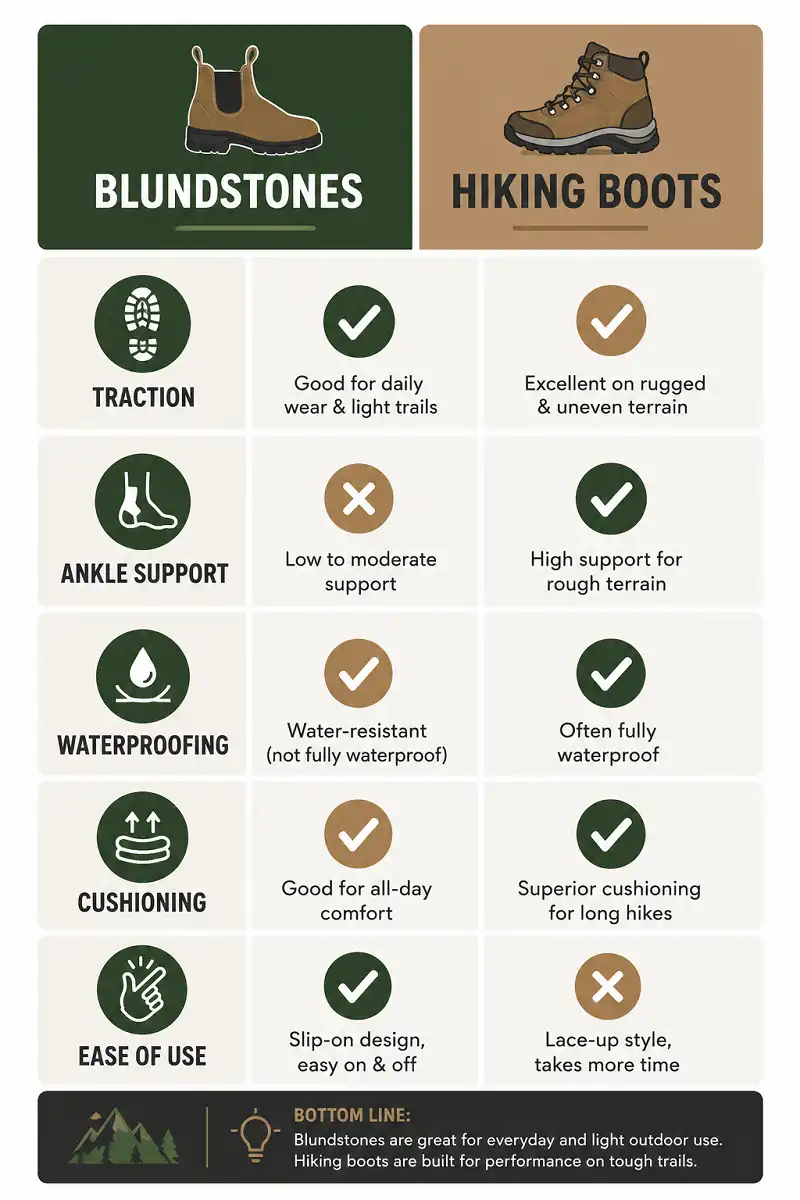
So the table makes the pattern clear. For casual outings, Blundstones compete well and win on comfort. For serious hikes, though, dedicated boots pull ahead on grip, support, and weather protection. Still, neither choice is wrong. It comes down to the trails you actually walk.
Which Blundstone Models Handle Trails Best?
The All-Terrain series handles trails best, since Blundstone built it with a grippier Vibram sole. Still, not every Blundstone performs the same on dirt, so here are the lines that stand out.
All-Terrain Series
All-Terrain models like the #2056 use the Vibram sole with stronger grip and a self-cleaning tread. For rougher ground, this is the line to pick.
Classic Series
Classic models like the #585 add a cushioned midsole with XRD shock absorption, which helps on longer walks.
Thermal Range
For cold-weather trails, the lined Thermal boots add warmth. Still, check the tread for grip on ice.
Dress Boots
Dress boots like the #062 are great for town, not for trails. Skip these for any hike.
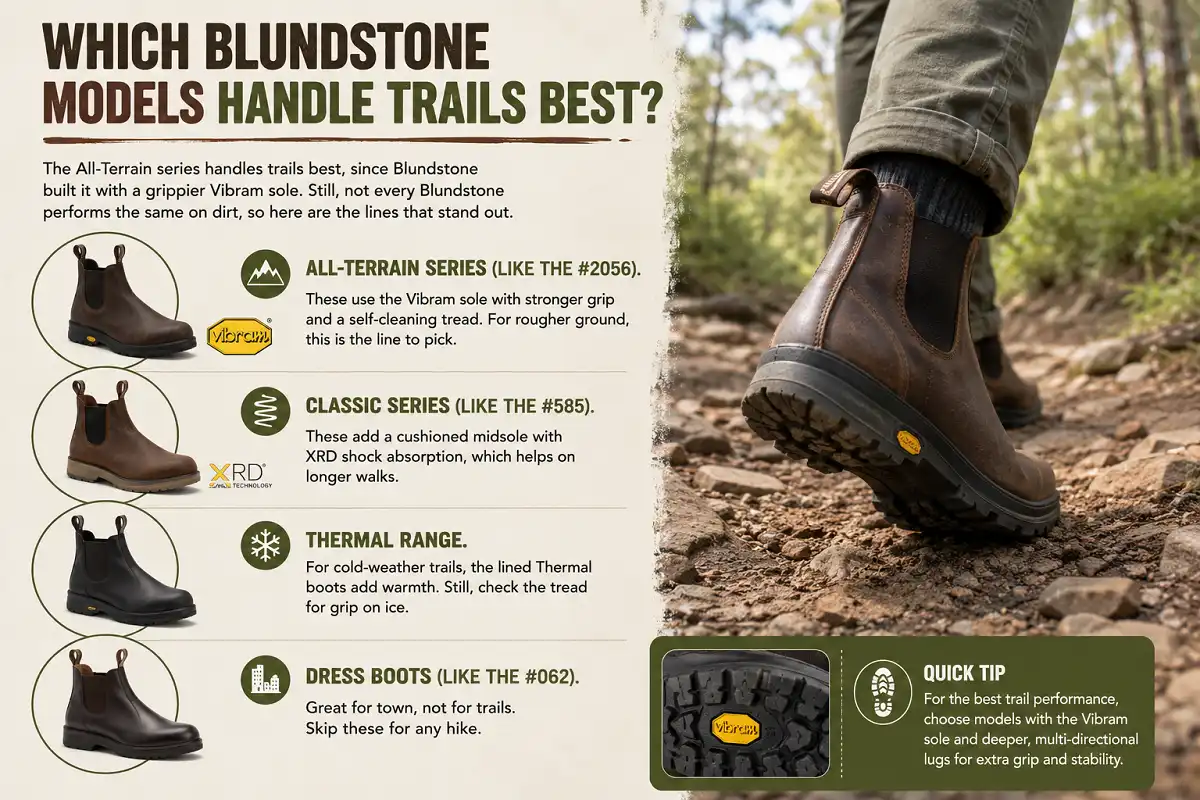
People still ask, “Are Blundstones good for hiking on rougher trails?” and the All-Terrain line is the closest thing to a yes. Because Vibram built that outsole for wet and uneven ground, it grips far better than the standard sole. For anything truly technical, though, I would still steer the money toward a proper hiking boot, the kind that also holds up on a job site if you need one pair to do more.
How Should Blundstones Fit for Hiking?
Blundstones fit best true to size, though the brand suggests sizing up for a wider foot. Fit makes or breaks comfort on the trail, so this step matters more than it sounds. A boot that fits right keeps your heel from sliding, which cuts down on blisters over a long walk. So try them on with hiking socks, not thin dress socks, before you judge the fit. Then wear them around the house first. New leather feels stiff, and it softens as it molds to your foot.
Tips for Hiking in Blundstones
If you plan to hike in your Blunnies, a few habits make the day smoother.
Break them in first
New leather feels stiff, so wear them around town before a hike.
Wear proper socks
Thin cotton invites blisters. Choose a cushioned hiking sock instead.
Keep the mileage moderate
Save them for shorter routes, not all-day treks.
Watch wet rock
The flat tread slides when surfaces turn slick, so step with care.
Condition the leather
A little care keeps water out and stretches the boot’s life.
Mind your heels
On long descents, heel rub can start, so learn how to keep blisters from forming before they ruin a trip.
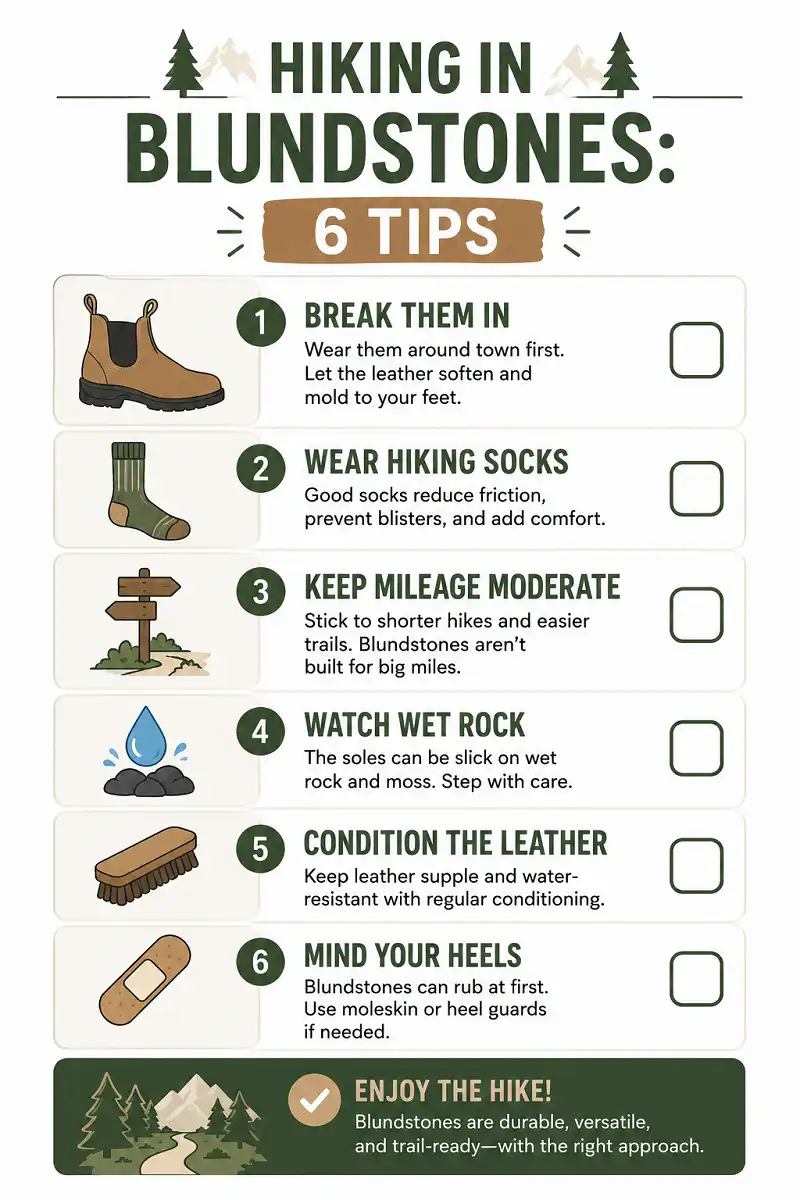
None of these tips turn a Chelsea boot into a mountaineering boot. However, they do help you get the most out of the pair you own for easy trails.
Are Blundstones Good for Hiking When You’re New?
For a beginner sticking to easy trails, yes, Blundstones are a fine place to start. You do not need special boots for a flat two-mile loop. If you are just getting into hiking, wearing comfortable boots you already own beats spending money you do not need to spend yet. As your hikes grow longer and steeper, though, upgrade to a dedicated pair. Start easy, learn what your feet need, and buy boots that match the trails you grow into. That path saves cash and teaches you what actually matters before you spend.
The Bottom Line by Trail Type
A simple rule sorts most of this out. Match the boot to the ground.
Flat, dry and short routes are where they make the most sense.
Fine in the All-Terrain series when conditions are mostly dry.
Steep, rocky, wet and long hikes call for dedicated footwear.
Keep that list in mind, and the choice gets easy. Your feet will thank you at the trailhead and again at the car.
Match the boot to the trail
Blundstones make sense when the trail is short, dry, flat and forgiving. When the ground becomes steep, rocky, wet or demanding, dedicated hiking boots are the safer choice.
FAQs
Are Blundstones actually good for hiking?
Yes, for short, easy, dry hikes on flat or packed trails. They are comfortable and durable, but they are not the best choice for steep, rocky, wet, long, or technical hikes because of their limited ankle support and traction.
Can I wear Blundstones on a long hike?
They can work for shorter outings, but long hikes are where their limitations become more noticeable. Beyond eight or ten miles, the cushioning may leave your feet aching, especially on long descents. Dedicated hiking boots are better suited to all-day mileage.
Are Blundstones waterproof for hiking?
No. Blundstones are water-resistant rather than waterproof. The leather handles light rain, dew and shallow puddles well, but water can enter through the low elastic gussets. For consistently wet routes or stream crossings, a waterproof hiking boot is a better choice.
Which Blundstone is best for hiking?
The All-Terrain series is the strongest option for trail use because it uses a grippier Vibram sole with a self-cleaning tread. Even so, a dedicated hiking boot remains the better choice for truly technical terrain.
Are Blundstones good hiking boots for beginners?
For beginners doing easy trails, yes. You do not need dedicated hiking boots for every short, flat route. Blundstones can be a practical starting point, but as your hikes become longer, steeper, wetter or more technical, upgrading to purpose-built hiking boots makes more sense.
So, are Blundstones good for hiking? For short, dry, easy trails, they work well, and their comfort is hard to beat. For steep, wet, rocky, or long hikes, they fall short on grip, ankle support, and waterproofing. Match the boot to the trail, and you rarely go wrong. Keep the Blunnies for casual outings and travel, and reach for a proper hiking boot when the terrain turns serious. That one habit keeps your feet happy and your hikes safe.
Match your footwear to the trail, not just to what feels comfortable around town.