10 Best Backpacks for Camera and Hiking Tested in 2026
You are two miles up the trail, the light turns gold behind the ridge, and your camera is buried under a rain jacket while the straps dig into your shoulders. That moment is exactly why the right pack matters so much. After years of hauling gear up trails around California and farther afield, I put together this guide to the best backpack for camera and hiking so you can skip the sore shoulders and the missed shots. Below are ten packs I trust, sorted by who each one suits best.
The best backpack for camera and hiking for most people
For most beginner and intermediate hikers, the Lowepro PhotoSport Outdoor BP 24L AW III is the best backpack for camera and hiking, because it carries like a normal daypack, protects your gear, and stays light. If you carry more, the Shimoda Explore V2 30 scales up without punishing your back.
How I tested and chose these packs
I did not rank these from a spec sheet alone. In practice, I have hiked with several of these packs on trails near home and on trips, and for the rest I leaned on hours of research, hands-on time in shops, and notes from hiking friends who shoot outdoors. Prices shift often, so treat the numbers below as a guide and check the current listing before you buy. Every pick here is a current 2026 model you can actually find in the United States, all chosen while hunting for the best backpack for camera and hiking across very different needs.
What makes the best backpack for camera and hiking
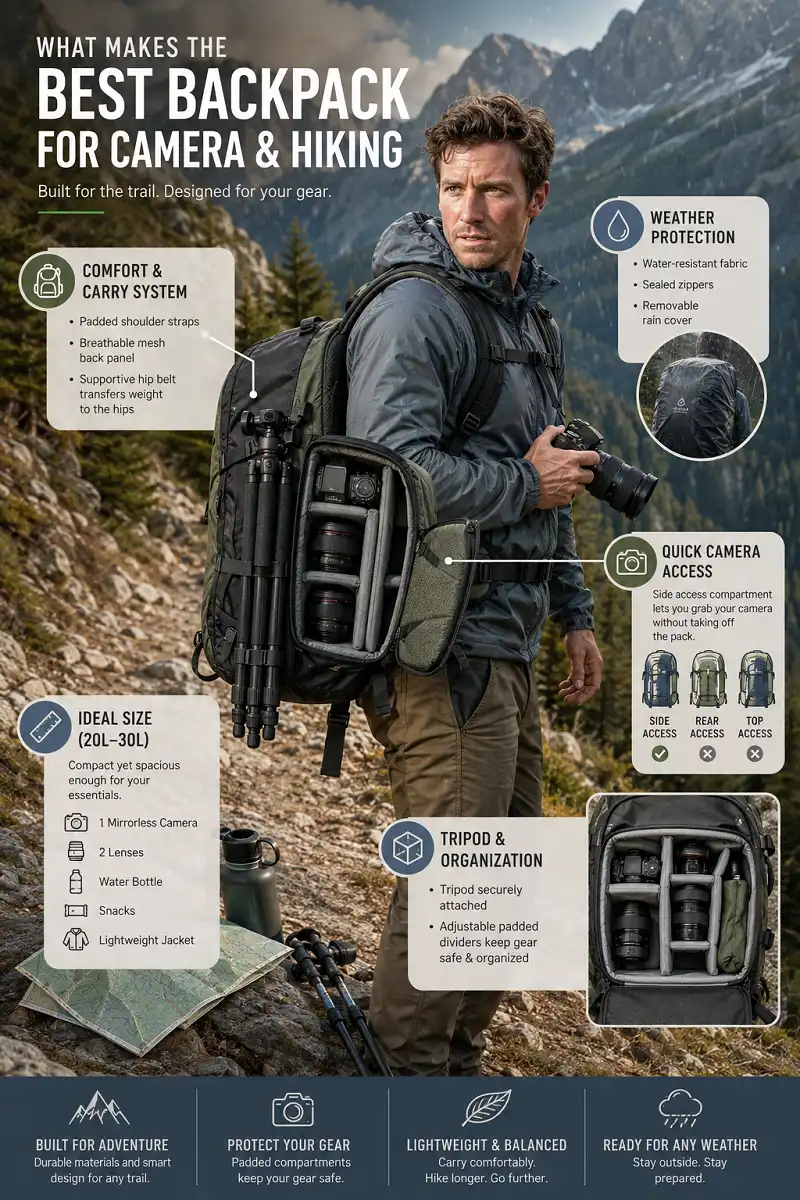
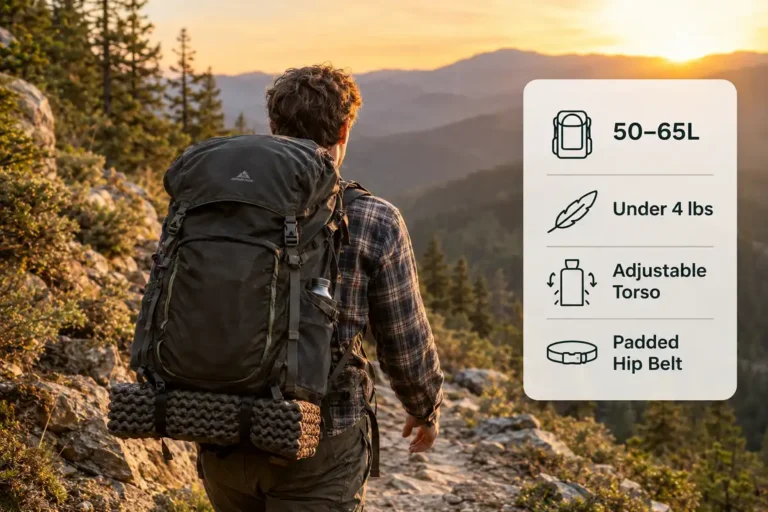
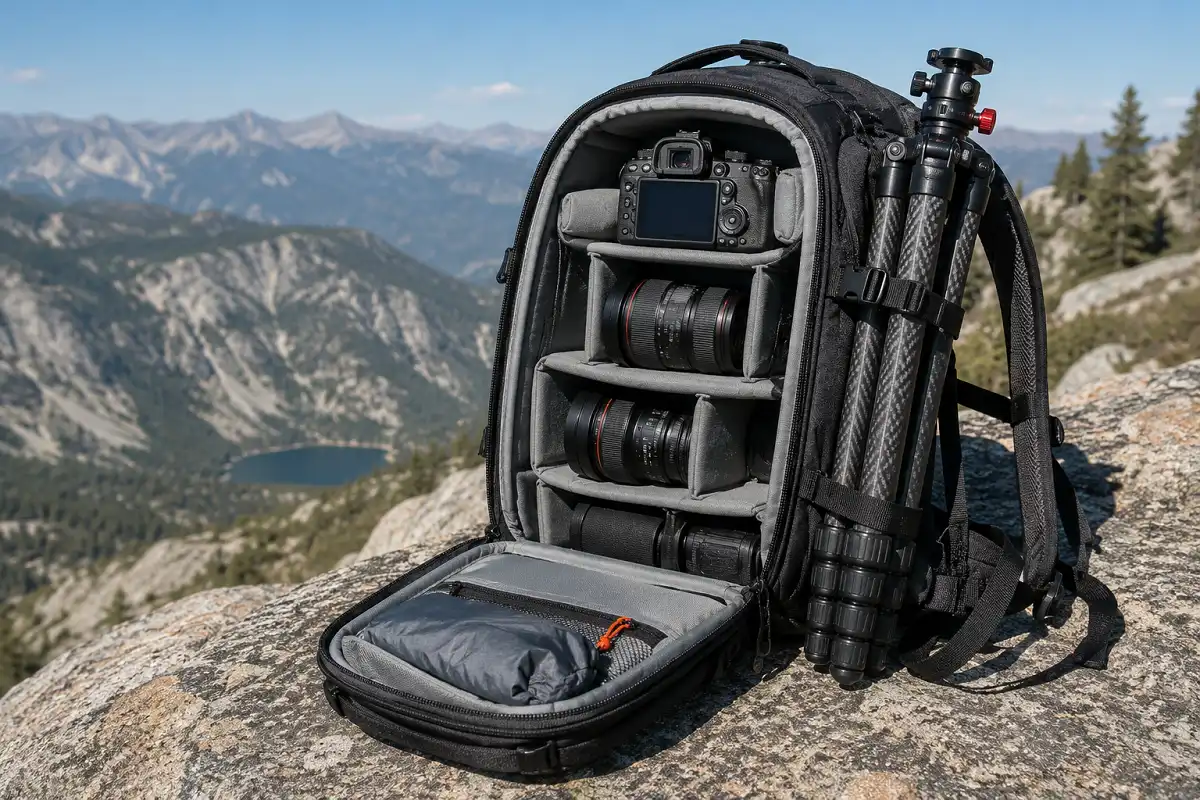
Padded straps, breathable back panels, and a proper hip belt matter when you’re carrying gear for several hours.
Water-resistant materials and rain covers help protect expensive camera equipment from changing mountain weather.
Side, rear, and top access determine how quickly you can grab your camera when the light changes.
This capacity range works well for most day hikes with a camera, lenses, water, snacks, and a layer.
Side pockets and external straps make carrying a tripod much easier on longer photography hikes.
Comfort and the carry system
Comfort matters more than pocket count. Look for padded shoulder straps, a breathable back panel, and a genuine hip belt that shifts weight onto your hips. This gets important once the elevation gain adds up and your legs are already working hard.
Weather protection matters
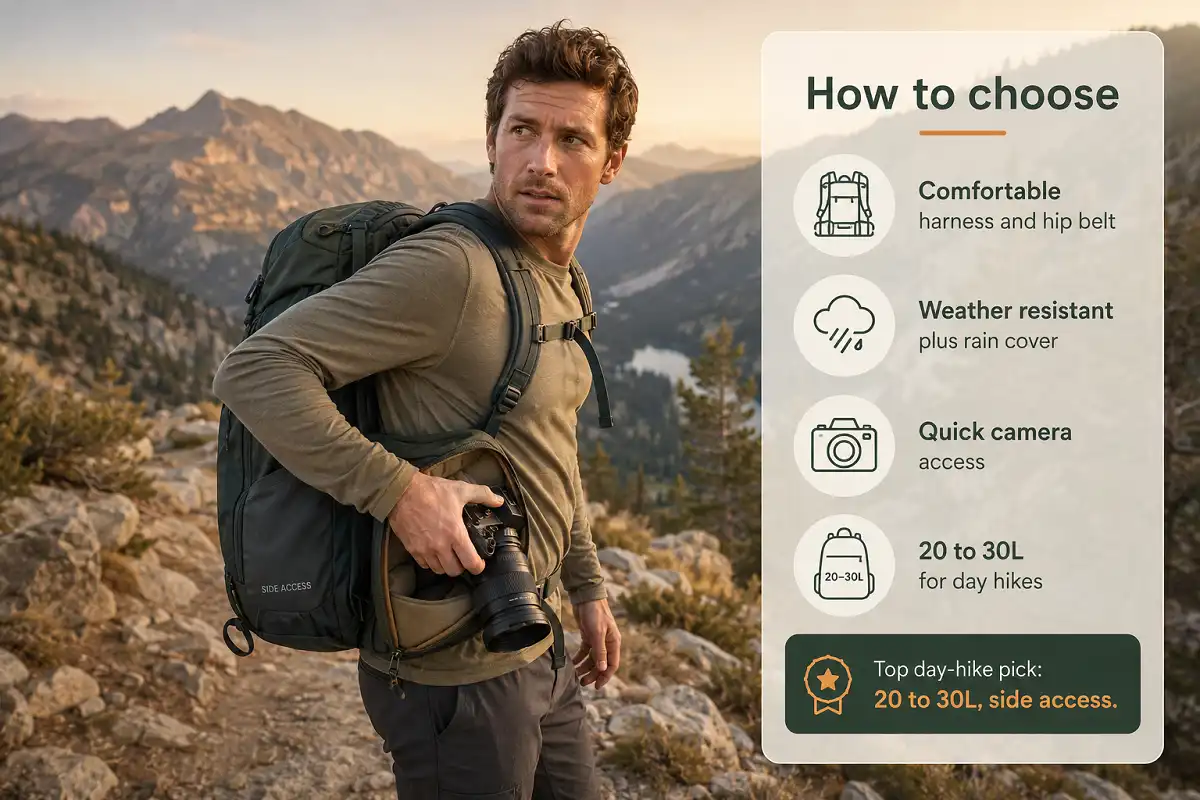
Weather turns fast in the mountains. A good pack uses water-resistant fabric and sealed zippers, and many include a rain cover. Still, most camera packs are weather resistant, not fully waterproof. Because of that, I always pack a cover for heavy rain.
Quick camera access
How fast you reach your camera decides how many shots you keep. Side access lets you swing the pack to one shoulder and grab the camera without stopping. Rear access keeps the camera cleaner and more secure, which helps on muddy or wet trails. Top access is simple and suits hybrid travel packs. In short, access style is what separates a decent camera bag from the best backpack for camera and hiking.
The right size
For day hikes, 20L to 30L is the sweet spot. That range fits a body, a couple of lenses, water, snacks, and the right layers for warm-weather trails . Most beginners now shoot with a mirrorless camera , which is lighter than a DSLR and leaves more room for trail gear. Bigger packs suit drones, extra bodies, or overnight trips, though they get heavy quickly.
Tripod and organization
Landscape shooters almost always carry a tripod, so look for side pockets or straps that hold it close to your back. Removable dividers also help, because they let you shape the inside around your kit, whether that is one small lens or a full landscape setup. The best backpack for camera and hiking gives you that flexibility without any fuss.
The 10 picks at a glance
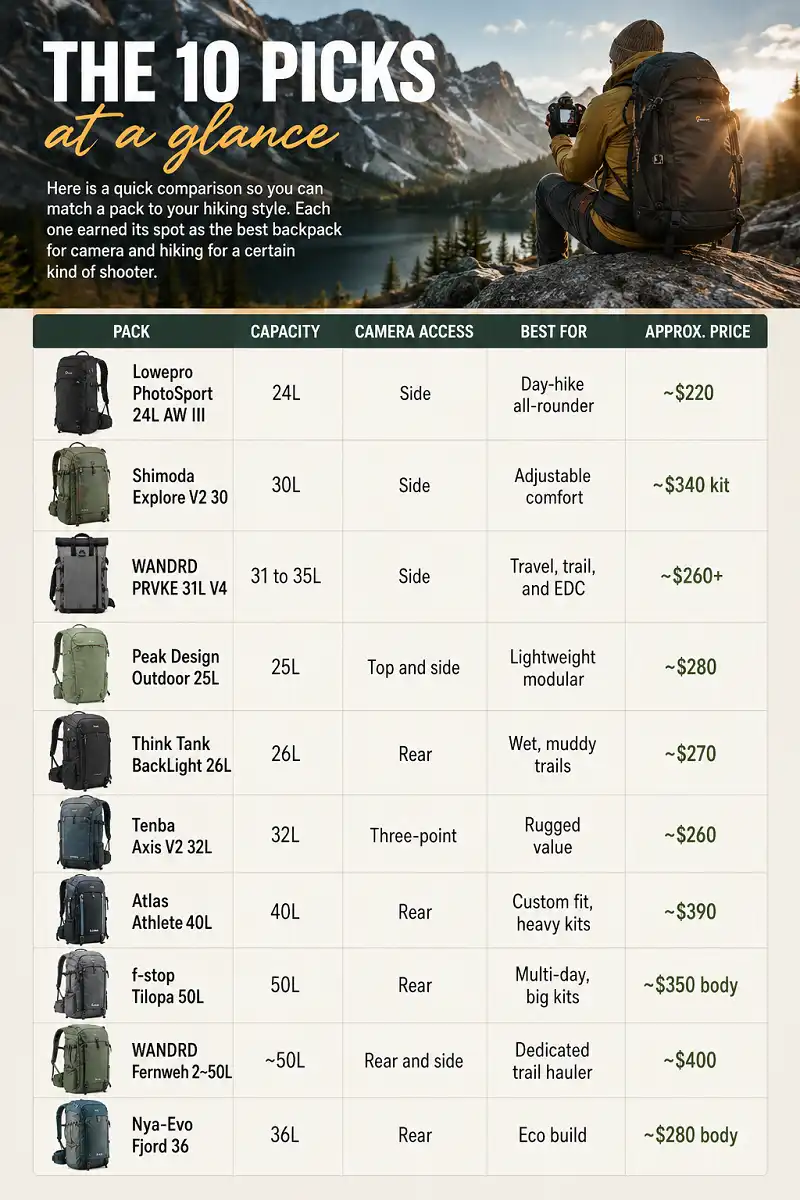
Here is a quick comparison so you can match a pack to your hiking style. Each one earned its spot as the best backpack for camera and hiking for a certain kind of shooter.
| Pack | Capacity | Camera Access | Best For | Approx. Price |
|---|---|---|---|---|
| Lowepro PhotoSport 24L AW III | 24L | Side | Day-hike all-rounder | ~$220 |
| Shimoda Explore V2 30 | 30L | Side | Adjustable comfort | ~$340 kit |
| WANDRD PRVKE 31L V4 | 31–35L | Side | Travel, trail, and EDC | ~$260+ |
| Peak Design Outdoor 25L | 25L | Top and side | Lightweight modular | ~$280 |
| Think Tank BackLight 26L | 26L | Rear | Wet, muddy trails | ~$270 |
| Tenba Axis V2 32L | 32L | Three-point | Rugged value | ~$260 |
| Atlas Athlete | 40L | Rear | Custom fit, heavy kits | ~$390 |
| f-stop Tilopa 50L | 50L | Rear | Multi-day, big kits | ~$350 body |
| WANDRD Fernweh 2 | ~50L | Rear and side | Dedicated trail hauler | ~$400 |
| Nya-Evo Fjord 36 | 36L | Rear | Eco build | ~$280 body |
Lowepro PhotoSport Outdoor BP 24L AW III
This is the pack I hand most people who are still new to hiking with a camera. Unlike bags that only move gear from the car to a viewpoint, the PhotoSport is built around trail use. It pairs a proper hiking harness with a protected camera zone you reach from the side, plus room for water, a layer, and snacks. At 24L it stays light and never feels like a suitcase. A built-in cover handles surprise rain, too. For waterfalls, overlooks, and state parks, this is the best backpack for camera and hiking that most people will actually enjoy carrying. It feels less premium than pricier packs, and huge kits will not fit, but that is a fair trade.
Shimoda Explore V2 30
The Explore V2 30 tackles the problem heavier kits create, which is back pain. Its standout feature is torso adjustment, so the harness fits your actual back length. The starter kit includes a medium core unit, a rain cover, and accessory straps, and the modular insert lets you rebuild the inside around your gear. It also fits a 16-inch laptop, meets strict carry-on sizes, and shrugs off light weather. Yes, it costs more and weighs more than a simple daypack. Even so, that comfort makes it the best backpack for camera and hiking once your load grows past ten pounds.
WANDRD PRVKE 31L V4
The PRVKE V4 suits people who do a little of everything. It expands from 31L to 35L, opens like a clamshell, and uses waterproof tarpaulin with tough ballistic nylon. Quick side access reaches your camera fast, and a foam-lined sleeve protects a laptop. Drop in a WANDRD camera cube and it becomes a proper camera bag; leave it out and it works as a clean travel pack. It looks sharp in a city and holds up on a casual hike. For long, steep miles it breathes less than a trail-first pack, so it is the best backpack for camera and hiking for people who travel as much as they hike.
Peak Design Outdoor Backpack 25L
Peak Design built the Outdoor 25L to feel like a light hiking pack that happens to carry a camera. It is airy, comfortable, and flexible, and it swallows jackets, water, and snacks easily. You add Peak Design’s camera cubes to create the gear zone, which keeps weight down when you travel light. That modular approach is the whole appeal. On the other hand, without an insert the camera organization is loose, and a big pro kit feels tight. For mirrorless shooters, it is a smart pick for the best backpack for camera and hiking when you like to travel light.
Think Tank BackLight 26L
The BackLight 26L opens against your back instead of the dirt. That rear-access design is its best trick, because you rotate the pack around your waist and reach your camera while the shoulder straps stay clean. On rocky viewpoints and rainy days, that keeps mud off the part that touches you. It carries a solid kit with a body and several lenses, organizes well, and still fits a tripod on the side. Large telephotos do push its limits, and it is not the biggest bag here. For careful landscape shooters, though, it is one of the best backpack for camera and hiking options around.
Tenba Axis V2 32L
The Axis V2 32L is the tank of this list. It uses tough, water-resistant fabric and gives you three ways into the camera area, from the top, side, and back. You can also clip on extra pouches, and the interior holds a big kit with room to spare. It leans tactical and runs a little heavy, and the basic dividers are fewer than some rivals offer. However, the build quality is excellent for the money. If you want one pack to survive years of abuse, it is a strong value choice for the best backpack for camera and hiking gear that takes a beating.
Atlas Athlete
The Athlete stands out for its adjustable back length and one of the most comfortable hip belts I have used under load. Its folding “origami” dividers shape around odd gear, and the DuraDiamond fabric is both light and water-repelling. At 40L it bridges a big day hike and a light overnighter, and camera gear loads from the back for security. It does cost more, and 40L is more than a casual shooter needs. Yet for photographers who hike hard with a full kit, the fit makes it the best backpack for camera and hiking for heavy-kit shooters.
f-stop Tilopa 50L
The Tilopa 50L is a true expedition pack. An internal aluminum frame and a padded harness move serious weight onto your hips, while the weatherproof DuraDiamond shell with welded zippers keeps gear dry. You then pick an f-stop ICU (internal camera unit) to match your kit, so the same bag holds one body or a full setup with a tripod strapped on. Some bundles add the ICU and a rain cover. This is far more bag than a day hiker needs. Still, for gear-heavy climbs, it is the best backpack for camera and hiking in the expedition class.
WANDRD Fernweh 2
The Fernweh 2 is WANDRD’s hiking-first pack, and it shows. It carries a bucket-style divider you can lift out, a sleeve for a hydration bladder, and both rear and side access for quick swaps. Wide, padded straps and a supportive belt handle big loads, and tough 420D and 630D nylon shrugs off trail wear. It also fits WANDRD’s camera cubes, so you can scale the camera zone up or down, whether you are chasing a winter sunrise in Yosemite or a local overlook. Granted, it is large and priced like a premium pack. For long trail days with heavy gear, though, it is one of the best backpack for camera and hiking choices for committed shooters.
Nya-Evo Fjord 36
The Fjord 36 proves a green pack can still be tough. Its shell uses ECONYL regenerated nylon made from waste, and a waterproof Hypalon base lets you set it down on wet ground without worry. A slim aluminum frame holds its shape, while the removable RCI insert system shapes the camera zone. Rear-only access keeps gear secure, and a seam-sealed rain cover comes included. The body is affordable, though adding inserts raises the total. If sustainability matters to you and you still want trail-ready protection, it is the best backpack for camera and hiking for eco-minded shooters.
How much capacity do you need?
For most day hikes, aim for 20L to 30L. That size fits a camera body, two or three lenses, a tripod, water, a snack, and a layer without turning into a boulder on your back. Go smaller, around 18L, if you carry one body and a single lens on short trips. Then step up to 40L or more only for overnight trips, winter layers, or a drone plus multiple bodies. Remember, bigger is not better here, and the best backpack for camera and hiking is simply the one sized to your actual kit.
Camera pack or hiking pack with an insert?
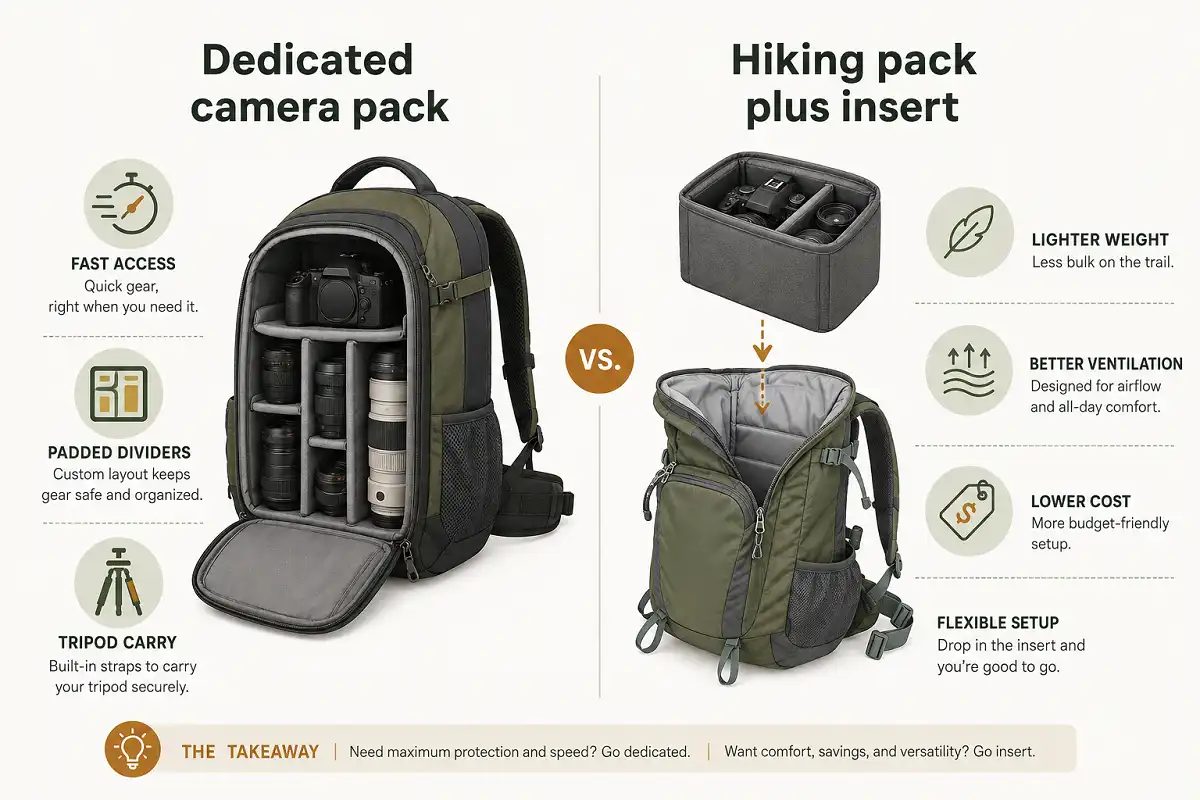
Dedicated Camera Pack
- Fast camera access
- Better camera dividers
- Built-in tripod carry
- Designed around camera equipment
Hiking Pack + Insert
- Usually more comfortable for hiking
- Flexible everyday use
- Often costs less
- Ideal for smaller camera kits
If hiking comes first and you carry a small camera, you do not need a dedicated camera bag at all. A comfortable hiking pack plus a padded camera insert works well, and it often saves money. Dedicated camera packs still win on fast access, better dividers, and tripod carry. So think about how often photography is the point of the hike. On days when the camera stays packed most of the time, an insert in your favorite daypack can stand in for the best backpack for camera and hiking on casual days.
Final thoughts
Start with the Lowepro if you’re unsure
The best backpack for camera and hiking is the one you will actually reach for on trail day, not the one with the longest feature list. For most people, a 24L to 30L pack with a comfy harness, weather protection, and quick camera access covers it.
So start with the Lowepro PhotoSport if you are unsure, size up as your kit grows, and match the bag to how you shoot.
That is how you land on the best backpack for camera and hiking for you, and it fades into the background so you can focus on the light.
FAQs
What is the best backpack for camera and hiking for a beginner?
 What is the best backpack for camera and hiking for a beginner?
For a beginner, the Lowepro PhotoSport Outdoor BP 24L AW III is the best backpack for camera and hiking, because it carries like a normal daypack and still protects your camera. It stays light, fits day-hike basics, and does not bury you in features you will not use yet.
Are camera backpacks waterproof?
Most are weather resistant, not waterproof. They shrug off light rain and snow thanks to coated fabric and sealed zippers. For a heavy downpour, however, use the included rain cover or add one. Keep the zippers closed and your gear stays dry.
What size camera backpack is best for hiking?
A 24L to 30L pack is usually the best backpack for camera and hiking size for day trips. It holds a body, a few lenses, a tripod, and trail basics like water and a layer. Smaller sizes work for minimal kits, while larger ones suit overnight or drone setups.
Can I fly with a camera hiking backpack?
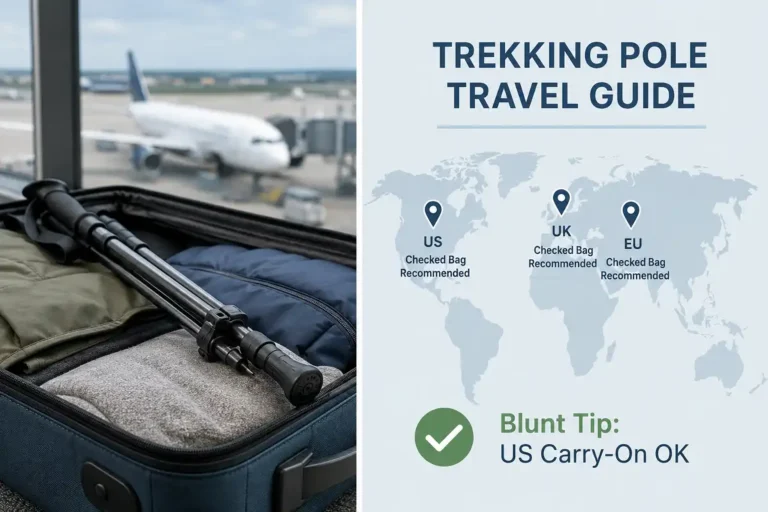
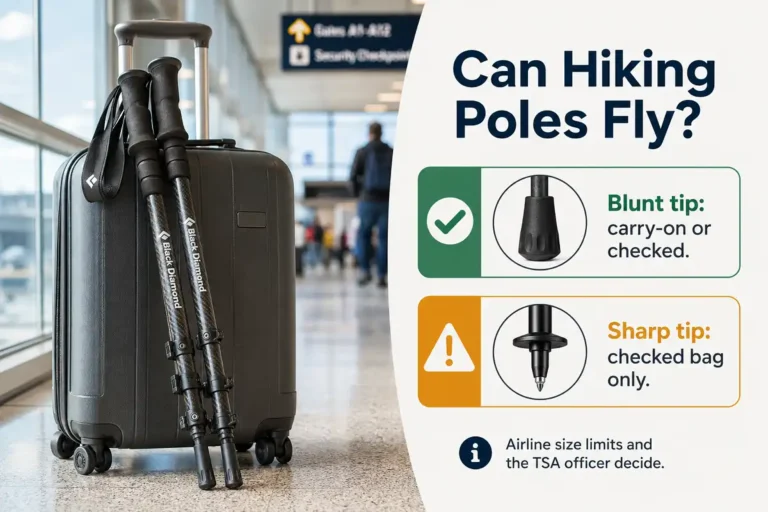
Usually yes. Many packs here, like the Shimoda Explore V2 30 and the PRVKE, meet common carry-on sizes. If you also pack trekking poles, first check the rules on flying with your trekking poles , since those ride a bit differently.
Do I need a rain cover?
When you hike where the weather changes fast, yes. A cover is cheap insurance for expensive gear. Some packs include one, while for others it is a small add-on worth buying anyway.