Best Hikes in Yosemite Winter: Trails for Every Skill Level
Most people picture Half Dome and the Mist Trail when they think about Yosemite, so it is easy to assume the park closes down once snow arrives. That is not the case. Yosemite Valley sits at about 4,000 feet, so it stays open and walkable all winter, even after a fresh storm. I have hiked here in every season, and winter often wins for me because of the quiet trails, the frozen waterfalls, and the empty parking lots. This guide covers the best hikes in Yosemite winter visitors can actually count on, from flat valley strolls to a real snowshoe adventure.
What are the best hikes in Yosemite during winter?
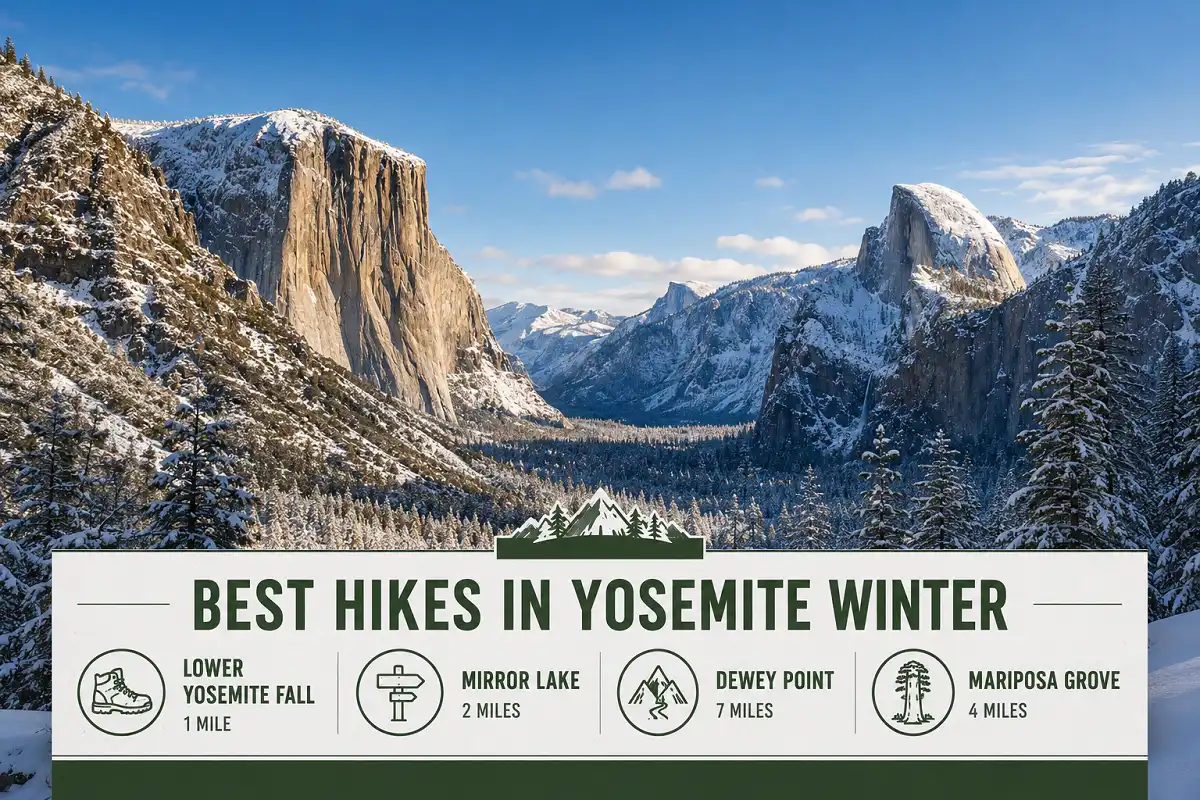
If you only have a day, stay on the valley floor. The Lower Yosemite Fall Trail, Cook’s Meadow Loop, Mirror Lake Trail, and Bridalveil Fall Trail all stay open, and none of them demand special gear beyond warm boots and a pair of traction spikes.
If you want more of a challenge, then snowshoeing out to Dewey Point or walking into Mariposa Grove rewards you with views you will not find in any other season.
1 mile · Easy · Minimal gain
1 mile · Easy · Minimal gain
0.5 mile · Easy · 80 ft gain
2 miles · Easy · 100 ft gain
About 7 miles · Moderate · 700 ft gain
Every trail on this best hikes in Yosemite winter list works without technical climbing gear, though a few call for microspikes once the ground turns icy.
Is Yosemite Open for Hiking in Winter?
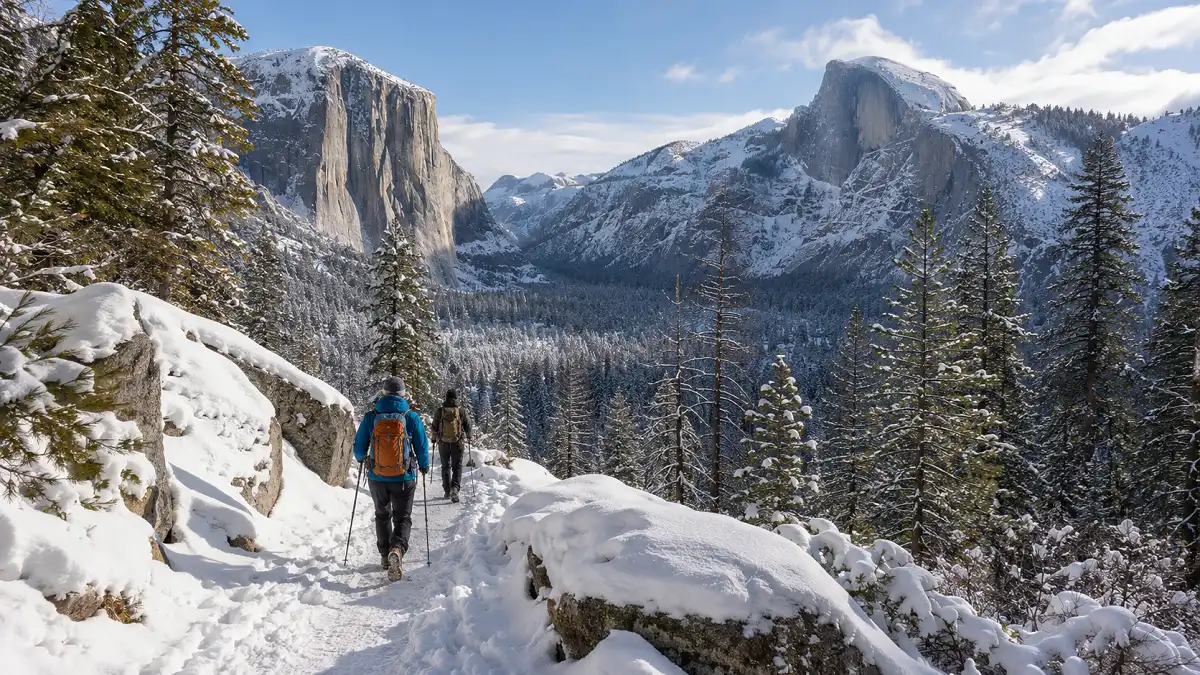
Yes, Yosemite stays open all winter, and most of Yosemite Valley remains hikeable. Since becoming one of the country’s first protected wilderness areas in 1890, the park has never fully closed for the season, and crews clear snow from the valley’s main roads throughout the winter.
What does close is the high country. Tioga Road, the route that crosses the Sierra through Tuolumne Meadows, typically shuts down in early November and does not reopen until late May or June, depending on snowpack.
Glacier Point Road follows a similar pattern, though the park service keeps the first five miles plowed so visitors can reach Badger Pass. Beyond that point, the road becomes a groomed track for snowshoers and cross-country skiers instead of a route for cars.
Winter Access
Yosemite Valley remains accessible during winter, while higher-elevation roads such as Tioga Road and most of Glacier Point Road close seasonally.
You also will not need an entrance reservation. Yosemite dropped its timed entry system for 2026, so you can drive in without booking a slot ahead of time, though you still need to pay the entrance fee or use a valid pass at the gate.
A standard seven-day vehicle pass runs $35, and digital passes are now available through the Recreation.gov app, which speeds up the entrance line considerably.
Because winter draws far fewer visitors than summer, and because most day hikers stick to the valley floor anyway, this is honestly one of the easiest times of year to find parking.
What to Pack Before You Go
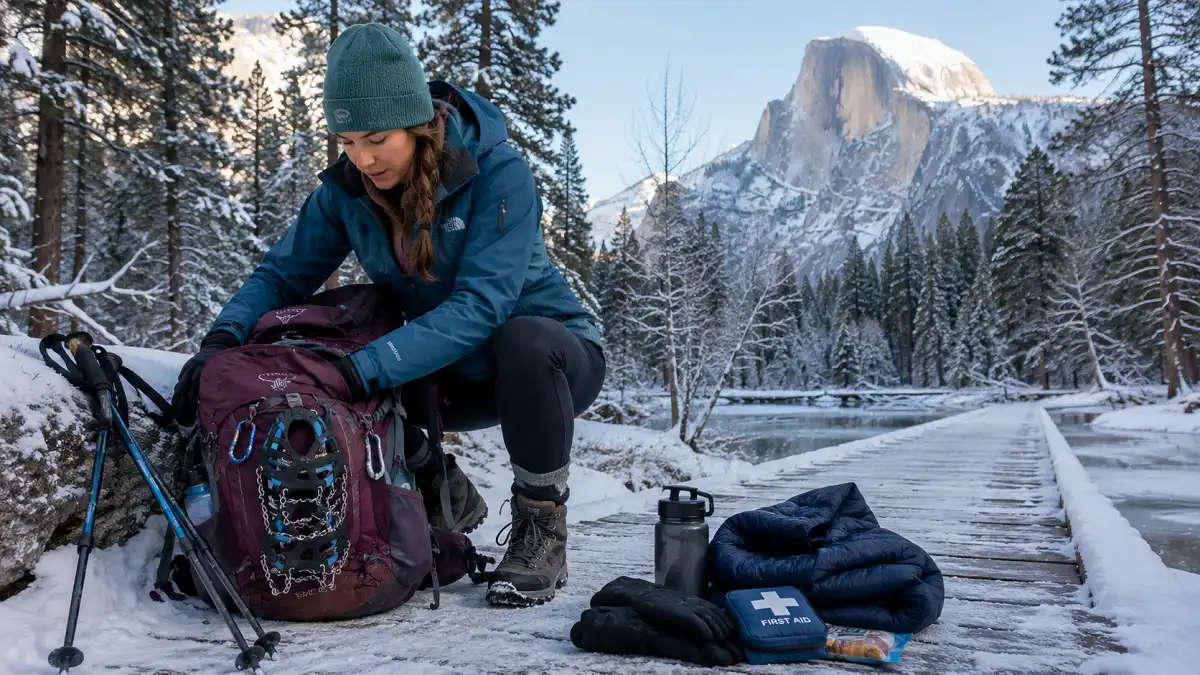
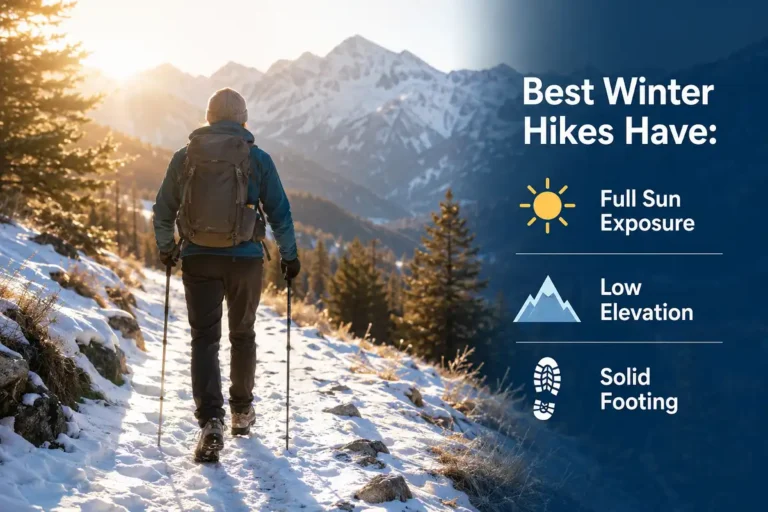
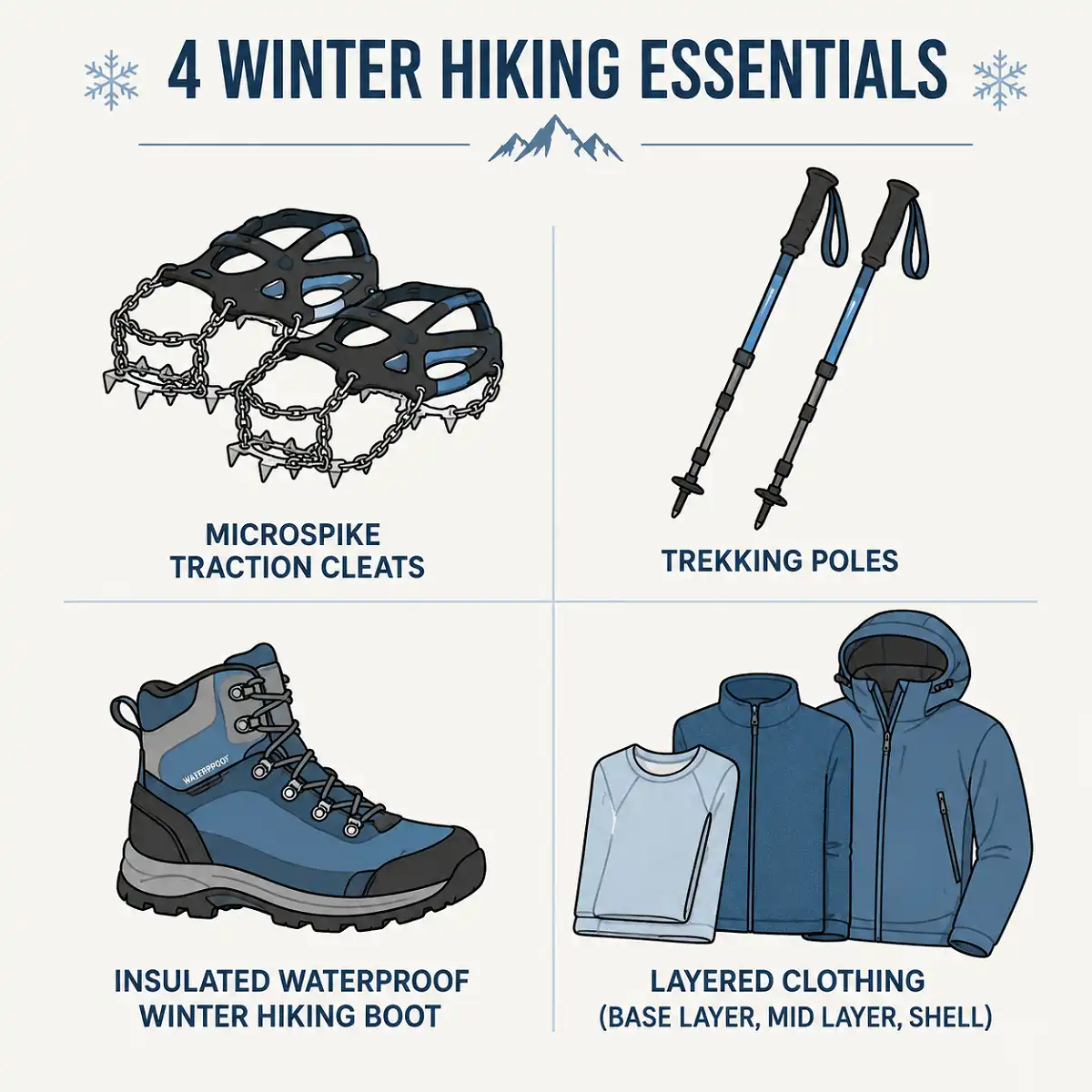
Winter hiking in Yosemite does not require mountaineering gear, but it does require the right basics. I never head out without microspikes, since boardwalks and paved paths ice over quickly in the shade.
A solid pair of trekking poles also helps with balance on packed snow, especially on the Mirror Lake Trail, where the south side of the loop holds ice long after a storm.
Microspikes
Useful when paved paths, boardwalks, and packed snow become icy.
Trekking Poles
Helpful for maintaining balance on packed snow and icy sections.
Layer Properly
Use a moisture-wicking base layer, insulating middle layer, and waterproof shell.
Carry Enough
Cold weather can make it easy to forget hydration, so bring more water than you think you need.
Insulated Footwear
Waterproof insulated boots help keep feet dry when walking through snow and slush.
Layering matters more than any single piece of gear. I dress in a moisture-wicking base layer, an insulating middle layer, and a waterproof shell, then adjust as I warm up on the trail.
If you are still building out your winter kit, my guide to dressing for cold weather trail days walks through what to prioritize first.
For footwear, an insulated, waterproof boot makes the biggest difference of all. I have tested several boots built for snow and slush, and the right pair keeps your feet dry even after post-holing through a few inches of fresh powder.
Do not forget water
Cold air feels less dehydrating than summer heat, so many hikers skip water entirely and regret it by the second mile.
Best Hikes in Yosemite Winter: Easy Valley Floor Trails
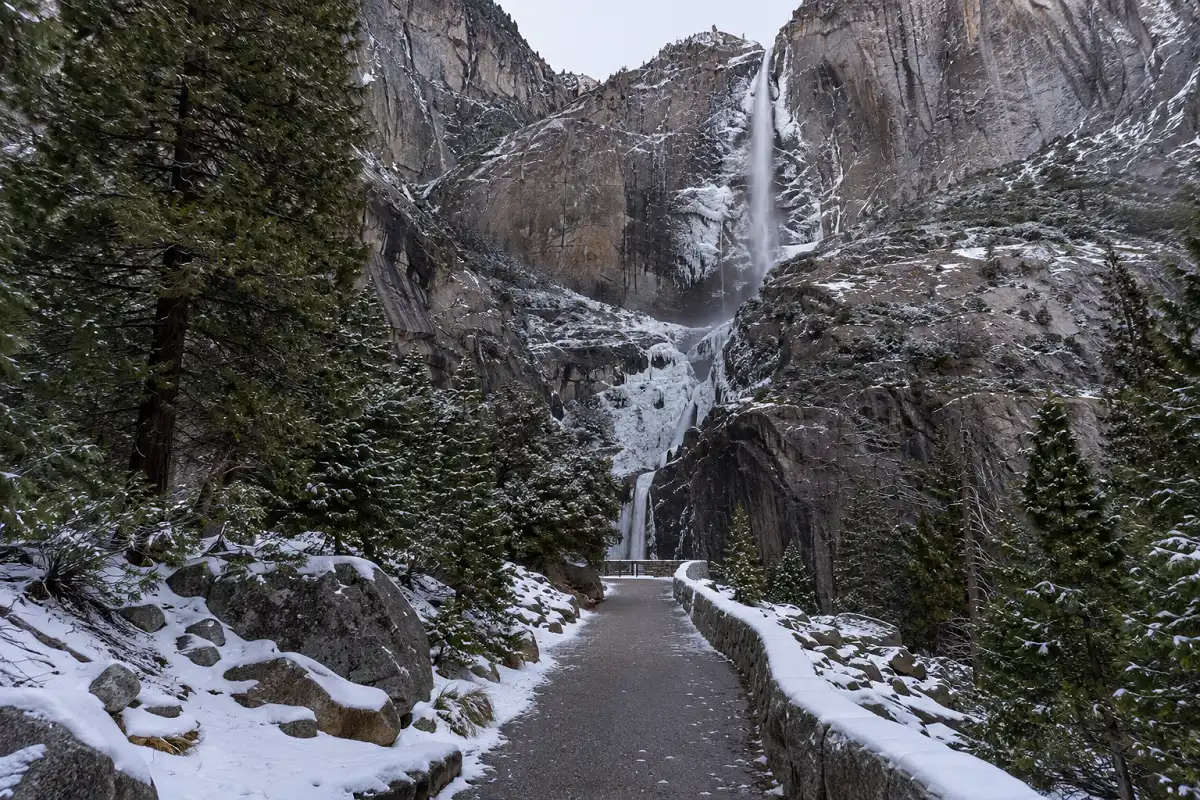
These four trails make up the core of any list of the best hikes in Yosemite winter beginners can handle. All of them start from Yosemite Valley, stay mostly flat, and reward you with some of the park’s most photographed views.
Lower Yosemite Fall Trail
This one-mile paved loop leads to a viewing platform right at the base of Yosemite Falls. In winter, spray from the falls often freezes onto the surrounding rocks, turning the whole scene into a natural ice sculpture.
The trail stays flat and paved for its entire length, so it works for strollers, wheelchairs, and anyone who wants a short outdoor break without much planning.
Cook’s Meadow Loop
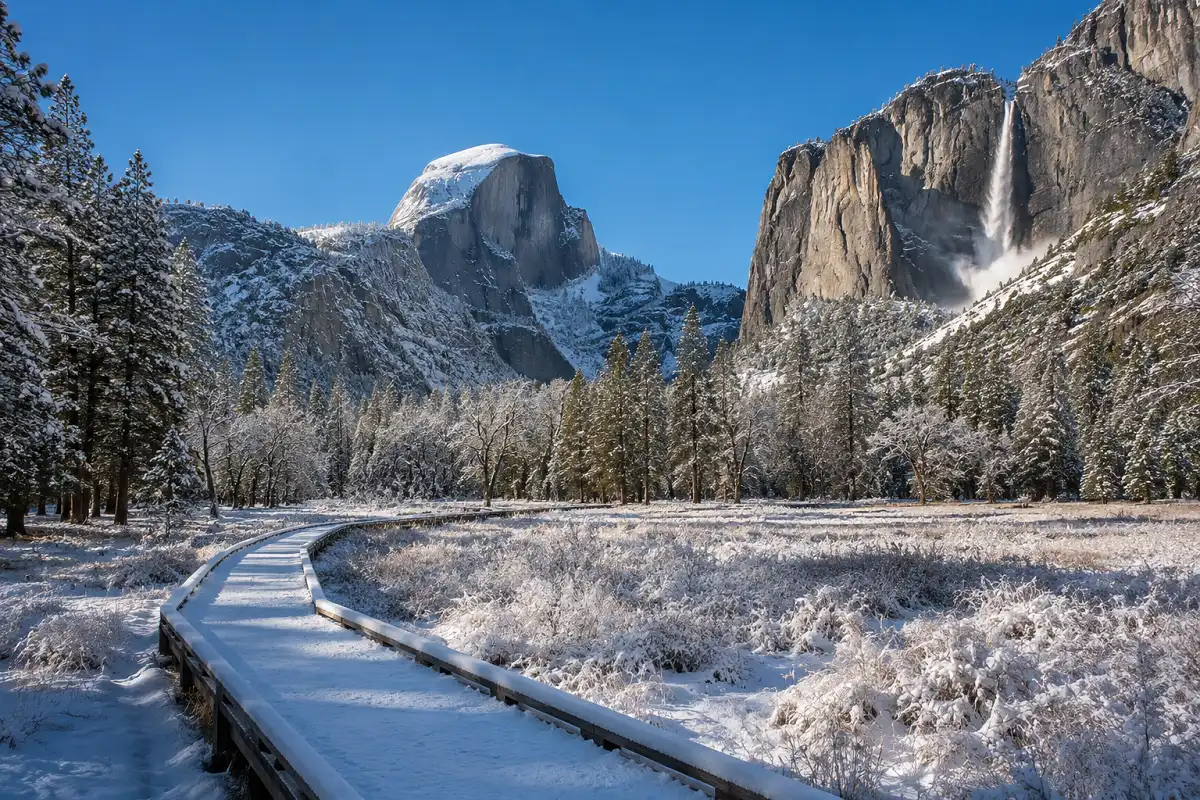
Cook’s Meadow Loop covers about one mile and stays completely flat, with clear views of Half Dome, Sentinel Rock, and Yosemite Falls all from the same open meadow.
Because the loop uses a raised boardwalk through the wetter sections, it handles snow and slush better than most valley trails.
Park at Yosemite Valley Village or shuttle stop 11 near Sentinel Bridge to reach the trailhead quickly.
Mirror Lake Trail
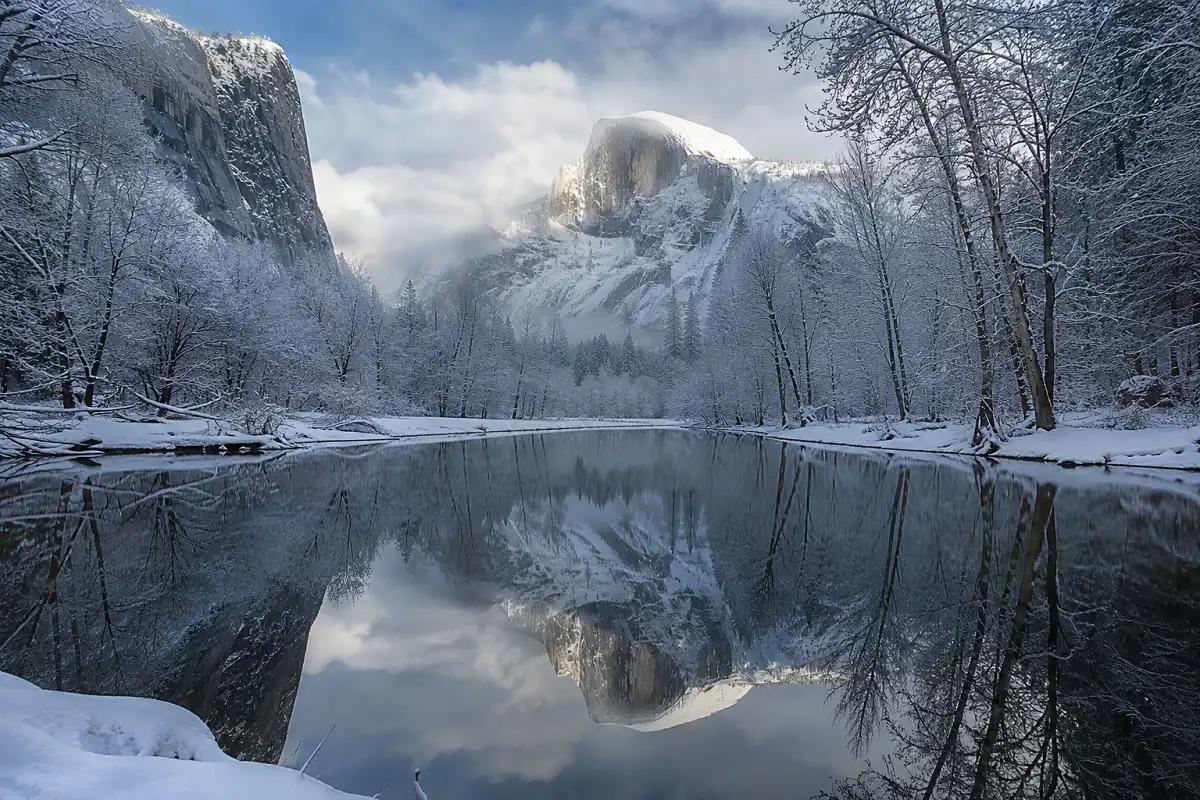
Mirror Lake sits about one mile from the trailhead on a paved, mostly flat path, so the round trip runs close to two miles.
In winter the lake itself often shrinks to a meadow, but the reflection of Half Dome still shows up after any calm, wet spell.
The out-and-back route along the north side is the better winter choice.
The south side can hold ice long after a storm and may become dangerous without spikes.
I recommend the out and back route along the north side in winter, since the full five mile loop crosses ice patches on its south side that can turn genuinely dangerous without spikes.
You can bike most of the paved section too, which makes this a fun option if you brought one along.
Best Winter Waterfall Hike
Bridalveil Fall Trail
Bridalveil Fall Trail
Bridalveil Fall Trail covers only half a mile round trip, yet it delivers one of the most reliable waterfall views in the park.
The trail gains about 80 feet, and ice often coats the final stretch near the viewing area, so slow down and watch your footing there.
Because Bridalveil Fall draws its water from a smaller watershed than Yosemite Falls, it tends to keep flowing even during drier winter stretches.
A note about Vernal Fall
If you want a longer waterfall hike, the trail toward Vernal Fall deserves a mention, with a caution attached. The famous granite staircase on the Mist Trail closes for the season because of ice, but the first two miles out and back to the footbridge below Vernal Fall stay open and offer a quieter version of the same canyon.
I would not push past the footbridge in winter unless you have real experience on icy terrain, since the trail beyond that point turns steep and exposed.
Best Snowshoe Trails for a Bigger Winter Adventure
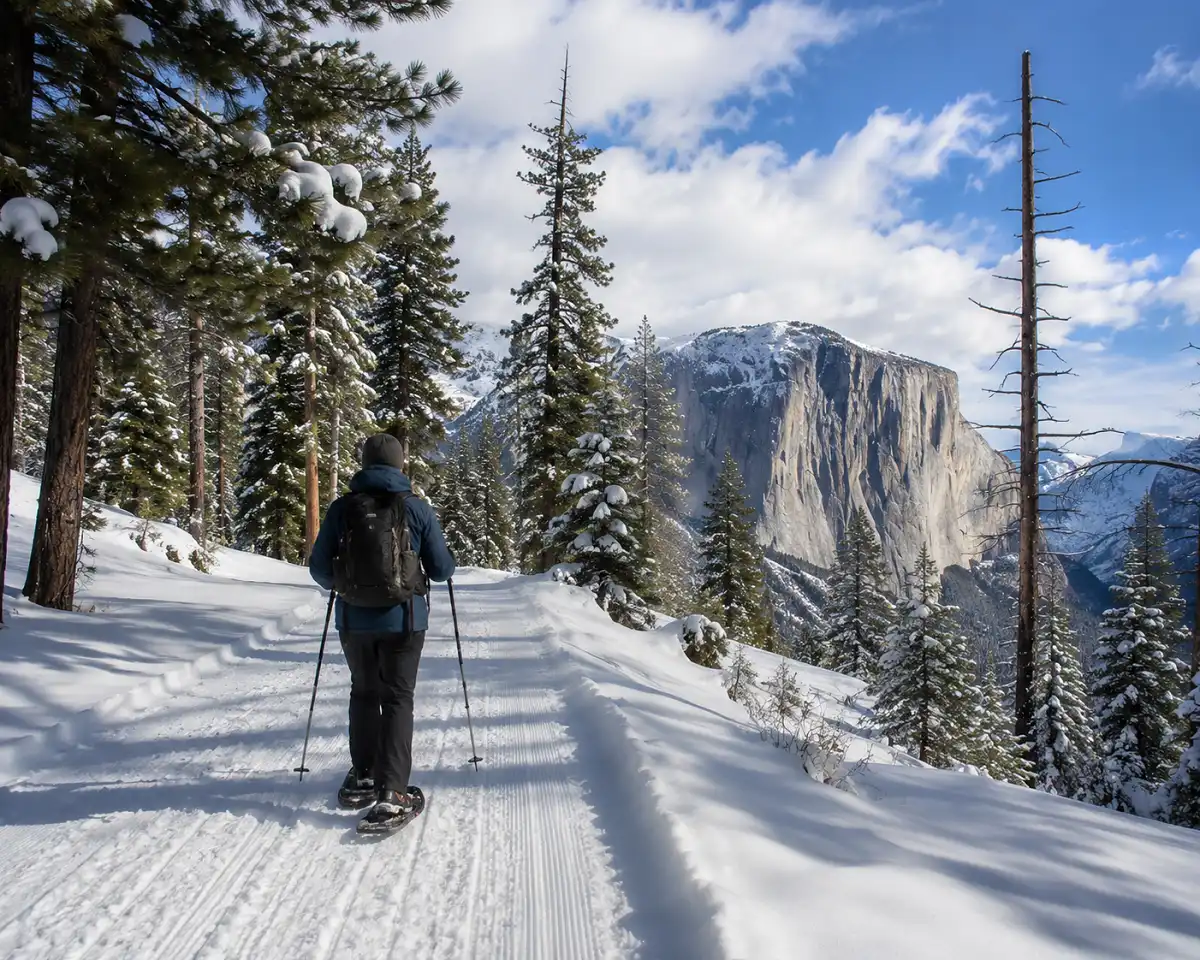
Once you have tried a few valley floor hikes, these two options offer a real step up in distance and scenery. Both call for snowshoes or, at minimum, sturdy traction devices after a fresh storm.
Dewey Point
Dewey Point delivers one of the best views in the entire park, and you can only reach it on foot in winter.
The route starts at Badger Pass, which also runs as Yosemite’s small ski area when conditions allow, and follows the closed Glacier Point Road for roughly seven miles round trip with about 700 feet of elevation gain.
A wide open view across the valley rewards the effort, taking in El Capitan, Half Dome, and Cathedral Rocks all at once.
Rent snowshoes at Badger Pass if you do not own a pair, and plan on five to six hours for the full trip, including a lunch break at the point.
Mariposa Grove in Winter
Mariposa Grove Road closes to cars for the winter, but the giant sequoias stay accessible on foot, snowshoes, or skis.
From the parking area near the entrance gate, it is about two miles each way to reach the grove, so plan on roughly four miles round trip.
Walking among snow covered sequoias feels completely different from a summer visit, and the crowds thin out to almost nothing.
Bring extra layers, since the grove sits at a higher elevation than the valley floor and holds onto cold air longer.
Winter Hiking Safety Tips
Winter days in Yosemite run short, often with only nine or ten hours of usable daylight, so start early and know your turnaround time before you leave the trailhead.
I also check the park’s current safety guidance before any winter trip, since conditions can shift quickly after a storm.
Paved paths and boardwalks can ice over even when nearby trails look clear.
Temperatures can drop quickly once the sun disappears behind the valley walls.
Spray can freeze into black ice that is difficult to see around waterfalls and creek crossings.
Share your route and expected return time, especially for longer trips such as Dewey Point.
Highway 41 and upper stretches of Highway 120 may require tire chains.
Because Yosemite Valley sits at a lower elevation than the high country, storms here often bring rain instead of snow. That means trail conditions can flip from dry to icy to muddy within the same week, so always check current reports instead of relying on how a trail looked a few days earlier.
When Is the Best Time to Visit?
December Through February
These months bring the most reliable snow to the valley floor, though a storm can bring a dusting as early as November or as late as March.
Weekdays run noticeably quieter than weekends, and the hour right after a fresh snowfall, once plows have cleared the main roads, tends to produce the best photos of the entire year.
If you are mapping out the best hikes in Yosemite winter has to offer, plan your trip around a stretch of clear weather that follows a storm rather than during the storm itself, since fresh snow looks stunning but makes trails harder to read.
I always check the forecast a few days out and try to arrive before mid-morning, since parking near the most popular trailheads fills up even in the slower season.
Final Thoughts
Start Small, Then Explore Further
Yosemite in winter rewards anyone willing to bundle up and show up. Start with the valley floor if this is your first cold weather visit, then work up to a snowshoe trip once you feel comfortable in the snow.
If Yosemite is just one stop on a bigger winter trip, I have also put together other cold season trail ideas from around the country worth checking out.
However you plan your visit, check current road and trail conditions before you leave home, since Yosemite’s weather changes faster than most people expect. These are the best hikes in Yosemite winter has to offer, and each one earns the extra layers you will pack for it.
FAQs
Do I need a permit to hike in Yosemite in winter?
No, day hiking on any of the trails in this guide does not require a permit. You only need a wilderness permit if you plan to camp overnight in the backcountry.
Is Half Dome open during the winter?
No. Rangers remove the cables each October and do not reinstall them until around Memorial Day weekend, so the summit route stays closed and genuinely dangerous without them.
Can beginners hike in Yosemite during winter?
Yes. The valley floor trails in this guide stay flat, short, and well marked, which makes them approachable even for first time winter hikers.
Do I need snowshoes for every winter trail?
No. Snowshoes only matter for higher routes like Dewey Point or Mariposa Grove after a big storm. Valley floor trails usually just need warm boots and traction spikes.
What are the best hikes in Yosemite winter for beginners?
The Lower Yosemite Fall Trail, Cook’s Meadow Loop, and Bridalveil Fall Trail are the easiest picks, since all three stay flat, short, and well maintained even after snow.