Best Hiking Trails in Big Bear: Safe Trail Guide
Big Bear Lake sits high in the San Bernardino Mountains, at about 6,750 feet above sea level. That altitude shapes every hike here, so a little planning keeps your day safe and fun.
This guide covers the best hiking trails in Big Bear for beginners, plus how to hike each one without trouble. I hike a lot across Southern California, and Big Bear stays one of my favorite spots. Below you will find easy picks, a few moderate step-ups, and the safety basics that matter most.
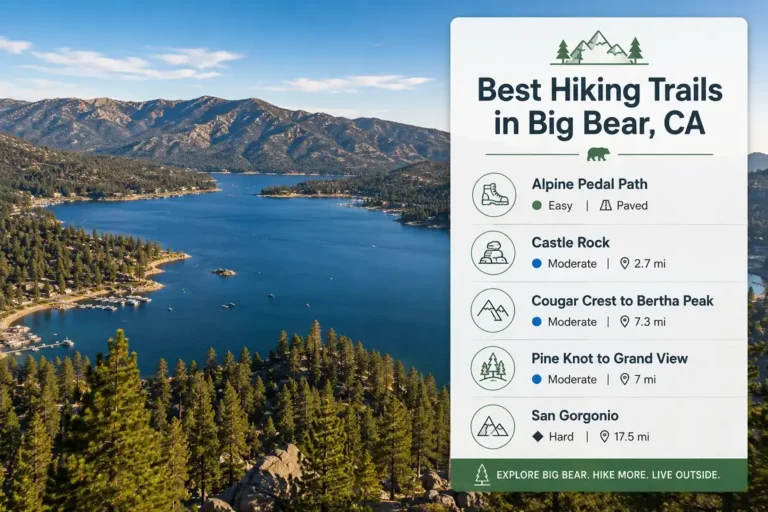
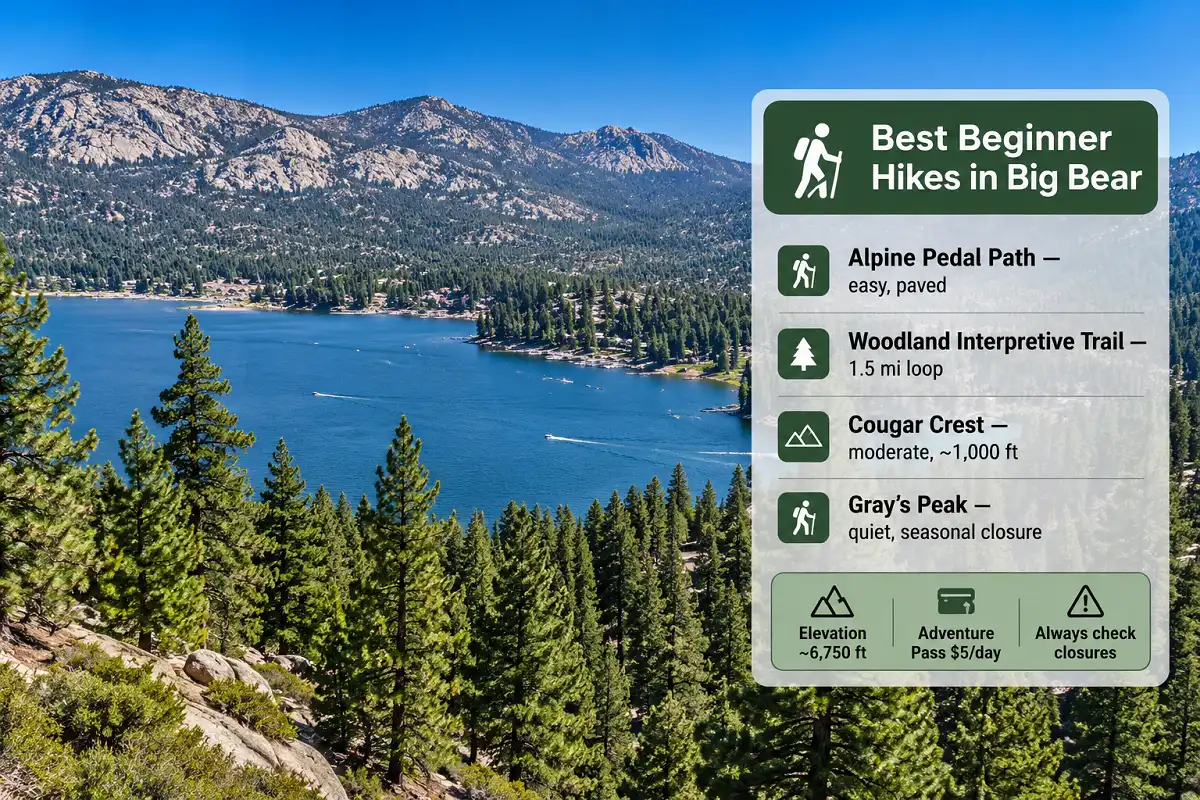
Start with the Alpine Pedal Path or the Woodland Interpretive Trail. Both stay gentle and easy to follow. For a bigger challenge, try Cougar Crest or Gray’s Peak. Whatever you pick from the best hiking trails in Big Bear, carry water, check current closures, and respect the thin mountain air.
Best Hiking Trails in Big Bear at a Glance
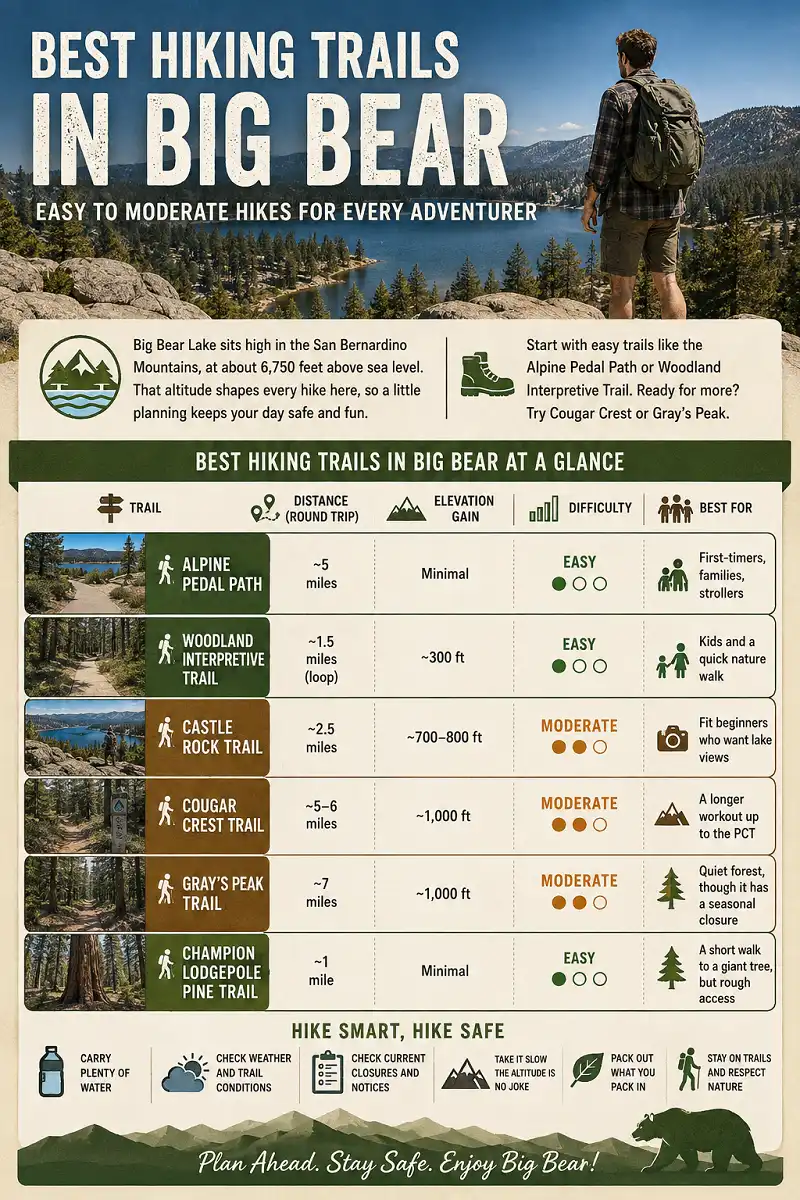
| Trail | Distance | Elevation Gain | Difficulty | Best For |
|---|---|---|---|---|
| Alpine Pedal Path | ~5 miles | Minimal | Easy | First-timers, families, strollers |
| Woodland Interpretive Trail | ~1.5 miles loop | ~300 ft | Easy | Kids and a quick nature walk |
| Castle Rock Trail | ~2.5 miles | ~700–800 ft | Moderate | Fit beginners who want lake views |
| Cougar Crest Trail | ~5–6 miles | ~1,000 ft | Moderate | A longer workout up to the PCT |
| Gray’s Peak Trail | ~7 miles | ~1,000 ft | Moderate | Quiet forest and longer hikes |
| Champion Lodgepole Pine Trail | ~1 mile | Minimal | Easy | Short walk to a giant tree |
Why Elevation Matters Before You Hit the Trail
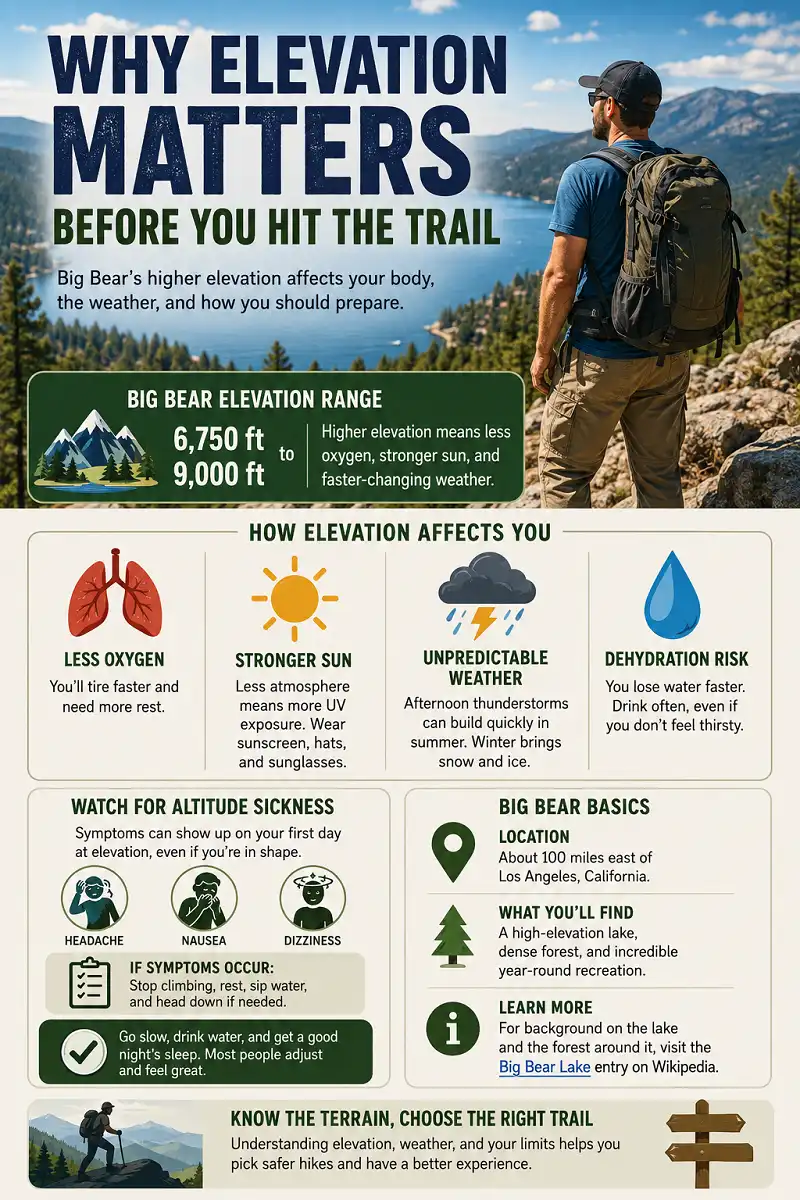
Elevation is the first safety factor in Big Bear. The valley runs from about 6,750 feet up to roughly 9,000 feet. At that height, the air holds less oxygen, so you tire faster and dehydrate quicker. Sun also feels stronger, because there is less atmosphere to filter it.
Big Bear sits around 6,750 feet, so your body may need time to adjust.
You may tire faster than expected, even if you are normally very fit.
Less atmosphere means stronger sun exposure, making sunscreen essential.
Summer thunderstorms can build quickly, while winter brings snow and ice.
Dry mountain air can make dehydration sneak up on you during a hike.
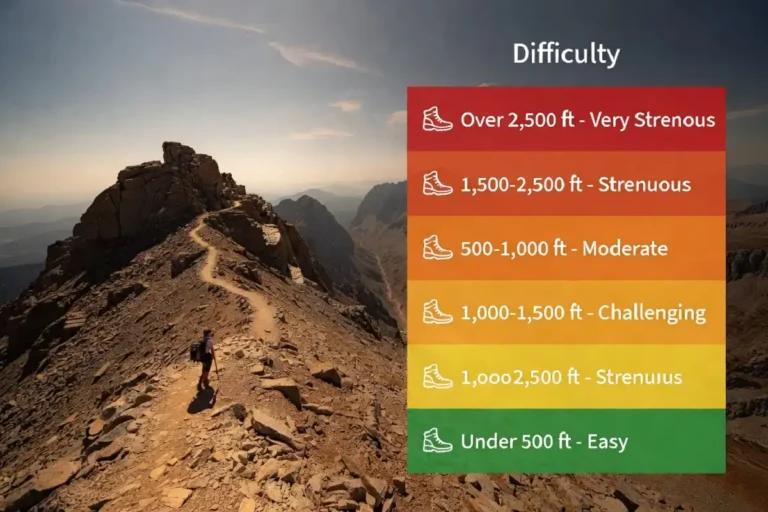
Afternoon thunderstorms can build fast in summer, and winter brings real snow. If you are new to hiking, ease in slowly and drink often. It also helps to understand how much climbing counts as a lot before you commit to a steep route.
Watch for altitude symptoms
A dull headache, nausea, or light dizziness can hit even fit hikers on the first day up high. If that happens, stop climbing, rest, and sip water, then head down if it does not ease.
Most people feel fine after a slow start and a good night’s sleep at elevation.
Big Bear’s location
The town sits about 100 miles east of Los Angeles. For background on the lake and the forest around it, the Big Bear Lake entry on Wikipedia is a solid start.
Once you know the terrain, picking a trail gets much easier.
The Best Hiking Trails in Big Bear for Beginners
These rank among the best hiking trails in Big Bear for newcomers, and I have ordered them from easiest to hardest. Each one gives you strong views without technical terrain. If you are just getting started, these routes are a friendly place to begin.
Alpine Pedal Path
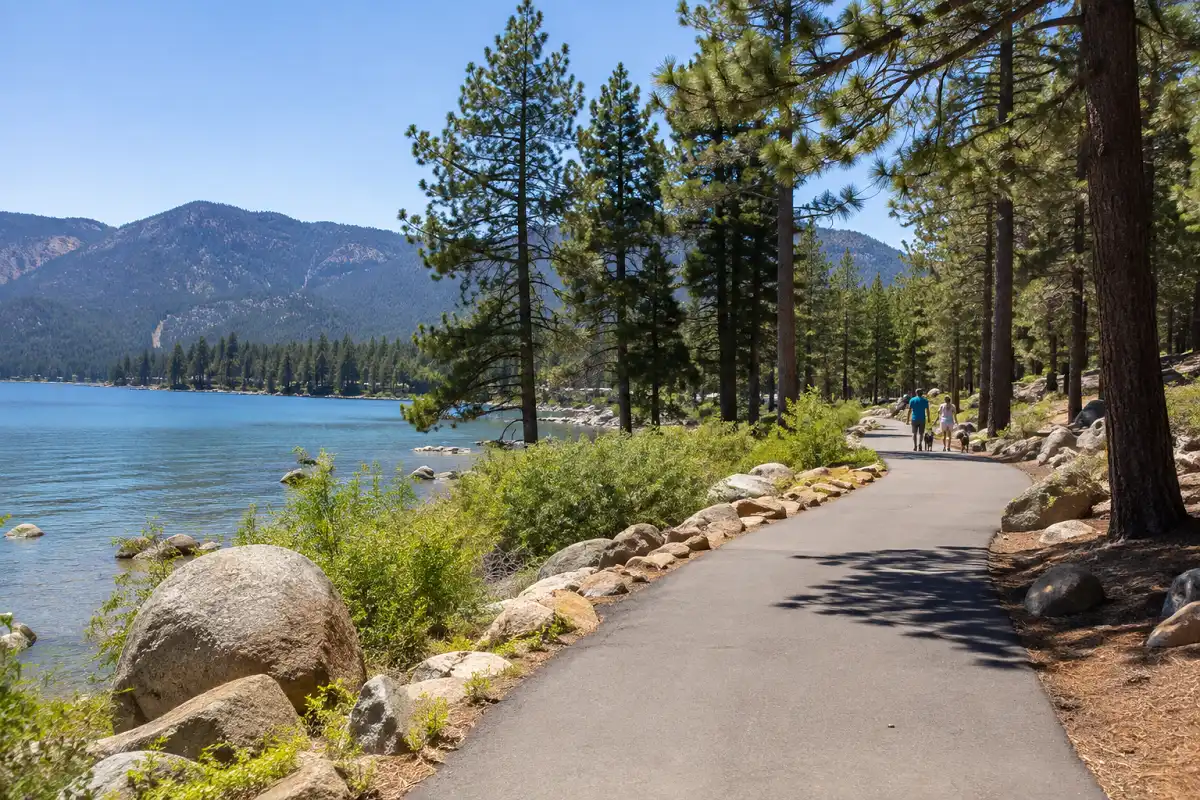
The Alpine Pedal Path is the easiest way to walk beside the lake. This paved route runs about 2.5 miles one way along the north shore, with very little climbing.
Strollers, kids, and leashed dogs all do well here. Because it stays flat and shaded in spots, it makes a great first outing at altitude. You can turn around whenever you like, so there is no pressure to finish the whole thing.
Woodland Interpretive Trail
The Woodland Interpretive Trail is one of the best short walks for families in the whole valley. It loops about 1.5 miles with only around 300 feet of gain.
Numbered posts match a free pamphlet you grab at the Big Bear Discovery Center, so kids learn about the plants and wildlife as they go. You will need an Adventure Pass to park at the lot.
Castle Rock Trail
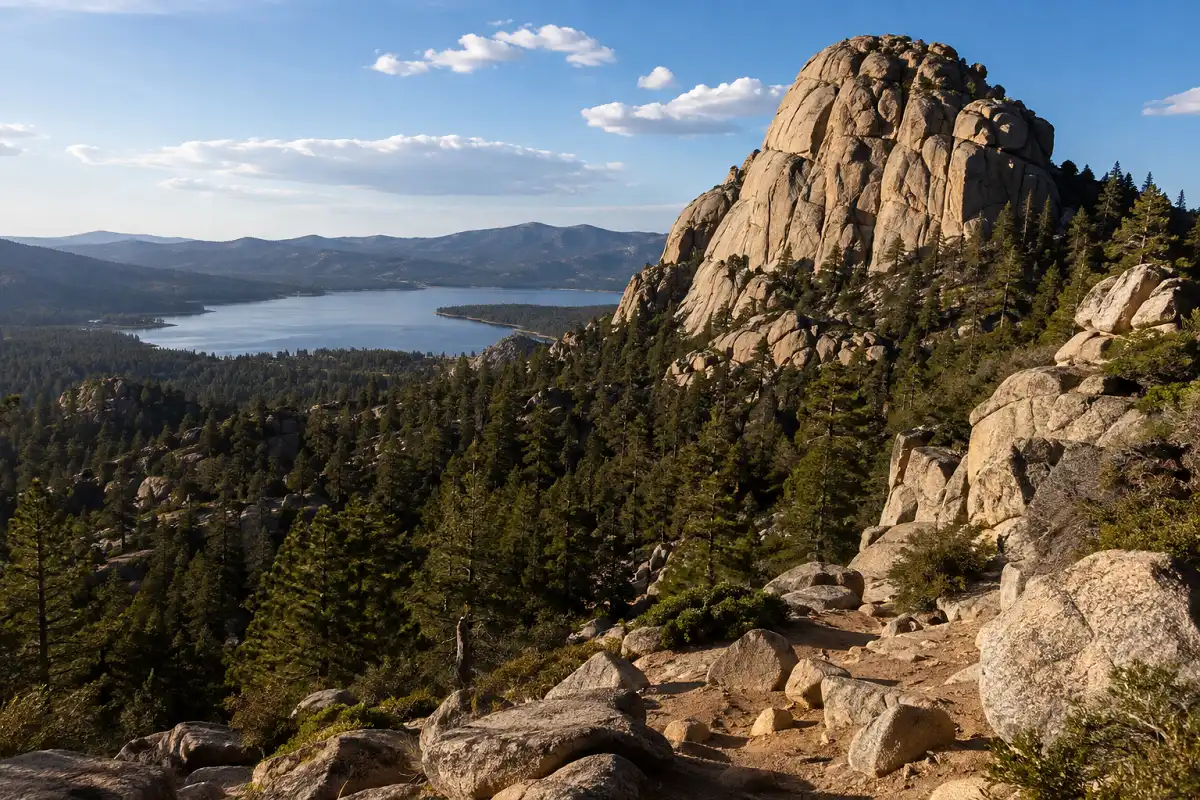
Castle Rock works for fit beginners, but it climbs harder than it looks. The out-and-back runs roughly 2.5 miles with about 700 to 800 feet of gain, and the first stretch is steep over loose rock.
Views of the lake open up near the granite outcrop at the top. Signs are sparse and a few side paths can confuse you, so follow the main worn track and watch your footing.
Helpful gear: trekking poles
Trekking poles can help on the loose sections, and I always bring mine here.
Note that trails on the south side of the lake can fall under seasonal fire closures, so check the status before you drive up.
Cougar Crest Trail
Cougar Crest Trail is the classic moderate step-up on the north shore. The main route climbs about 5 to 6 miles round trip to the junction with the Pacific Crest Trail, gaining roughly 1,000 feet through pine and juniper.
Strong hikers can push on to Bertha Peak for wider views, which adds distance and climbing. The trail is well signed and easy to follow, so route-finding stays simple.
Bring plenty of water, because shade thins out as you climb. This is one of the best hiking trails in Big Bear when you want a real workout with a big payoff.
Gray’s Peak Trail
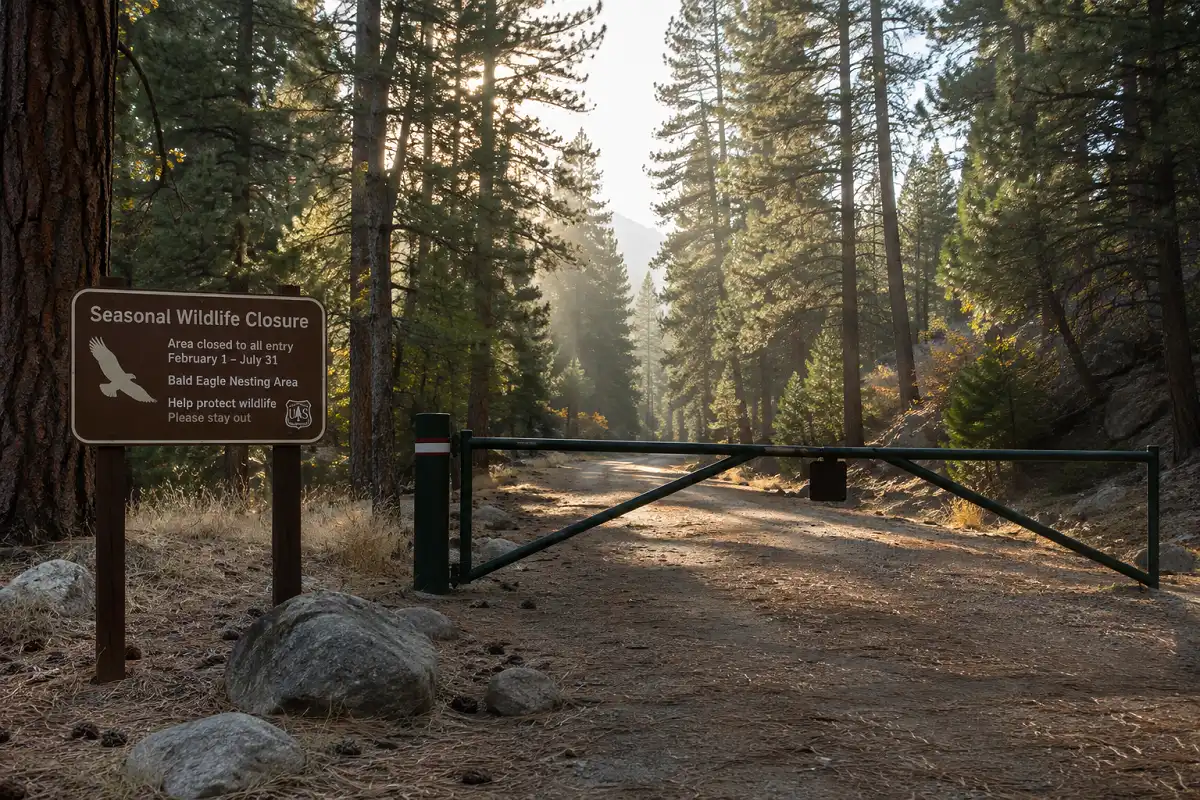
Gray’s Peak is open in summer and fall, but it closes for much of winter and spring to protect nesting bald eagles.
The out-and-back runs about 7 miles with around 1,000 feet of gain, and it stays quieter than the busier south-shore hikes. Its trailhead sits near Fawnskin on the north shore, across from the Grout Bay Picnic Area.
Check the seasonal closure first
In most years the closure runs from roughly December through April, though the Forest Service can extend it into summer if a chick fledges late.
In 2026, for example, the trailhead stayed closed into early July. Always confirm the current status before you plan this one.
Champion Lodgepole Pine Trail
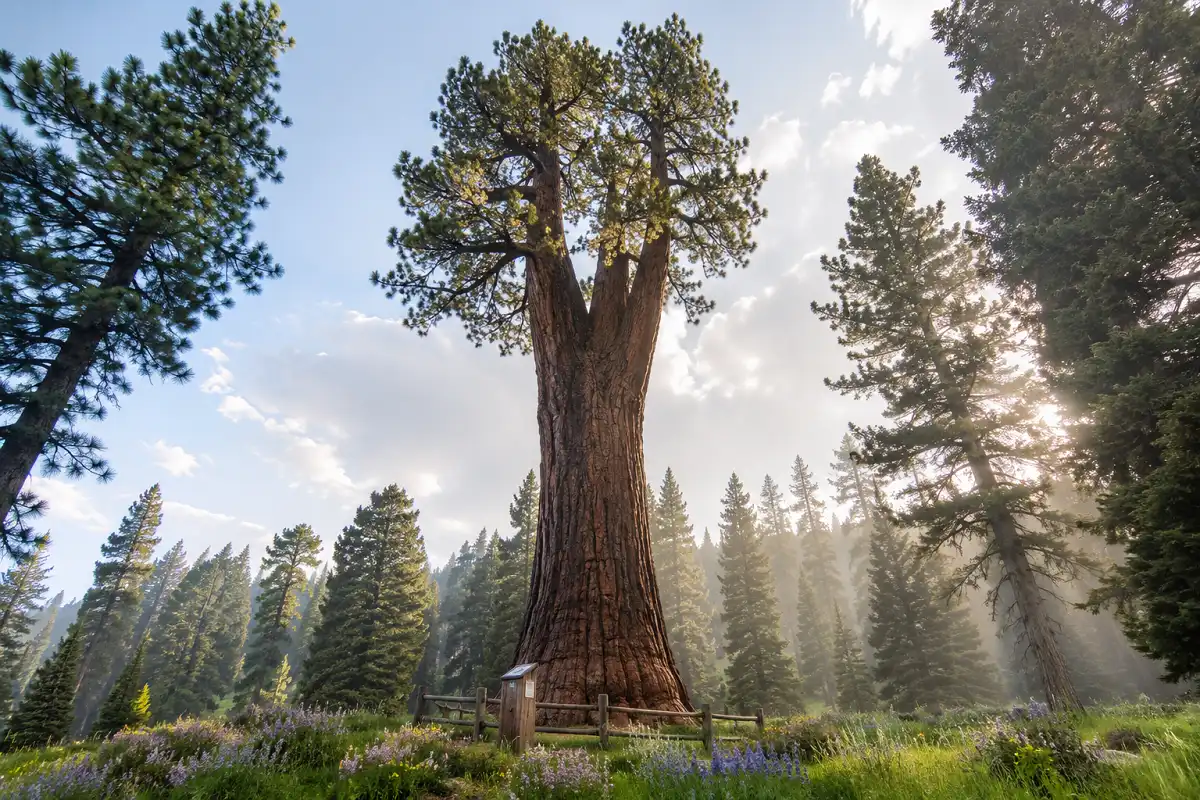
The Champion Lodgepole Pine Trail leads to one of the largest lodgepole pines known, a tree over 110 feet tall and more than 400 years old.
The walk to the tree is short and gentle, well under a mile on a flat interpretive path with numbered signs.
Why it’s appealing
- Very short walk
- Flat interpretive path
- Giant, historic tree
- Easy payoff
What to watch
- Rough forest-road access
- High-clearance vehicle helps
- Roads close under winter snow
- Possible fire closure
Getting there is the catch. You reach the trailhead by driving several miles on rough dirt forest roads, where a high-clearance vehicle helps, and those roads close in winter under snow.
This area also sits within the Line Fire closure that has kept parts of the south side shut, so the trail may be off-limits when you visit. Once it reopens, it ranks among the best hiking trails in Big Bear for an easy, rewarding payoff.
How to Hike the Best Hiking Trails in Big Bear Safely
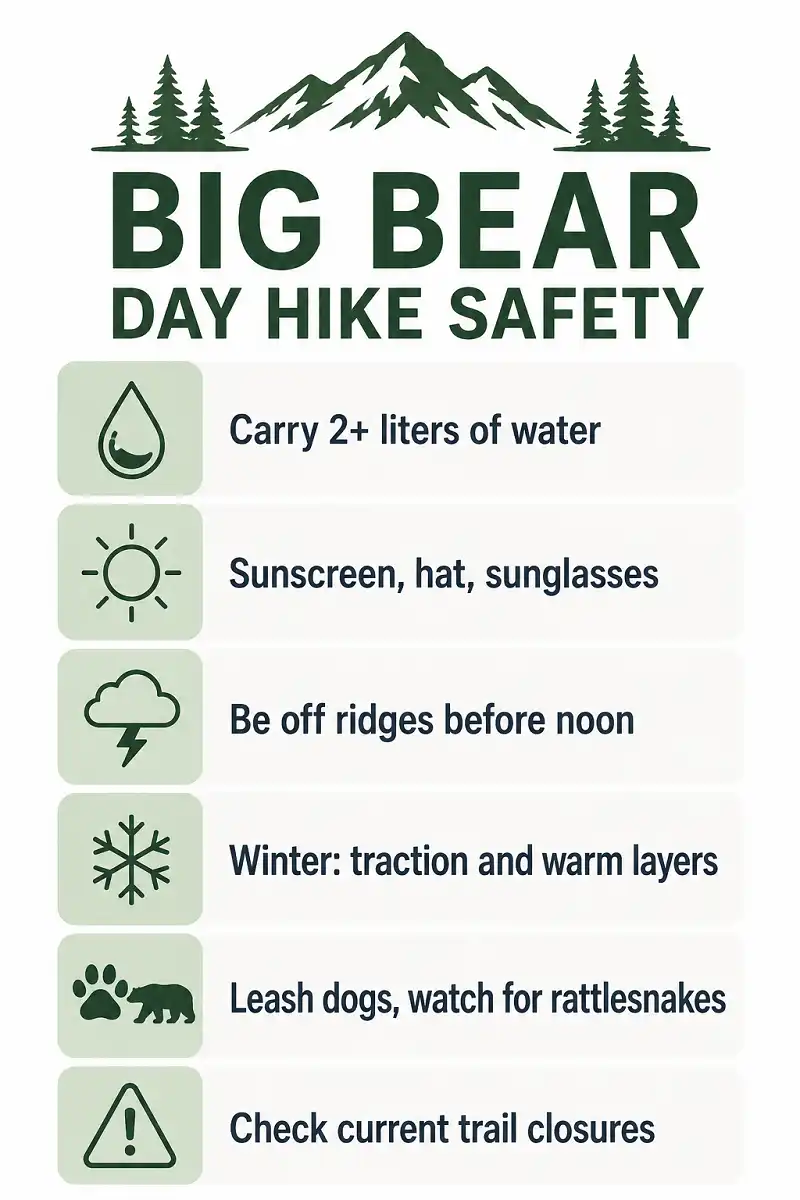
Safety in Big Bear comes down to a few habits, and none of them are hard. First, check current closures before you choose a trail. The Line Fire closure order covers a number of roads and trails on the south side of the lake through late September 2026, and the eagle closure affects Gray’s Peak each winter.
Fire, wildlife, snow, and road closures can change which trails are accessible.
Drink water often, slow your pace, and turn back if a headache starts to build.
Use sunscreen, wear a hat, and bring sunglasses for the strong mountain sun.
Summer thunderstorms can form quickly. Aim to be off high ground by noon.
Light traction spikes and warm layers can make a major difference.
Black bears, mountain lions, coyotes, and rattlesnakes all live here. Keep dogs leashed to six feet.
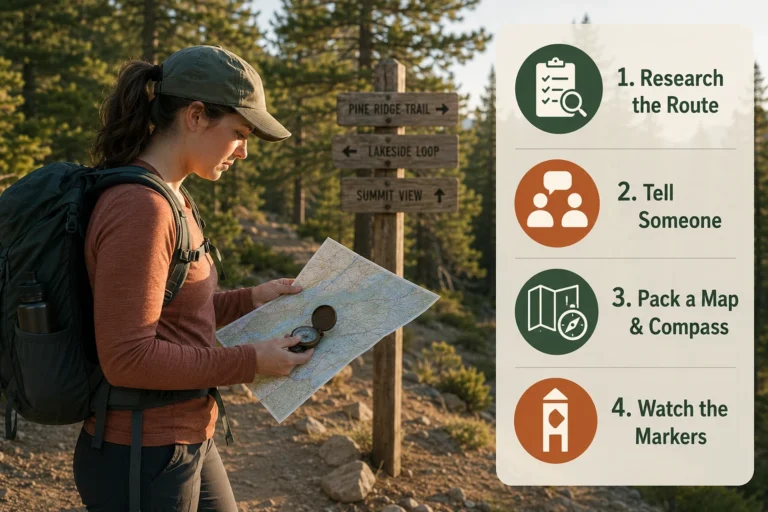
Finally, tell someone your route and expected return time, and carry the ten essentials even on short walks.
Best Time to Hike in Big Bear
Summer and early fall are the most reliable times to hike in Big Bear. Timing shapes your day as much as the route, so plan the best hiking trails in Big Bear around the season.
From June through October, the trails run mostly clear, daytime temperatures sit near 80 degrees, and wildflowers show up along shady paths. Fall then brings crisp air and thinner crowds, which many locals treat as the sweet spot.
On summer weekends, popular lots fill early, so arrive before 9 a.m. to grab parking and beat the afternoon storms. Spring can be muddy as snow melts, and some trailheads stay gated for eagle protection or fire recovery.
Winter turns the valley into a snow-play hub, though several trails close and you will want traction and warm clothing for the ones that remain open.
Summer & Early Fall
- Mostly clear trails
- Comfortable daytime temperatures
- Wildflowers in summer
- Crisp fall air
- Reliable hiking conditions
Spring & Winter
- Spring mud and melting snow
- Seasonal wildlife closures
- Winter snow and ice
- Some trail closures
- Extra traction and warm layers
For a summer trip, light and breathable hiking clothes keep you comfortable in the heat. For winter outings, though, dressing in warm layers matters even more.
What to Pack for a Big Bear Day Hike
Smart packing lets you enjoy the best hiking trails in Big Bear without nasty surprises. Carry at least two liters of water per person, since the dry air pulls moisture from you fast.
Carry at least two liters per person for a typical day hike.
Bring sunscreen, sunglasses, and a hat for strong mountain sun.
Mountain temperatures can change quickly, so carry an extra layer.
Download an offline map because cell service drops out on many trails.
Good grip matters on rocky sections and uneven mountain terrain.
A first-aid kit and headlamp are useful year-round, even on short hikes.
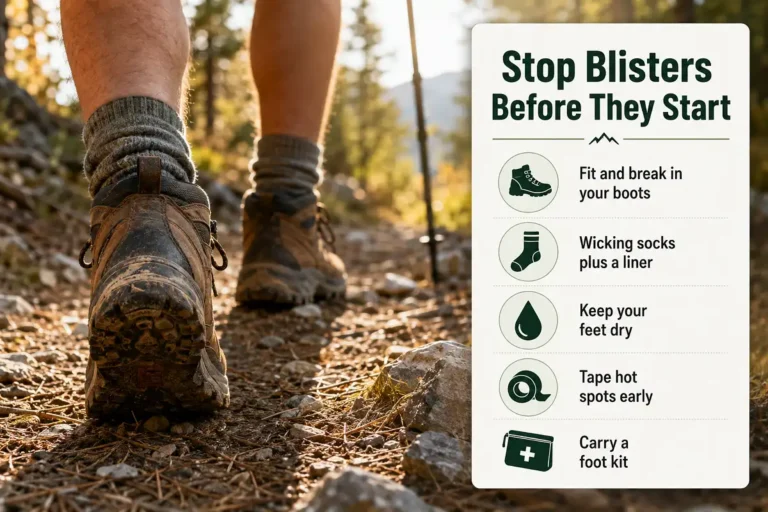
Good socks help keep blisters from forming on longer days. In winter, also pack microspikes and gloves.
My year-round pack essentials
I keep a small first-aid kit and a headlamp in my pack year round, and they have saved my day more than once.
Frequently Asked Questions
What is the easiest hiking trail in Big Bear for beginners?
The Alpine Pedal Path is the easiest option for most first-time hikers. It is paved, has very little climbing, and runs along the north shore of Big Bear Lake. It is also suitable for families, strollers, kids, and leashed dogs.
Is Big Bear safe for beginner hikers?
Yes, Big Bear has several beginner-friendly trails, but its elevation requires some extra preparation. Start slowly, drink water regularly, protect yourself from the sun, check trail closures, and turn around if you develop symptoms such as a headache, nausea, or dizziness.
Which Big Bear trail is best for beginners who want a challenge?
Castle Rock is a good step-up for fit beginners who want lake views. It is roughly 2.5 miles round trip with about 700 to 800 feet of elevation gain. Cougar Crest is another strong choice if you want a longer workout with roughly 1,000 feet of climbing.
When is the best time to hike in Big Bear?
Summer and early fall are the most reliable seasons for hiking. From June through October, trails are mostly clear and conditions are generally favorable. Fall can also bring crisp air and thinner crowds. Spring may be muddy, while winter brings snow, ice, and additional trail closures.
What should I bring on a Big Bear day hike?
Carry at least two liters of water per person, sun protection, snacks, a warm layer, an offline map, sturdy shoes, and basic emergency supplies. For winter hikes, add microspikes, gloves, and additional warm layers. A small first-aid kit and headlamp are useful year-round.
Final Thoughts
Big Bear packs a lot of variety into one mountain valley. Start easy on the Alpine Pedal Path or the Woodland loop, then work up to Cougar Crest or Gray’s Peak as your legs adjust.
Respect the altitude, carry water, and check closures every single time, because conditions here shift with the season.
Do that, and the best hiking trails in Big Bear will reward you with clean air, quiet forest, and some of the finest lake views in Southern California.