How to Avoid Getting Lost While Hiking (And What to Do If You Get Lost While Hiking Anyway)
There is a kind of dread that strikes when a trail splits without any sign or when fog rolls in and the landmarks a hiker was counting on simply disappear. Most hikers have felt this at least once. This feeling is uncomfortable. The reassuring truth is that it is almost always avoidable.
No hiker becomes lost in a dramatic instant. The loss usually happens slowly. A hiker misses a blaze, takes a route that seems like a shortcut, and after twenty minutes realizes that the last marker is forgotten.
How to avoid getting lost while hiking
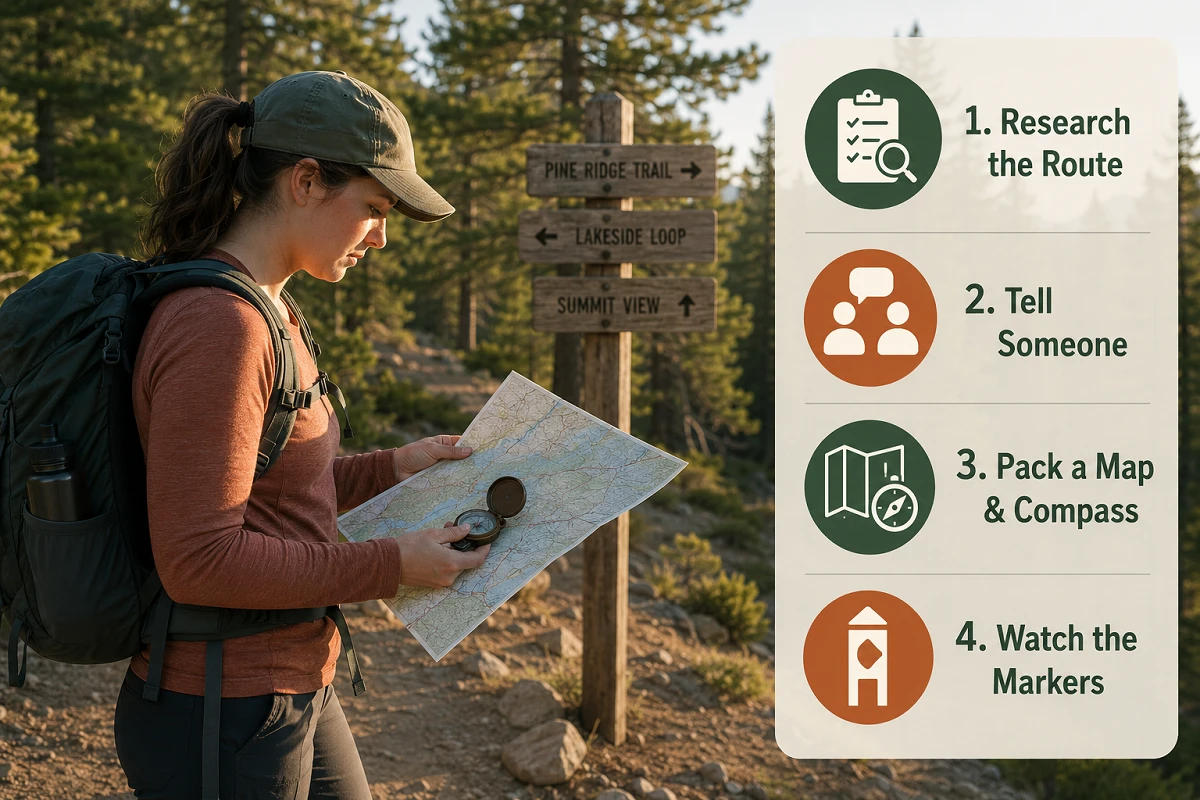
The best approach is simple: research the route before starting, tell someone your plan, carry a paper map and compass alongside your phone, watch trail markers and landmarks, and regularly check that you are still on route. If the trail disappears anyway, use the STOP method: Stop, Think, Observe, Plan.
That is really the story of how to avoid getting lost while hiking: a handful of habits, most of which require no special skill to learn. On the unlikely chance that a hiker does end up off the route even after doing everything correctly, knowing what to do next separates a stressful afternoon from a true emergency. This guide walks through both sets of habits that keep a hiker found and the exact steps to take if the trail disappears anyway.
Study the route, elevation, landmarks, junctions, and current trail conditions before leaving.
Tell someone where you are going, your route, vehicle, and expected return time.
Bring a paper map, compass, offline maps, and backup power instead of relying on one device.
Pay attention to blazes, cairns, signs, landmarks, and changes in the path.
If you become unsure of your location, stop moving and work through Stop, Think, Observe, Plan.
To learn how to avoid getting lost while hiking several simple steps help. First research the route before starting. Second inform someone of the plan before leaving. Third bring a paper map, compass along with the phone instead of relying on one device. While walking, watch landmarks and trail markers. Look back from time to time to remember the way. If a hiker ends up lost use the STOP method: stop, think, observe, plan. Staying still and signaling for help is better than wandering into unknown terrain.
Why Hikers End Up Lost in the First Place
Getting lost while hiking is never about being reckless. It usually comes down to a few mistakes: not checking trail conditions ahead of time, drifting onto a “social trail” made by other hikers, losing track of markers in bad weather, or simply trusting a phone app that loses signal at the worst possible moment.
Search and rescue teams across the U.S. respond to thousands of backcountry incidents every year. A large share of them involve hikers who lost the trail rather than hikers dealing with injuries. Recognizing these causes is really the first lesson in how to avoid getting lost while hiking. You can’t fix a problem you don’t understand yet.
A faded blaze, poorly marked junction, or stretch of missing markers can make an otherwise obvious trail confusing.
Informal paths created by other hikers can look legitimate but may lead away from the official route.
Fog, rain, snow, or darkness can remove the landmarks and visibility that hikers were using to navigate.
A dead battery, damaged phone, poor reception, or missing offline maps can turn a useful navigation tool into a liability.
How to Avoid Getting Lost While Hiking: Prepare Before You Leave
Most of the work for how to avoid getting lost while hiking happens before your boots ever hit the dirt. A little prep work at home does more for your safety than any gadget you can buy.
Research the Trail Before You Go
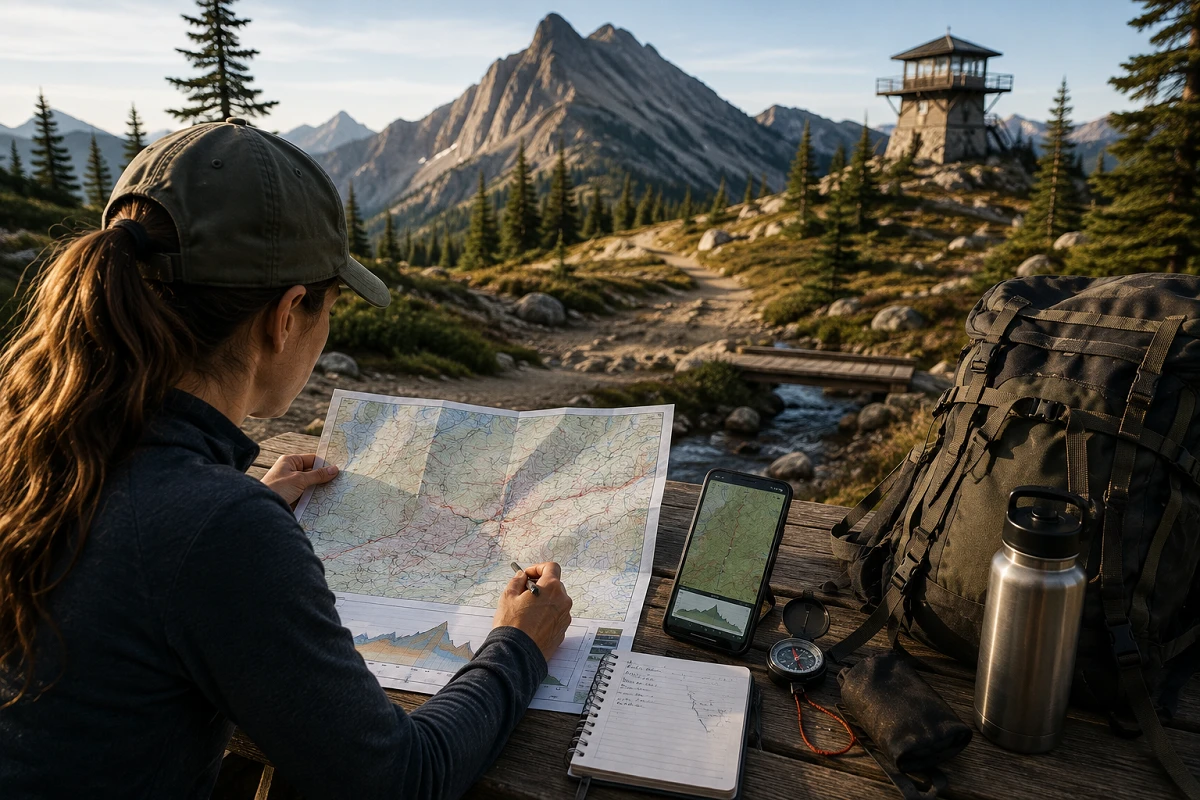
Read trip reports, not just the trailhead description from three years ago. Trail apps and local hiking forums often flag junctions, faded blazes, or spots where hikers commonly wander off route.
Study the elevation profile. Note two or three major landmarks you will pass. A distinctive peak, a creek crossing, an old fire tower. These become checkpoints that tell you whether you are still on track.
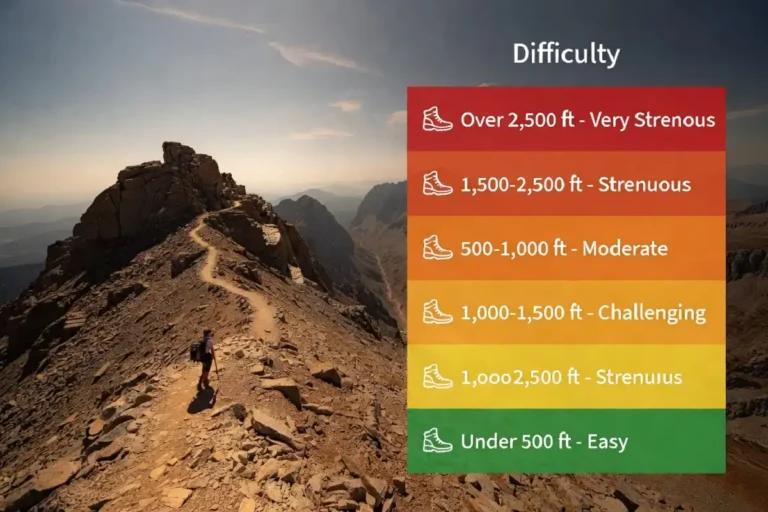
Also remember that trail difficulty ratings are not standardized: a “moderate” hike in one region can be far tougher than a “moderate” hike elsewhere, so read distance and elevation numbers rather than relying on adjectives alone.
This kind of homework is a small time investment. It is one of the most overlooked parts of how to avoid getting lost while hiking.
Tell Someone Your Plan
This is the most effective way to avoid a bad outcome if one gets lost while hiking. Tell someone who is not coming with you where you are going: the trailhead, the specific route, the expected return time, and the vehicle you are driving.
Tell someone to call for help if you have not checked in by a set time. If you hike solo often, a satellite communicator such as a Garmin inReach lets someone track your progress in real time and lets you call for help even when there is zero cell signal.
A Simple Safety Rule
Someone outside your hiking group should know where you are going and when you are expected back. That information can become extremely valuable if something goes wrong.
Pack Real Navigation Gear, Not Your Phone
Your smartphone is a useful tool, but it should not be the only tool you bring. Batteries can die. Screens can fail. Cell service can disappear when you need it most.
A dependable kit includes:
- A paper topographic map of the area kept inside a case
- A compass that you know how to use
- A smartphone that has offline maps downloaded before you leave
- A portable charger or spare battery
- Extra food, water, and a layer for changing weather
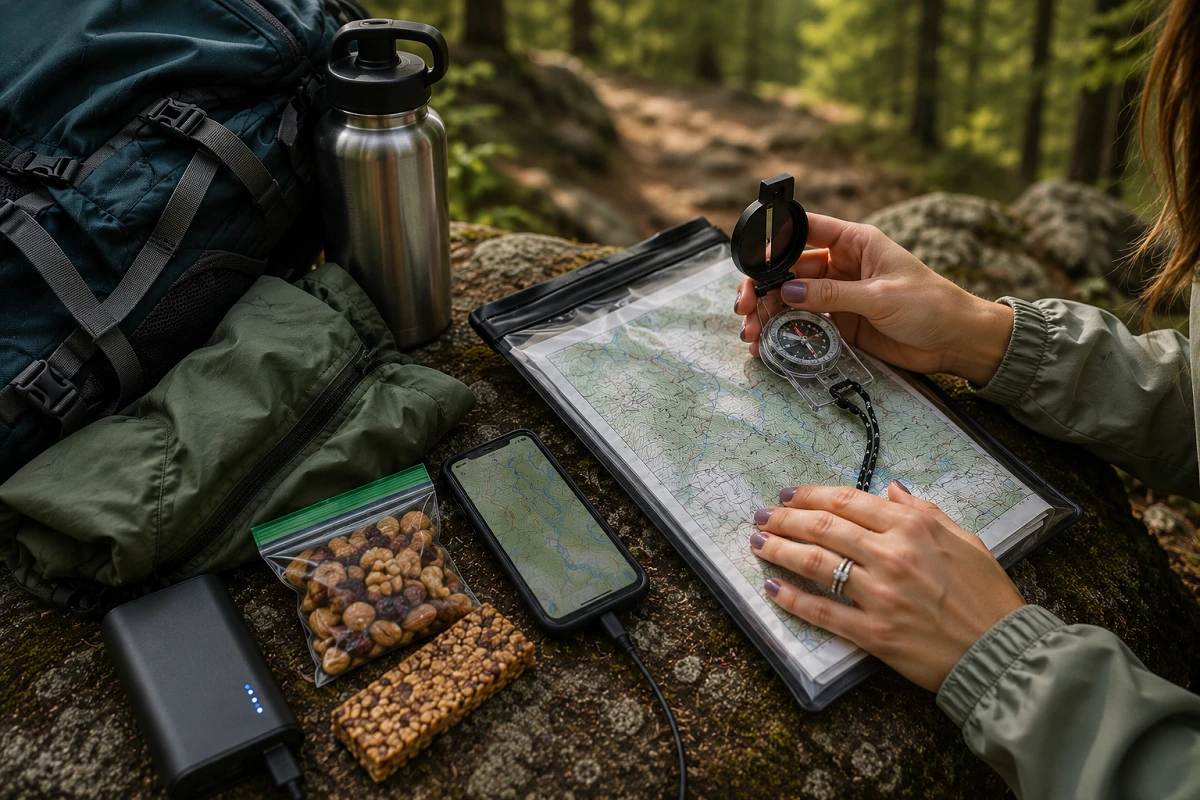
Paper maps never run out of battery, which is exactly why they remain essential gear for anyone who is serious about learning how to avoid getting lost while hiking.
Trail Skills for How to Avoid Getting Lost While Hiking
Gear only helps if you know how to use it. These low-tech skills are the backbone of how to avoid getting lost while hiking, and they work whether your phone is at 100% or completely dead.
Learn to Read Trail Markers
Different regions use different marking systems, and understanding them helps you catch a wrong turn early:
Painted marks on trees or rocks, usually a consistent color for a given trail.
Small stacks of rocks used above the treeline where trees and paint run out.
Wooden markers at junctions listing distances and directions.
Often signal an upcoming turn or change in direction.
Your cue to stop and backtrack rather than push forward hoping another marker appears.
If the path becomes increasingly unclear, stop and verify your location.

A good rule of thumb is if you haven’t seen a marker in several minutes and the path feels increasingly faint, that is a strong sign you have wandered onto an unofficial route. Reading these markers correctly is a core skill in how to avoid getting lost while hiking in areas with sparse or inconsistent signage.
Keep an Eye Out for Social Trails
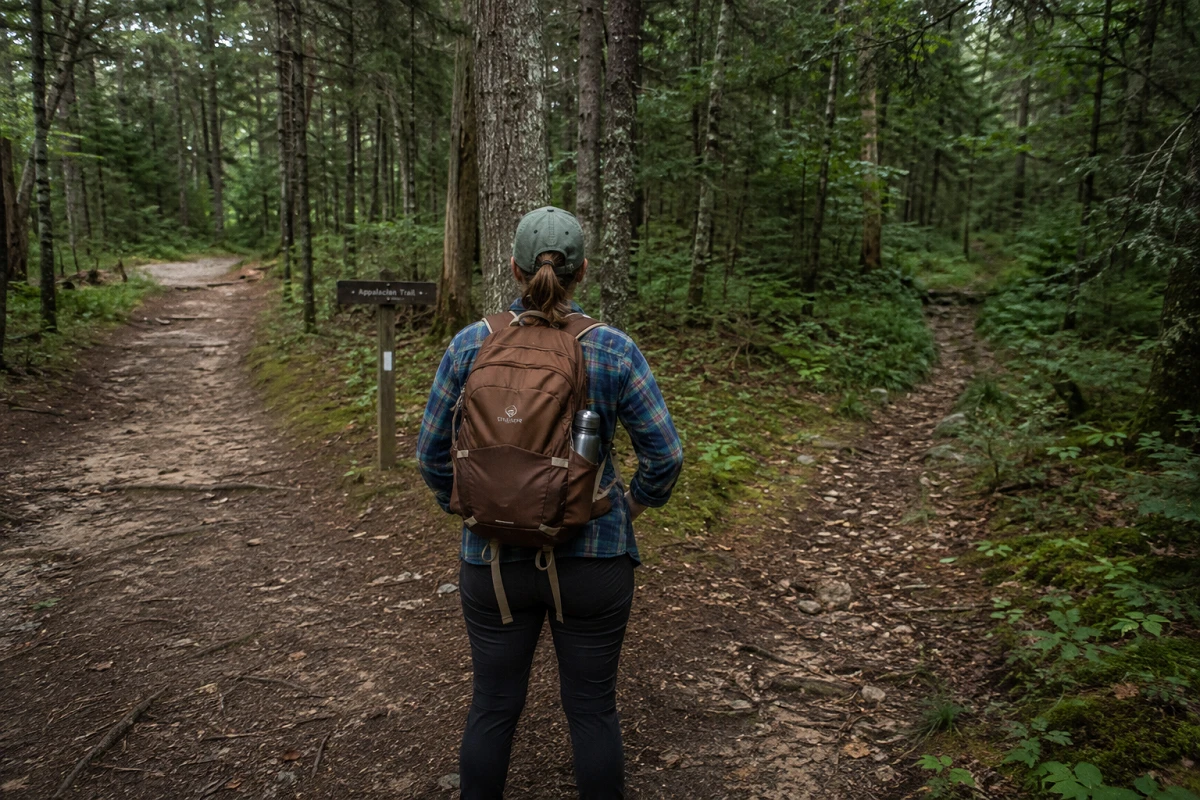
Social trails are simply paths made by other hikers who try to cut corners or walk off the main path. These social trails might look just as clear as the trail, but they often lead to a dead end, a campsite, a viewpoint, or nowhere at all.
I have seen people get lost because they follow footprints instead of official markers. This is one of the common ways people get lost while hiking. You should always make sure you are following blazes or signage and do not just follow boot prints in the dirt.
Use Natural Navigation Cues
The sun rises in the east and sets in the west. That is simple. The sun is genuinely useful for holding a general direction when other tools fail.
In the Northern Hemisphere, the sun moves across the sky during the middle of the day. The sun gives you a general directional reference even if you have no compass in your pack.
Pay attention to major terrain features. If a ridge was supposed to stay on your left during the hike but now is on your right, the ridge has moved. It is worth stopping to figure out what happened.
Reading the landscape this way is low-tech and genuinely useful for avoiding getting lost while hiking.
Check Your Map Often. Look Behind You.
Do not wait until you are not sure before taking out your map. Check it regularly with things you can see in the environment so little mistakes are found before they get bigger.
It is also good to stop now and then and look at the path you came from. The way back looks very different from the way you went forward, and remembering things—a strange rock, a tree that has fallen—makes it much easier to find the way back.
Tiny things like this help more with not getting lost while hiking than any one piece of equipment.
Warning Signs You May Be Off Route
A part of how to avoid getting lost while hiking is catching the warning signs early, since it rarely happens all at once.
If the terrain suddenly feels rougher than expected, stop and reassess your location.
A maintained trail should generally have recognizable evidence that you are still following the intended route.
A long stretch without expected markers is a reason to pause rather than continue blindly.
Fog, rain, snow, or darkness can remove the landmarks you were using to navigate.
If you’re scrambling over obstacles on what should be a maintained trail or if you simply get a feeling that something’s off, trust it and stop.
Sudden weather changes that cut visibility are another cue to pause and reassess rather than push forward. Catching these signals early is often the difference between a correction and a genuine emergency.
What to Do If You Get Lost While Hiking: The STOP Method
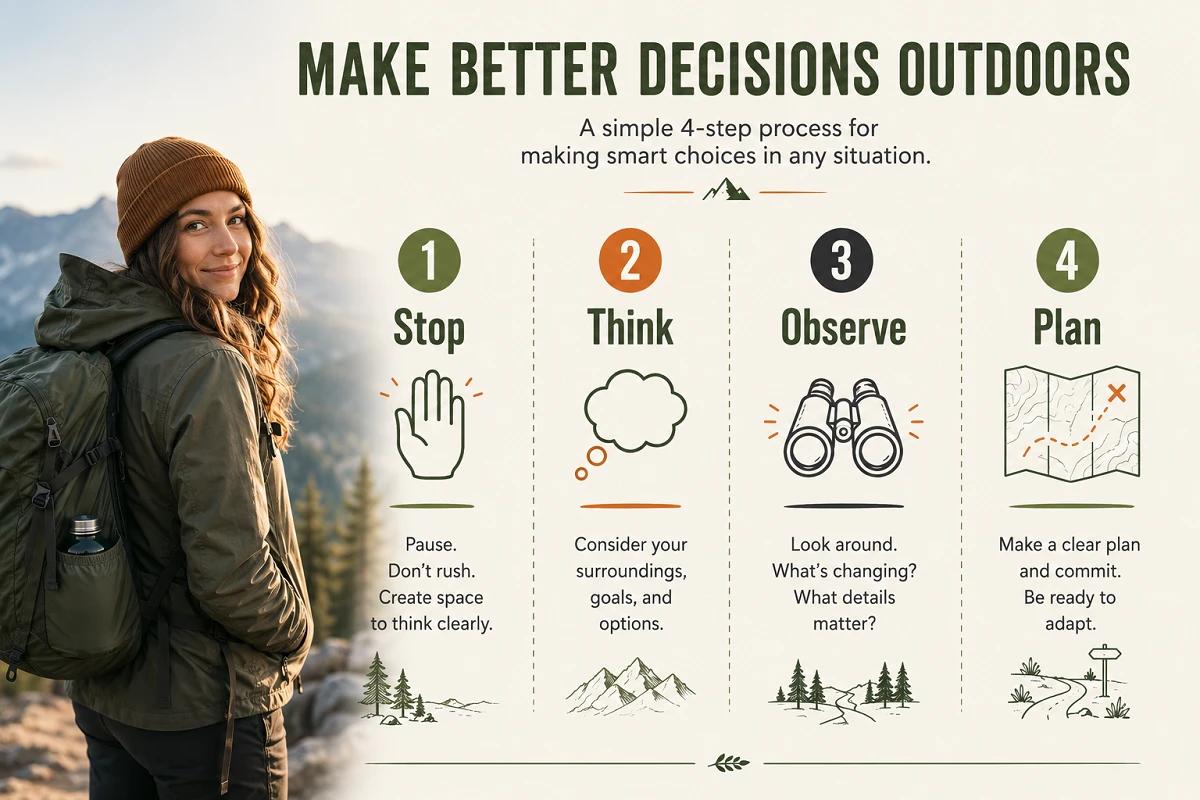
Hikers who know exactly how to avoid getting lost while hiking can still end up off-route sometimes. If it happens to you, the U.S. Forest Service recommends a framework: STOP. The STOP method is easy to remember when you feel stressed and the method actually works.
Stop moving, slow your breathing, and avoid making decisions from panic.
Reconstruct the last point where you knew exactly where you were.
Study your surroundings, map, compass, GPS, terrain, and available clues.
Choose one deliberate next step instead of wandering on a guess.
If you cannot confidently identify the route, remaining in place is often safer.
Stay Calm
The moment you suspect you are lost, stop walking. Continuing to move in a direction almost always makes things worse.
Sit down, drink some water, and take a few minutes to steady your breathing. Panic leads to poor decisions and wastes energy you may need later. Stop again if you feel more uneasy and remember to stay calm.
Think Through What You Know
Look back at the twenty or thirty minutes in your mind. When did you last see a sign or recognizable spot? Do you have pictures on your phone that show scenery? Is anyone waiting for you to return at a set time?
Answering these questions honestly will give you a better picture than guessing.
Observe the Place You’re In
Look for hints: Are you in a low area between hills or on a high area? Which way is water moving? Does the vegetation you see match what you saw earlier during the walk?
If you are still on a path, keep walking on it instead of going through the bushes and trees. A small path usually goes somewhere. Going through the woods does not often help.
Take out your compass and map. Look at your phone’s GPS; maps that work without internet can still show where you are even if you don’t have phone signal.
Plan Your Next Move
Plan based on what you have seen and choose one action. If you are not sure about a plan, do not act on a guess.
Staying in place is usually the safer choice, especially when it gets dark, the weather shifts, or you feel tired.
Before you move, mark your present spot with a visible piece of clothing, a pile of rocks, or a saved GPS point. That way, if your first attempt to find the trail fails, you have a point to return to instead of wandering even farther off path.
How to Signal for Help
Understanding how to avoid getting lost while hiking is part of the story. Knowing how to get found is just as important once you are off the path.
If you have any cell signal, call 911. Explain your surroundings as clearly as you can. Even a weak signal that can’t make a call might send a text.
Make Yourself Easier to Find
A whistle can travel farther than your voice and uses much less energy. The standard distress signal is three short blasts, a pause, then repeat. If you might be seen from the sky, place colored clothing or equipment in an open space or put items on tree branches where they will be easy to spot.
What to Do If You Have to Spend the Night Lost
If searching hasn’t worked and daylight is disappearing, staying in one place is always the better choice than going on in the dark.
Choose a Safe Place
Find a place to stay safe away from dangers like broken trees, the edge of a cliff, or a dry riverbed that could flood.
Stay Warm and Dry
Put on clothes before you start to feel cold because it is much better to prevent hypothermia than to try to fix it later.
Use Fire Carefully
Make a fire only if it is allowed and safe. It can provide warmth and also act as a signal.
Stay Visible
Wear clothes or use gear that can be seen easily so people looking for you might spot it.
Conserve Your Phone
Save your phone battery for emergencies instead of using it simply to pass time.
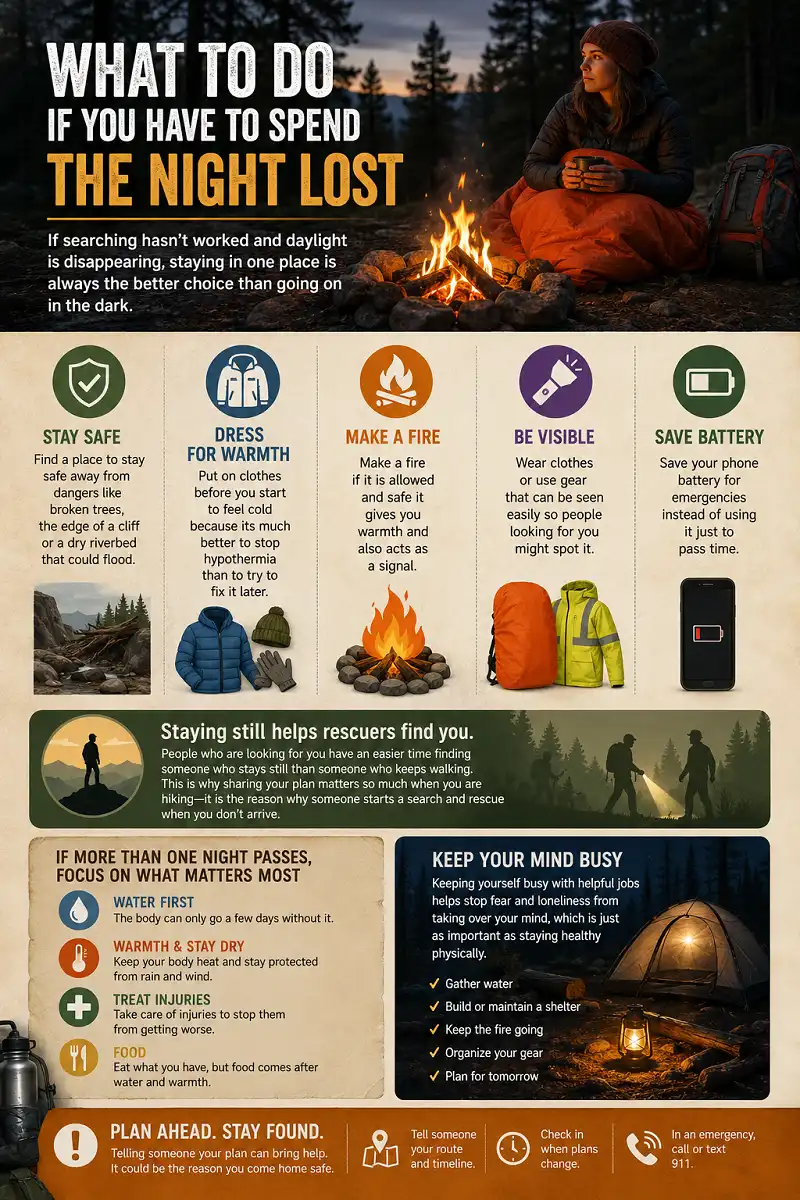
People who are looking for you have an easier time finding someone who stays still than someone who keeps walking. This is why sharing your plan matters so much when you are hiking. It is the reason why someone starts a search and rescue when you don’t arrive.
If more than one night goes by, focus on the most important things first: water is the first thing because the body can only go a few days without it, then warmth and staying dry, then taking care of any injuries to stop them from getting worse, then food.
Keeping yourself busy with helpful jobs also helps stop fear and loneliness from taking over your mind, which is just as important as staying healthy physically.
Navigation Tools Compared
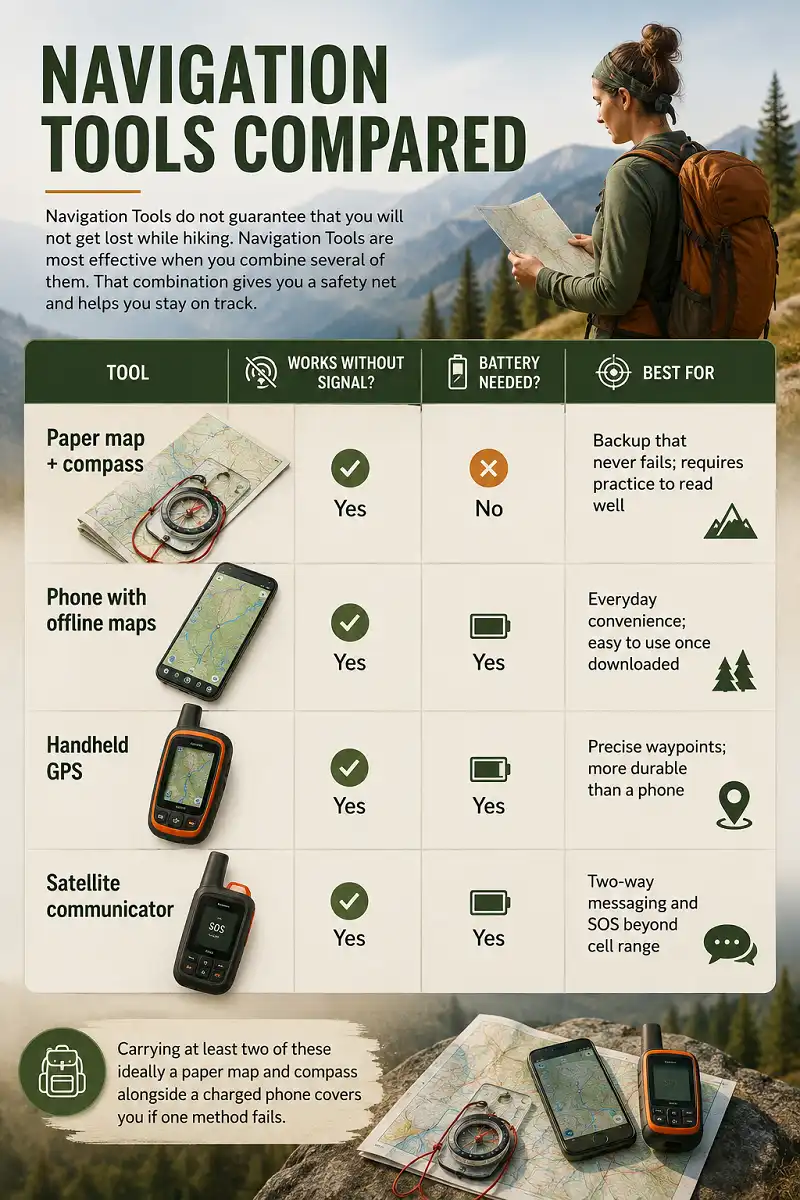
Navigation tools do not guarantee that you will not get lost while hiking. Navigation tools are most effective when you combine several of them. That combination gives you a safety net and helps you stay on track.
| Tool | Works Without Signal? | Battery Needed? | Best For |
|---|---|---|---|
| Paper map + compass | Yes | No | Backup that never fails; requires practice to read well |
| Phone with offline maps | Yes | Yes | Everyday convenience; easy to use once downloaded |
| Handheld GPS | Yes | Yes | Precise waypoints; more durable than a phone |
| Satellite communicator | Yes | Yes | Two-way messaging and SOS beyond cell range |
The Best Navigation Setup
Carrying at least two navigation methods—ideally a paper map and compass alongside a charged phone—covers you if one method fails.
Building the Habit of How to Avoid Getting Lost While Hiking
None of this requires expert-level skill. Most people who have truly figured out how to avoid getting lost while hiking are simply paying attention: checking the map before doubt creeps in, noticing when the trail starts to feel off, and never assuming a footpath is the real trail just because other people walked it.
These habits are worth practicing on short, familiar trails before you take them into more remote terrain.
Prepare
- Research the trail
- Study the elevation profile
- Identify landmarks
- Download offline maps
- Pack map and compass
- Share your hiking plan
Stay Aware
- Watch for markers
- Check your map regularly
- Notice terrain changes
- Watch for social trails
- Look behind you
- Stop when something feels wrong
If you’re still building your outdoor foundation, our guide on how do I start hiking covers the basics that pair well with the navigation skills here, and our skills section has more on building trail confidence over time.
For a broader look at staying safe on the trail beyond navigation, our safety section is a good next stop.
For more on wilderness navigation and search and rescue procedures generally, Wikipedia’s search and rescue overview has a helpful overview of how these operations work.
FAQs
What is the best way to avoid getting lost while hiking?
The best approach is to prepare before the hike and stay aware during it. Research the route, tell someone your plan, carry a paper map and compass, download offline maps, watch trail markers and landmarks, and regularly check your position. If the trail becomes unclear, stop and reassess instead of continuing on a guess.
Should I rely on my phone for hiking navigation?
A phone is a useful navigation tool, but it should not be your only one. Batteries can die, devices can fail, and cell service may disappear. Download maps for offline use and carry a paper map and compass as a backup.
What should I do if I realize I am lost while hiking?
Stop moving and use the STOP method: Stop, Think, Observe, Plan. Stay calm, think through where you were last certain of your location, observe the terrain and available navigation clues, and then make one deliberate plan. If you cannot confidently identify the route, staying in place is generally safer than wandering farther away.
How can I tell if I have accidentally followed a social trail?
A social trail may look like a real path but often lacks official blazes, signs, or other trail markers. If the path becomes increasingly faint, the terrain seems inconsistent with your planned route, or expected markers disappear, stop and check your map and surroundings rather than continuing to follow footprints.
What should I do if I have to spend the night lost in the wilderness?
If daylight is disappearing and you cannot safely find the trail, stay in place rather than continuing in the dark. Choose a safe location away from hazards, keep yourself warm and dry, conserve your phone battery, stay visible, and signal for help when possible. If you have cell service, contact emergency services and clearly describe your surroundings.
In Summary
Learning how to avoid getting lost while hiking is not hard. It is mostly about preparation, paying attention, and being ready to stop and think when something feels wrong.
Pack the tools, let someone know your plan, and watch your surroundings as you go. If you do become lost even after doing everything right, remember the steps that help: stop, think, look around, plan, and stay in one place after you have decided.
Calm choices help people find you. Panic can turn a wrong turn into a real emergency.