How Much Elevation Gain Is a Lot Hiking? A Beginner’s Guide
Elevation gain trips up more new hikers than distance does. I’ve watched friends breeze through a flat 8-mile trail, then completely fall apart on a 4-mile climb. So how much elevation gain is a lot hiking? It depends on your fitness, the trail surface, and the altitude you’re starting from, but there are real numbers you can use to plan smarter. This guide breaks it down so you know what to expect before you lace up.
How Much Elevation Gain Is a Lot Hiking?
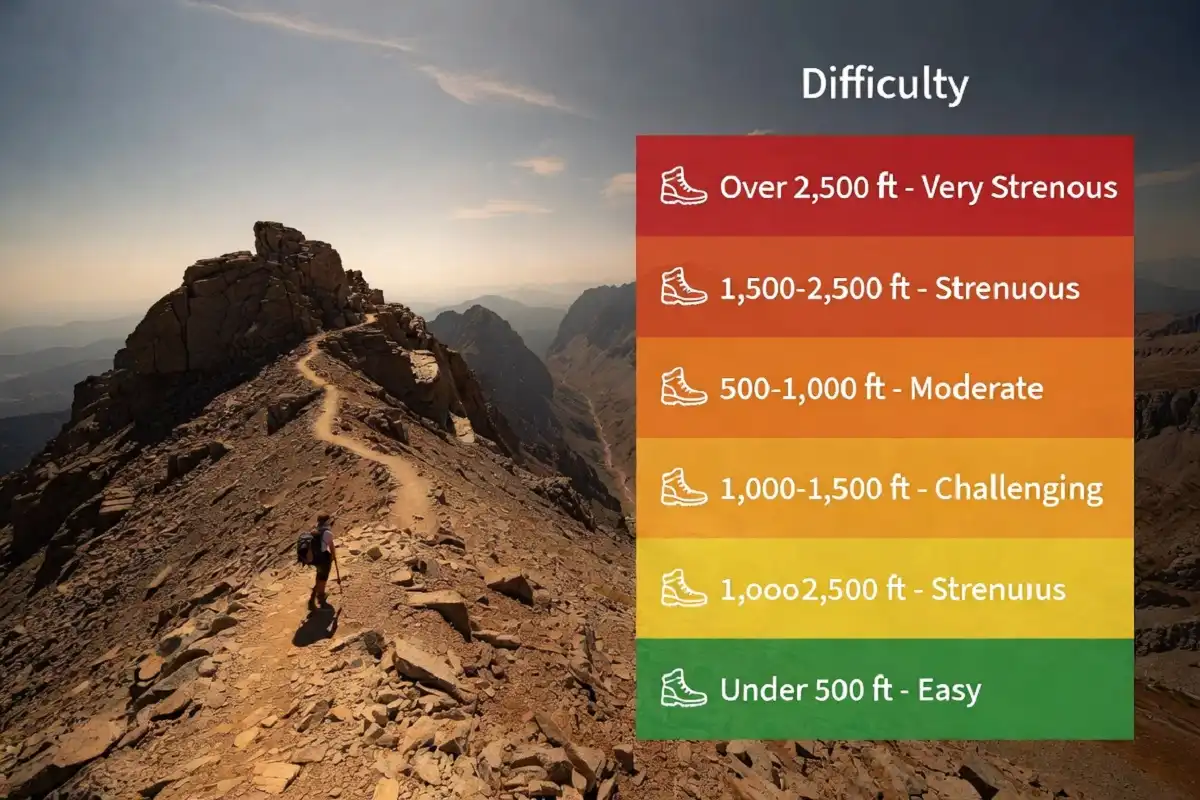
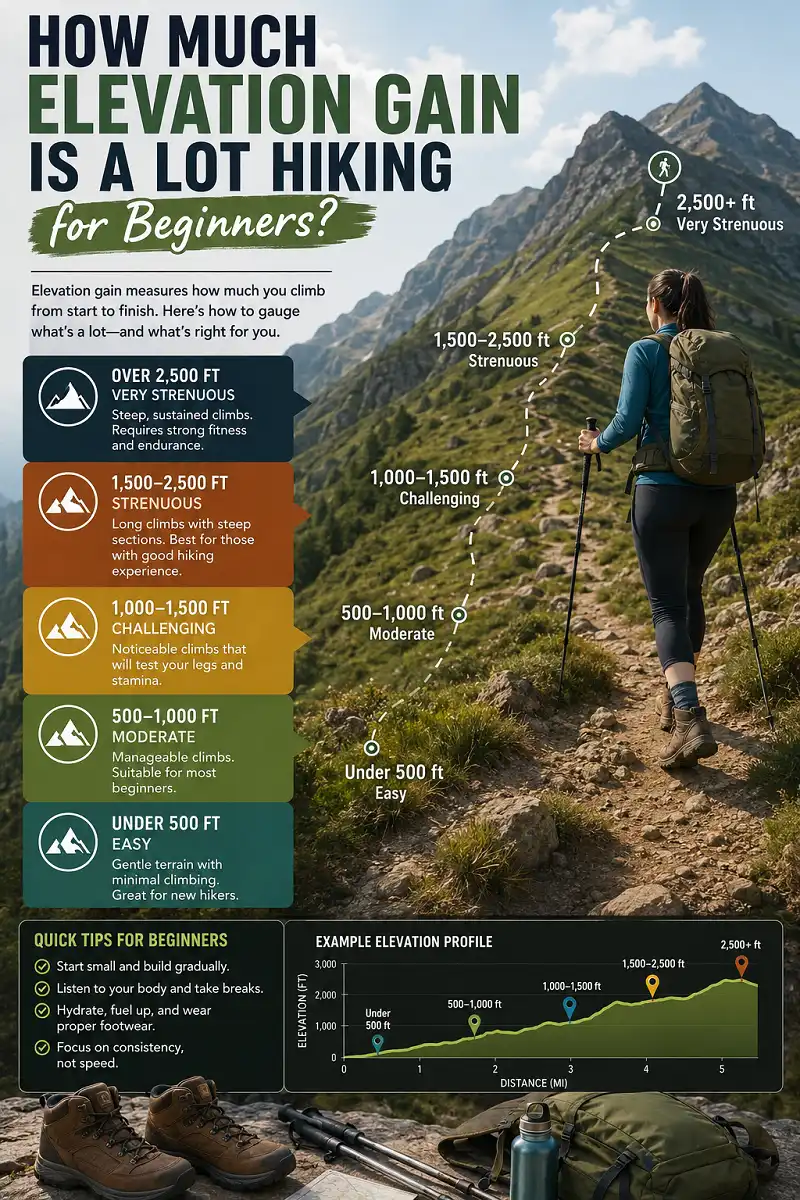
For most beginners, anything over 1,000 feet of elevation gain in a single day starts to feel like real work. Under 500 feet per hike is easy for almost anyone. Between 500 and 1,000 feet is moderate and manageable with some effort. Above 1,500 feet in one outing is where things get demanding, even for people in decent shape.
These numbers change based on distance too. A 1,000-foot climb spread across 5 miles feels very different than the same gain packed into 1.5 miles. So when people ask how much elevation gain is a lot hiking, the honest answer is: it’s not just the total feet, it’s how quickly you gain them.
What Counts as Elevation Gain
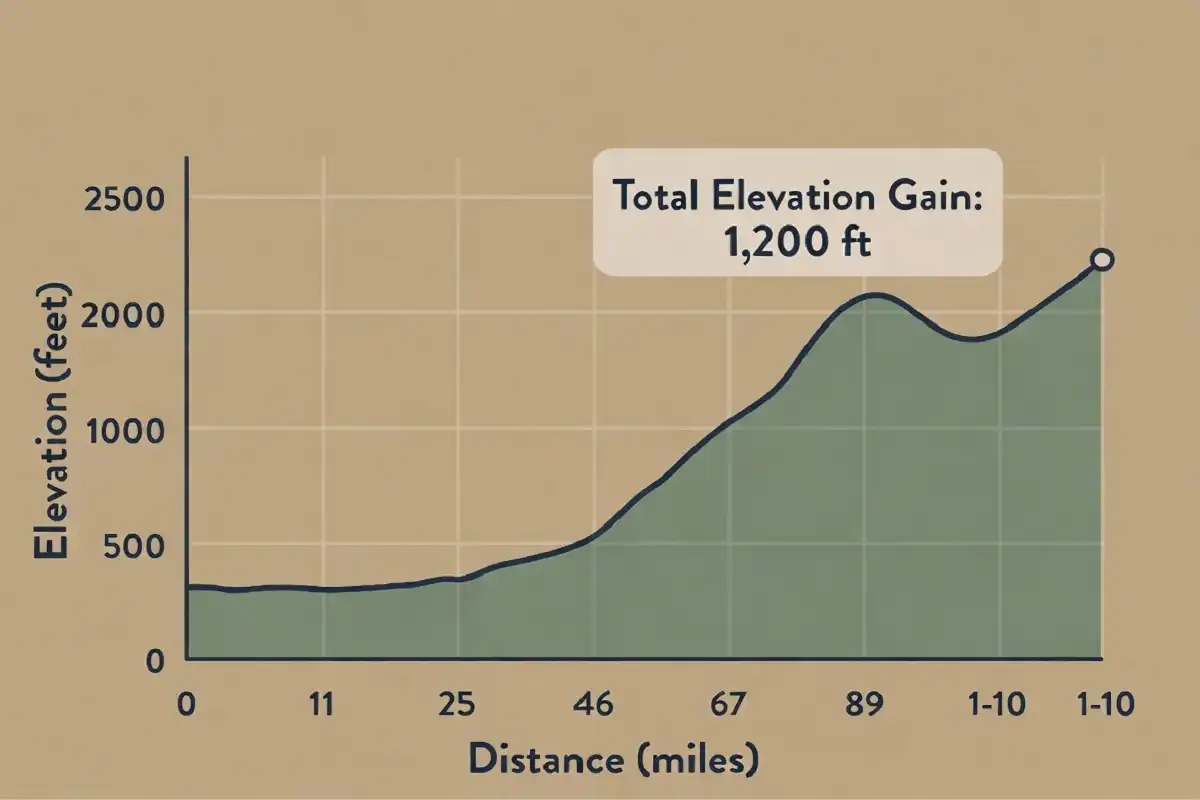
Elevation gain is the total number of feet you climb from start to finish, added up across every uphill section of the trail. It’s not the same as the difference between your starting and ending elevation. A trail that rolls up and down repeatedly can rack up more elevation gain than a steady climb to the same final point.
This matters because two trails listed at the “same elevation” can feel completely different. Always check the gain number specifically, not just the summit height, before you commit to a hike.
How Much Elevation Gain Is a Lot Hiking for Beginners
New hikers should treat anything above 800 to 1,000 feet of gain as a real training hike, not a casual walk. I remember my first serious climb, about 1,200 feet over 3 miles, and my legs were sore for two days afterward. That’s normal. Your body needs time to adapt to sustained climbing.
If you’re still building a base level of fitness, start with hikes under 500 feet of gain and build up from there. Once those feel comfortable, move to the 500-1,000 foot range before attempting anything steeper. This gradual approach also helps you figure out your own answer to how much elevation gain is a lot hiking, because everyone’s threshold is different.
Elevation Gain Guide by Feet
Easy. Suitable for most fitness levels and first-time hikers.
Moderate. Expect a steady heart rate increase and some leg fatigue.
Challenging. Good fitness helps, and you’ll want breaks.
Strenuous. Requires training and pacing strategy.
Very strenuous. Typically multi-hour climbs even for experienced hikers.
Factors That Change How Much Elevation Gain Is a Lot Hiking
The feet-per-hike number is only part of the picture. A few other factors shift how much elevation gain is a lot hiking for you personally, even at the same total gain.
Fitness Level
Your cardiovascular fitness matters more than raw leg strength on climbs. Hikers who run, cycle, or do regular cardio handle elevation gain more comfortably than those who only strength train. If you’re new to cardio-heavy activity, expect climbs to feel harder than the number on paper suggests.
Trail Conditions
Loose gravel, mud, or uneven rock slows you down and burns more energy per foot of gain than a smooth, packed trail. Steep, technical terrain also demands more from your balance and stabilizer muscles, so the same elevation number can feel much tougher depending on the surface.
Altitude
Climbing at high altitude, generally above 8,000 feet, adds real difficulty because there’s less oxygen in the air. A 1,000-foot gain at sea level feels nothing like a 1,000-foot gain at 9,000 feet elevation. If you’re traveling to a mountain destination, plan for a day or two to adjust before attempting big climbs.
Pack Weight
Every extra pound in your pack adds up on a climb. A daypack under 15 pounds barely affects most hikers, but a loaded overnight pack of 30-40 pounds changes the math completely. If you’re carrying gear for an overnight trip, plan on the climb feeling noticeably harder than a day hike with the same gain.
How Much Elevation Gain Is a Lot Hiking on a Day Hike vs Multi-Day Trip
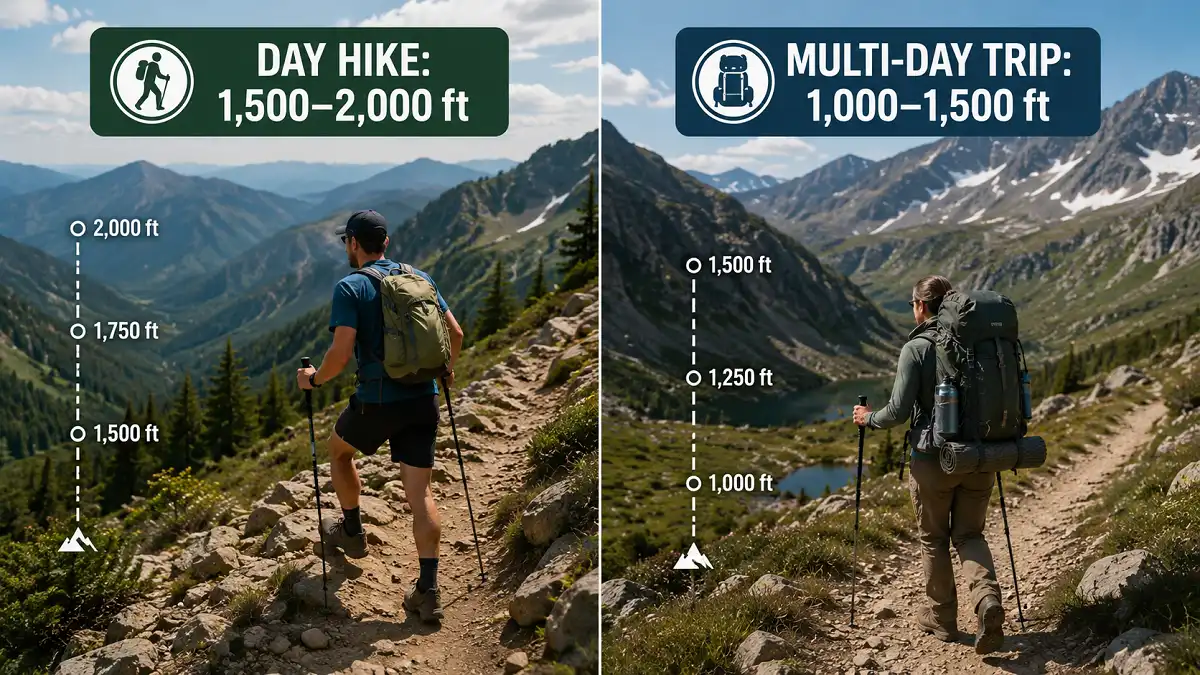
1,500-2,000 Feet
- Reasonable strenuous target for a fit beginner.
- Less gear makes climbing easier.
- You can push harder because you don’t need to save as much energy for tomorrow.
1,000-1,500 Feet
- Conserves energy for the following day.
- Accounts for heavier camping packs.
- Helps maintain a sustainable pace throughout the trip.
Day hikers can push harder because they’re not carrying camping gear and don’t need to conserve energy for the next day. On a day trip, 1,500 to 2,000 feet of gain is a reasonable strenuous target for a fit beginner. On a multi-day trip, I usually recommend keeping daily gain closer to 1,000-1,500 feet, since you’re hiking again tomorrow and carrying more weight.
This is also where trekking poles start to earn their keep. If you’re deciding whether to bring them, I put together a breakdown of whether poles are worth carrying that covers exactly this kind of climbing scenario.
Signs You’ve Taken On Too Much Elevation Gain
Your body gives clear warnings when a climb is beyond what you trained for. Watch for these signs, especially if you’re still figuring out how much elevation gain is a lot hiking for your fitness level:
Your heart rate stays unusually high even during short breaks.
Your legs begin shaking or cramping during the climb.
You cannot slow your breathing down without stopping completely.
These symptoms can also signal altitude effects.
You need frequent extended breaks just to keep moving.
Know When to Turn Back
If two or more of these signs show up, it’s a sign to turn back or cut the hike short. Pushing through is how minor fatigue turns into a real injury or an evacuation situation.
Tips to Handle More Elevation Gain Safely
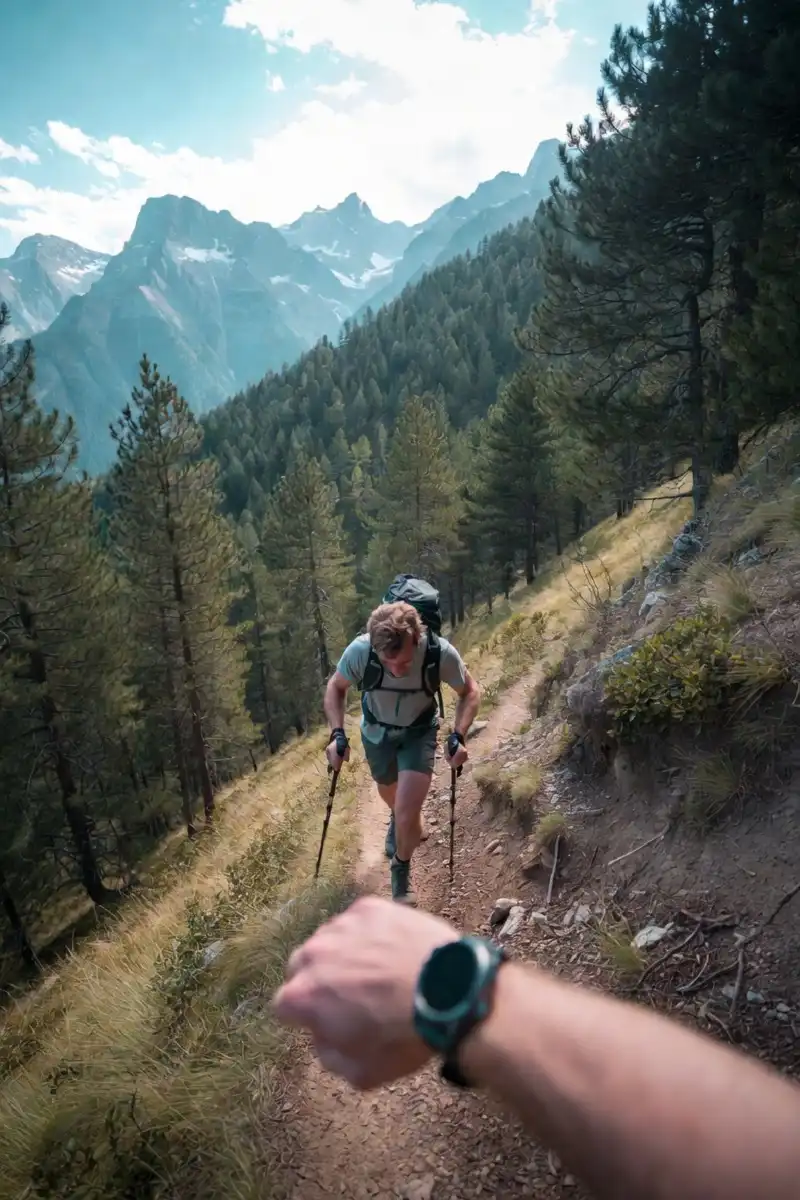
A slow, steady pace beats short bursts followed by long breaks.
Aim for a pace where you could still talk in full sentences while climbing.
Eat small snacks every hour instead of waiting until you’re hungry.
Focus on the next switchback instead of thinking about the entire climb.
Training with stairs, hills, or a weighted pack in the weeks before a big hike can make a real difference.
Climbing generates heat quickly, so wear gear you can shed and pack away as your body warms up.
Layering matters too. Climbing generates heat fast, even in cold winter conditions, so you’ll want gear you can shed and pack away as your body warms up.
Final Thoughts
There’s no single number that defines how much elevation gain is a lot hiking for everyone. It depends on your fitness, the terrain, the altitude, and what you’re carrying. Use the guidelines here as a starting point, pay attention to how your body responds, and build up gradually.
That approach will get you ready for bigger climbs without wrecking your first few hikes in the process.
FAQs
How much elevation gain is a lot hiking for a beginner?
For a beginner, anything over 800 to 1,000 feet of gain in a single hike counts as demanding. Most new hikers do well starting with climbs under 500 feet and building up gradually as their cardiovascular fitness and leg strength improve.
Is 1,000 feet of elevation gain a lot for hiking?
For an average, moderately fit hiker, 1,000 feet is a moderate to challenging amount, especially if it’s packed into 2 miles or less. Spread across 5 or 6 miles, the same gain feels much more manageable.
How much elevation gain is too much in one day?
There’s no single number that applies to everyone, but most hikers without significant training start to struggle above 2,500-3,000 feet in a single day. If you’re planning a hike near that range, according to Wikipedia’s overview of hiking, pacing and proper preparation are consistently cited as the biggest factors in completing longer, steeper routes safely.
Does elevation gain matter more than total distance?
Often, yes. A short, steep trail can be more exhausting than a long, flat one. When comparing two hikes, always check the gain number before assuming the shorter trail is easier.