Do Hiking Socks Make a Difference? A Beginner’s Guide
Standing in the sock aisle before your first real hike, the math feels off. A three-pack of cotton socks costs a few dollars. One pair of hiking socks can run twenty or more. So you might wonder: do hiking socks make a difference, or is that just clever packaging?
I wondered the same thing years ago, right up until a hot trail and a cheap pair of cotton socks left my heels blistered by the third mile. That day changed how I pack. This guide walks you through what changes, so you can decide for your own feet.
Do hiking socks make a difference?
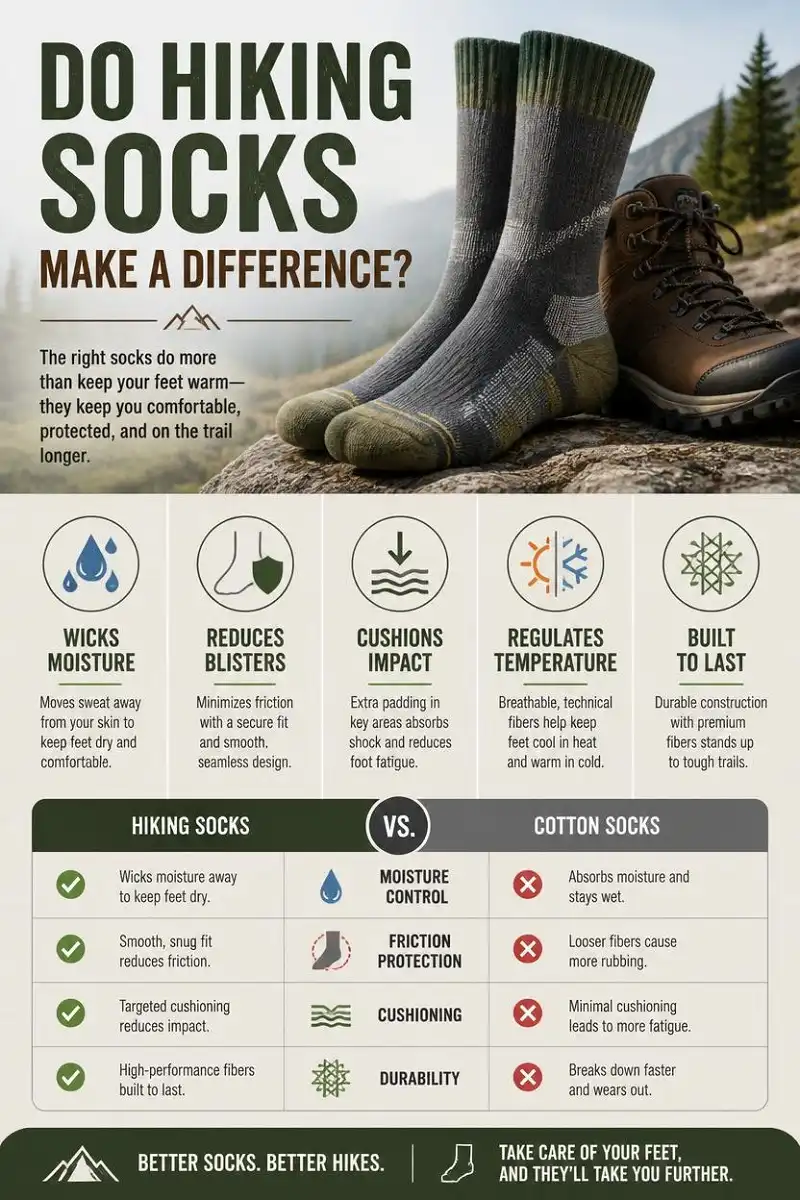
Yes. Hiking socks make a real difference, especially on longer, hotter, steeper, or multi-day hikes. They help manage moisture, reduce friction, cushion your feet, regulate temperature, and generally last longer than ordinary cotton socks.
Wicks sweat away so your skin stays drier.
Less moisture and rubbing means fewer hot spots.
Padding helps absorb impact under the heel and ball.
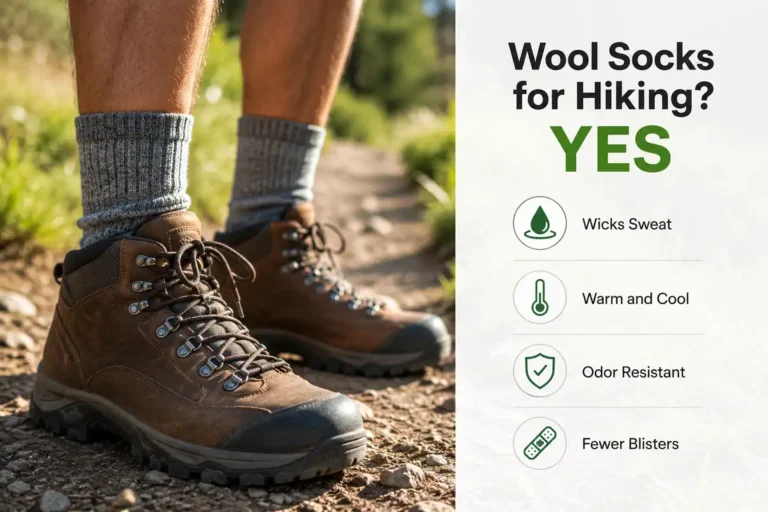
Merino can help keep feet warm in cold and comfortable in heat.
Tighter knitting and tougher fibers handle repeated miles.
When do hiking socks matter most?
Hiking socks matter most on long, hot, or steep hikes, and least on short, flat walks near home. The longer, hotter, or steeper the trail, the more good socks help, so knowing the pattern lets you spend wisely.
More miles mean more sweat and more chances for friction and hot spots.
Sweat builds quickly, making moisture management especially important.
Descents can push your toes forward while cushioning protects your feet.
Odor resistance, drying performance, and durability become more valuable.
A good hiking sock can help buffer pressure from stiff, unbroken boots.
For a short, flat stroll, ordinary socks may be perfectly adequate.
You don’t need trail socks for the mailbox, but you’ll appreciate them when you’re spending a full day on the mountain.
Hiking socks vs regular socks: what really changes?
The gap comes down to three things: material, fit, and build.
Regular cotton socks use a loose weave and soak up water like a towel. Once your feet sweat, the fabric holds moisture against your skin. Wet skin softens, friction climbs, and blisters follow.
Cotton Socks
- Absorb and retain sweat
- Stay damp for longer
- Can increase friction
- Dry slowly
- Lose insulation when wet
Hiking Socks
- Move moisture away from skin
- Dry faster
- Reduce rubbing
- Provide targeted cushioning
- Hold their shape better
The materials that matter
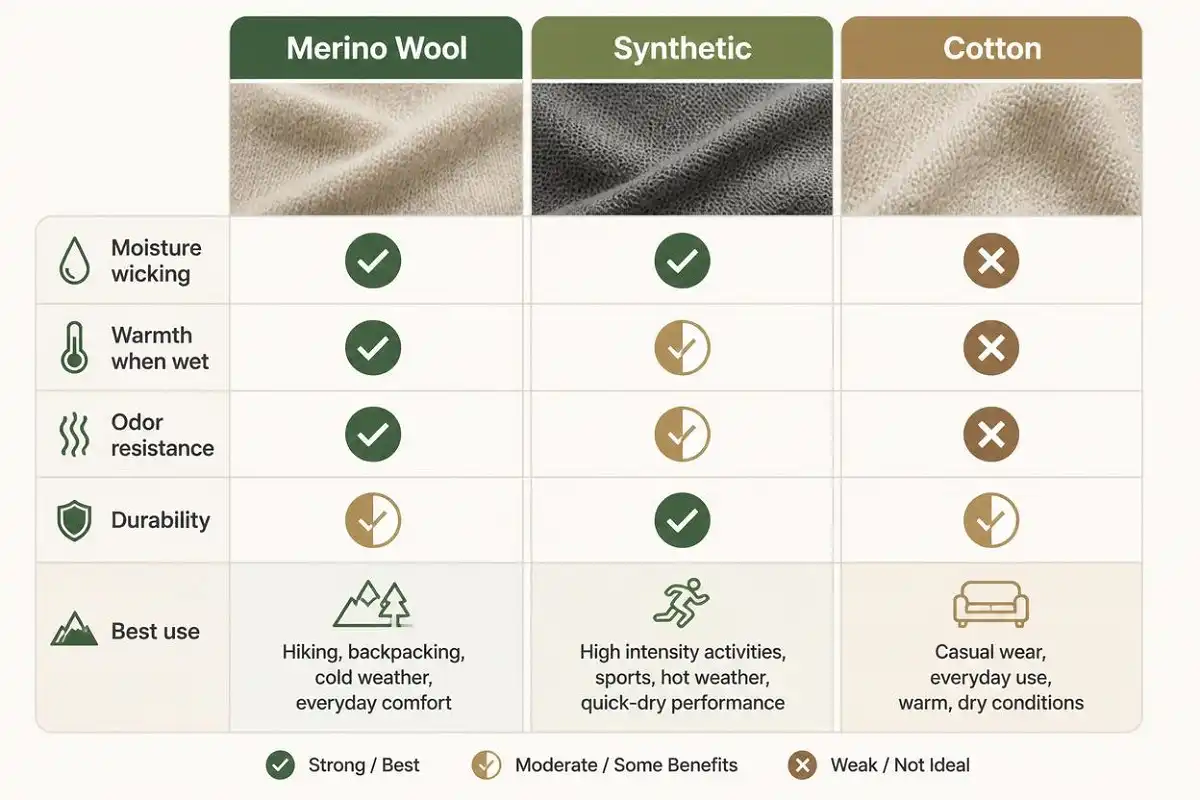
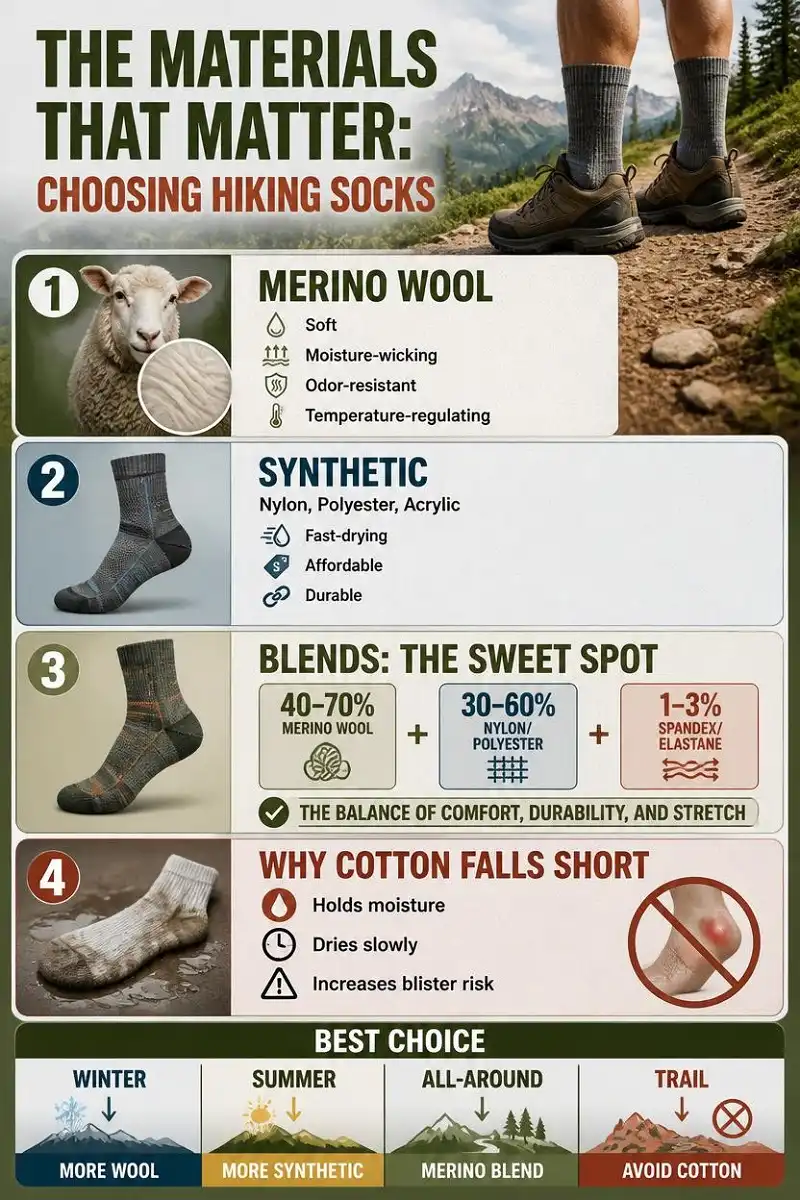
Material is where most of the difference starts. Three major families show up on store shelves, and they are not equal.
Merino Wool
Merino wool is a favorite among hikers because its fine fibers feel soft, wick moisture, resist odor naturally, and regulate temperature in both directions.
The tradeoff is durability. Pure merino can wear thin quickly, so many quality hiking socks blend it with synthetic fibers.
Synthetic
Synthetic socks commonly use nylon, polyester, or acrylic. They dry fast, cost less, and stand up well to repeated use. They can be a good choice for short summer hikes and trail running.
Advantages
- Fast drying
- Generally durable
- Often less expensive
- Good for warm weather
Tradeoffs
- Can trap odor
- May breathe less than merino
- Quality varies considerably
Blends: The Sweet Spot
Most quality hiking socks are blends. A typical recipe may contain approximately 40–70% merino wool, 30–60% nylon or polyester, and 1–3% spandex or elastane.
Why cotton falls short
Cotton holds water and builds friction. Once soaked with sweat, it can rub against the skin and increase blister risk. It also dries slowly and provides less insulation when wet.
For a quick errand, cotton is fine. On a demanding trail, a purpose-built hiking sock is the better choice.
How hiking socks prevent blisters
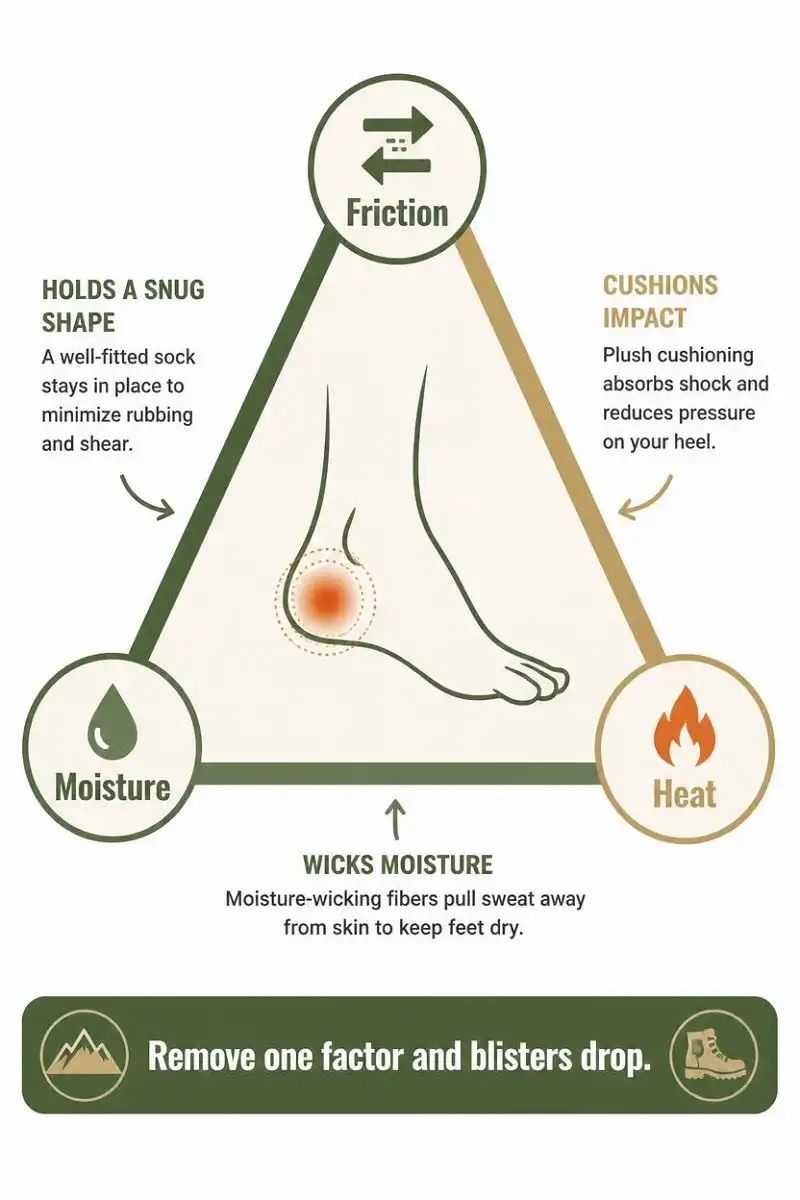
Blisters form when three forces line up: friction, heat, and moisture. Remove any one of them and the risk can drop.
Moisture Management
Wicking fibers move sweat away from the skin and help keep your feet drier.
Secure Fit
A snug sock moves with your foot instead of sliding and bunching.
Cushioning
Targeted padding can absorb some of the shock and heat generated by repeated steps.
Extra tricks for blister-prone feet
A thin liner can shift friction to the fabric layer. Some modern hiking socks wick well enough that liners are unnecessary.
Toe socks separate individual toes and can help reduce toe-on-toe rubbing.
A sock that bunches, slides, or leaves excess fabric can create hot spots. Fit often matters more than any single feature.
Carrying a dry spare pair can be especially useful on long or multi-day trips.
Cushioning and thickness: matching socks to your hike
Cushioning tells you how thick and warm a sock is. More padding can bring comfort and warmth, but it can also add heat. Match the cushion level to your trip rather than automatically choosing the thickest option.
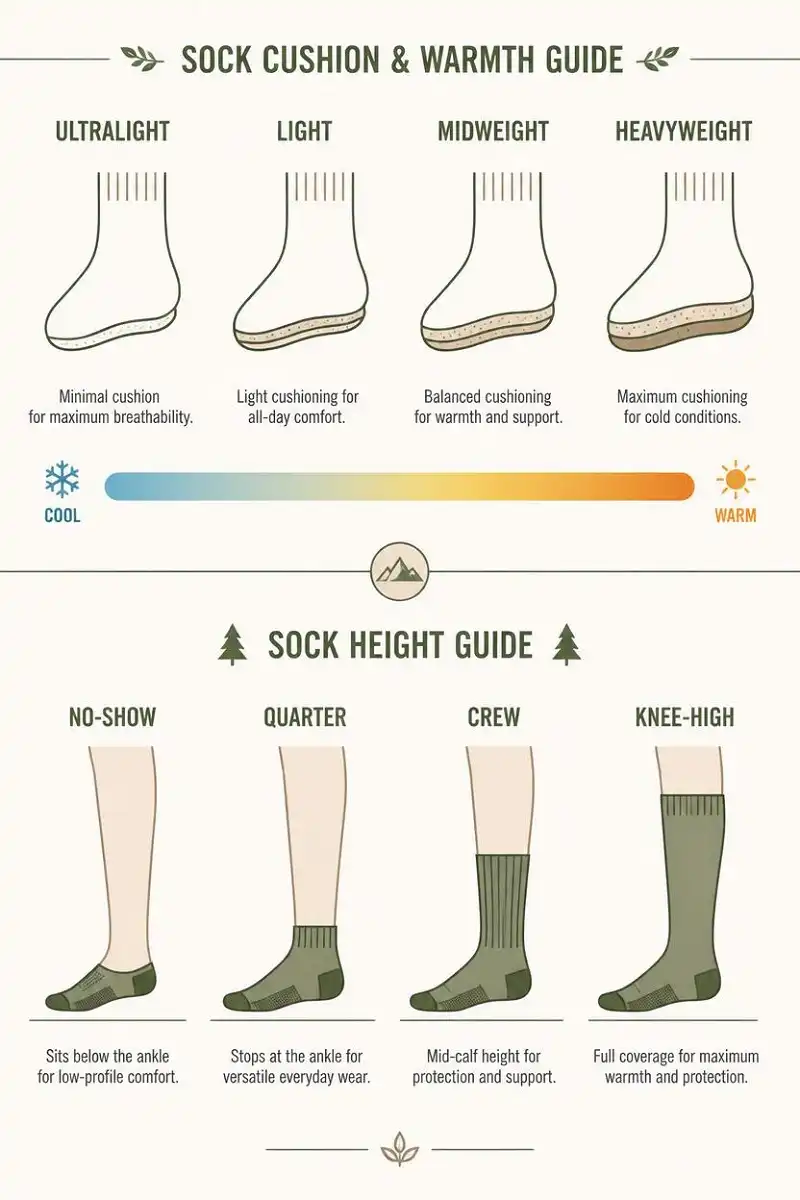
For most beginners on day hikes, a light or midweight sock covers nearly everything. For longer and steeper hikes, a little extra cushioning can be useful.
Sock height and why it matters
Height determines how much of your leg the sock protects and should match your footwear.
Works with low trail shoes but offers little boot protection.
Breathable and popular for warm days and trail running.
Classic hiking height that protects against boot-cuff abrasion.
Useful for tall boots, mountaineering, and colder conditions.
Crew socks pair well with most hiking boots.
Your socks are part of your footwear setup
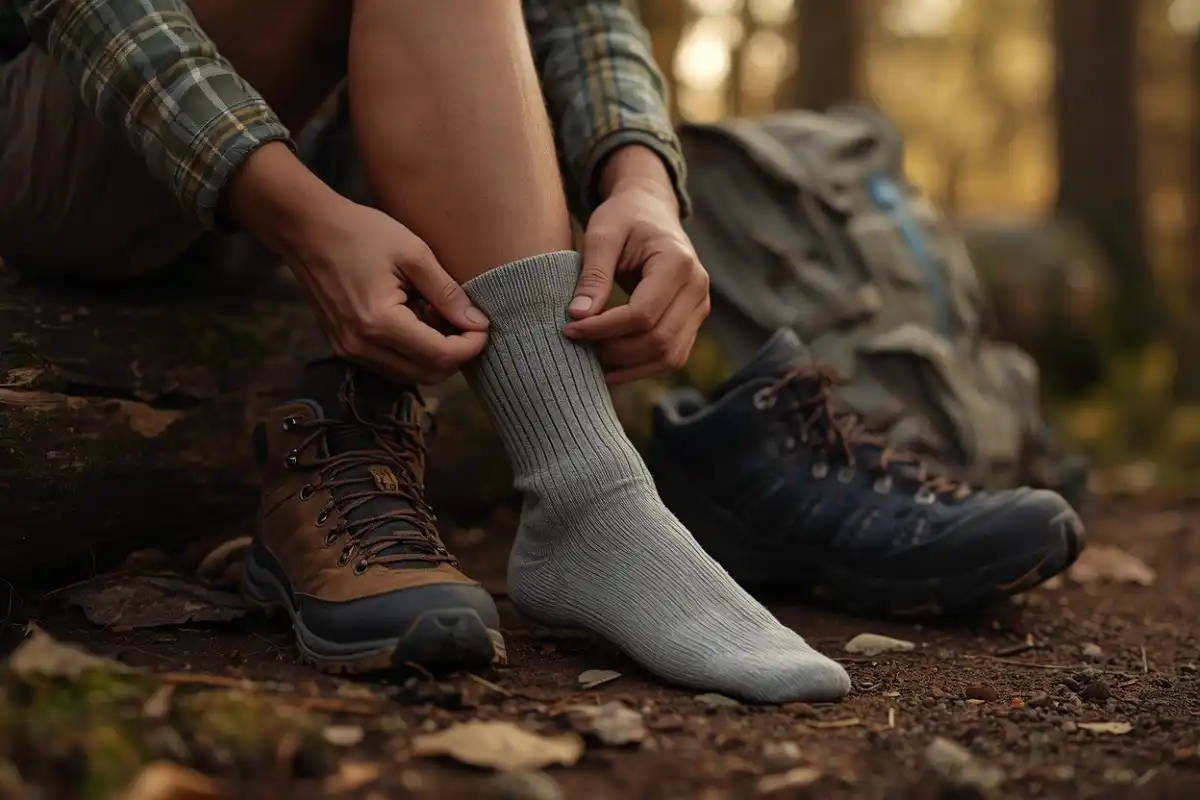
Think of everything between your feet and the trail as one setup: your socks, insoles, and boots. They work together, and the sock is the layer touching your skin directly.
Thickness matters most. A sock that is too thick can crowd a snug boot and create pressure points. Too thin, and your foot may slide inside the boot, increasing friction.
Try your boots with your hiking socks
When buying boots, bring the socks you plan to hike in and try the footwear on together. This helps the fit in the store better match the fit you’ll experience on the trail.
You can also read more about choosing and evaluating trail boots.
How to choose the right hiking socks
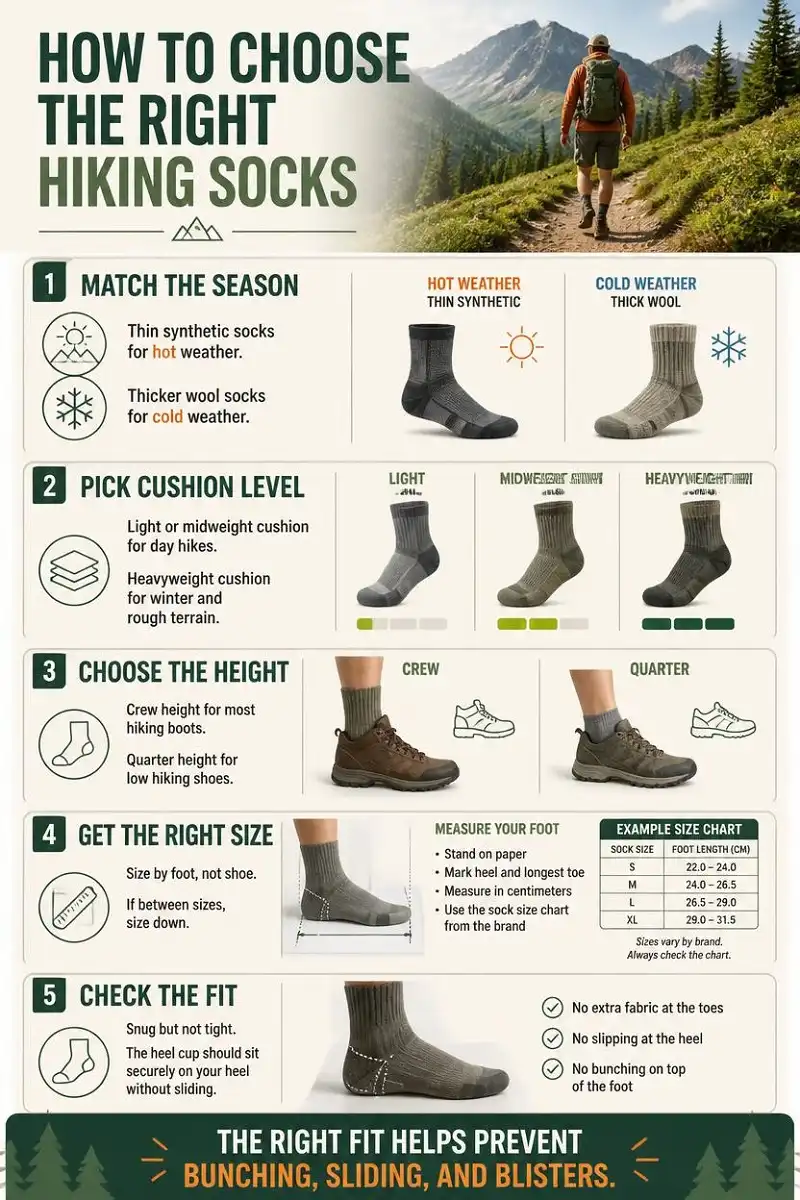
Choosing gets easy once you know what to check. Run through these five steps and you’ll land on a solid pair.
Choose thinner synthetic options for heat and warmer wool blends for cold.
Light or midweight works for most day hikes.
Crew works well with most hiking boots, while quarter socks suit low shoes.
Extra fabric can bunch and create friction, so don’t simply size by shoe size.
The sock should feel snug without being tight, and the heel should stay in place.
Are expensive hiking socks worth it?
Usually yes — within reason
Quality hiking socks generally cost more because they use better fibers, denser knitting, targeted cushioning, and stronger construction. The goal isn’t to buy the most expensive sock, but to buy a pair that matches your hiking conditions and fits correctly.
You don’t need a drawer full of hiking socks. Two or three good pairs that you wash and rotate can cover a large portion of your hiking needs.
Brands mentioned in the source article include Darn Tough, Smartwool, Icebreaker, Farm to Feet, and Injinji.
Caring for your hiking socks
Good care helps preserve the performance of hiking socks. Wash them inside out in cool or warm water and skip fabric softener, which can coat fibers and affect wicking.
Wash Carefully
Turn socks inside out and use cool or warm water.
Skip Fabric Softener
It can coat fibers and reduce their moisture-management performance.
Dry Gently
Air-drying is ideal, while low-heat tumble drying is generally acceptable.
Avoid High Heat
High heat can shrink wool and damage elastic over time.
Rotate Pairs
Rotating socks gives each pair time to dry and recover between hikes.
For warmer trips, you can also pair your socks with warm-weather hiking clothes. For colder conditions, consider your cold-weather hiking layers and overall trail footwear choices.
FAQs About Hiking Socks
Do hiking socks really make a difference?
Yes. Hiking socks can improve moisture management, cushioning, temperature regulation, durability, and friction control. The benefits become more noticeable as hikes get longer, hotter, steeper, or more demanding.
Are hiking socks better than cotton socks?
For hiking, generally yes. Cotton tends to absorb and retain sweat, leaving feet damp and increasing friction. Purpose-built hiking socks are designed to move moisture away from the skin and provide better cushioning and fit.
Are merino wool socks good for hiking?
Merino wool is an excellent hiking-sock material because it is soft, manages moisture, regulates temperature, and naturally resists odor. Many hiking socks blend merino with synthetic fibers to improve durability.
What hiking sock thickness should beginners choose?
Light or midweight socks are a good starting point for most day hikes. Choose lighter socks for hot conditions and thicker socks when hiking in colder weather or carrying out longer trips.
What sock height is best for hiking boots?
Crew socks are a practical choice for most hiking boots because they provide coverage above the ankle and can help protect against boot-cuff rubbing.
Can hiking socks prevent blisters?
They can help reduce blister risk by managing moisture, reducing friction, and keeping the sock securely positioned on the foot. However, correct footwear fit and overall foot care remain important.
How many pairs of hiking socks do I need?
You don’t need a large collection. Two or three quality pairs that you rotate and care for properly can cover many day-hiking needs.
Should hiking socks be tight?
Hiking socks should feel snug without being uncomfortably tight. The heel should stay in position and the fabric should not bunch around the toes, heel, or ankle.
The bottom line
So, do hiking socks make a difference? For anyone spending real time on the trail, yes. The difference shows up as drier feet, fewer hot spots, better cushioning, and comfort that lasts longer into the hike.
Start with a well-fitting merino blend in the right cushion and height, keep cotton for casual use, and begin with two solid pairs that you can rotate and care for properly.