Are Chacos Good for Hiking? Pros, Cons & Expert Tips (2026)
Last July, I hit a knee-deep creek crossing three miles into a Sierra day hike. My boots came off, and my Chacos went on for the rest of the loop. That quick switch got me thinking about a question new hikers ask me all the time: are Chacos good for hiking, or are they just comfy camp shoes? The honest answer depends on the trail, the weather, and your own feet. So below, I lay out where these sandals earn their spot and where they let you down.
Are Chacos good for hiking?
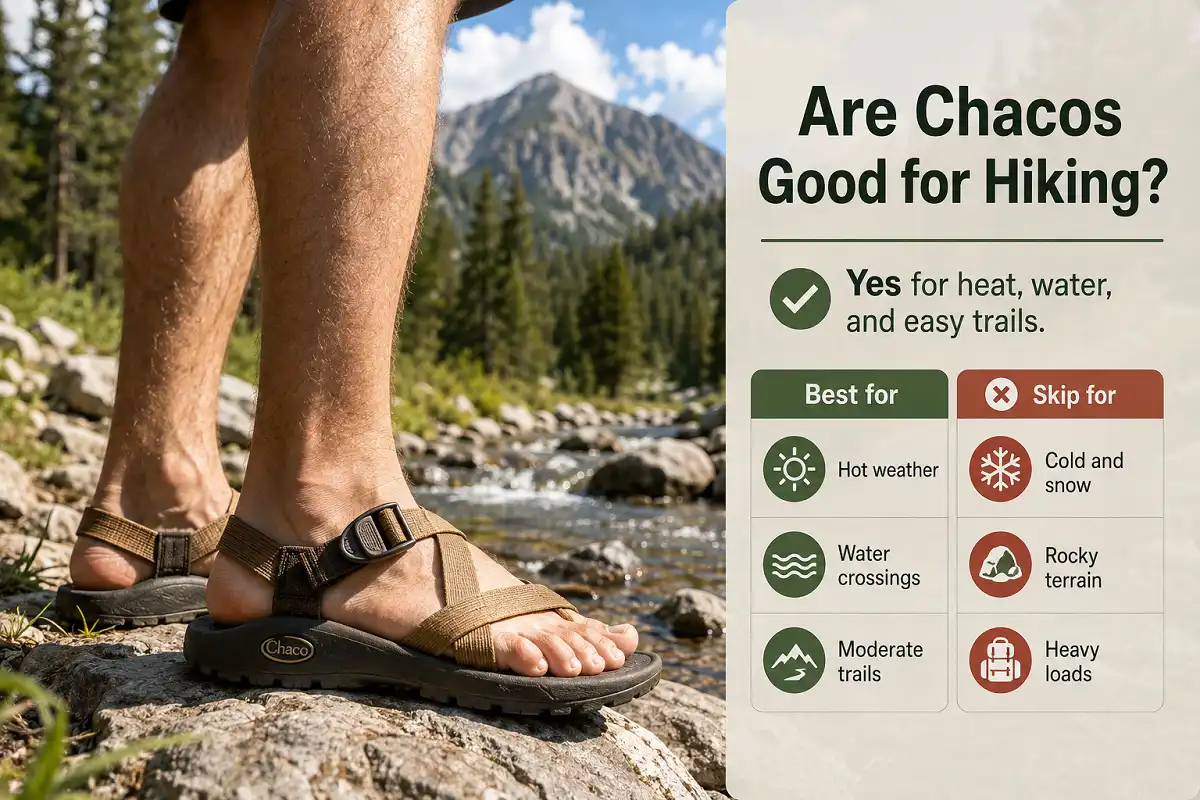
Yes, for warm weather, water crossings, and moderate, well-kept trails. They give arch support close to a boot, plus an open, breathable design. However, they fall short on rocky, cold, or technical ground because your toes stay exposed.
What are Chacos, and why do hikers wear them?
Chacos are adjustable outdoor sandals built for support in and out of water. A rafting guide named Mark Paigen made the first pair in 1989 because he wanted his feet to dry in the sun after long days on the river. The design uses one continuous strap that threads through the sole, so you can dial in the fit without extra buckles. You can read the brand’s full history on its Chaco footwear Wikipedia page.
Two features explain why hikers reach for them. First, the LUVSEAT footbed gives contoured arch support that the American Podiatric Medical Association has accepted. Second, the outsole grips wet and dry ground while the open top keeps air moving. In short, you get sole support that feels close to a hiking boot, yet your toes still breathe.
A continuous strap lets you dial in a secure fit around your foot.
Contoured support helps distribute pressure across the foot.
Open construction drains water quickly after creek crossings.
The open design allows heat and moisture to escape easily.
Designed for trails, rivers, campsites, travel, and everyday use.
Are Chacos good for hiking in every condition?
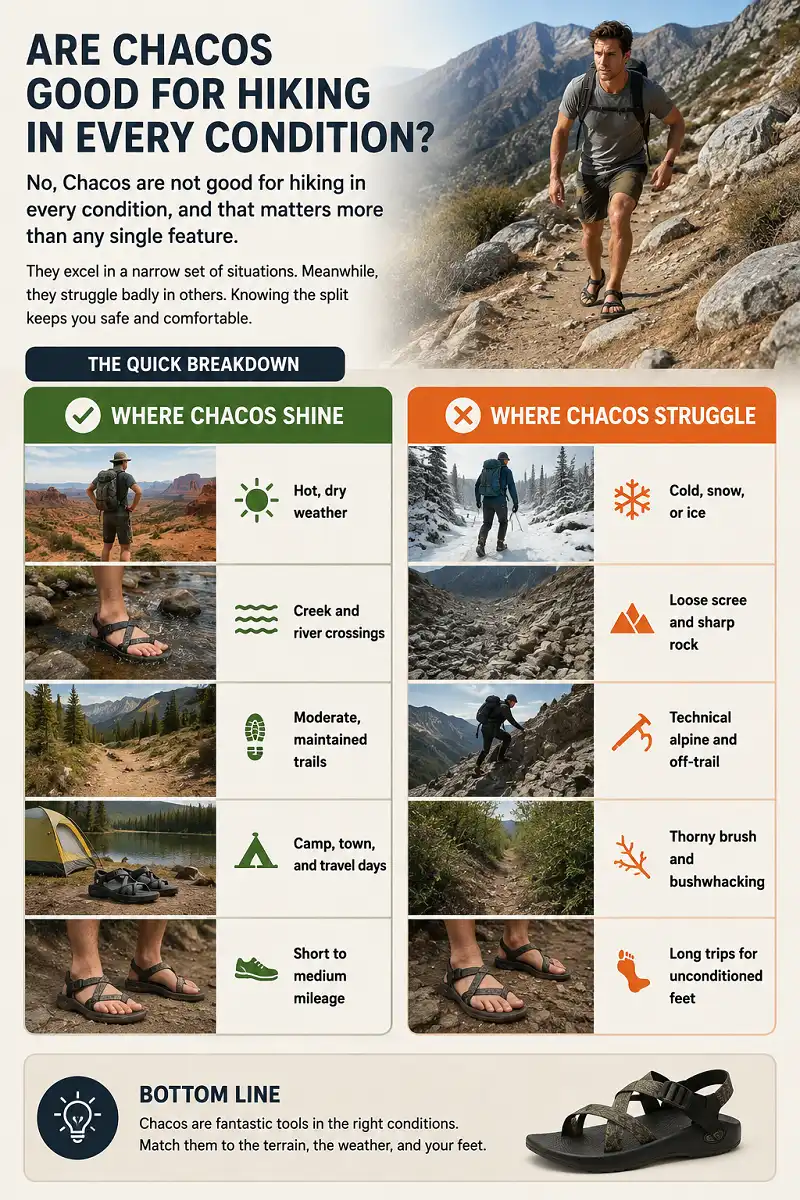
No, Chacos are not good for hiking in every condition, and that matters more than any single feature. They excel in a narrow set of situations. Meanwhile, they struggle badly in others. Knowing the split keeps you safe and comfortable.
Here is the quick breakdown before I dig into each side:
| Where Chacos shine | Where Chacos struggle |
|---|---|
| Hot, dry weather | Cold, snow, or ice |
| Creek and river crossings | Loose scree and sharp rock |
| Moderate, maintained trails | Technical alpine and off-trail |
| Camp, town, and travel days | Thorny brush and bushwhacking |
| Short to medium mileage | Long trips for unconditioned feet |
When Chacos work great on the trail
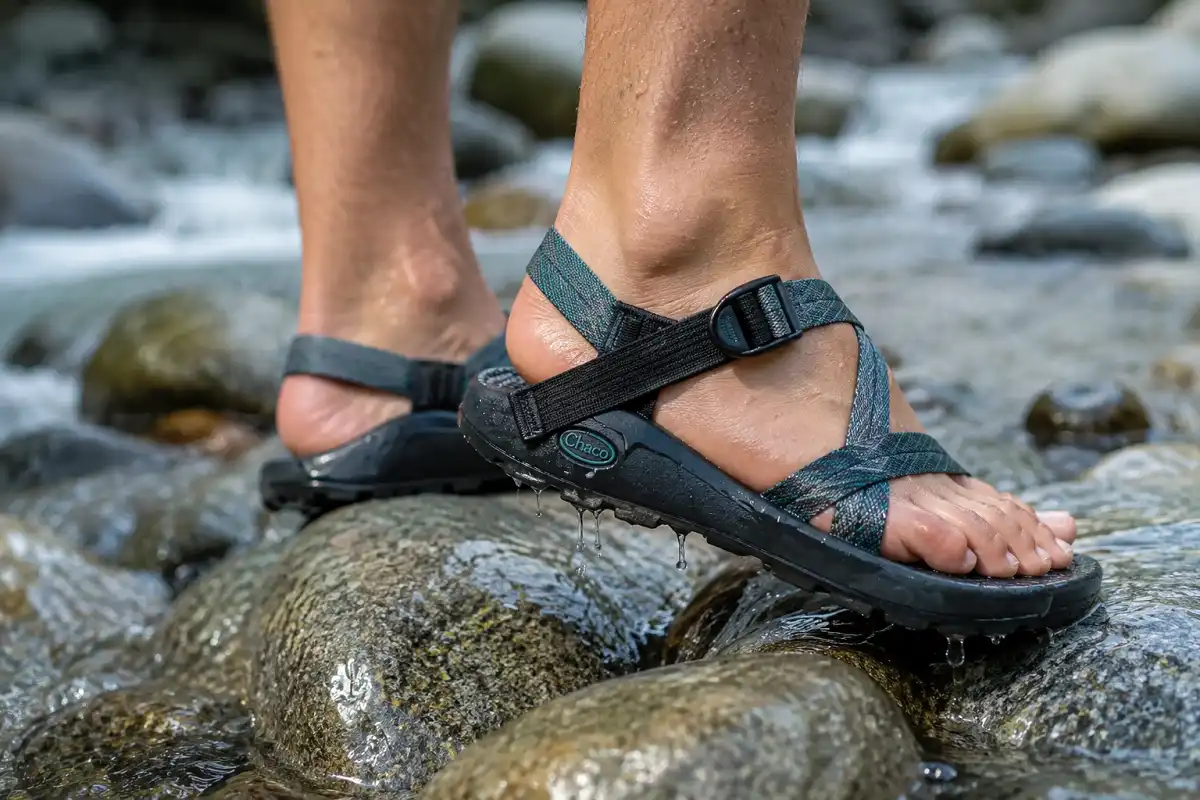
Chacos work great when heat, water, and comfort matter more than toe protection. If you only ask are Chacos good for hiking in summer, these next points are your answer. This is the sweet spot, and it covers a lot of everyday hiking. Below are the four reasons they keep a spot in my pack.
Do Chacos handle hot weather well?
Chacos handle hot weather better than almost any closed shoe. The open design lets heat escape and dries sweat fast. Because there is no fabric upper to trap moisture, your feet stay cooler on exposed switchbacks and desert trails. On a scorching afternoon, that airflow alone can prevent hot, swollen feet.
Are Chacos good for hiking through water?
Yes, Chacos are good for hiking through water, and this is where they truly outclass boots. The straps hold firm when wet, and the footbed drains instead of turning into a sponge. So after a crossing, you keep walking without soggy socks or blistered heels. Wading routes like Zion’s Narrows suit them well, and if you plan that trip, check the rules first in my guide to Narrows permit basics .
Do Chacos give real arch support?
Chacos give real arch support, which sets them apart from flat flip-flops. The molded LUVSEAT footbed cradles the arch and spreads pressure across the foot. As a result, your feet fatigue less on longer days than they would in thin sandals. Many hikers with high arches say Chacos feel more supportive than some sneakers.
How long do Chacos last?
Chacos last a long time, often well past 1,000 miles before the tread gives out. The standard ChacoGrip outsole wears slowly, usually thinning first at the ball of the foot. On top of that, Chaco runs a lifetime repair program called ReChaco that can resole or restrap a worn pair. Keep in mind the warranty covers defects, not normal wear, so faded straps or thin soles fall under paid repair rather than a free swap.
Where Chacos fall short for hiking
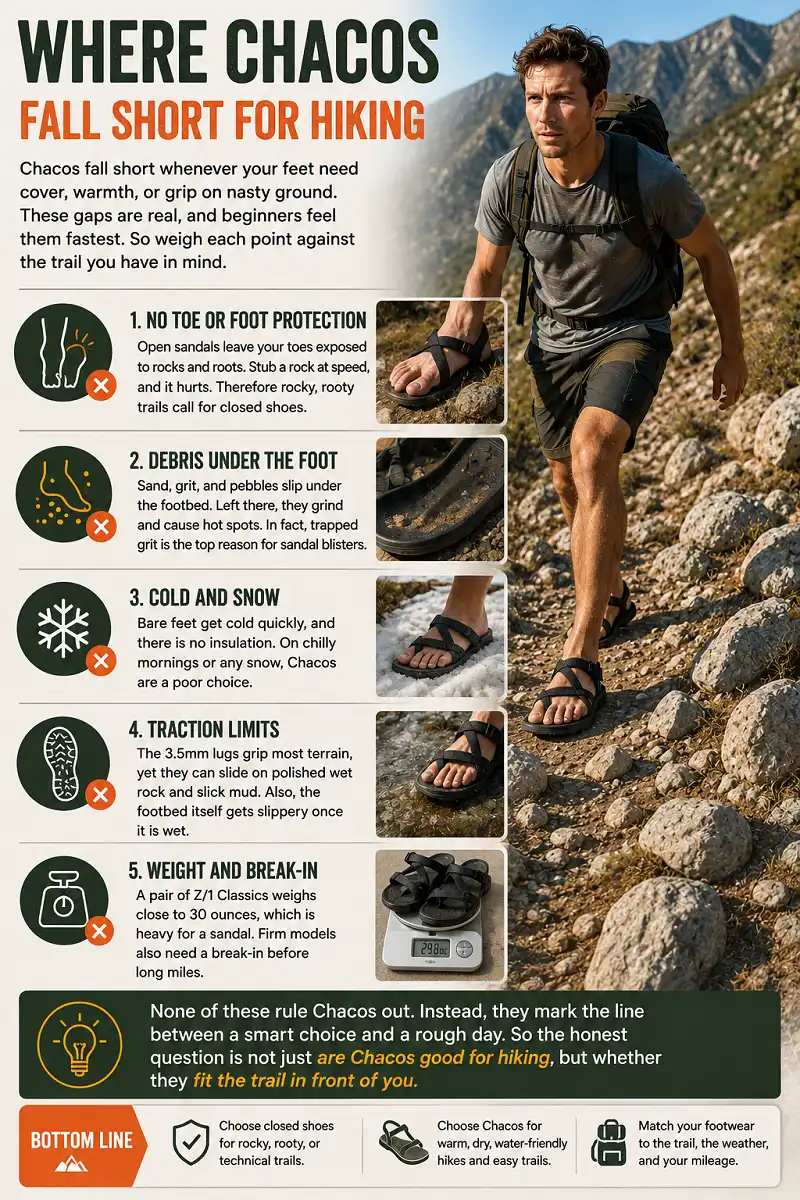
Chacos fall short whenever your feet need cover, warmth, or grip on nasty ground. These gaps are real, and beginners feel them fastest. So weigh each point against the trail you have in mind.
Open sandals leave your toes exposed to rocks and roots. Stub a rock at speed, and it hurts. Therefore rocky, rooty trails call for closed shoes.
Sand, grit, and pebbles slip under the footbed. Left there, they grind and cause hot spots. In fact, trapped grit is the top reason for sandal blisters.
Bare feet get cold quickly, and there is no insulation. On chilly mornings or any snow, Chacos are a poor choice.
The 3.5mm lugs grip most terrain, yet they can slide on polished wet rock and slick mud. Also, the footbed itself gets slippery once it is wet.
A pair of Z/1 Classics weighs close to 30 ounces, which is heavy for a sandal. Firm models also need a break-in before long miles.
The important distinction
None of these rule Chacos out. Instead, they mark the line between a smart choice and a rough day. So the honest question is not just are Chacos good for hiking, but whether they fit the trail in front of you.
Which Chaco model is best for hiking?
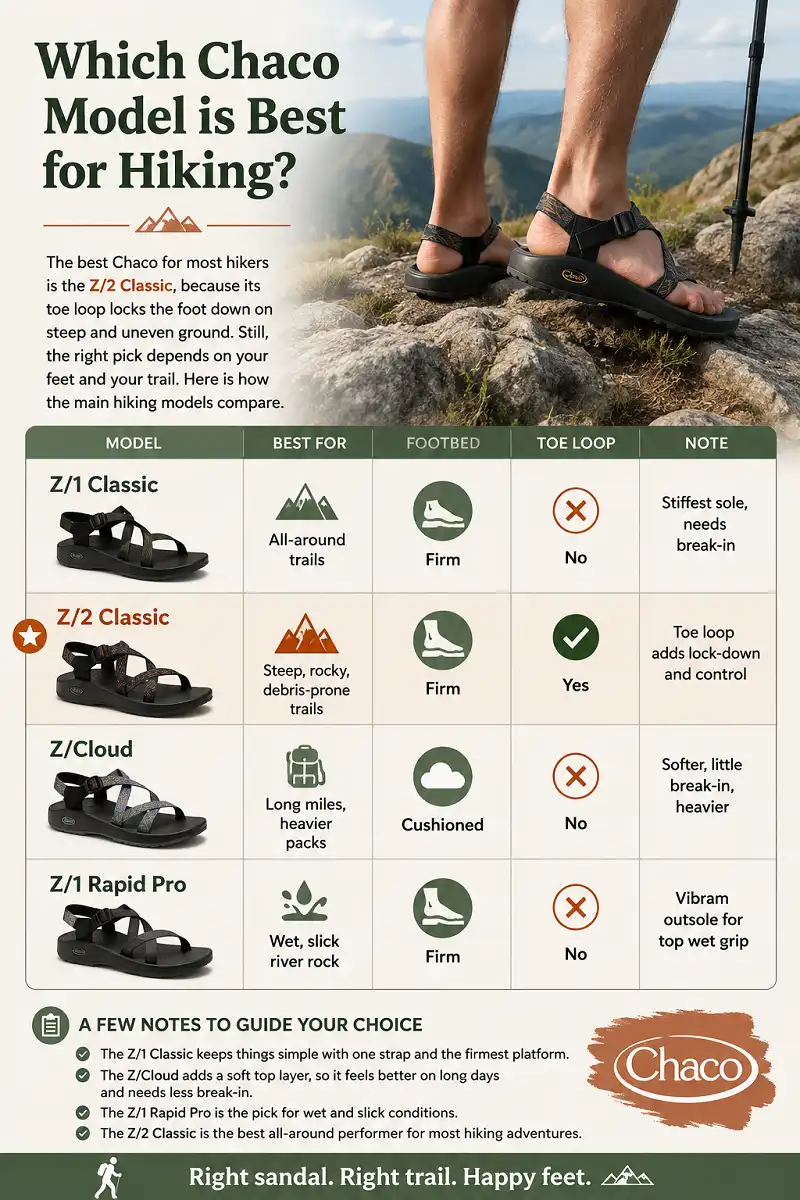
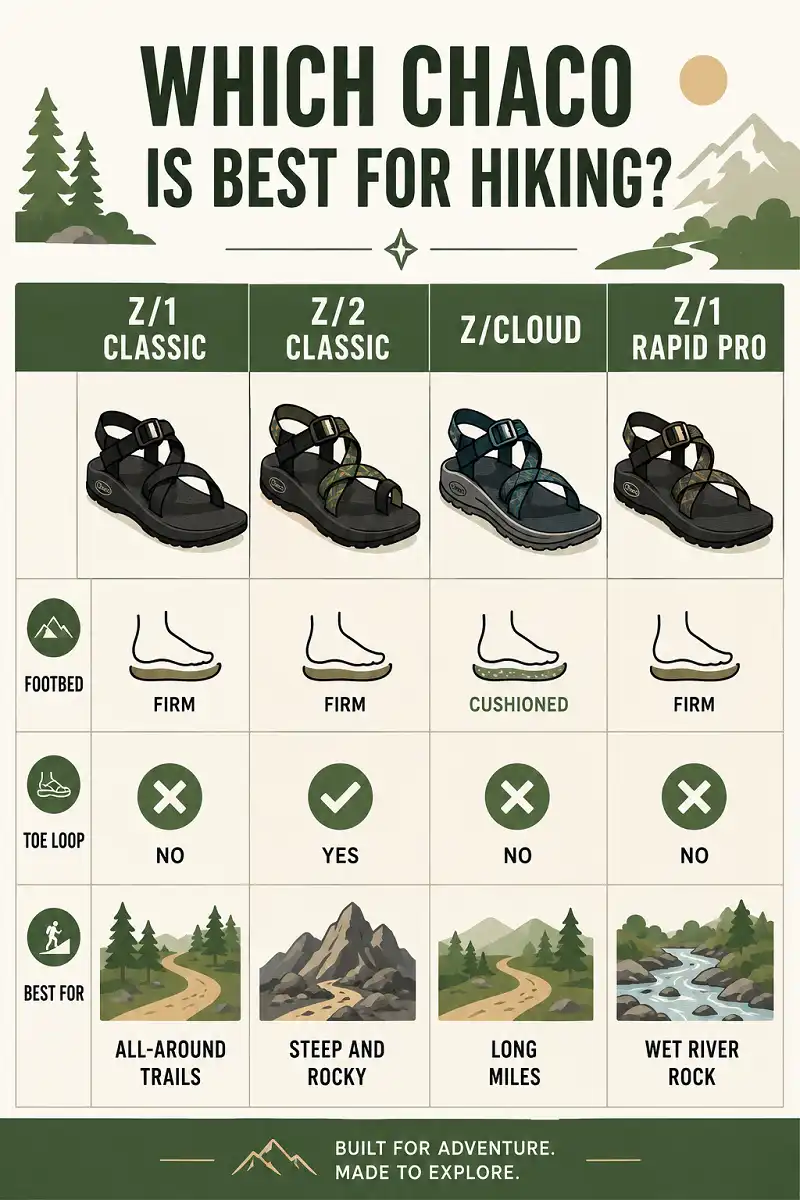
The best Chaco for most hikers is the Z/2 Classic, because its toe loop locks the foot down on steep and uneven ground. Still, the right pick depends on your feet and your trail. Here is how the main hiking models compare.
Chaco Hiking Models
| Model | Best for | Footbed | Toe loop | Note |
|---|---|---|---|---|
| Z/1 Classic | All-around trails | Firm | No | Stiffest sole, needs break-in |
| Z/2 Classic | Steep, rocky, debris-prone trails | Firm | Yes | Toe loop adds lock-down and control |
| Z/Cloud | Long miles, heavier packs | Cushioned | No | Softer, little break-in, heavier |
| Z/1 Rapid Pro | Wet, slick river rock | Firm | No | Vibram outsole for top wet grip |
A few notes to guide the choice. The Z/1 Classic keeps things simple with one strap and the firmest platform. Meanwhile, the Z/Cloud adds a soft top layer, so it needs almost no break-in and suits high-mileage days, though it runs heavier. For serious water and slick rock, the Rapid Pro uses a Vibram sole tuned for wet grip. Chaco also offers a lighter EcoTread outsole for around-town use, but it grips and lasts less than ChacoGrip on real trails.
How do I break in Chacos and avoid blisters?
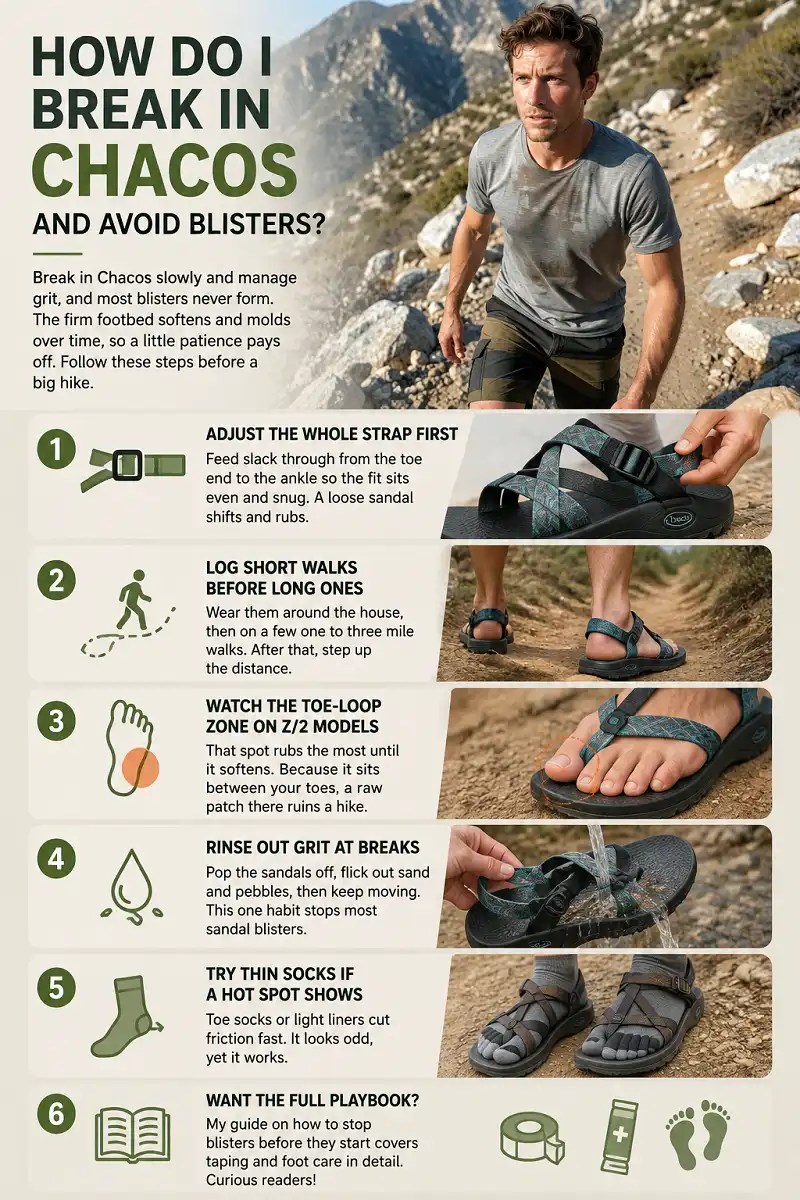
Break in Chacos slowly and manage grit, and most blisters never form. The firm footbed softens and molds over time, so a little patience pays off. Follow these steps before a big hike.
- Adjust the whole strap first. Feed slack through from the toe end to the ankle so the fit sits even and snug. A loose sandal shifts and rubs.
- Log short walks before long ones. Wear them around the house, then on a few one to three mile walks. After that, step up the distance.
- Watch the toe-loop zone on Z/2 models. That spot rubs the most until it softens. Because it sits between your toes, a raw patch there ruins a hike.
- Rinse out grit at breaks. Pop the sandals off, flick out sand and pebbles, then keep moving. This one habit stops most sandal blisters.
- Try thin socks if a hot spot shows. Toe socks or light liners cut friction fast. It looks odd, yet it works.
Are Chacos good for hiking long distances or with a heavy pack?
Chacos can handle long distances and moderate pack weight, but only once you condition your feet to them. The LUVSEAT footbed and stiff sole give more support than most sandals, so experienced hikers have logged 25-mile days and even thru-hikes in them. Still, sandals ask more from your feet than boots do. Therefore beginners should build up slowly and start light.
Two cautions matter here. First, a heavy pack pushes more force through the footbed, and the Z/Cloud’s cushion helps more than the firm Classic on those days. Second, exposed toes and trapped grit become bigger problems the longer you walk. So for a first backpacking trip, I steer new hikers toward closed shoes and save the sandals for camp and crossings.
Chacos vs hiking boots and trail shoes: which should you pick?
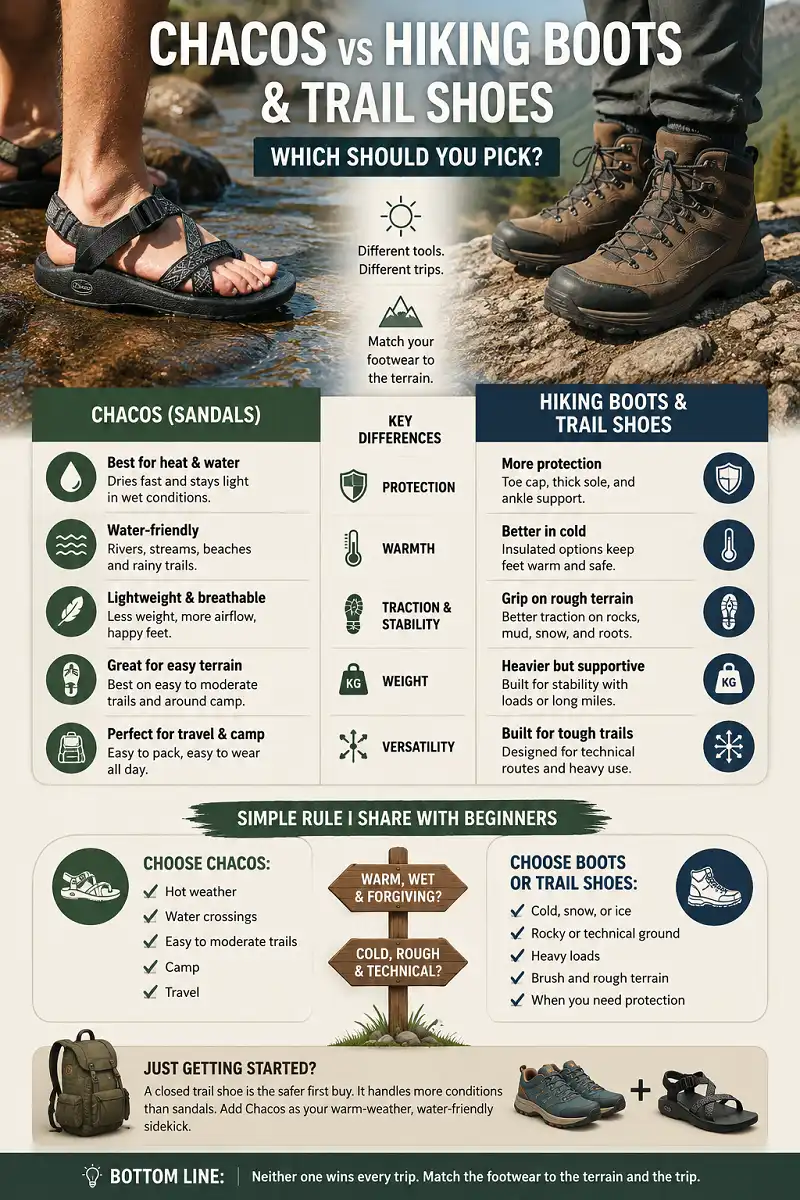
Pick Chacos for heat and water, and pick boots for cold, rough, or protective needs. Neither one wins every trip, so match the footwear to the terrain. If you are still building a kit and just getting started with hiking , a closed trail shoe is the safer first buy, with sandals as a warm-weather add-on.
Boots give ankle support, toe armor, and warmth that sandals cannot match. For rocky, technical, or cold routes, a rugged pair wins outright, and it helps to know how Merrell’s hiking boots perform before you buy. Some hikers also want one pair that covers trails and errands, so it is worth checking which boots pull double duty for walking . Chacos, by contrast, are the better call when the trail is warm, wet, and forgiving.
When sandals make sense
- Hot weather
- Water crossings
- Easy to moderate trails
- Camp
- Travel
When protection matters
- Cold
- Snow
- Rocky or technical ground
- Heavy loads
- Brush
Are Chacos worth buying for hiking in 2026?
My take: yes, but know what you’re buying
Chacos are worth buying for hiking if you spend time in heat and water and want one sandal that lasts for years. A Z/1 Classic runs about $90, and cushioned or Vibram models cost more. Given the lifetime repairs, the cost spreads out over a long life. Beginners often ask me are Chacos good for hiking before they commit, and my answer is yes when the trail matches their strengths.
That said, do not buy them expecting a do-everything shoe. They handle a slice of hiking extremely well and the rest poorly. So think of Chacos as a specialist you add to your kit, not a replacement for boots.
Best use case
Think of Chacos as your warm-weather, water-friendly specialist rather than your only hiking shoe.
FAQs
 Are Chacos good for hiking in the rain?
Yes, Chacos are good for hiking in the rain and wet conditions. Water drains straight through instead of pooling in fabric, so your feet dry fast between showers. Just watch your footing, because the footbed and lugs can turn slick on smooth wet rock.
Do you need to wear socks with Chacos?
No, you do not need socks with Chacos, and most people hike in them bare. However, thin socks or toe socks help in two cases: cold weather and any spot that starts to rub. Socks add warmth and cut friction without changing the fit much.
Can you hike rocky trails in Chacos?
You can hike rocky trails in Chacos, but carefully. The soles grip well and the arch support holds up, yet exposed toes stay at risk from rocks and roots. For sharp, technical rock, closed shoes protect your feet far better.
Are Chacos good for hiking for beginners?
Yes, Chacos are good for hiking for beginners on warm, short to moderate, well-kept trails. Start with easy day hikes, break the sandals in first, and keep grit out of the footbed. Save cold, rocky, or long routes for boots until you gain experience.
Are Chacos good for hiking?
So, are Chacos good for hiking? Yes, on the right trail. They own hot weather and water crossings, deliver arch support close to a boot, and last for years thanks to lifetime repairs. However, they leave your toes exposed and struggle on cold, rocky, or technical ground. Treat them as a warm-weather specialist, break them in before a big day, and keep boots ready for rough terrain. Used that way, a pair of Chacos earns a lasting place in your kit.
Match the sandal to the trail, break it in before the big day, and Chacos can be an excellent part of your hiking kit.