Best Hiking at Zion National Park: A Simple Guide for Beginners
You pull into Springdale, crane your neck up at those towering red walls, and every trail sign suddenly feels like too much. I felt exactly that way on my first trip out from Bakersfield. So this guide sorts the best hiking at Zion National Park by difficulty, which lets you match a trail to your comfort level and skip the guesswork. I hike here often, and I have made plenty of rookie mistakes so that you do not have to repeat them.
Start Easy, Then Build Up
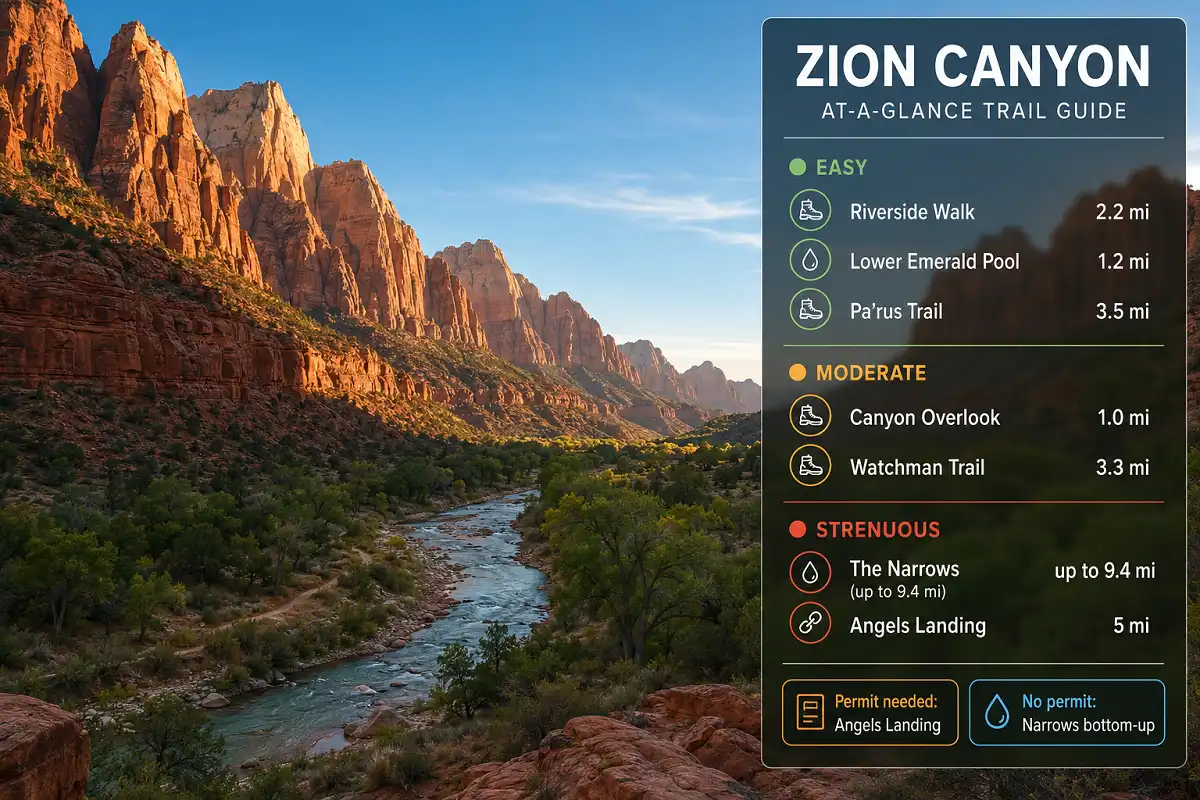
For most beginners, the best hiking at Zion National Park starts with the paved canyon trails like the Riverside Walk and the Lower Emerald Pool. Ready for more? The Narrows and Angels Landing are the two headline hikes, though Angels Landing now needs a permit.
Below, I break down eight standout trails from gentle strolls to steep climbs, with distances, difficulty, and current 2026 access notes.
Why Zion Rewards Hikers of Every Level
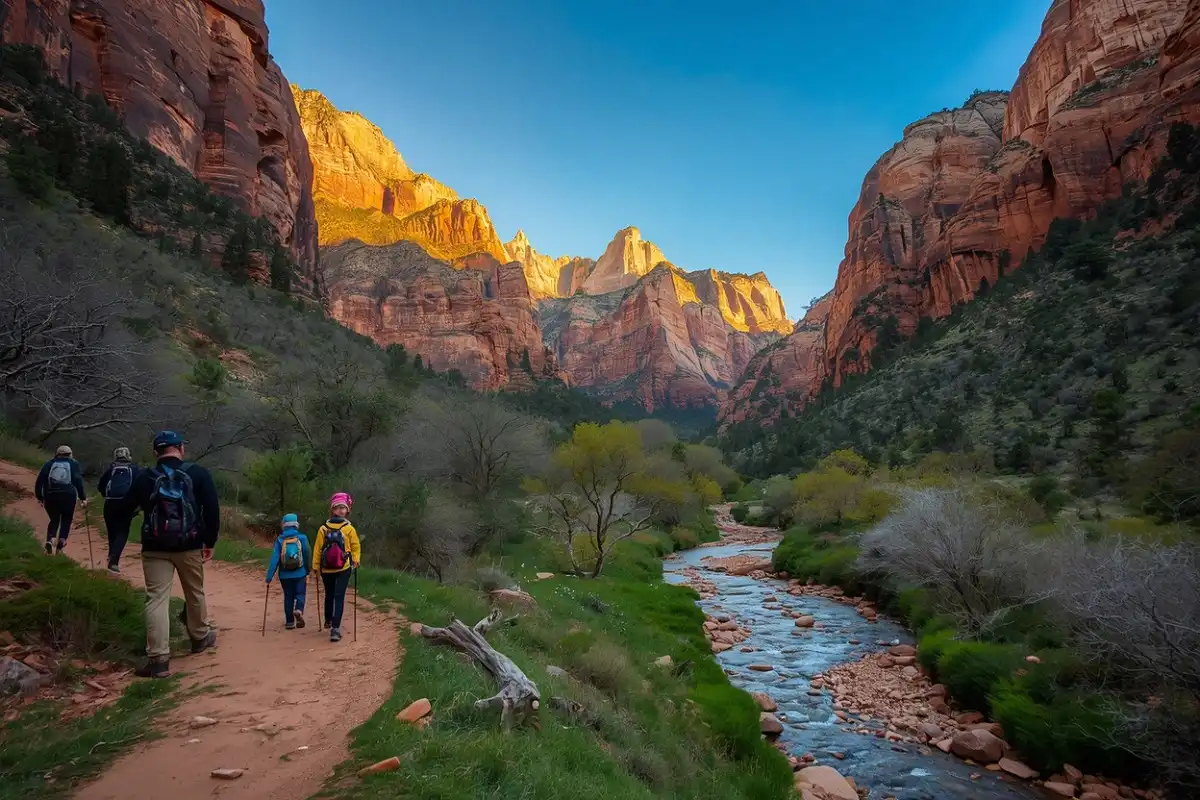
Zion sits in southwest Utah, where the Virgin River spent millions of years carving a deep sandstone canyon. Those cliffs rise more than 2,000 feet in places. Because most trails begin on the canyon floor, you stand surrounded by towering walls from the very first step.
That setup is rare. At many parks you walk for hours before the views open up, but here the scenery hits you right away. You can follow how this canyon was carved on Wikipedia, which lays out the full geologic story.
Since the trailheads sit close together along one road, you can easily pair an easy morning walk with a bigger afternoon climb. That simple access is a big reason the best hiking at Zion National Park suits new hikers so well.
Plan Before You Go: Shuttle, Fees, and Seasons
A little planning saves a lot of stress at the gate and the trailhead. Three things matter most: when you visit, how you get around, and what you pay. Getting all three right sets up the best hiking at Zion National Park before you even lace your boots.
When Is the Best Time for the Best Hiking at Zion National Park?
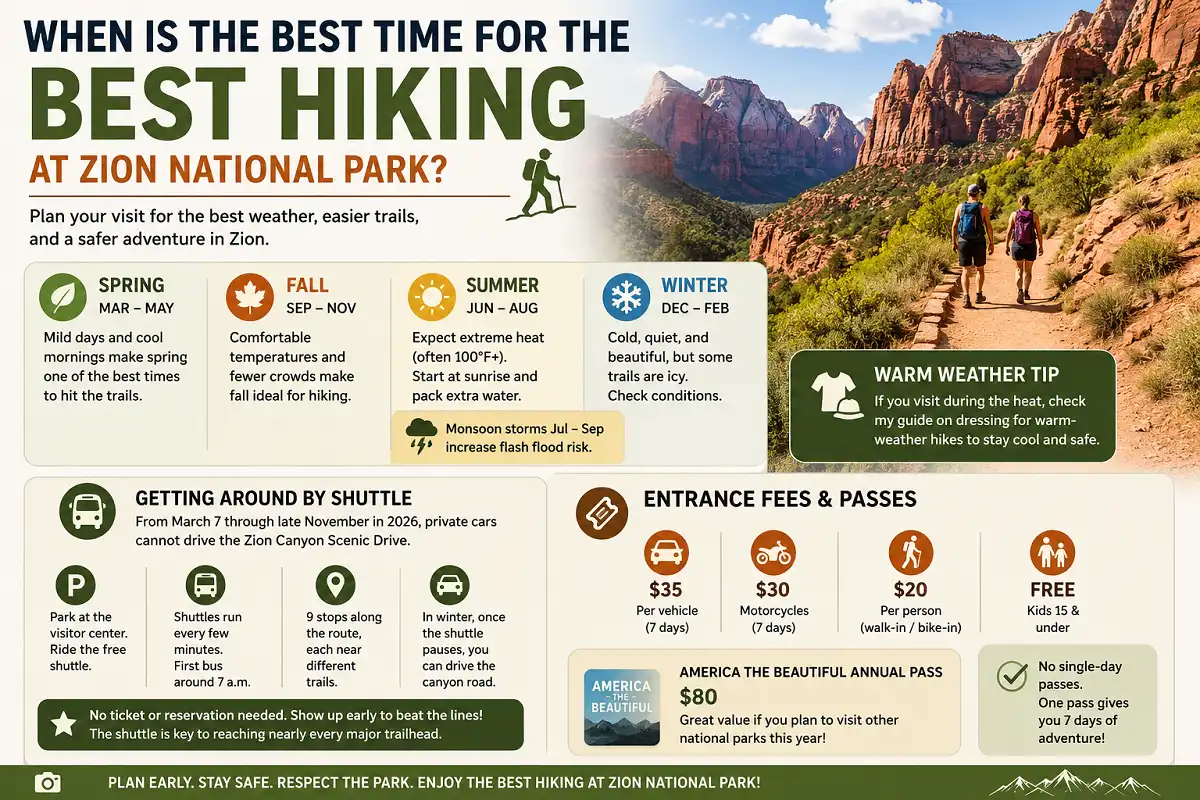
Spring and fall bring the best hiking at Zion National Park, with mild days and cool mornings. March through May and September through November stay comfortable for climbing.
Summer heats up fast, often above 100 degrees on exposed trails, so start at sunrise if you go then.
Afternoon monsoon storms roll in from July through September, sharply raising flash flood risk in narrow canyons.
Winter turns quiet and cold, and some trails can ice over.
If you visit during the heat, my notes on dressing for warm-weather hikes can help you stay cool and safe.
Getting Around by Shuttle
2026 Shuttle Season
From March 7 through late November in 2026, private cars cannot drive the Zion Canyon Scenic Drive. Instead, park at the visitor center and ride the free shuttle.
Here is the detail that trips up most first-timers. From March 7 through late November in 2026, private cars cannot drive the Zion Canyon Scenic Drive. Instead, you park at the visitor center and ride the free shuttle.
It runs every few minutes, and the first bus leaves around 7 a.m. Nine stops line the route, and each one drops you near different trails.
In winter, once the shuttle pauses, you can drive the canyon road yourself. No ticket or reservation is needed, so just show up early to beat the lines. Honestly, the shuttle is central to the best hiking at Zion National Park, since it reaches nearly every major trailhead.
Entrance Fees and Passes
Standard entrance pass per vehicle, covering everyone inside for seven days.
Seven-day entrance pass for motorcycles.
Entrance fee for visitors arriving on foot or by bicycle.
Kids 15 and under enter free.
America the Beautiful annual pass for visits to other parks too.
There are no single-day passes. Either way, one pass unlocks all the best hiking at Zion National Park for a full week.
The Best Hiking at Zion National Park by Difficulty
Now for the trails themselves. I have grouped the best hiking at Zion National Park into three tiers: easy, moderate, and strenuous. Beginners should start with the easy tier, then work up as their confidence grows.
If you are brand new to trails, my guide on how to plan a first hike covers pacing, water, and prep.
Easy Trails for the Best Hiking at Zion National Park
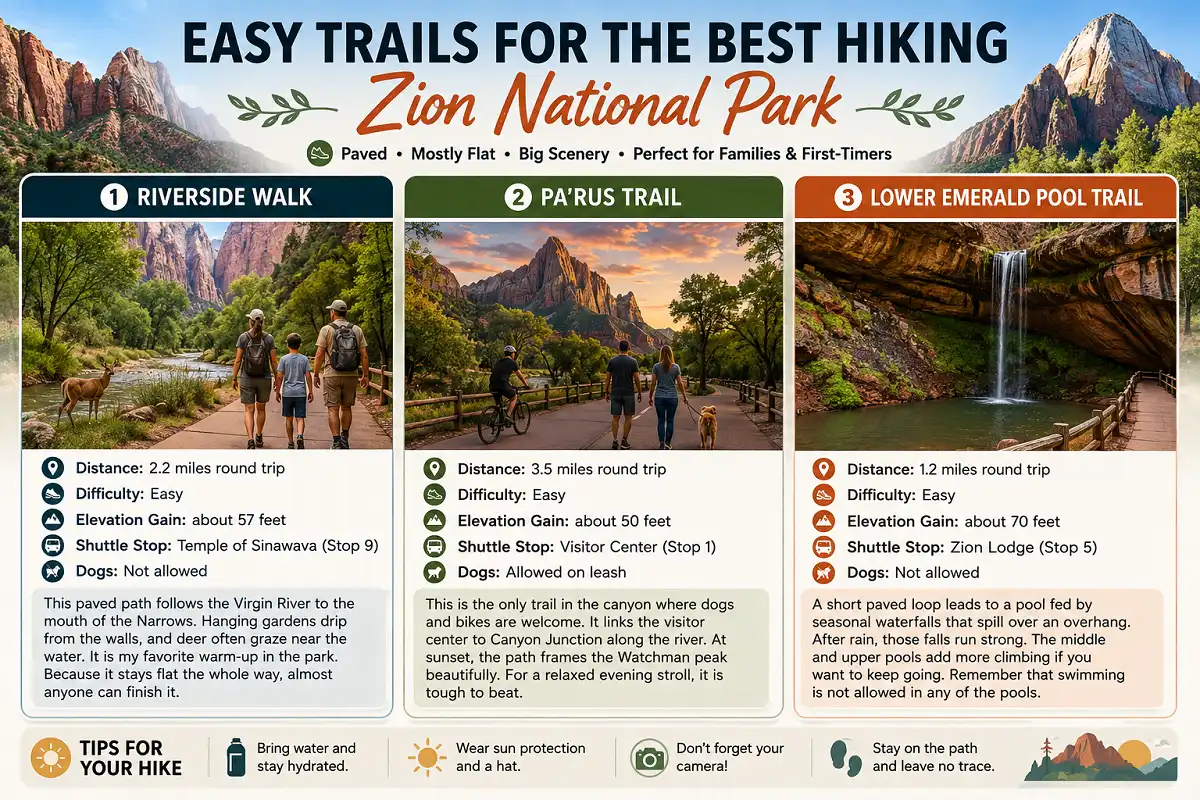
These paved, mostly flat routes deliver huge scenery for little effort. They also make up some of the best hiking at Zion National Park for families and first-timers.
Riverside Walk
This paved path follows the Virgin River to the mouth of the Narrows. Hanging gardens drip from the walls, and deer often graze near the water. It is my favorite warm-up in the park.
Pa’rus Trail
This is the only trail in the canyon where dogs and bikes are welcome. It links the visitor center to Canyon Junction along the river. At sunset, the path frames the Watchman peak beautifully. For a relaxed evening stroll, it is tough to beat.
Lower Emerald Pool Trail
A short paved loop leads to a pool fed by seasonal waterfalls that spill over an overhang. After rain, those falls run strong. The middle and upper pools add more climbing if you want to keep going.
Moderate Trails Worth the Extra Climb
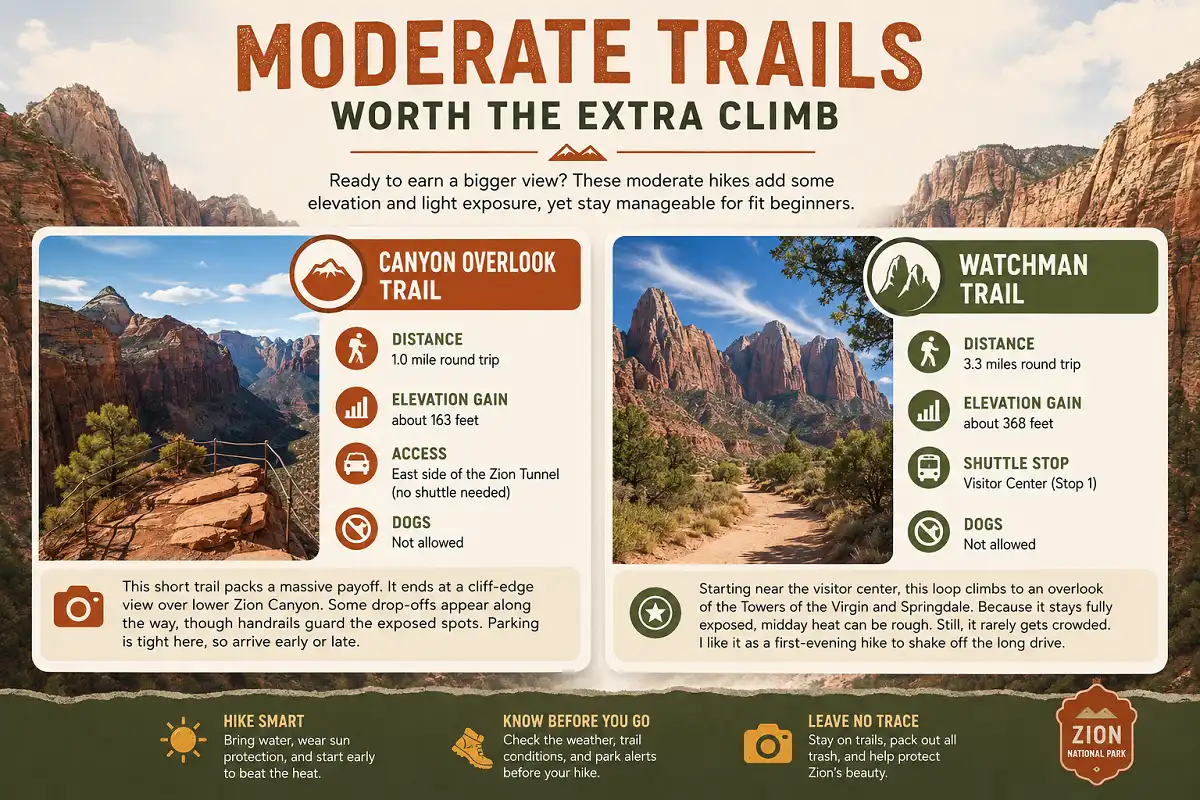
Ready to earn a bigger view? The moderate tier of the best hiking at Zion National Park adds some elevation and light exposure, yet it stays manageable for fit beginners.
Canyon Overlook Trail
This short trail packs a massive payoff. It ends at a cliff-edge view over lower Zion Canyon. Some drop-offs appear along the way, though handrails guard the exposed spots.
Watchman Trail
Starting near the visitor center, this loop climbs to an overlook of the Towers of the Virgin and Springdale. Because it stays fully exposed, midday heat can be rough. Still, it rarely gets crowded.
Strenuous Hikes: The Best Hiking at Zion National Park for a Challenge
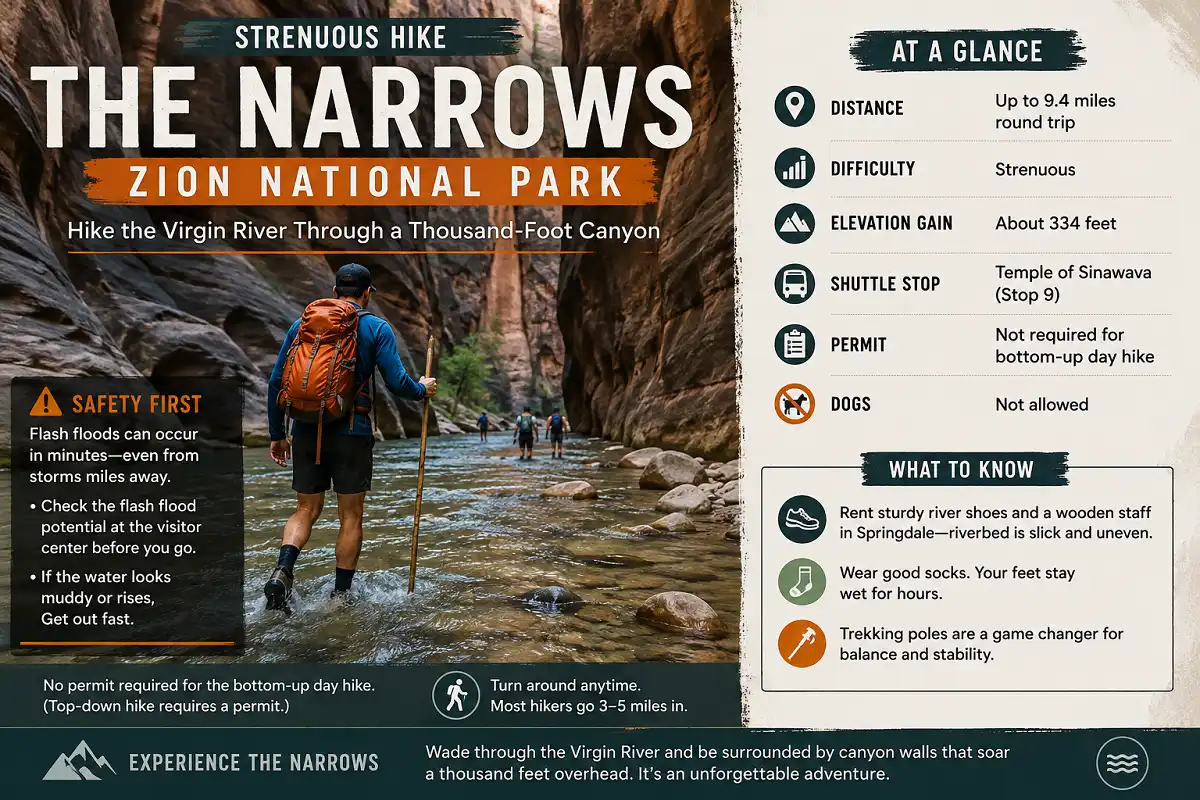
These are the big ones. For strong hikers, the two most famous routes for the best hiking at Zion National Park are the Narrows and Angels Landing. Both take real planning, and one of them now requires a permit.
The Narrows (Bottom-Up Day Hike)
The Narrows is not a normal trail at all. Instead, you hike in the Virgin River itself, wading between walls that soar a thousand feet overhead. Start at the end of the Riverside Walk, then follow the water upstream as far as you like.
Most people rent sturdy river shoes and a wooden staff in Springdale first. The riverbed is slick and uneven, which is exactly where trekking poles prove their worth. Good socks help too, since your feet stay wet for hours.
⚠ Flash Flood Safety
Flash floods can turn this canyon deadly within minutes, even from a storm miles away. Always check the flash flood potential rating at the visitor center before you start.
If the water looks muddy or begins to rise, get out fast. The bottom-up route needs no permit, but the top-down version does, and I cover the details in my guide on what the Narrows permit involves.
Angels Landing
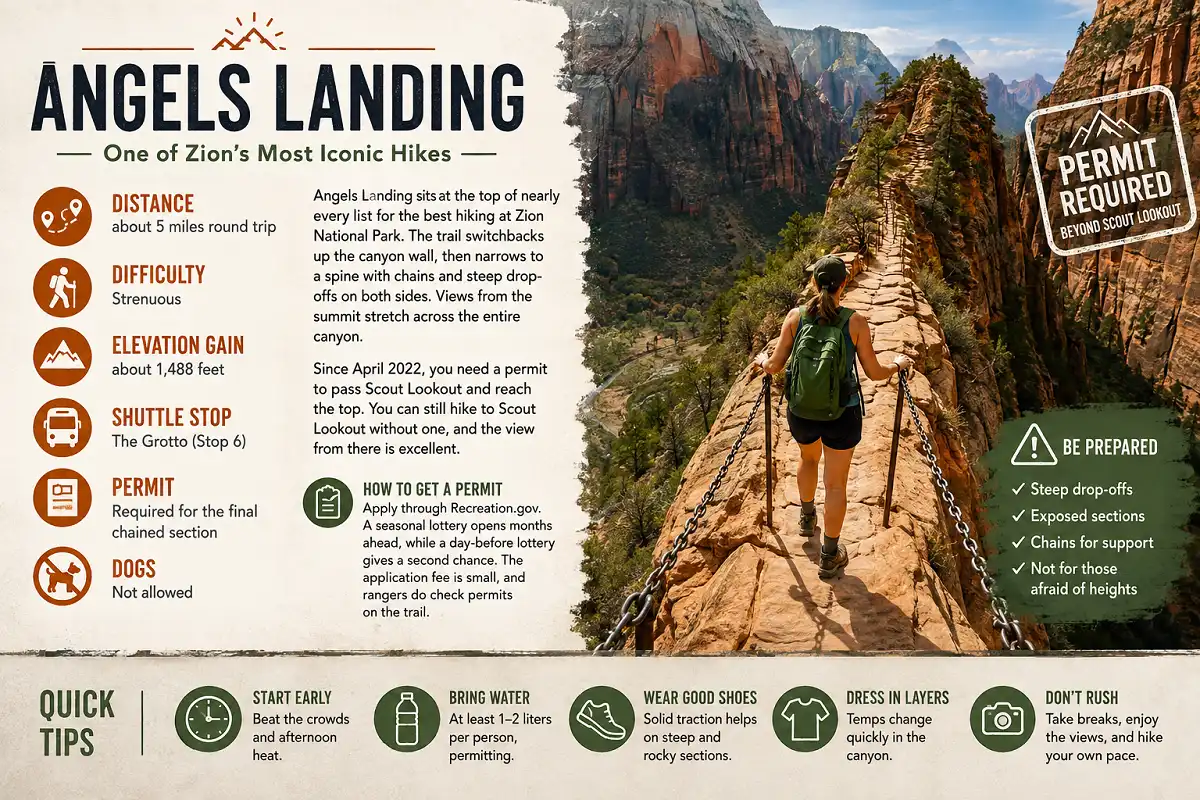
Angels Landing sits at the top of nearly every list for the best hiking at Zion National Park. The trail switchbacks up the canyon wall, then narrows to a spine with chains and steep drop-offs on both sides.
Views from the summit stretch across the entire canyon. Since April 2022, you need a permit to pass Scout Lookout and reach the top. You can still hike to Scout Lookout without one, and the view from there is excellent.
Getting the Angels Landing Permit
To get a permit, apply through Recreation.gov. A seasonal lottery opens months ahead, while a day-before lottery gives a second chance. The application fee is small, and rangers do check permits on the trail.
If heights make you nervous, this is a lot of elevation to face, so my notes on what counts as serious elevation gain put the numbers in perspective.
Observation Point via East Mesa Trail
Here is a trail that many visitors miss, and it may be the most underrated of the best hiking at Zion National Park. Observation Point looks down on Angels Landing from even higher up, so the view ranks among the finest in the park.
The old route from Weeping Rock has stayed closed since a 2019 rockfall. Instead, you reach the point by the East Mesa Trail, which starts on the plateau above and stays far gentler.
Quick Tips for the Best Hiking at Zion National Park
A few simple habits make the best hiking at Zion National Park safer and more fun.
Carry more water than you expect to drink, at least two liters per person on longer trails.
Start early to dodge both heat and crowds.
Wear shoes with real grip because sandstone gets slick when wet.
Check trail and weather conditions at the visitor center that same morning.
My tips on stopping blisters before they start can save you real pain.
Final Thoughts
Zion rewards every kind of hiker, from families on paved paths to thrill-seekers on the chains. In the end, the best hiking at Zion National Park comes down to matching a trail to your comfort, then respecting the heat, the water, and the shuttle schedule.
Start with the gentle canyon walks, build up to the Narrows, and save Angels Landing for when you feel ready. Before each hike, check current conditions, carry plenty of water, and take your time.
The canyon is not going anywhere.
FAQs
What Is the Number One Hike in Zion?
Angels Landing is the most famous hike in Zion, thanks to its chains and dramatic drop-offs. It regularly tops rankings for the best hiking at Zion National Park. The Narrows comes a close second. For beginners, though, the Riverside Walk offers the biggest reward for the least effort.
Can I Hike Zion Without a Permit?
Yes. Most trails, including the Narrows bottom-up, the Emerald Pools, and Canyon Overlook, need no permit at all. Only the chained section of Angels Landing requires one. So you can easily fill an entire trip with permit-free hikes.
How Many Days Do You Need for the Best Hiking at Zion National Park?
Two full days cover the best hiking at Zion National Park for most visitors. One day handles the easy canyon trails, while the second tackles a bigger climb like the Narrows or Angels Landing. Add a third day if you also want Observation Point or a slower pace.
Is Zion Good for Beginner Hikers?
Absolutely. Zion is one of the friendliest big parks for new hikers, because so many top trails are short and paved. That mix makes the best hiking at Zion National Park approachable for anyone willing to start slow. You get world-class scenery without any technical skill required.