Are Hiking Poles Worth It? A Practical Guide for Beginners
I get asked this a lot: are hiking poles worth it? Short answer, yes, for most hikers. I started using them five years ago after a rough knee-jarring descent in the Sierra Nevada, and I haven’t hiked without them since. In this guide, I’ll walk through when poles genuinely help, when you can skip them, and how to choose a pair that fits how you hike.
Are hiking poles worth it?
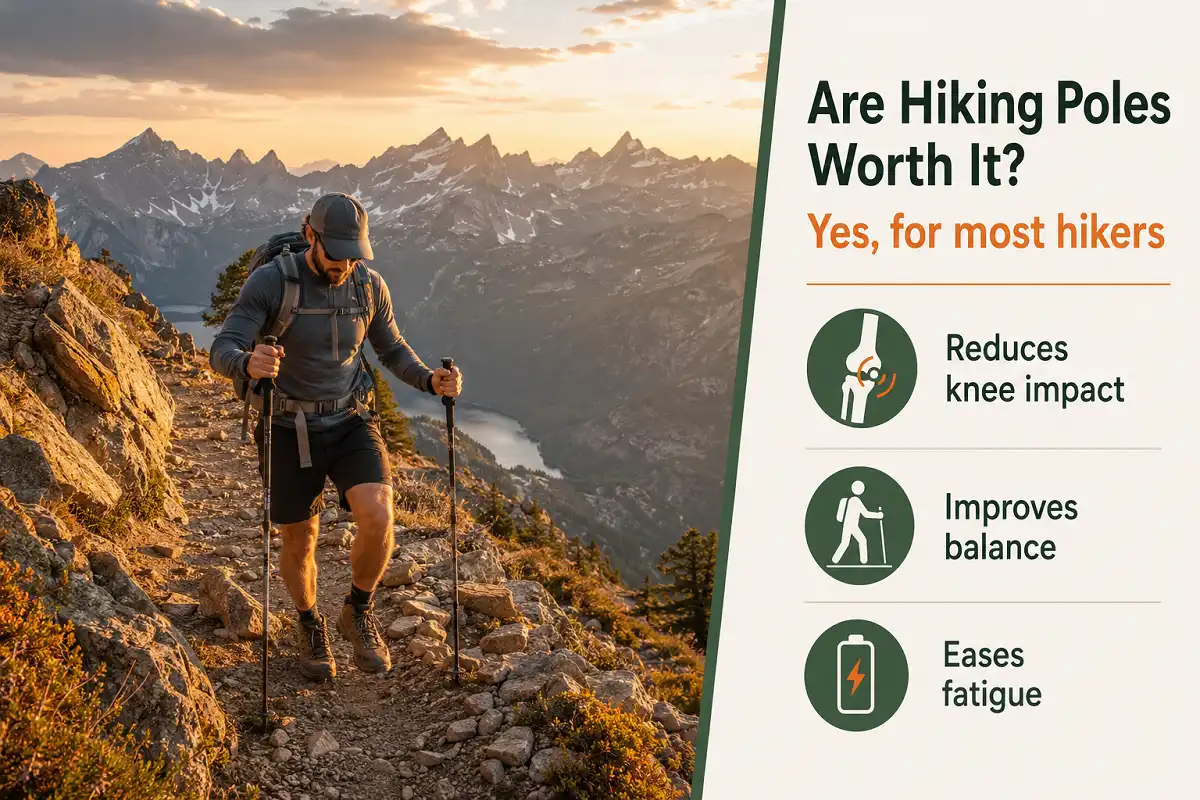
Hiking poles are worth it for most people, especially on steep, long, or uneven trails. They ease the load on your knees, improve balance, and help you keep a steadier pace. They matter less on short, flat, well-maintained paths.
If you take one thing from this article, let it be that: whether hiking poles are worth it comes down to the terrain, and for most terrain, the answer is yes.
Help reduce the load and shock on your knees during descents.
Provide extra points of contact on loose or uneven terrain.
Help create a consistent rhythm on long hikes.
Let your arms contribute more effort when climbing.
Spread effort across more muscle groups over a full day.
Are hiking poles worth it for beginners?
Yes, hiking poles are worth it for beginners, maybe more than for anyone else. New hikers often haven’t built up the ankle strength and trail balance that experienced hikers rely on. Poles fill that gap. They give you two extra points of contact with the ground, so a loose rock or a root won’t send you sprawling.
If you’re just starting out and picking your first trails from our trail guides, I’d say grab a pair before your first hike over three miles. So when people ask me are hiking poles worth it for a first-time hiker, I always say yes.
Why are hiking poles worth it? What they actually do
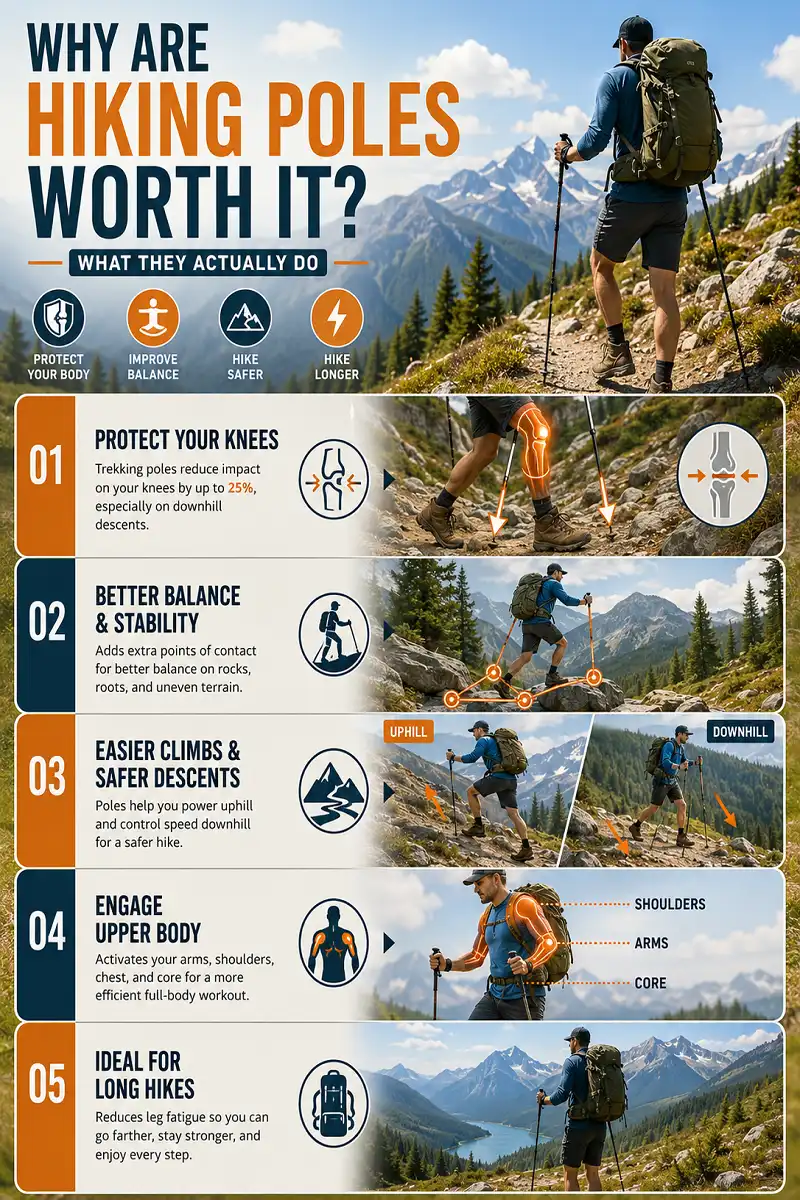
Poles aren’t just for looks. Each function below explains why hiking poles are worth it for the average trail user.
Are hiking poles worth it for your knees?
Yes, and this is the biggest reason hiking poles are worth it for most people. Studies on trekking pole use have shown a meaningful drop in the compressive force on your knees during descents, because the poles absorb some of that shock instead of your joints. On a long downhill, that adds up fast.
I noticed the difference myself after switching to poles for descents around Breckenridge, where the elevation loss on some of the high-country summer routes is steep and relentless.
Are hiking poles worth it for balance and stability?
Yes. Two poles plus two feet means four points of contact. On loose gravel, wet roots, or stream crossings, that extra stability keeps you upright. Beginners especially benefit here, since balance on uneven terrain is a skill that takes time to build.
Are hiking poles worth it on climbs and descents?
Yes, in both directions. Going uphill, poles let your arms share some of the work your legs would otherwise do alone. Going downhill, they act like a brake, so you’re not relying purely on your quads and knees to control your speed.
This matters even more on icy or snow-packed trails, which is why I never skip poles on the routes I cover in our winter hiking roundup.
Are hiking poles worth it for a light upper-body workout?
Somewhat, yes. Using poles engages your shoulders, arms, and core with every push. It’s not a huge calorie burn, but over a full day hike, it adds up. Some hikers also find the rhythm of poling helps them settle into a steady pace instead of stopping and starting.
Are hiking poles worth it on long, multi-day hikes?
Absolutely, and this is where the benefit shows up the most. Because poles spread effort across more muscle groups, your legs don’t take the full brunt of a long trail. On multi-day trips, this can be the difference between finishing strong and dragging your feet the last few miles.
When are hiking poles worth it, and when are they not?
Poles aren’t for every trail. On short, flat, well-groomed paths, they’re mostly dead weight in your hands. If a trail involves scrambling where you need both hands free for rock holds, poles become a hassle and you’ll want to stash them on your pack instead.
And if you’re hiking somewhere crowded with narrow boardwalks or stairs, swinging poles around can be more annoying than helpful. So are hiking poles worth it on every single trail? No, not really.
On easy, well-maintained paths, poles may add more weight and inconvenience than benefit.
When you need both hands for rock holds, poles are better stored on your pack.
Narrow boardwalks, stairs, and busy trails can make swinging poles awkward.
Extra contact and support make poles especially useful on challenging terrain.
Are hiking poles worth it once you factor in the different types?
Once you’ve decided poles make sense for your hikes, the next question is which kind to buy.
Fixed-Length
- Lighter and simpler
- No adjustment mechanism
- One fixed size
Adjustable
- Shorten for uphill sections
- Lengthen for descents
- Flexible for different terrain
- Great choice for beginners
Fixed-length vs. adjustable poles
Fixed-length poles are lighter and simpler, but you’re stuck with one size. Adjustable poles let you shorten them for uphill climbs and lengthen them for descents, which is why I recommend adjustable poles for most beginners. The flexibility is worth the small weight penalty.
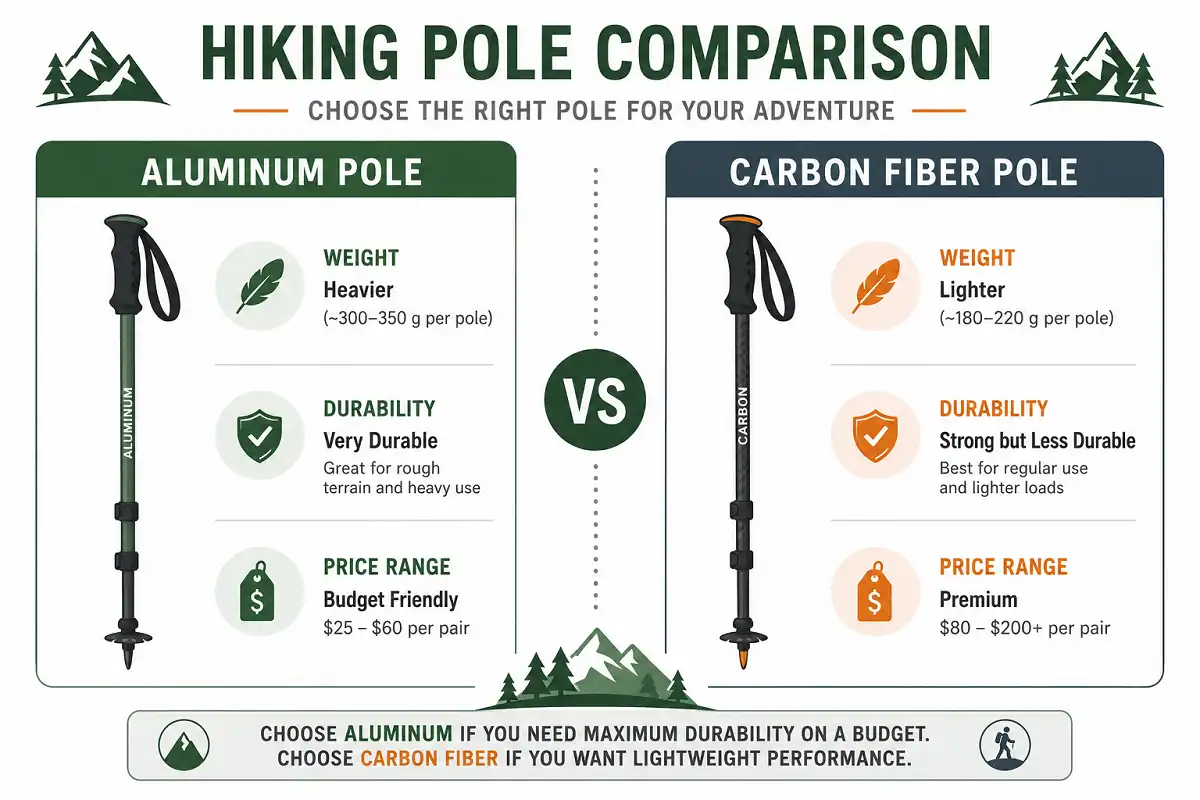
Materials: aluminum vs. carbon fiber
Aluminum poles are heavier but more affordable and tend to bend rather than snap under stress, which is safer in a pinch. Carbon fiber poles are lighter and absorb vibration better, but they cost more and can shatter if you put too much side pressure on them.
For beginners, I usually point people toward aluminum first. You can always upgrade once you know how much you’ll actually use them.
Grip types
Molds to your hand and wicks sweat well.
Softer feel and doesn’t feel as cold to the touch.
Affordable but may cause blisters on longer hikes.
Locking mechanisms
Most adjustable poles use either a twist-lock or a lever-lock (also called a flip-lock) system. Lever-locks are generally more reliable in cold or wet conditions, since twist-locks can slip if grit gets into the mechanism.
I’ve had a twist-lock fail on me mid-descent, so I lean toward lever-locks now. The modern trekking pole design has evolved a lot from its roots as a simple walking staff into the adjustable tools we use today.
Are hiking poles worth it at a higher price point?
You don’t need the most expensive pair
A solid mid-range set will cover almost everyone reading this. Premium poles make the most sense when you’re covering serious mileage, especially on frequent long-distance or multi-day trips.
From what I’ve seen shopping around, budget aluminum poles start fairly low and get the job done for occasional hikers. Mid-range poles with better locking mechanisms and grips cost more, and premium carbon fiber poles from well-known outdoor brands sit at the top of the price range.
You don’t need the most expensive pair to get real benefits, so if you’re wondering are hiking poles worth it at the premium end, my honest answer is only if you’re covering serious mileage. A solid mid-range set will cover almost everyone reading this.
Budget aluminum poles are usually enough for occasional trail use.
Mid-range adjustable poles offer a strong balance of weight, reliability, and price.
Premium carbon fiber can make sense when saving weight over many miles matters.
How to use poles so they’re actually worth it
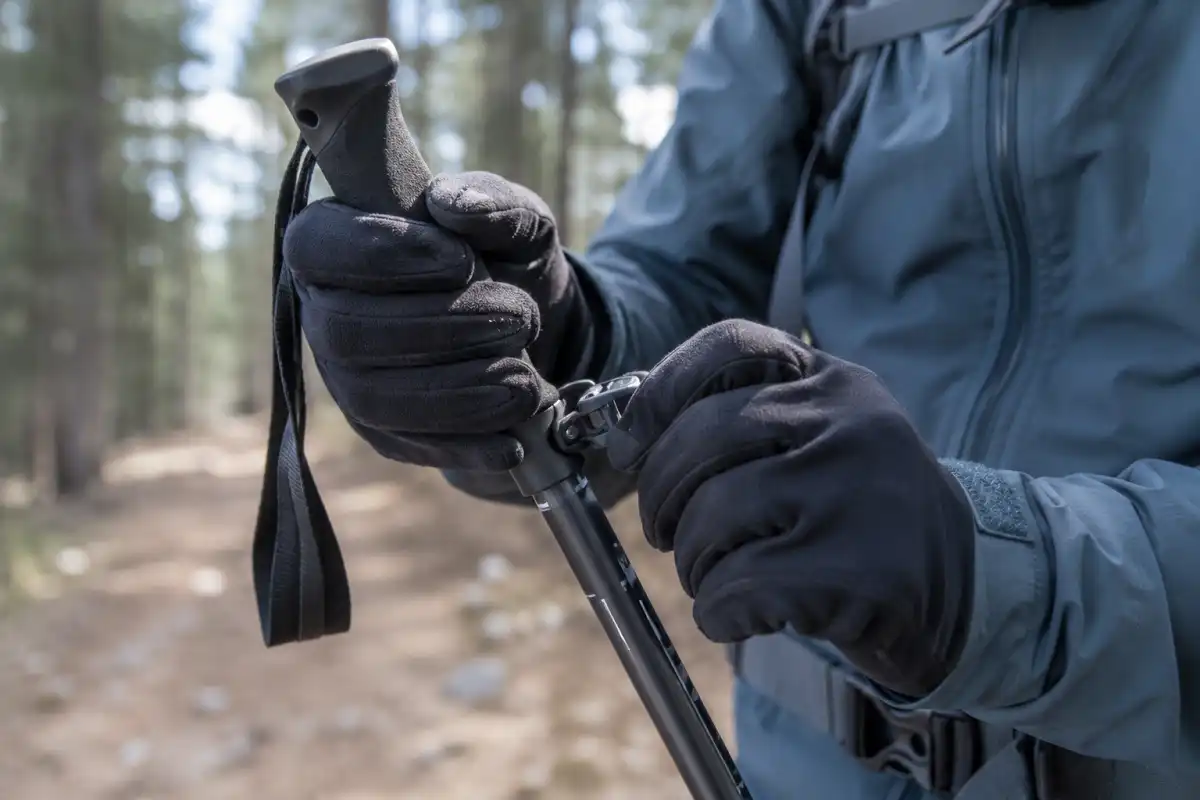
Owning poles doesn’t answer are hiking poles worth it on its own. Technique matters just as much as the gear itself. Here’s how to set them up.
Adjusting pole height
Stand up straight and hold the pole with your elbow bent at roughly a 90-degree angle. That’s your baseline length for flat ground.
Shorten the poles by a few inches for uphill sections, and lengthen them for downhill sections so they can reach the ground ahead of you comfortably.
Wrist strap technique
Slide your hand up through the strap from below, then grip the pole. This lets the strap support some of your weight instead of your hand doing all the gripping.
It sounds small, but it saves your grip strength over a long day.
Uphill and downhill adjustments
On climbs, plant the pole slightly behind you and push off to help propel yourself forward. On descents, plant the pole slightly ahead of you to catch your weight before your knee does.
Small adjustments like this are exactly what separates hikers who find poles worth it from hikers who bought a pair and never really learned to use them.
Are hiking poles worth it over a single trekking staff?
Simple & Minimal
- Simpler and cheaper
- One hand remains free
- Works well for casual walks
- Less balanced support
Two Hiking Poles
- Balanced support
- Better on steep terrain
- Useful on technical trails
- Four points of contact
Some hikers prefer a single wooden or carbon staff instead of a pair of poles. A staff is simpler and cheaper, and some people like having one hand free. However, you lose the balanced, symmetrical support that two poles give you, especially on steep or technical terrain.
For most trail conditions, I’d choose a pair of poles over a single staff, though a staff can work fine for casual, flat walks. So are hiking poles worth it over a staff? For most hikers, yes.
My take on hiking poles
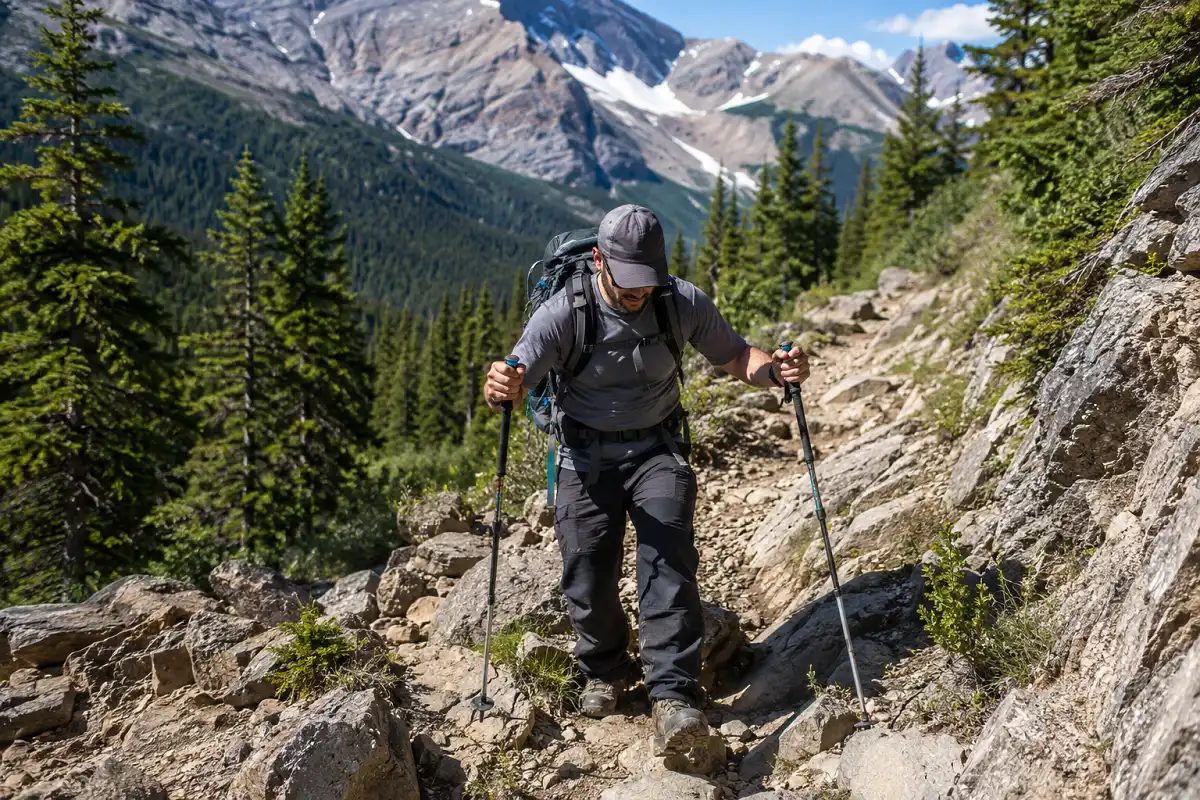
My verdict: yes, most of the time
I didn’t believe poles were worth the hassle until that one bad descent changed my mind. Since then, I’ve used them on nearly every hike over five miles, and my knees have held up better because of it.
I still leave them at home for short local walks or scrambles where I need my hands free. After years on the trail, my honest answer to are hiking poles worth it is yes, most of the time, for most hikers.
Hiking poles aren’t essential on every trail, but they can make a noticeable difference when the terrain is steep, uneven, slippery, or long.
If you’re hiking more than a few miles or dealing with meaningful elevation changes, a good pair of poles is one of the simplest pieces of gear you can add to your kit.
FAQs
Do hiking poles really help your knees?
Yes. Research on trekking pole use consistently shows reduced compressive force on the knees during descents, which is the main reason doctors and physical therapists often recommend them for hikers with knee sensitivity.
Can hiking poles replace a knee brace?
No. Poles reduce strain, but they don’t provide the joint support a medical brace offers. If you have a diagnosed knee issue, talk to a doctor about whether you need both.
Are hiking poles worth it for short day hikes?
Usually not, if the trail is flat and well-maintained. For anything with real elevation change, I’d still bring them, even on a short hike.
Are expensive hiking poles worth the extra cost?
Not always. A mid-range aluminum pair covers most hikers’ needs. Carbon fiber poles are worth the upgrade mainly for people doing frequent long-distance or multi-day trips where weight savings matter more.