Are Timberland Boots Good for Hiking? Pros, Cons, and Best Models
If you already own a pair of Timberland boots, you may have wondered whether you can take them out on the trail. They look tough, feel sturdy, and many models have excellent weather protection. But are Timberland boots for hiking, or are they mainly made for everyday wear?
The answer is a little more complicated than simply saying yes or no.
Yes — but choose the right Timberland.
Timberland makes both casual boots and boots specifically designed for hiking. A classic Timberland boot can be fine for an easy walk or a short, well-maintained trail, but a dedicated hiking model is a much better choice when you’re dealing with rocks, mud, rain, roots, or longer distances.
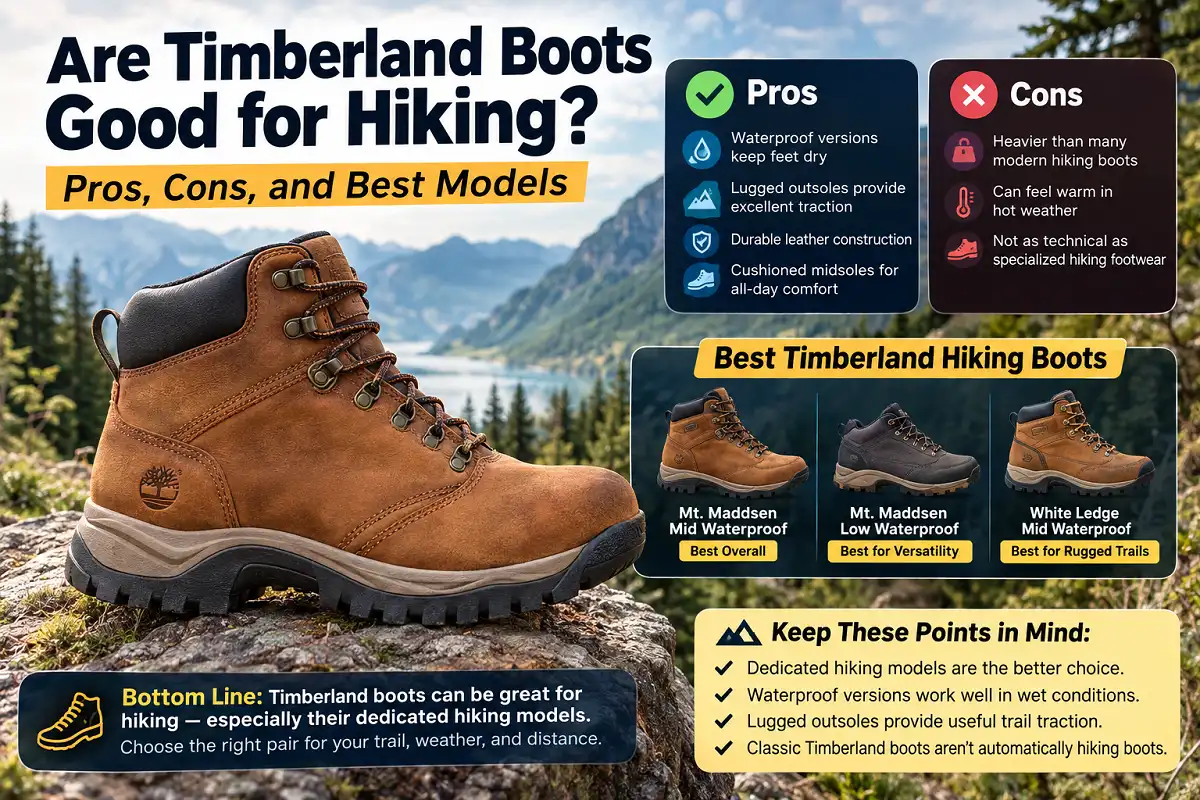
The good news is that Timberland has several hiking boots worth considering, including the Mt. Maddsen Mid Waterproof, Mt. Maddsen Low Waterproof, and White Ledge Mid Waterproof. These models come with features such as waterproof leather, cushioned midsoles, and lugged rubber outsoles designed for trail use.
Timberland boots are good for hiking.
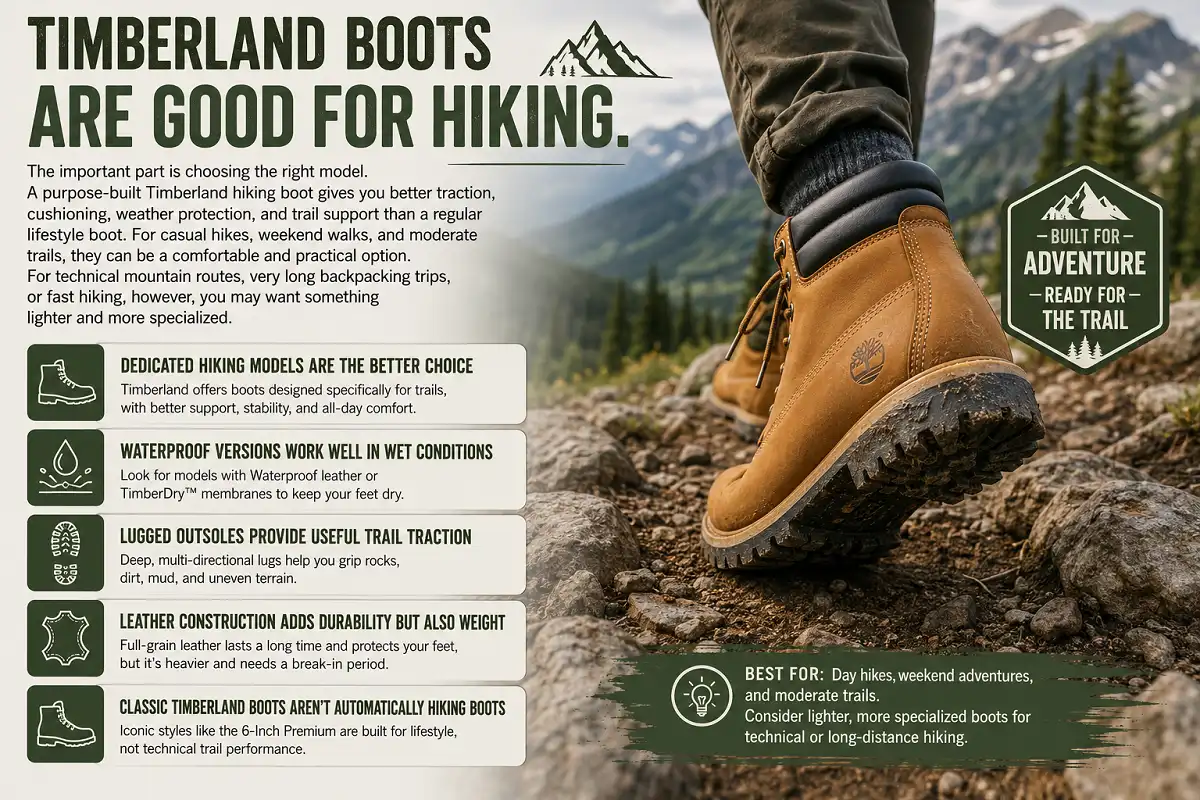
The important part is choosing the right model.
A purpose-built Timberland hiking boot gives you better traction, cushioning, weather protection, and trail support than a regular lifestyle boot. For casual hikes, weekend walks, and moderate trails, they can be a comfortable and practical option.
For technical mountain routes, very long backpacking trips, or fast hiking, however, you may want something lighter and more specialized.
Dedicated hiking models are the better choice.
Waterproof versions work well in wet conditions.
Lugged outsoles provide useful trail traction.
Leather construction adds durability but also weight.
Classic Timberland boots aren’t automatically hiking boots.
Best Timberland Hiking Boots
If you’re shopping specifically for hiking, these are the models I’d look at first.
Timberland Mt. Maddsen Mid Waterproof
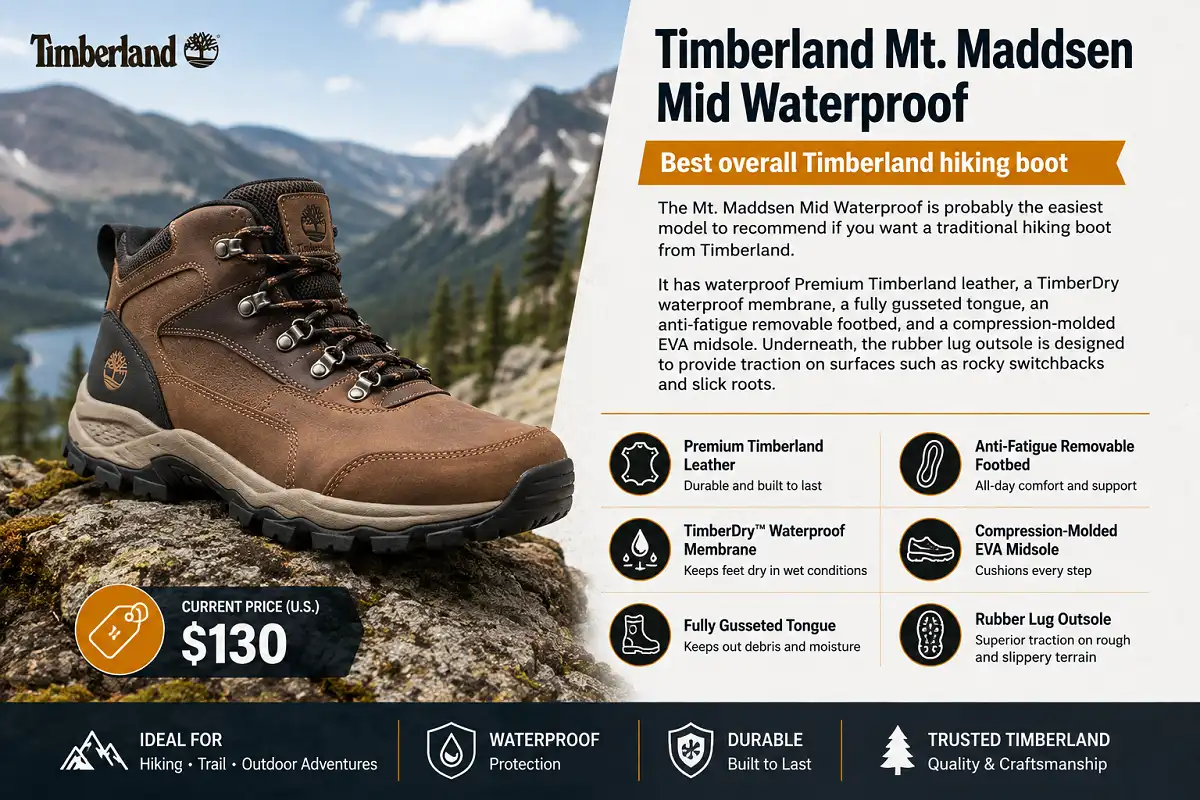
The Mt. Maddsen Mid Waterproof is probably the easiest model to recommend if you want a traditional hiking boot from Timberland.
It has waterproof Premium Timberland leather, a TimberDry waterproof membrane, a fully gusseted tongue, an anti-fatigue removable footbed, and a compression-molded EVA midsole. Underneath, the rubber lug outsole is designed to provide traction on surfaces such as rocky switchbacks and slick roots.
The current U.S. Timberland listing shows it at around $130.
Pros
- Waterproof construction
- Good grip on uneven trails
- Comfortable cushioning
- Mid-height design gives more coverage
- Good choice for rainy hikes
- Available in wide sizes
Cons
- Heavier than a hiking shoe
- Can feel warm in hot weather
- Not ideal if you prefer lightweight footwear
Timberland Mt. Maddsen Low Waterproof
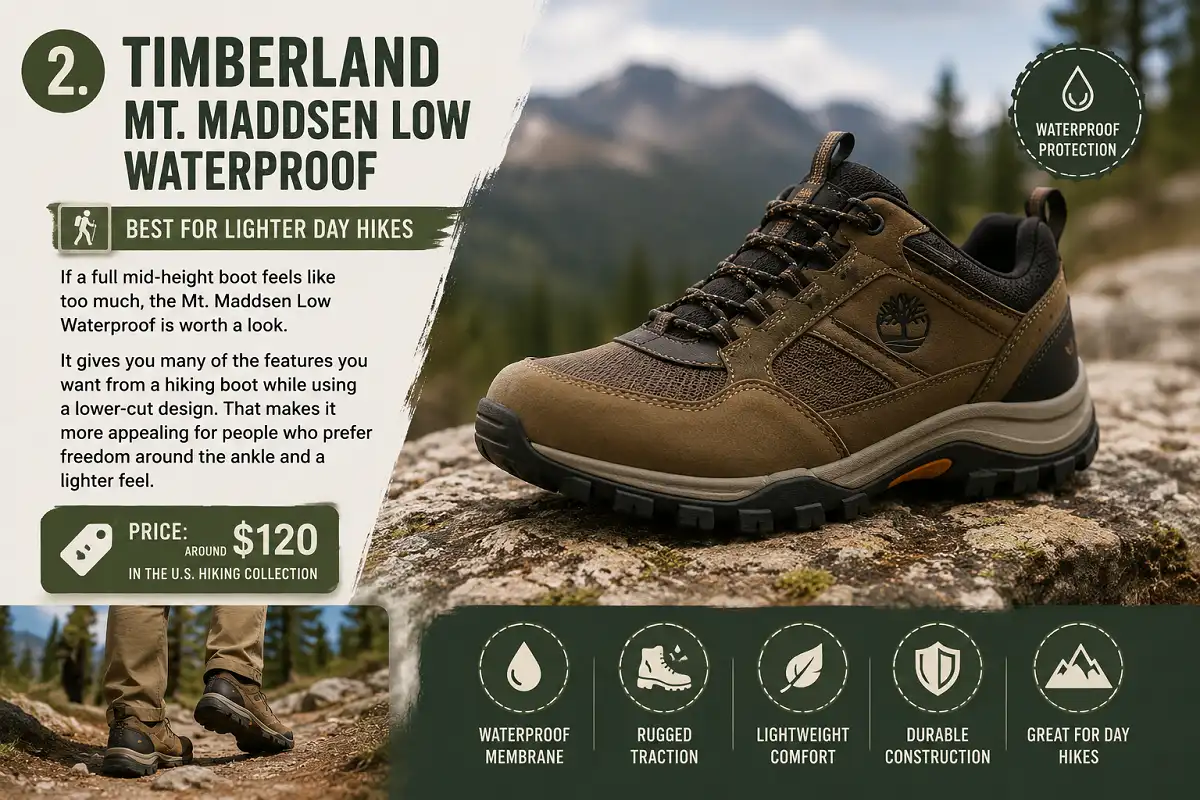
If a full mid-height boot feels like too much, the Mt. Maddsen Low Waterproof is worth a look.
It gives you many of the features you want from a hiking boot while using a lower-cut design. That makes it more appealing for people who prefer freedom around the ankle and a lighter feel.
Timberland currently lists the model at around $120 in its U.S. hiking collection.
Pros
- Lighter feel than a mid boot
- Waterproof protection
- Good option for day hikes
- Comfortable for everyday outdoor use
- Trail-focused outsole
Cons
- Less ankle coverage
- Not as protective on rough terrain
- Still heavier than many modern trail shoes
Timberland White Ledge Mid Waterproof
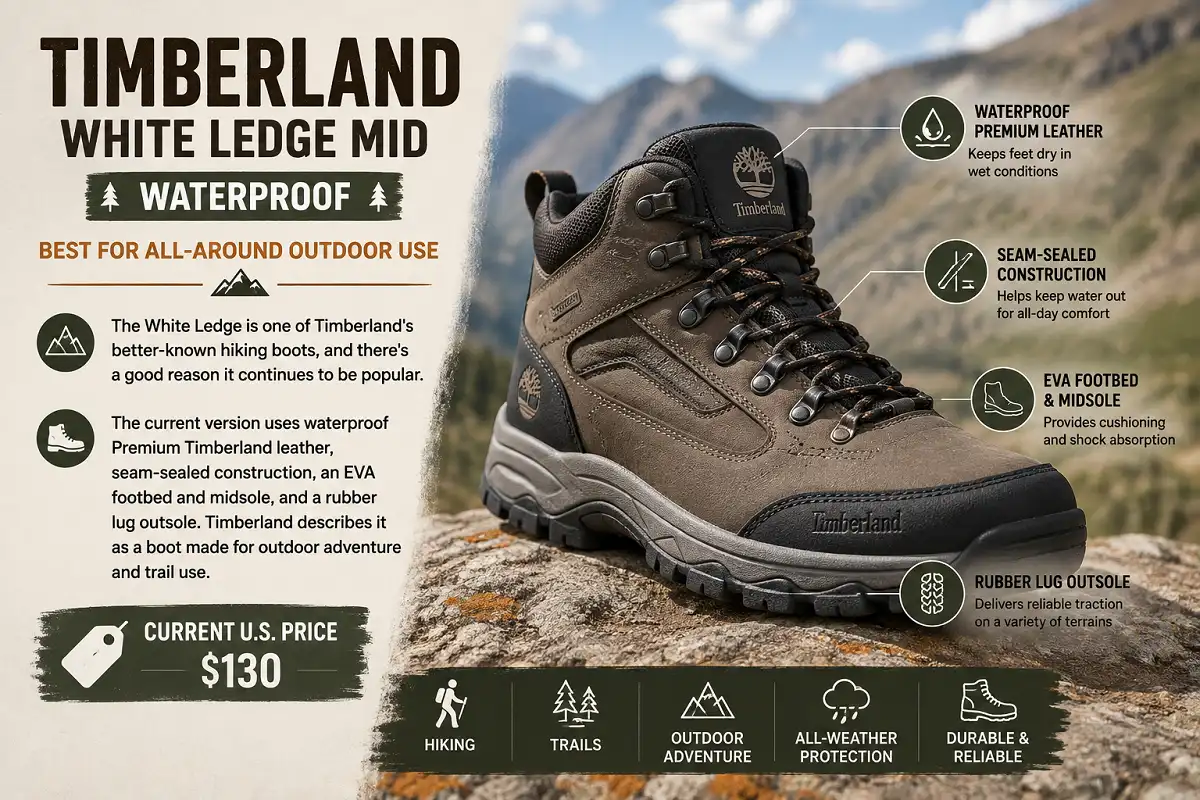
The White Ledge is one of Timberland’s better-known hiking boots, and there’s a good reason it continues to be popular.
The current version uses waterproof Premium Timberland leather, seam-sealed construction, an EVA footbed and midsole, and a rubber lug outsole. Timberland describes it as a boot made for outdoor adventure and trail use.
The current U.S. price is about $130.
Pros
- Waterproof leather
- Good trail grip
- Comfortable EVA cushioning
- Durable construction
- Works for hiking and everyday outdoor wear
- Classic Timberland styling
Cons
- Relatively heavy
- Can feel warm in hot climates
- Not designed for highly technical mountain use
Timberland Hiking Boots Pros and Cons
Before buying a pair, it’s worth looking at the bigger picture. Timberland hiking boots have some genuine strengths, but they’re not perfect for every type of hiking.
Pros: Where Timberland Boots Do Well
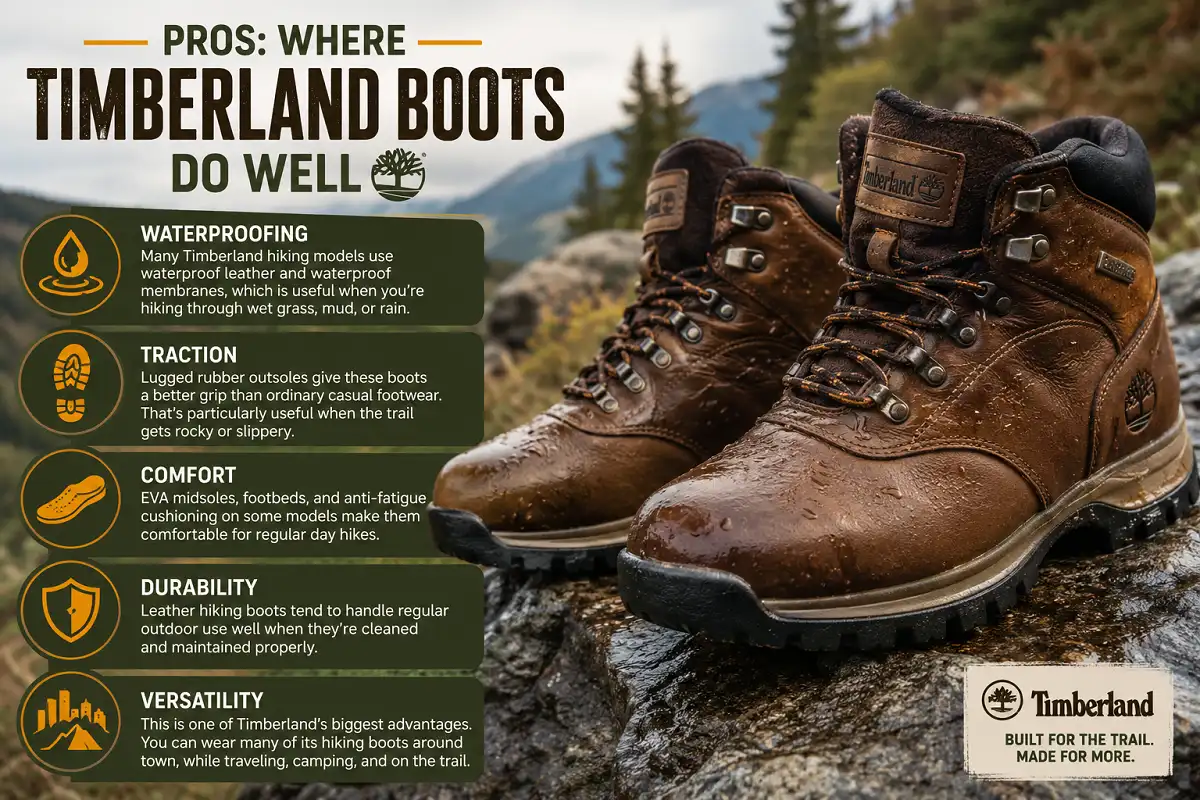
Waterproofing
Many Timberland hiking models use waterproof leather and waterproof membranes, which is useful when you’re hiking through wet grass, mud, or rain.
Traction
Lugged rubber outsoles give these boots a better grip than ordinary casual footwear. That’s particularly useful when the trail gets rocky or slippery.
Comfort
EVA midsoles, footbeds, and anti-fatigue cushioning on some models make them comfortable for regular day hikes.
Durability
Leather hiking boots tend to handle regular outdoor use well when they’re cleaned and maintained properly.
Versatility
This is one of Timberland’s biggest advantages. You can wear many of its hiking boots around town, while traveling, camping, and on the trail.
Cons: Where They Fall Short
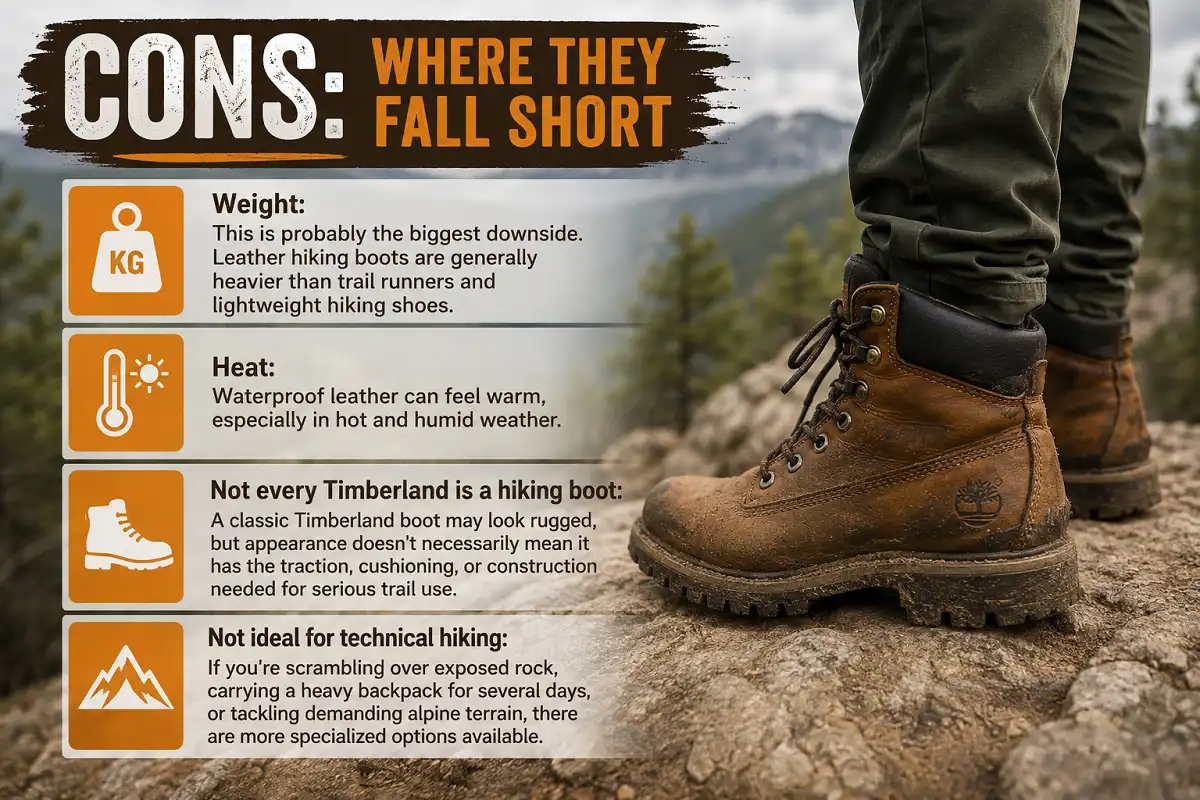
This is probably the biggest downside. Leather hiking boots are generally heavier than trail runners and lightweight hiking shoes.
Waterproof leather can feel warm, especially in hot and humid weather.
A classic Timberland boot may look rugged, but appearance doesn’t necessarily mean it has the traction, cushioning, or construction needed for serious trail use.
If you’re scrambling over exposed rock, carrying a heavy backpack for several days, or tackling demanding alpine terrain, there are more specialized options available.
Classic Timberland Boots vs. Timberland Hiking Boots
This distinction is important.
Everyday First
- Lifestyle focused
- May be sturdy and weather-resistant
- Not necessarily designed for long hikes
- Rugged appearance doesn’t guarantee trail performance
Trail First
- Trail-specific construction
- Waterproof membrane on suitable models
- Trail cushioning
- Lugged rubber outsole
A classic Timberland boot is primarily an everyday lifestyle boot. It may be sturdy and weather-resistant, but that doesn’t automatically make it suitable for long hikes.
A dedicated Timberland hiking boot is built around trail-specific features. For example, the Mt. Maddsen Mid Waterproof has a waterproof membrane, an anti-fatigue footbed, EVA cushioning, and a lugged rubber outsole.
So if you’re asking are Timberland boots for hiking, don’t judge the answer by the brand alone. Look at the individual model.
Are Timberland Boots Good for Hiking in Rain?
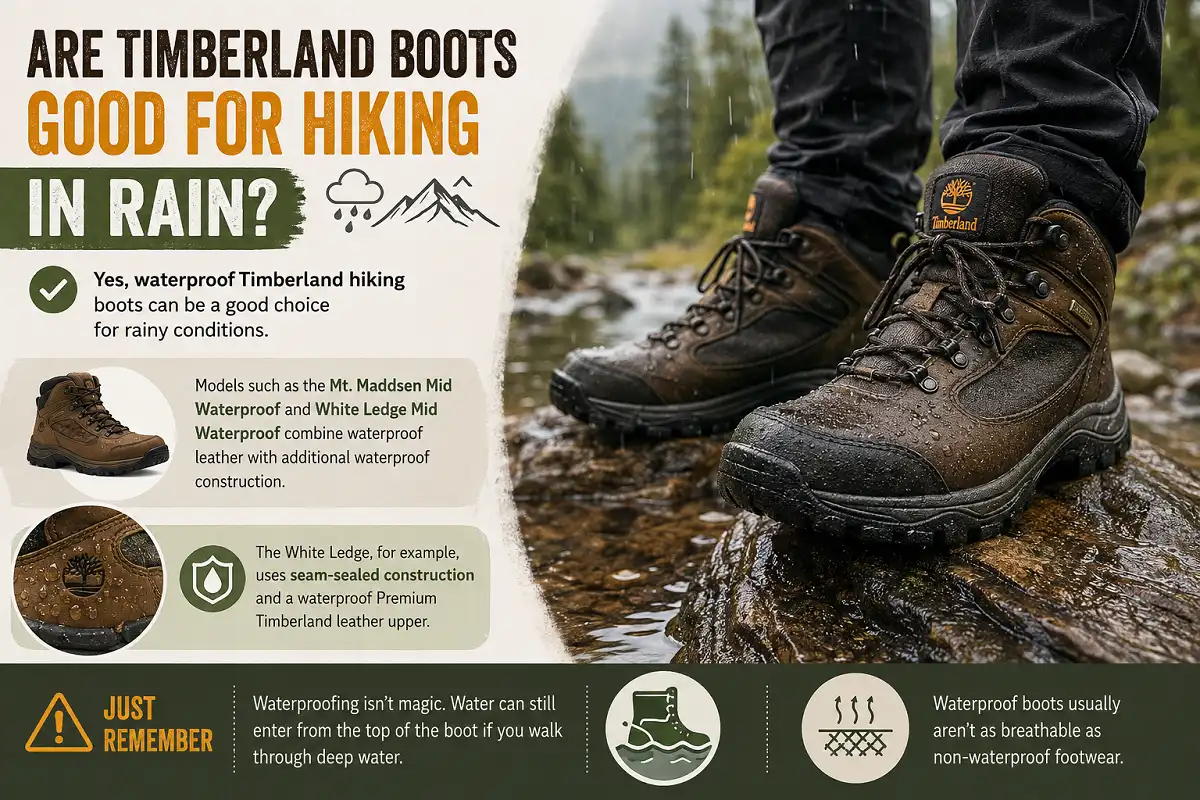
Yes — waterproof models are a good fit.
Yes, waterproof Timberland hiking boots can be a good choice for rainy conditions.
Models such as the Mt. Maddsen Mid Waterproof and White Ledge Mid Waterproof combine waterproof leather with additional waterproof construction. The White Ledge, for example, uses seam-sealed construction and a waterproof Premium Timberland leather upper.
Just remember that waterproofing isn’t magic. Water can still enter from the top of the boot if you walk through deep water, and waterproof boots usually aren’t as breathable as non-waterproof footwear.
Are Timberland Boots Good for Hot Weather Hiking?
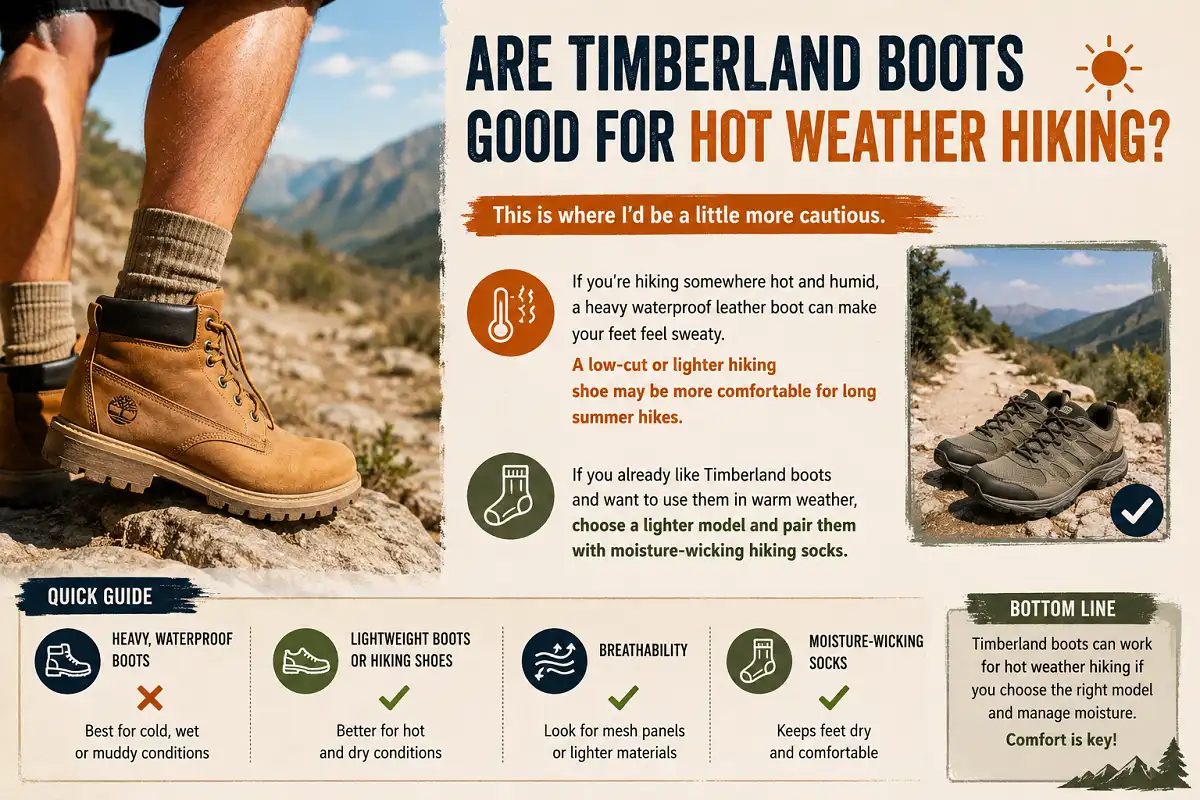
Use a little more caution.
This is where I’d be a little more cautious.
If you’re hiking somewhere hot and humid, a heavy waterproof leather boot can make your feet feel sweaty. A low-cut or lighter hiking shoe may be more comfortable for long summer hikes.
If you already like Timberland boots and want to use them in warm weather, choose a lighter model and pair them with moisture-wicking hiking socks.
Are Timberland Boots Good for Long Hikes?
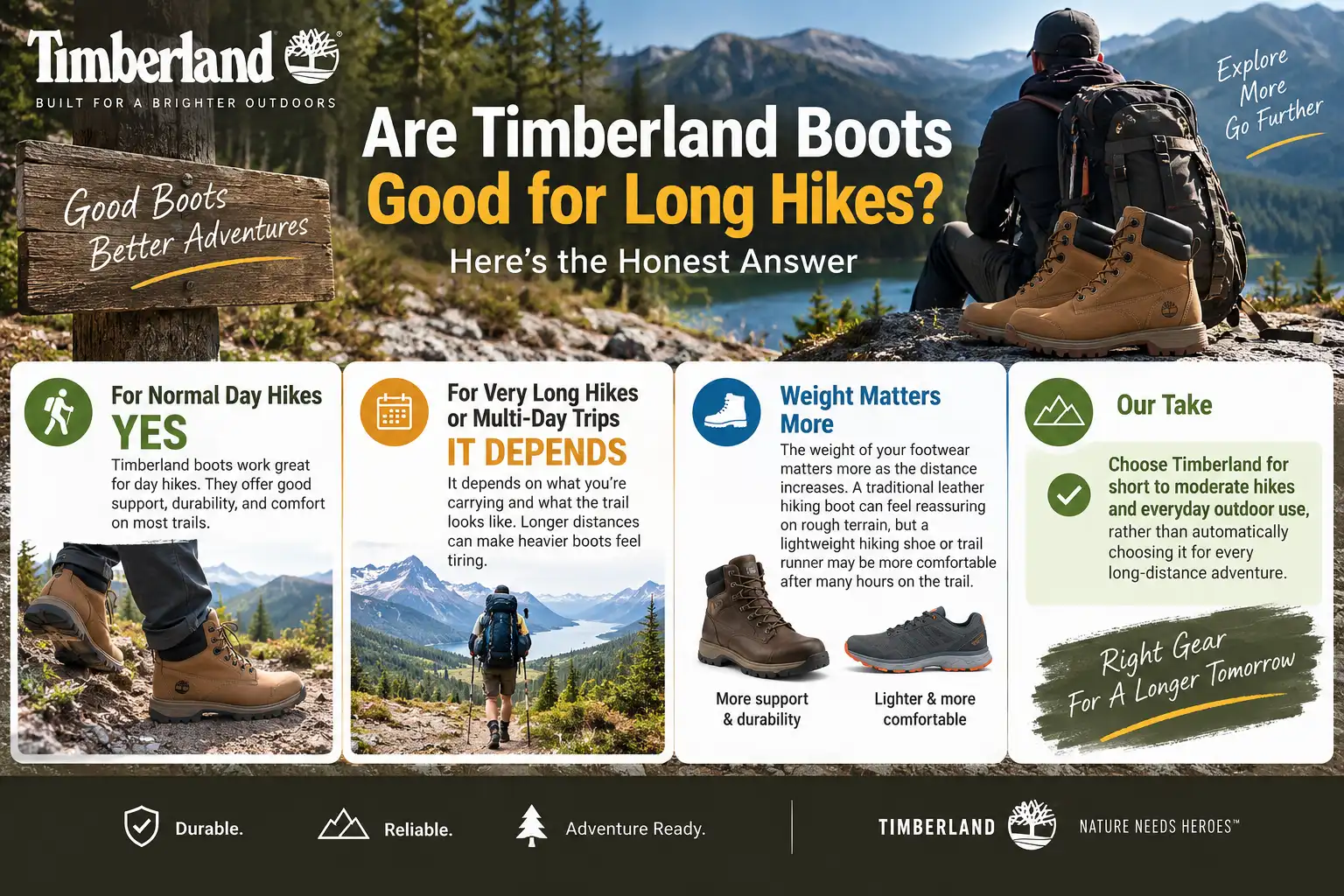
For normal day hikes, yes.
For very long hikes or multi-day backpacking trips, it depends on what you’re carrying and what the trail looks like.
The weight of your footwear matters more as the distance increases. A traditional leather hiking boot can feel reassuring on rough terrain, but a lightweight hiking shoe or trail runner may be more comfortable after many hours on the trail.
I’d choose Timberland for short to moderate hikes and everyday outdoor use, rather than automatically choosing it for every long-distance adventure.
Where Can You Buy Timberland Hiking Boots?
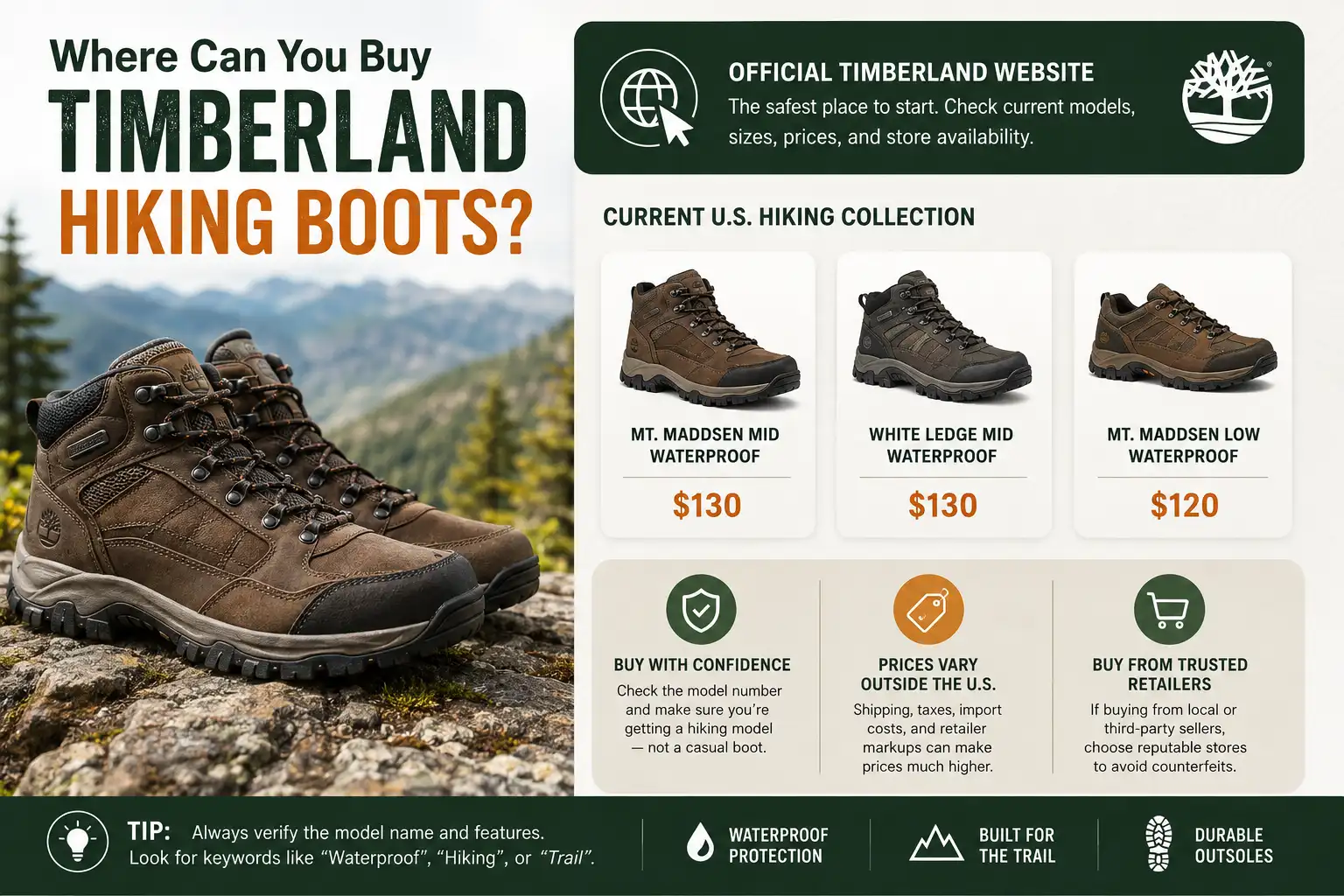
Start with the official Timberland website.
The safest place to start is the official Timberland website, where you can check current models, sizes, prices, and store availability.
Timberland’s current U.S. hiking collection includes the Mt. Maddsen and White Ledge ranges, with the Mt. Maddsen Mid Waterproof and White Ledge Mid Waterproof currently listed around $130, while the Mt. Maddsen Low Waterproof is around $120.
If you’re buying from a local or third-party seller, check the model number and make sure you’re actually getting a hiking model rather than a casual Timberland boot. Prices outside the U.S. can also be considerably different because of shipping, taxes, import costs, and retailer markups.
Which Timberland Hiking Boot Should You Buy?
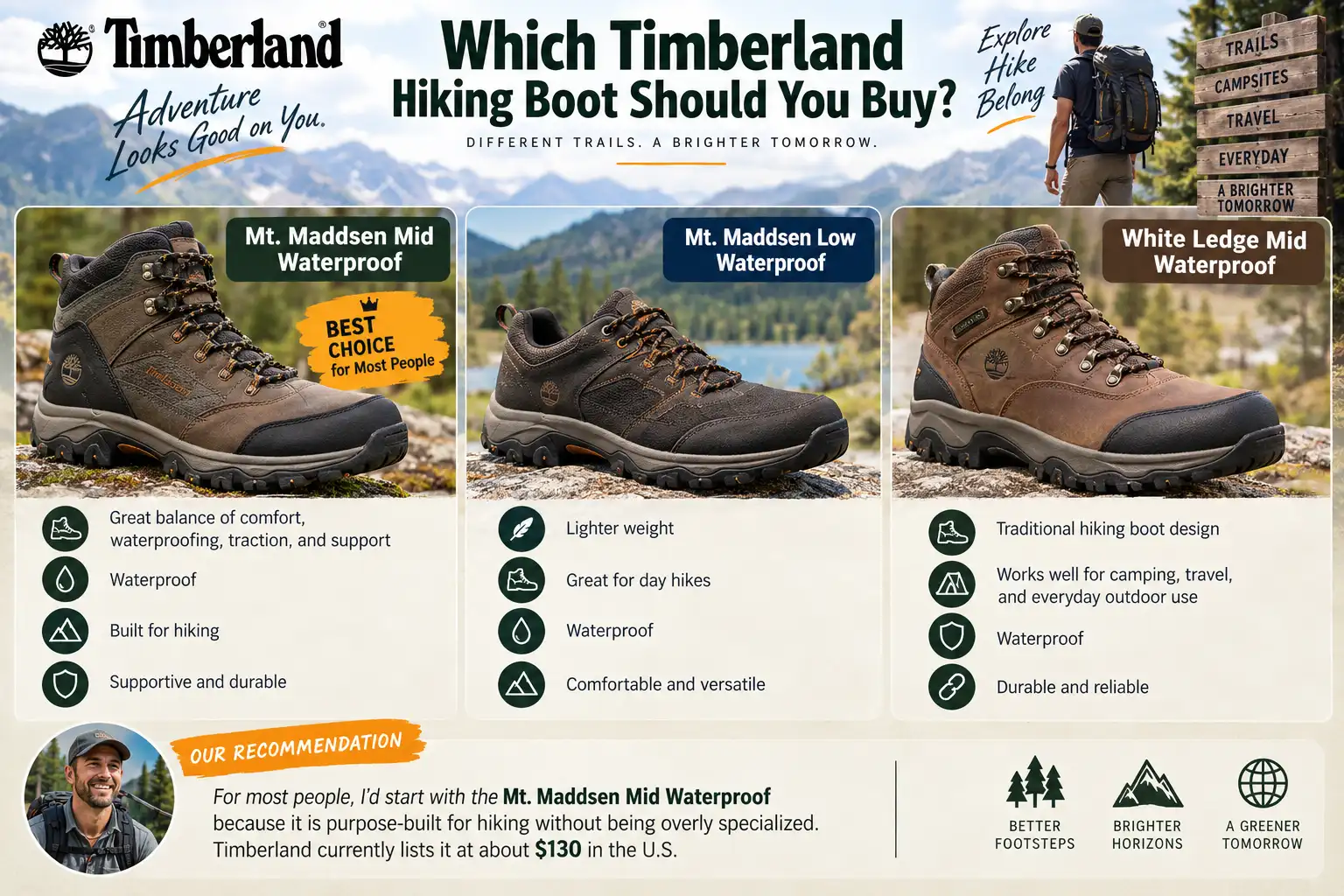
Best balance of comfort, waterproofing, traction, and support.
Best if you want something lighter and mostly take day hikes.
Best for traditional hiking, camping, travel, and everyday outdoor use.
Mt. Maddsen Mid Waterproof
For most people, I’d start with the Mt. Maddsen Mid Waterproof because it is purpose-built for hiking without being overly specialized. Timberland currently lists it at about $130 in the U.S.
only if you choose a model designed for the trail.
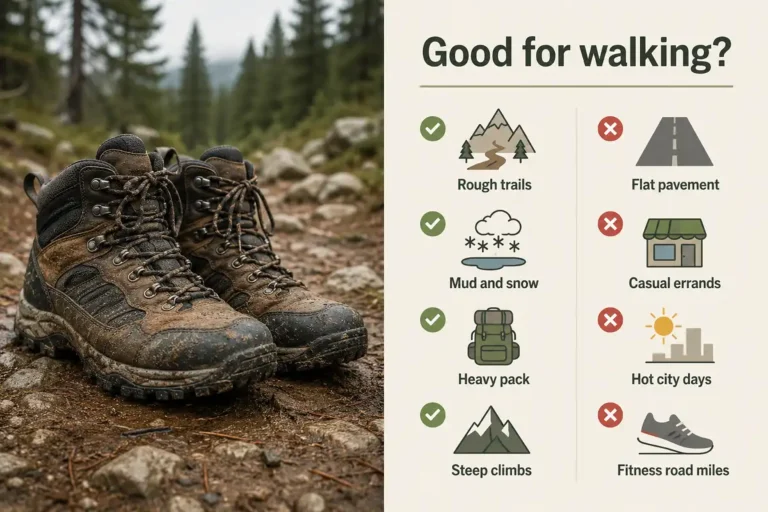
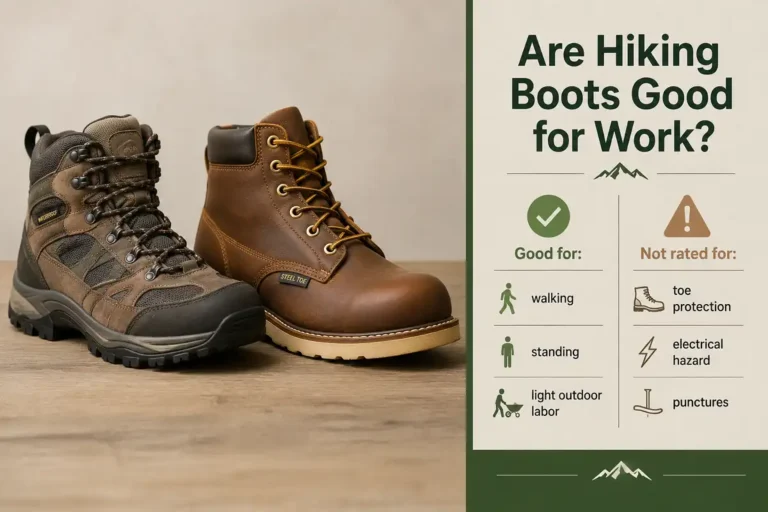
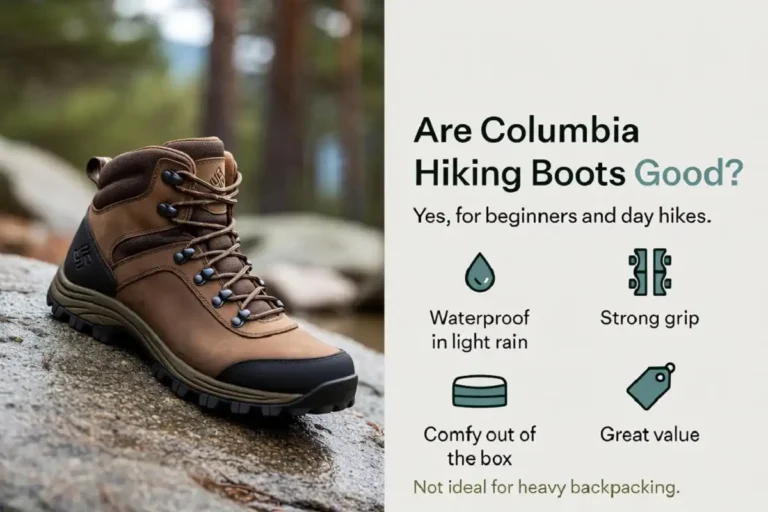
Timberland’s dedicated hiking boots offer a useful combination of waterproofing, cushioning, traction, and durability. They’re especially appealing if you want a boot that can move easily between hiking and everyday wear. If you’re still deciding whether a hiking boot is the right choice for your daily walks, this guide on whether hiking boots are good for walking offers a useful comparison. You can also see how Timberland’s approach compares with other popular footwear brands in this guide to whether Columbia hiking boots are good.
They’re not the lightest option on the market, and I wouldn’t pick them automatically for technical mountain routes or ultralight backpacking. But for day hikes, moderate trails, rainy weather, camping, and general outdoor use, a model like the Mt. Maddsen Mid Waterproof or White Ledge Mid Waterproof can be a solid choice. If you’re concerned about comfort on longer hikes, it’s also worth checking this practical guide on how to avoid blisters while hiking. For a broader explanation of what separates hiking boots from other outdoor footwear, Wikipedia’s hiking boot guide is a useful external reference.
The main thing to remember is simple: don’t choose a Timberland just because it looks rugged. Choose one that is actually built for hiking.
FAQs
Are Timberland boots good for hiking?
Yes. Timberland makes dedicated hiking boots with features such as waterproof construction, cushioning, and lugged outsoles. They’re best suited to casual and moderate hiking rather than highly technical routes.
Can I hike in classic Timberland boots?
You can use them for short, easy trails, but they’re not the best choice for serious hiking. A dedicated Timberland hiking model will provide better trail-specific performance.
Which Timberland boot is best for hiking?
The Mt. Maddsen Mid Waterproof is a strong all-around choice because it combines waterproofing, cushioning, traction, and a supportive mid-height design.
Are Timberland hiking boots waterproof?
Several Timberland hiking models are waterproof. The Mt. Maddsen Mid Waterproof and White Ledge Mid Waterproof both use waterproof construction.
5. Are Timberland boots too heavy for hiking?
They can be heavier than modern hiking shoes or trail runners. For short and moderate hikes, that may not be a major problem, but lightweight footwear can be more comfortable for long-distance hiking.