Are KEEN Hiking Boots Good? An Honest Beginner’s (Guide 2026)
You keep seeing one brand pop up every time you search for wide-toe or waterproof hiking boots. That brand is KEEN. So before you spend $150 or more on a pair, you deserve a straight answer to one practical question: are KEEN hiking boots good, or are you just paying for the name? I have hiked in KEEN boots for years around Bakersfield and well beyond. I have also helped plenty of first-time hikers pick their very first pair. This guide gives you the honest version, covering the features, the fit, the durability, the weak spots, and who they actually suit.
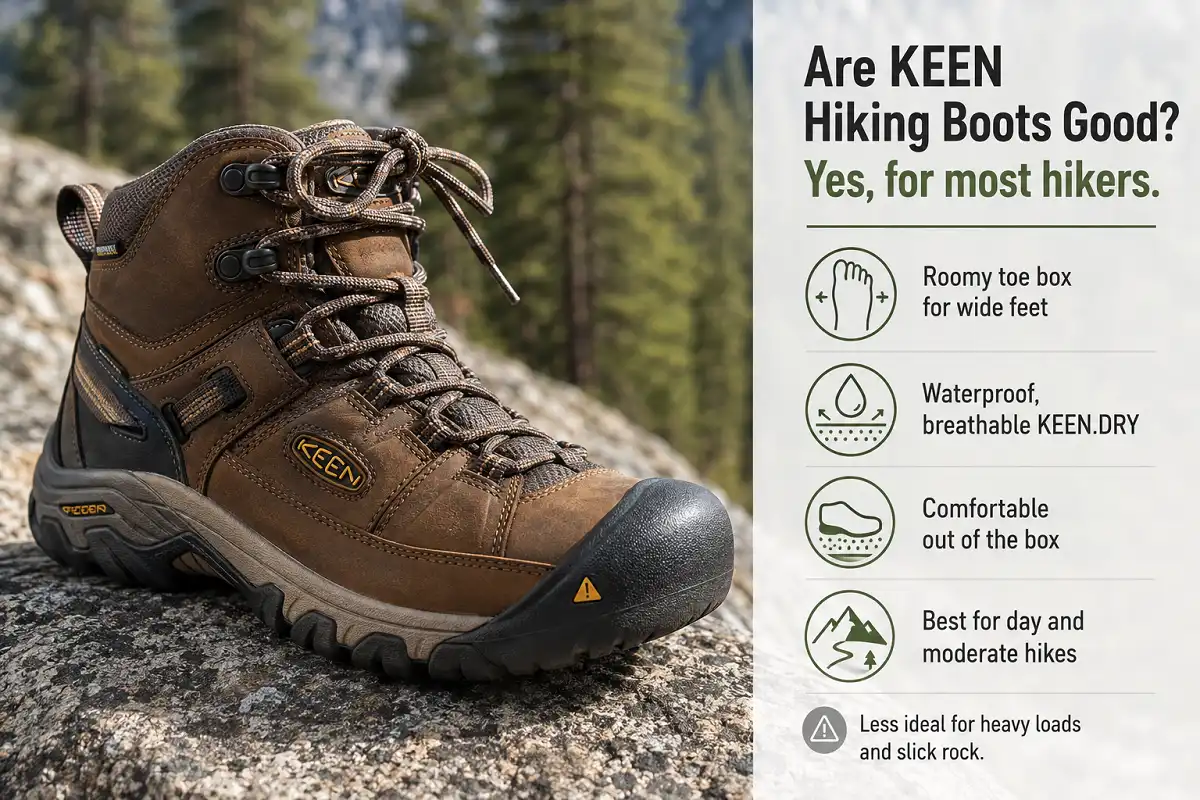
Yes, KEEN hiking boots are good for most hikers.
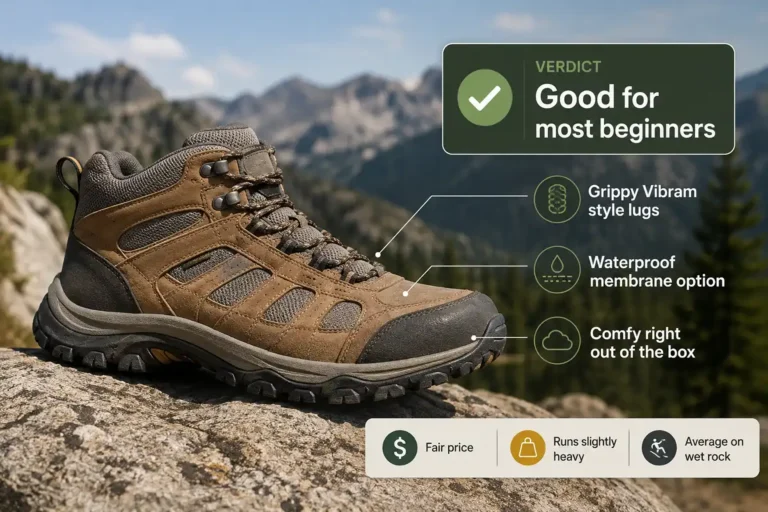
Yes, KEEN boots work well for most beginner and intermediate hikers, and they shine for anyone with wide feet. You get a roomy toe box, dependable waterproofing, and comfort right out of the box. However, they are not built for heavy multi-day loads or slick technical rock. For day hikes and moderate trails, though, they hold up very well.
What KEEN is known for
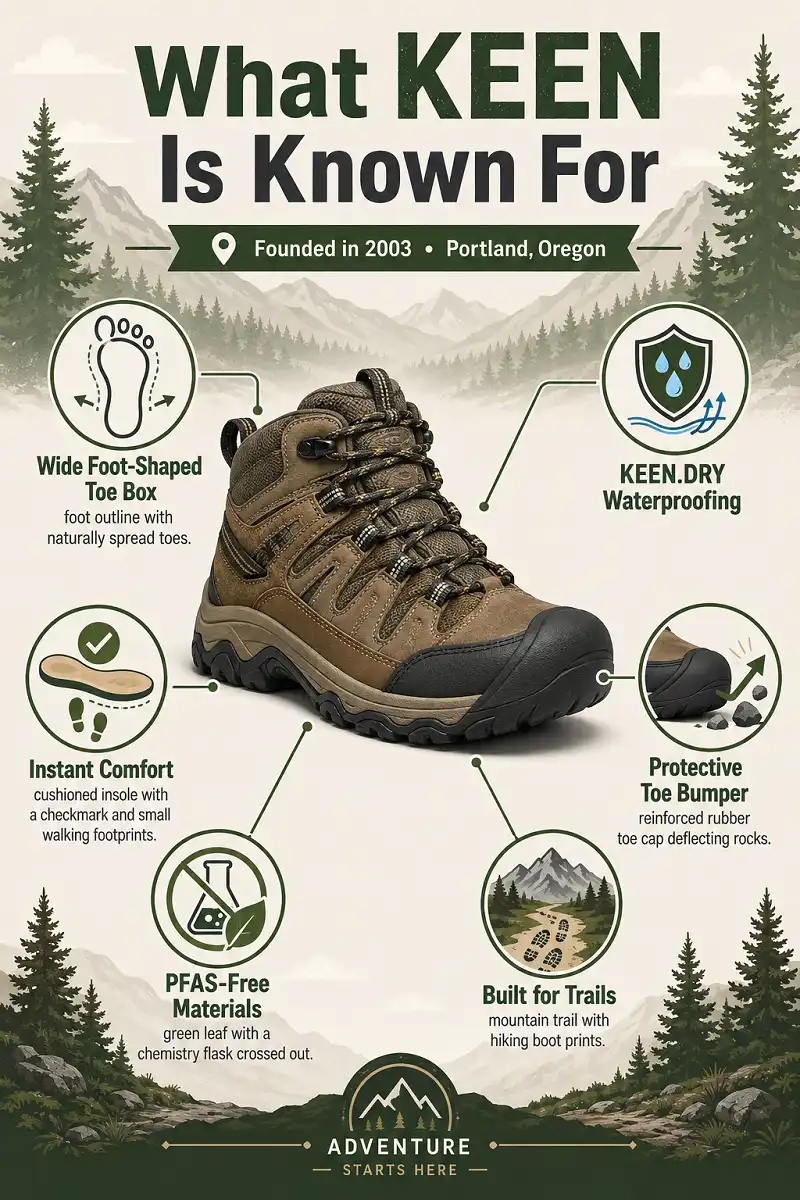
KEEN started in 2003 and now runs from Portland, Oregon. The brand made its name with one simple idea: protect the toes and give them room to move. That first rubber toe bumper showed up on a sandal, and it still shapes the look of every boot today.
Over the years, KEEN earned a loyal following for a few clear reasons:
Your toes get to splay naturally, so hot spots drop off.
This is the brand’s own waterproof, breathable liner.
Most pairs need little to no break-in time.
The rubber cap guards your toes against rocks and roots.
Every KEEN shoe now ships without those “forever chemicals.”
That last point matters more than most people think. KEEN removed PFAS across its whole line, so you still get waterproofing, just without the chemistry that worries a lot of hikers now.
The features that make KEEN boots stand out
Good boots come down to the details. So here is where KEEN earns its reputation, and where it slips a little.
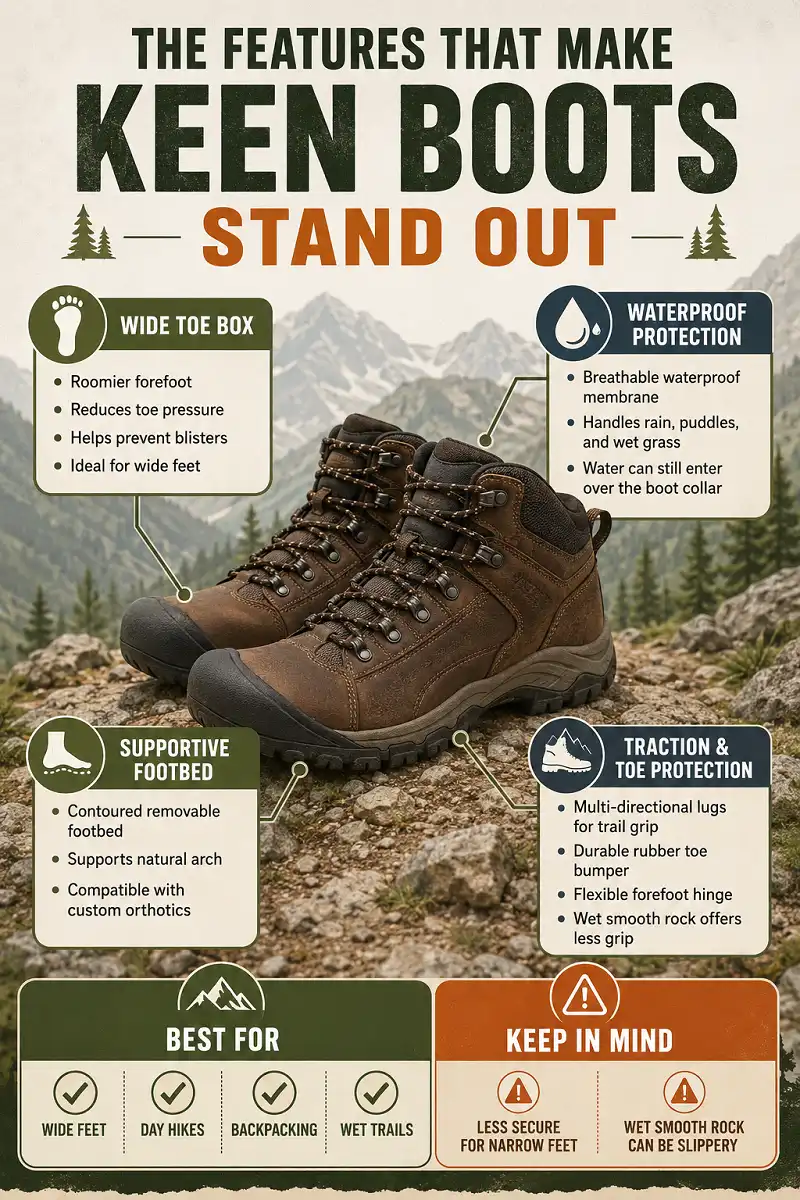
The wide toe box
This is the feature people mention first, and for good reason. KEEN builds a roomier forefoot than most brands do. As a result, your toes can spread on long descents instead of jamming into the front. If you have wide feet, this one thing can end years of trail pain, and it is a big reason these boots help you keep blisters away on long days. On the other hand, narrow feet can find all that room a bit sloppy. More on sizing shortly.
KEEN.DRY waterproofing
KEEN.DRY is the brand’s answer to Gore-Tex. It keeps puddle water and rain out while letting sweat vapor escape. In my experience, it handles creek crossings and wet grass without complaint. Still, remember one rule that applies to every waterproof boot. Water pours in over the top if it rises above the collar. So waterproofing helps a lot, yet it does not turn a boot into a rubber galosh.
The footbed and support
KEEN uses a contoured, removable footbed, often called a metatomical footbed. It cradles the arch and adds all-day support. Many hikers with plantar fasciitis find these comfortable because of that shape. For severe foot problems, though, a podiatrist and custom orthotics still beat any stock insole. The good news is the footbed pops right out, so swapping in your own is easy.
Traction and the toe bumper
KEEN outsoles use multi-directional lugs that grip dirt, mud, and loose gravel well. Meanwhile, the rubber toe bumper wraps the front and takes the hits from rocks and roots. There is also a clever fold in that rubber near the toes. It creates a flexible hinge, so the boot bends with your foot while it still protects it. Traction on wet, smooth rock is the main weak spot here. For slick granite, a grippier sole from another brand does better.
So, are KEEN hiking boots good for beginners?
A strong first boot for new hikers
Yes, KEEN boots are a strong choice for beginners, and that group may benefit the most. New hikers rarely want to fuss with a long, painful break-in. KEEN skips most of that. The comfort is there from the first walk, the fit is forgiving, and the waterproofing covers the surprise puddle.
Beginners also tend to stick to day hikes and mellow trails at first, which is exactly where these boots perform best. So if you are just getting started, a comfortable boot removes one big worry. For a wider look at gear priorities, my notes on taking those first steps on the trail pair well with a solid first boot.
KEEN hiking boot models worth knowing in 2026
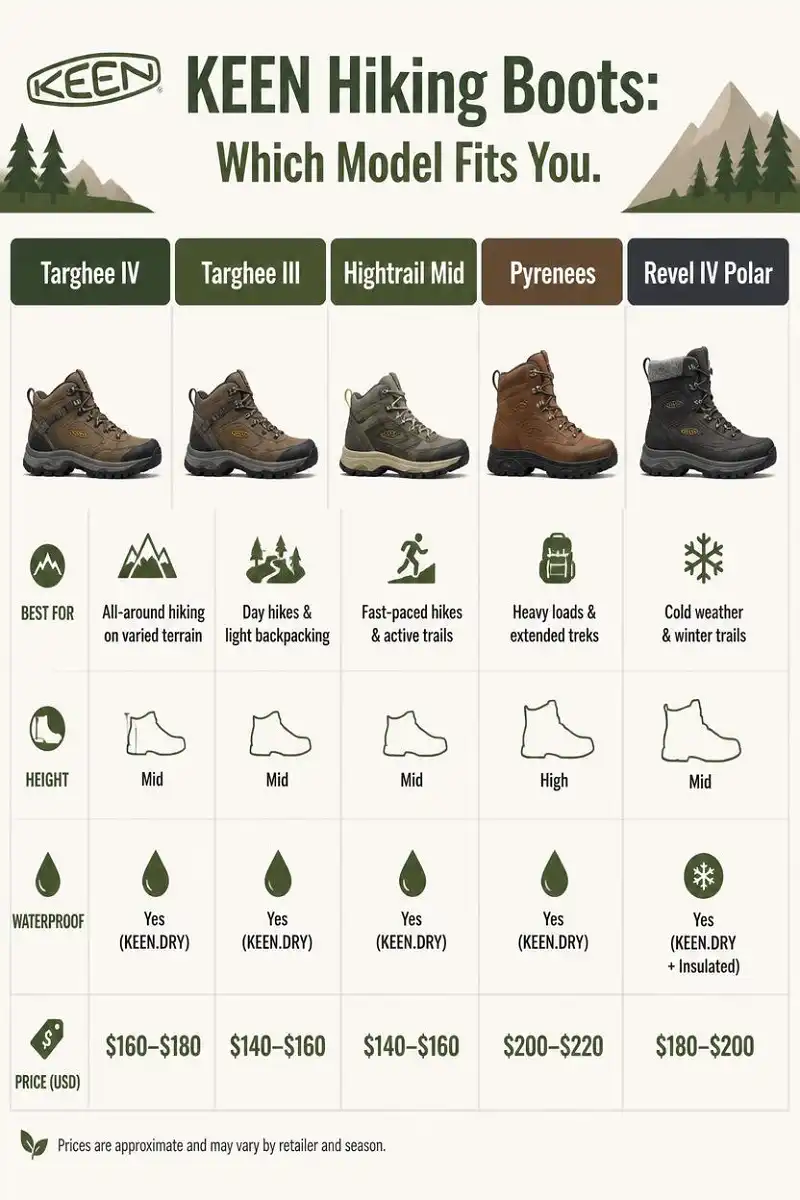
Because the answer to are KEEN hiking boots good depends a lot on which pair you choose, here is a quick look at the main models. Prices move around, so treat these as rough retail figures.
| Model | Best for | Height | Waterproof | Rough price |
|---|---|---|---|---|
| Targhee IV | All-around day hiking | Mid | Yes (KEEN.DRY) | $150 to $180 |
| Targhee III | Budget hiking | Mid | Yes (KEEN.DRY) | $100 to $130 |
| Hightrail Mid | Light, fast trails | Mid | Yes (KEEN.DRY) | Mid-range |
| Pyrenees | Rough terrain, heavier packs | Mid | Yes (KEEN.DRY) | Higher-range |
| Revel IV Polar | Winter and snow | Mid or high | Yes, insulated | Around $190 |
Targhee IV
This is the flagship and the safest first pick. You get a waterproof nubuck leather upper, grippy lugs, and long-wearing build. It handles day hikes and light backpacking with ease.
Targhee III
The older Targhee, now often discounted. It fits slightly snugger through the midfoot than the IV. For a first budget boot, it still performs well.
Hightrail Mid
The lightest boot in the lineup. It feels almost like a sneaker, with soft cushioning and no break-in. Great for easy trails, but not for heavy loads.
Pyrenees
The most supportive of the bunch. Its stiffer leather build suits rougher ground and bigger packs.
Revel IV Polar
Insulated and rated for deep cold. So it earns its place on snow hikes and winter trips.
KEEN also runs newer models like the Circadia and the Targhee Apex. Both aim at lighter, faster hiking. For most beginners, though, the Targhee IV is still the boot I point to first.
How KEEN boots fit and how to size them
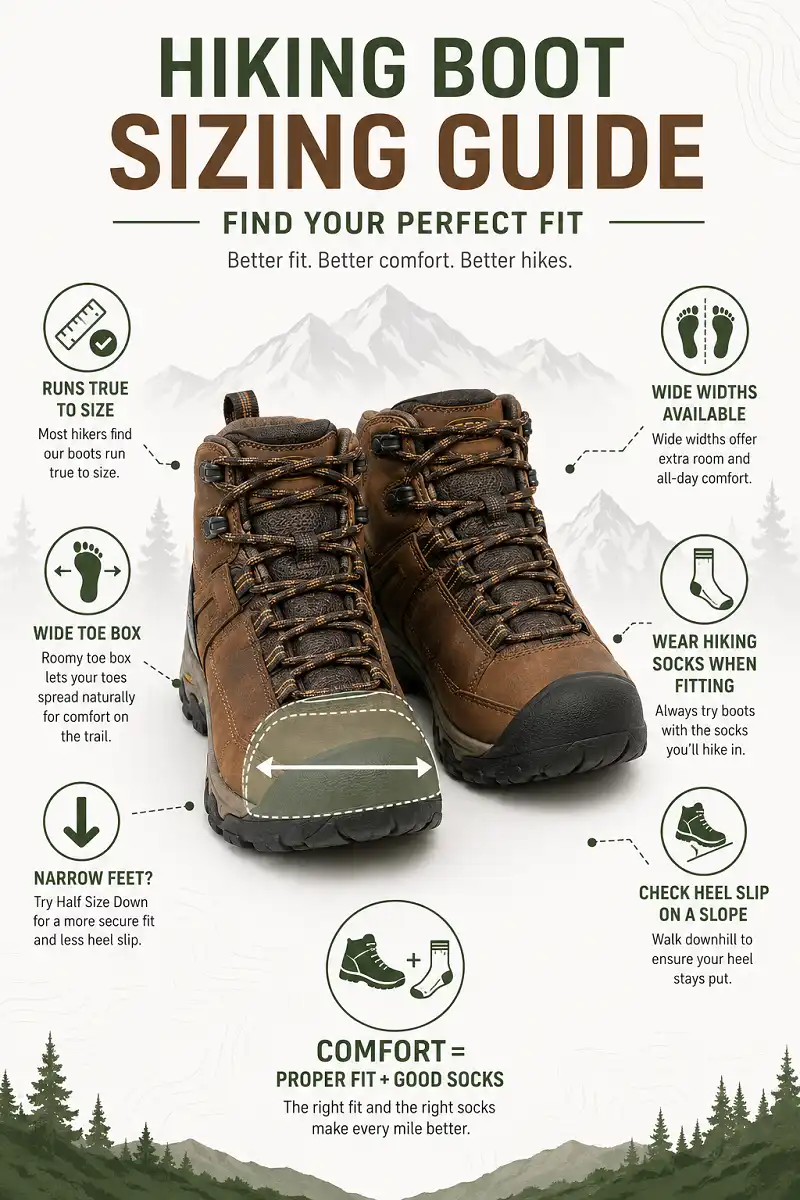
KEEN boots generally run true to size, so start with your normal number. The catch is that famous wide toe box. If your feet run narrow, the roomy front can feel loose. In that case, size down a half size, or look for a model offered in a narrow width.
KEEN also sells many boots in wide widths, which is a big help for wider feet. Here is a handy trick too. A men’s size fits about the same as a women’s wide when a women’s wide is not available.
The right socks matter as much as the boot, so I break down what good hiking socks actually do in a separate guide.
Durability and warranty
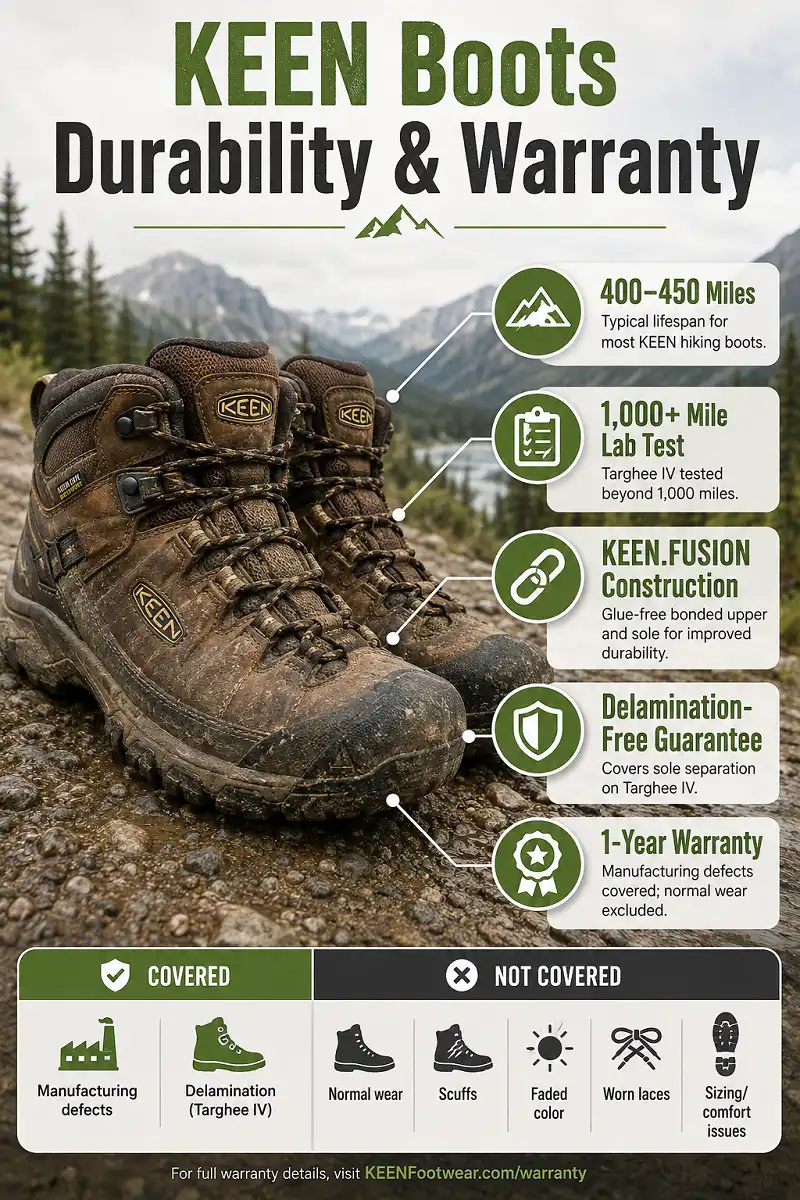
KEEN boots hold up reasonably well, and the newest ones go further than before. Most KEEN footwear lasts somewhere around 400 to 450 miles, depending on the model and how you treat it. That is solid for day hiking, though high-mileage hikers will wear through any boot faster.
The Targhee IV pushes durability harder. KEEN builds it with a process it calls KEEN.FUSION, which bonds the upper to the sole without glue. The company says its own lab testing ran the boot past 1,000 miles without it breaking down. On top of that, KEEN backs the Targhee IV with a Delamination-Free Guarantee. So if the sole peels away from the boot, you are covered.
The standard warranty is simpler. KEEN covers manufacturing defects for one year from the purchase date across North America. There is also a 30-day return window on boots bought directly from KEEN.
What is covered
- Manufacturing defects
- One-year warranty coverage
- Targhee IV delamination guarantee
What is not covered
- Normal wear
- Cosmetic scuffs
- Faded color
- Worn laces
- Comfort or sizing complaints
Buy from an authorized seller too, because purchases from random resale sites will not qualify.
How to make your KEEN boots last
Clean them after every hike
Knock off mud and grit after each hike, since dirt grinds down materials over time.
Air-dry naturally
Let wet boots air-dry away from direct heat, because a hot vent or fire can crack the glue and leather.
Refresh waterproofing
Refresh the waterproof coating once the surface stops beading water.
Rotate your boots
Rotate between two pairs if you hike often, so each pair gets time to fully dry.
Small habits add real miles
These steps cost almost nothing, yet they add real miles.
Where KEEN boots fall short
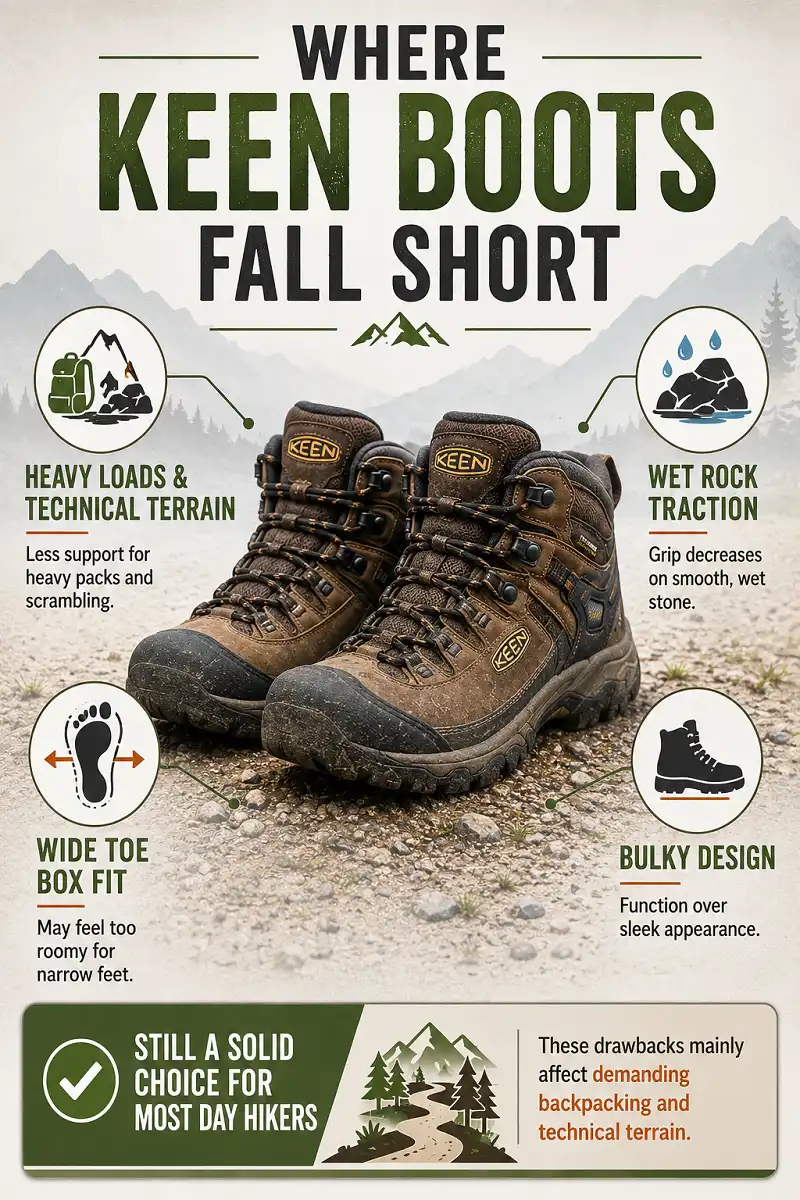
By now the answer is taking shape, but it is fair to keep asking, are KEEN hiking boots good once you weigh their limits? No boot is perfect, so honesty matters here. KEEN has a few clear limits you should know before you buy.
The lighter models lack the stiffness for big packs or scrambling. For rugged multi-day trips, a burlier boot serves you better.
The lugs grip dirt and mud well, but wet, smooth stone is not their strength.
The wide toe box is a gift for some and a nuisance for others.
KEEN’s chunky, toe-heavy style is not for everyone. Function comes first here, and style comes second.
None of these are dealbreakers for typical day hiking. Still, they explain why serious backpackers often reach for other brands.
Who should buy KEEN boots
KEEN suits some hikers far better than others. So here is the quick sorting guide.
KEEN’s roomy toe box gives your feet more space to spread naturally.
Most KEEN boots feel comfortable from the first walk.
This is where KEEN boots perform especially well.
KEEN.DRY provides useful waterproof protection in wet conditions.
Look elsewhere for a more supportive boot designed around heavier loads.
A boot with a grippier sole may be a better choice.
KEEN makes sense if you…
- Have wide feet.
- Want immediate comfort.
- Mostly day hike.
- Need waterproof protection.
Consider another boot if you…
- Carry heavy packs.
- Hike technical terrain.
- Have very narrow feet.
- Prefer a sleek profile.
Are KEEN hiking boots good value for the money?
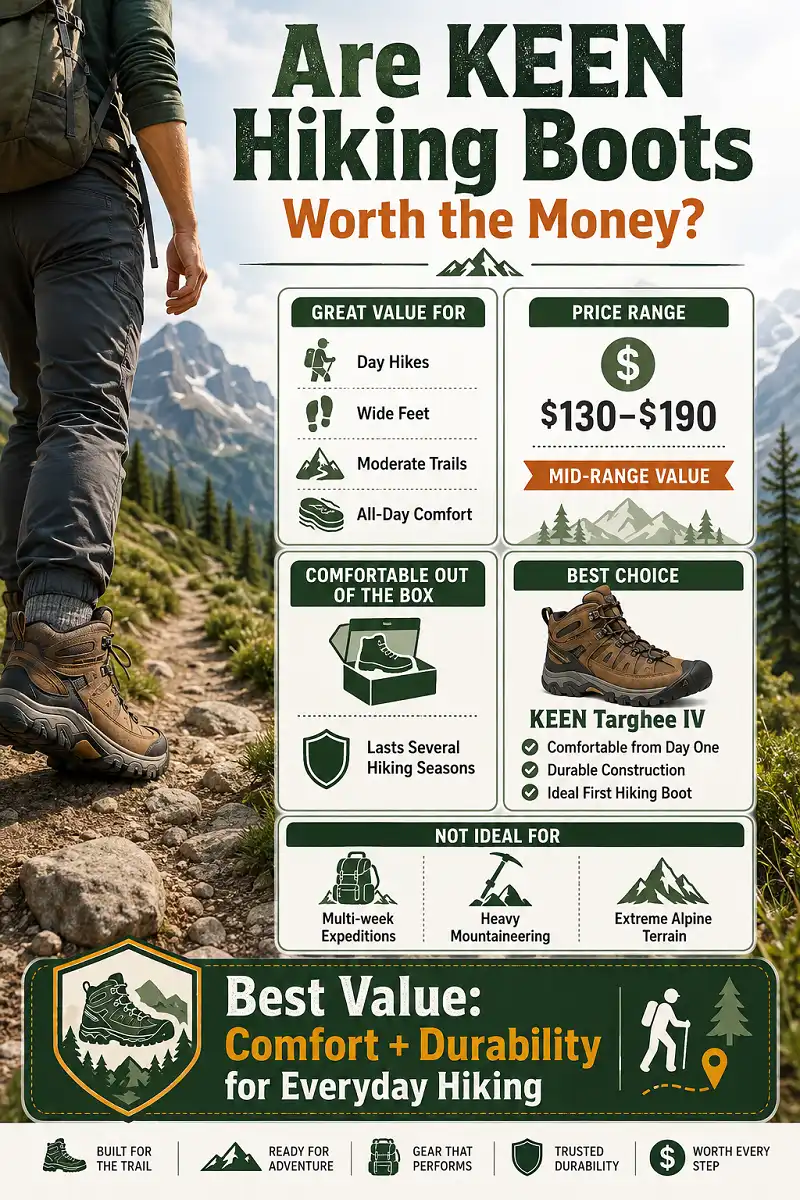
For the right hiker, KEEN boots are good value, mostly because of comfort plus durability. You pay a fair mid-range price, usually $130 to $190, and you get boots that feel good on day one and last a few seasons of regular hiking. Compared with cheap boots that punish your feet and fall apart, that is money well spent.
However, the value drops if you need a rugged expedition boot, since KEEN is not aimed at that use. So the honest answer depends on your trails. For day hikes, wide feet, and moderate terrain, the value is strong.
The easiest first recommendation
If you decide KEEN fits your feet and your trails, the Targhee IV is the easiest first recommendation. It covers the most ground for the most hikers, and it carries that longer-wear guarantee. Wide-footed beginners especially will feel the difference fast.
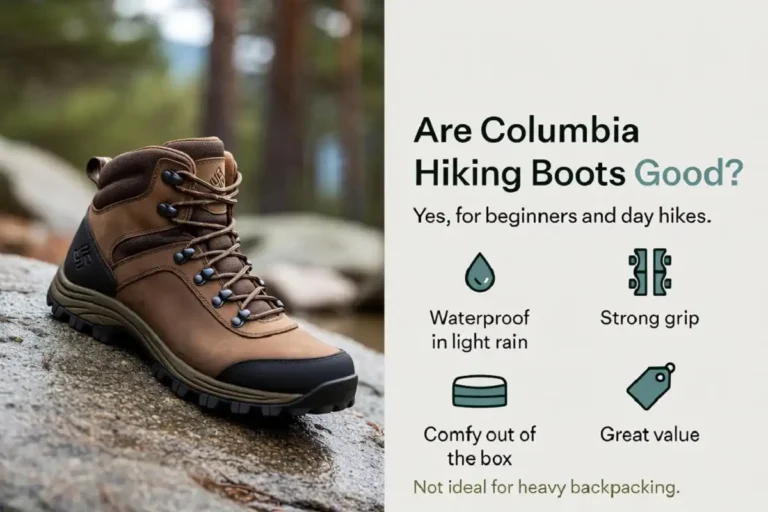
To see how a different label compares on price and feel, my take on whether Columbia’s boots are worth it sits right alongside this one.
My verdict
Yes — KEEN hiking boots are good for most everyday hikers.
So, are KEEN hiking boots good? For most beginner and intermediate hikers, yes, and wide-footed hikers get the biggest win. You get roomy comfort, honest waterproofing, and durability that keeps improving with newer models. They are not the pick for heavy expeditions or slick rock. But for day hikes, moderate trails, and easygoing weekends, they earn their spot.
So start with the Targhee IV, wear the right socks, and match the boot to the trails you actually hike.
For wide-footed beginners and moderate day hikers, KEEN remains one of the easiest hiking boot choices to recommend.
More about the KEEN brand
KEEN has an interesting backstory for a company built around toe protection. You can read more about the footwear company’s history and its patented toe design on Wikipedia.
FAQs
Are KEEN hiking boots good for wide feet?
Yes, wide feet are exactly where KEEN shines, and this is its strongest selling point. The foot-shaped toe box gives your toes room to splay, which reduces blisters and pressure on long days. Many wide-footed hikers switch to KEEN and never look back.
Are KEEN hiking boots good in the rain?
Yes, most KEEN hiking boots handle rain well thanks to the KEEN.DRY liner. It blocks outside moisture while letting sweat escape. Just remember that water still gets in if it rises above the boot collar, so deep puddles remain a risk.
Do KEEN boots run big or small?
KEEN boots generally run true to size in length. The toe box simply feels wider than most brands. So if your feet are narrow, size down a half size or pick a narrow-width model.
How long do KEEN hiking boots last?
Most KEEN boots last around 400 to 450 miles with normal use and care. The Targhee IV is built to go further, and KEEN claims over 1,000 miles in its own testing.
Can I use KEEN boots for work or daily walking?
Often, yes. Their comfort makes them popular off the trail too, and I dig into that idea in my look at hiking boots for everyday walking.