Are Hiking Boots Good for Walking? What Beginners Should Know
You just bought your first pair of hiking boots. They feel solid, they grip well, and now you wonder if you can wear them for regular walking too, not only on the trail. New hikers ask me this all the time. So let me answer it plainly. Are hiking boots good for walking? It depends on where you walk and how far. On rough ground, they shine. On smooth pavement, they can be more shoe than you need.
Are hiking boots good for walking?
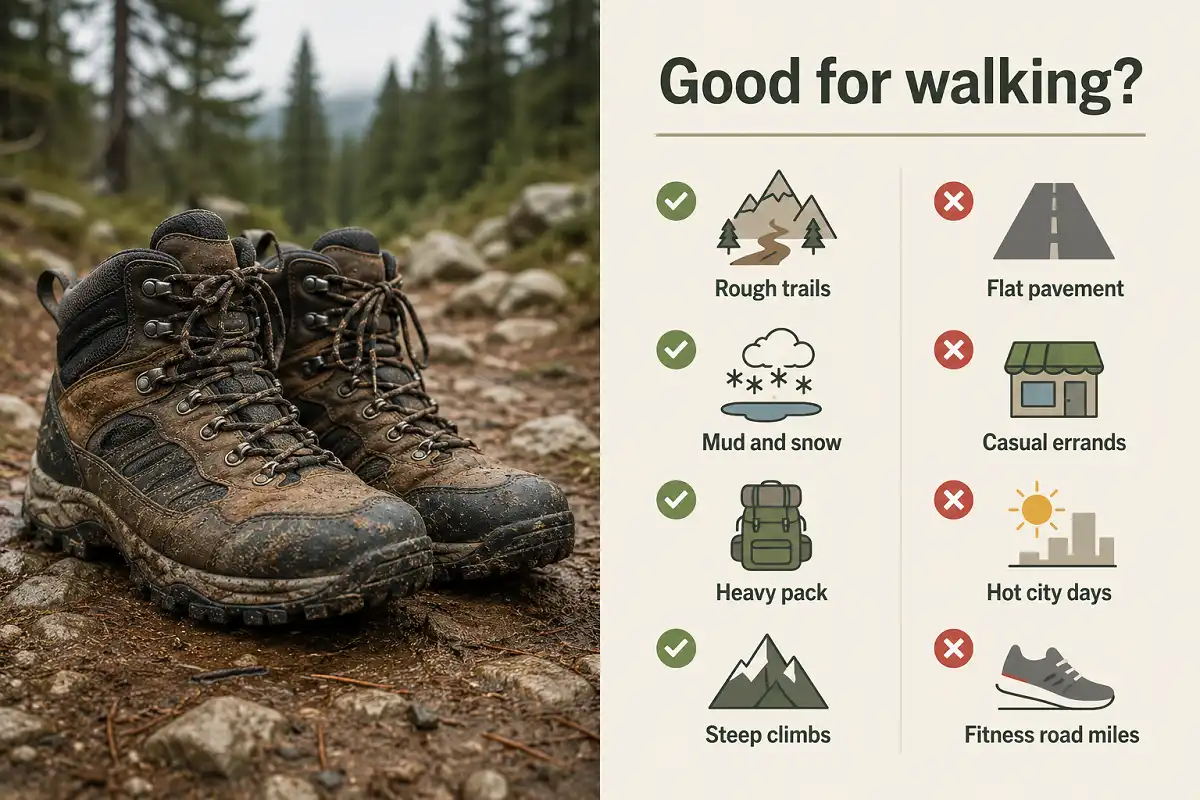
Hiking boots work well for walking on uneven trails, in mud or snow, and when you carry a load. For flat pavement, quick errands, or fitness walking on roads, a lighter walking shoe feels better and holds up longer. So are hiking boots good for walking in everyday life? Yes, they can handle it. Still, they are usually more boot than a sidewalk needs.
First, what kind of walking do you mean?

The right answer shifts with the type of walking. “Walking” covers a lot, and each version changes the math.
City sidewalks and hard floors.
Miles on roads, tracks, or a treadmill.
Walking during travel, often all day on pavement.
Mixed sidewalks, grass, and local paths.
Casual walks that turn onto dirt or park paths.
For the first three, lighter shoes usually win. For the last two, it depends on how rough the ground gets. So keep your own mix in mind as you read on.
What makes hiking boots different from walking shoes
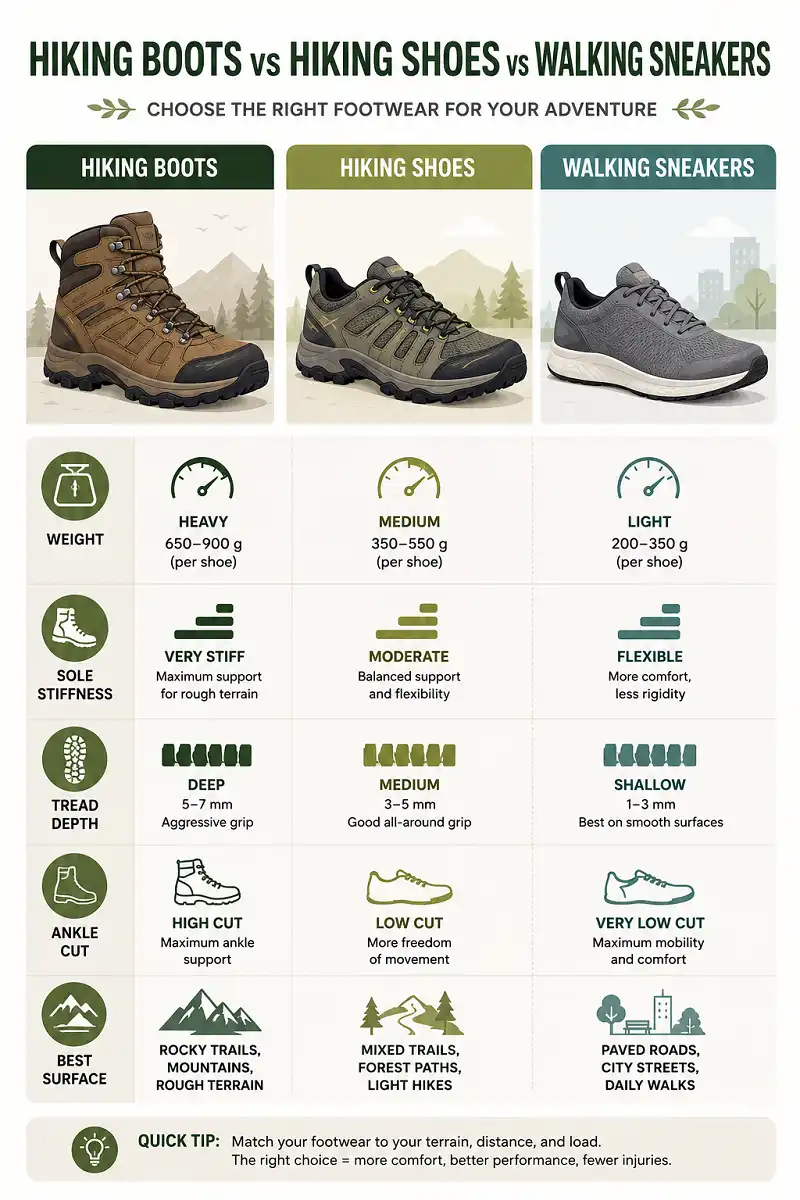
A hiking boot protects your foot on hard ground. A walking shoe keeps your foot comfortable on easy ground. That one difference drives everything else. By design, the build of a hiking boot puts protection and support first, which is why boots feel stiffer and taller than a sneaker.
Hiking Boots
- About 2.5 to 3 lbs per pair
- Stiff and thick sole
- Deep, aggressive lugs
- High ankle cut
- Best for rough trails, mud, and snow
- Longer break-in period
Walking Shoes
- About 1 to 1.5 lbs per pair
- Flexible and cushioned sole
- Shallow and flat tread
- Low ankle cut
- Best for pavement and indoors
- Almost no break-in needed
A few of these deserve a closer look:
- Weight: most boots weigh about 2.5 to 3 pounds a pair, while walking shoes sit near 1 to 1.5, so your feet feel every extra ounce.
- Sole stiffness: boots use a stiff, thick sole to guard against rocks, but on flat pavement that stiffness feels less natural than a shoe that flexes.
- Tread: deep lugs bite into mud and loose dirt, yet on smooth concrete those same lugs can feel unstable and wear down sooner.
- Ankle height: a boot rises above the ankle for a locked-in feel, while a walking shoe stays low so your ankle moves freely.
- Breathability: leather uppers and waterproof liners keep water out, but they also trap heat, so boots run warmer than a mesh shoe.
- Break-in: leather boots need time to soften, whereas walking shoes feel ready almost right away.
That stiffness is the key trade. On a trail, a rigid sole shields your foot from sharp rocks and roots. On a sidewalk, though, it just adds effort, because your foot wants to bend and roll through each step. If you are still sorting out your trail footwear options, knowing each type before you buy saves you money and sore feet.
When are hiking boots good for walking?
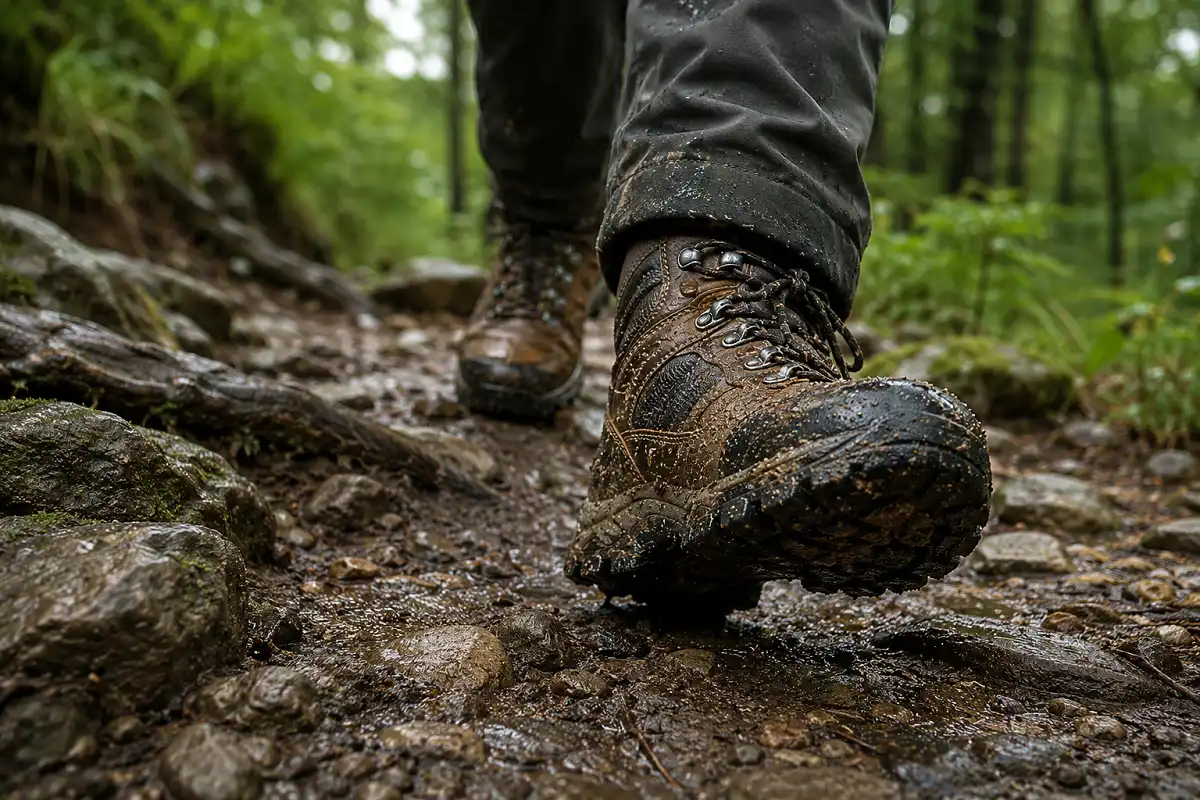
Hiking boots are good for walking any time the ground turns rough, wet, or steep. Those are the conditions they handle best. So here is where I reach for boots over shoes.
Rocky or uneven trails
Roots, loose rock, and ruts can catch a foot, so a stiff sole and firm midfoot give you a stable base.
Mud, snow, and wet ground
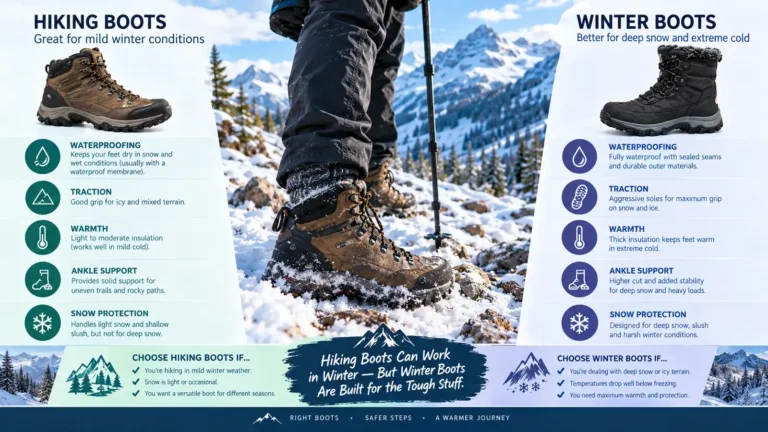
A waterproof boot keeps your feet dry and blocks grit, and in the cold that warmth helps, so dry feet make winter trails far more pleasant.
Steep climbs and long descents
On a big grade, the extra support and traction pay off.
Carrying a heavy pack
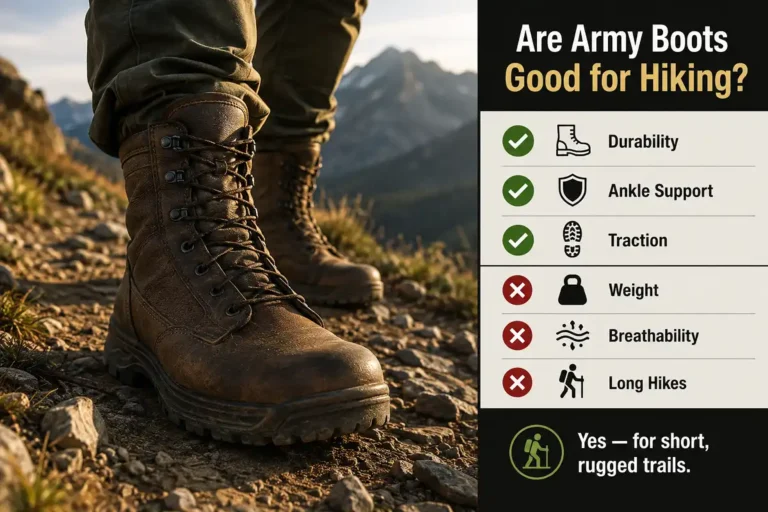
More load means more strain, so backpackers and ruckers lean on boots for the added support.
Recovering from an ankle injury
While your ankle heals, a snug boot adds compression and limits how far it can roll as you build strength back.
So are hiking boots good for walking on the trail? Absolutely. That is the exact job they were built for, and nothing does it better.
When hiking boots are not the best choice for walking
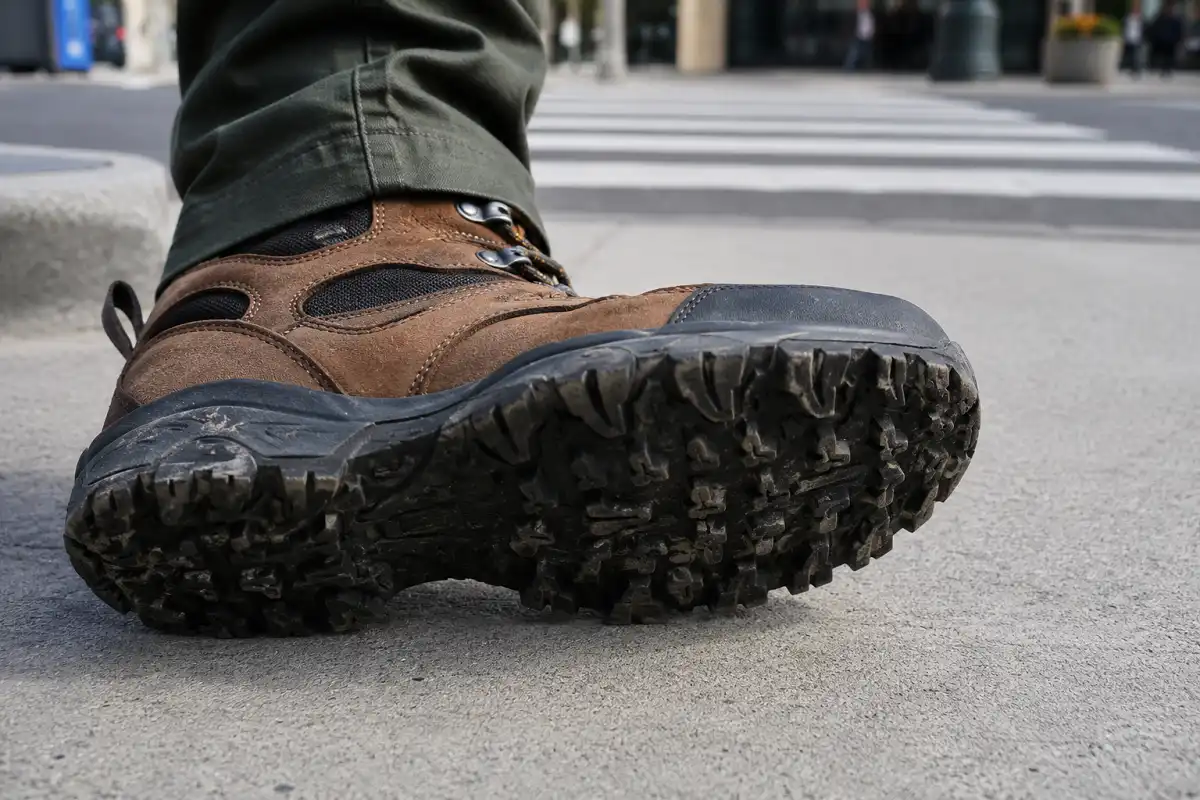
For flat, smooth, everyday walking, hiking boots are usually more than you need. The features that help on a trail turn into drawbacks on a sidewalk. So are hiking boots good for walking on flat ground? They will do it, but you can do better. Skip the boots when you face any of these.
Concrete is flat and predictable, so a light walking shoe flexes with each step and feels far less clunky.
For daily miles on pavement, lighter shoes let you move faster, and if you are curious whether those miles help you drop weight, comfortable shoes make it easier to keep them up.
Boots trap heat, so on a warm day breathable shoes keep your feet cooler, and pairing them with the right warm weather layers keeps the rest of you comfortable too.
Standing on hard floors in stiff boots gets tiring, so a cushioned shoe treats your feet far better.
Are hiking boots good for walking on pavement every day?
Daily pavement walking?
Are hiking boots good for walking on pavement every day? Not really, at least not as a daily habit. Pavement is hard and flat, so the boot’s thick, stiff sole gives you no payoff for its weight. The aggressive lugs meet a surface they were never built for.
On concrete, they can feel like small studs underfoot, and they grind down faster than they would on soft dirt.
Traction is a quiet issue too. Deep lugs grab loose dirt well, yet on smooth wet pavement they contact less surface than a flat rubber sole, so they can feel slick on a rainy sidewalk. Then there is cost. A solid pair of boots runs expensive, and daily pavement miles chew through that tread and cut the boot’s life short. So even people who love their boots tend to save them for the trail. If you already own a good pair and want them to last, keep the everyday sidewalk miles in a cheaper walking shoe.
The ankle support question
Ankle support is the top reason beginners assume boots are safer for walking. The idea makes sense at a glance. A tall boot wraps your ankle, so it feels like it will stop a roll. The evidence, though, is more mixed than most people expect.
Plenty of hikers and sports medicine sources point out that boot height alone does not clearly prevent sprains. Your ankle stays stable mostly through its ligaments, muscle strength, and balance, not through the height of your footwear. A tall boot can even give a false sense of security, and it dulls the feel you get from the ground. That said, boots still help in two cases: while you recover from an injury, and on very unstable ground under a heavy load.
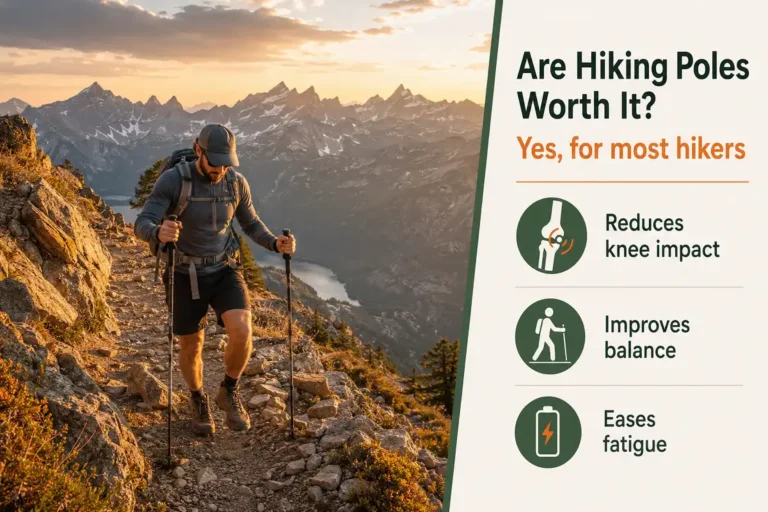
So for flat, easy walking, the ankle argument is weak. Strong ankles come from use and simple balance work, not from locking them in place. On tricky ground, a pair of poles does more for your balance than a tall boot collar ever will.
Comfort, break-in, and fit for beginners
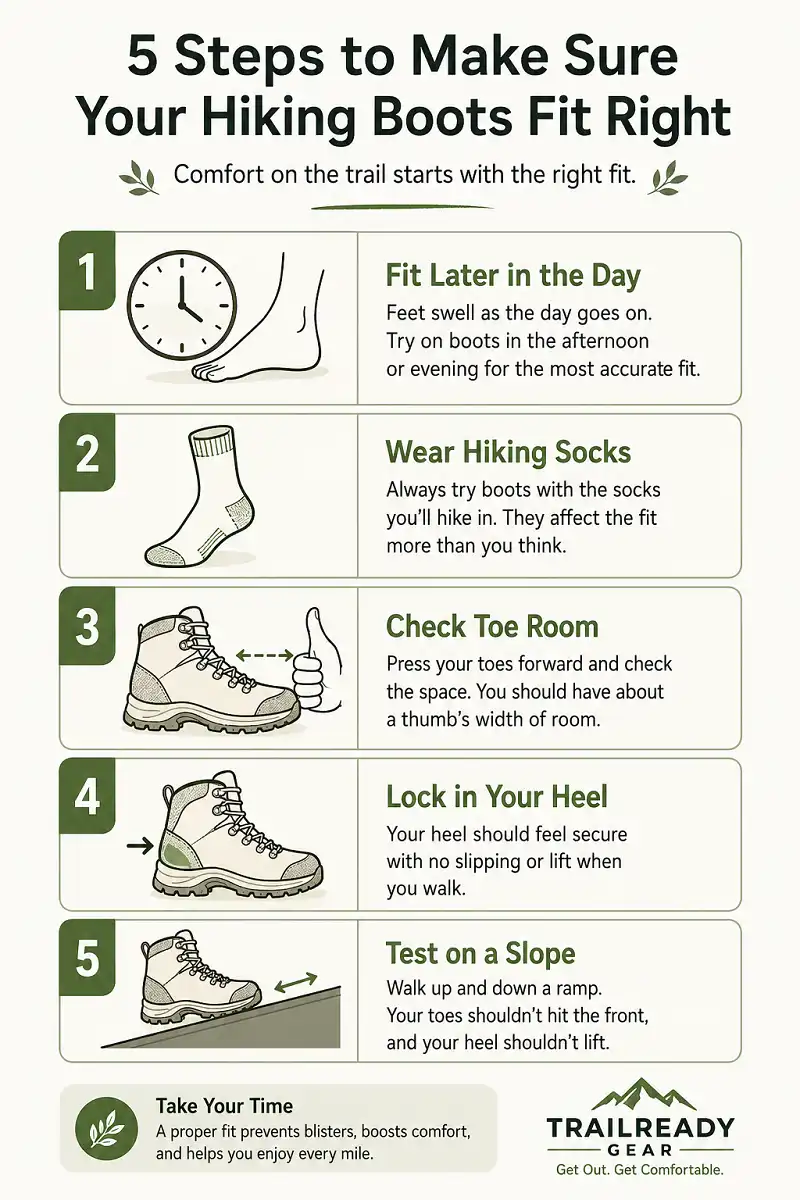
Comfort comes down to fit, not just the type of shoe. A boot that fits well beats a walking shoe that does not, and the reverse holds too. So before you judge how boots feel for walking, break them in and dial in the fit.
New boots need breaking in. Leather pairs take the longest, while synthetic ones soften faster. Wear them around the house first, then on short walks, before any long day. Otherwise you invite blisters.
Here is the fit check I use with beginners.
Feet swell as the hours pass, so an evening fitting matches how they feel after miles.
A thicker sock changes the fit, so test with the socks you plan to use. Merino or synthetic blends also cut friction and wick sweat.
Your longest toe should have about a thumb’s width of room ahead of it, because that space protects your toes on downhills.
Your heel should stay put as you walk. Slippage means blisters, so try another size or adjust the lacing.
Many stores keep a small ramp, so head up and down to check for toe bang and heel lift.
One more tip for comfort: an aftermarket insole often helps a lot, especially when the stock insole feels thin or flat. Also, if you plan to wear thick winter socks, size up a half size so your toes keep their room. Small tweaks like these frequently decide whether a boot feels good over a long walk.
Hiking boots, hiking shoes, or walking shoes: how to pick
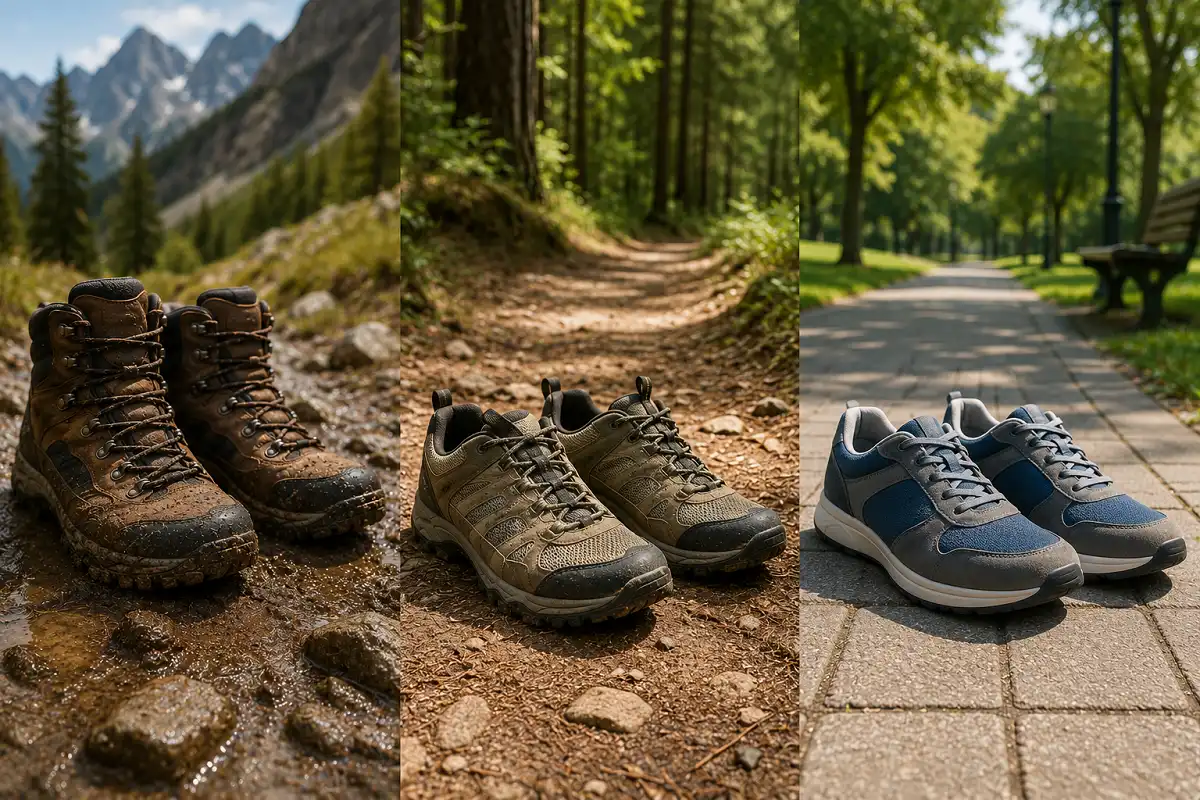
Match the shoe to the ground, and the choice gets simple. So ask yourself where most of your steps will land.
Rough Ground
- Rough trails
- Mud
- Snow
- Heavy loads
Easy Ground
- Easy trails
- Pavement
- Errands
- Fitness walking
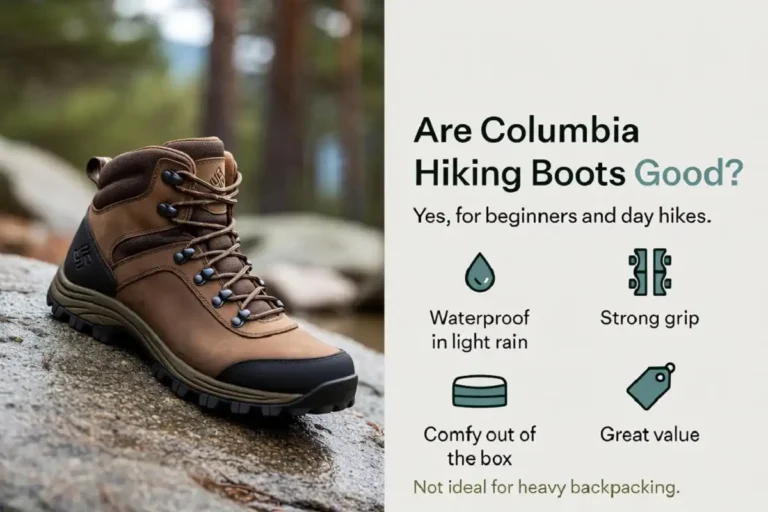
Most beginners do not need the burliest boot on the shelf. If your walks stay easy, a lighter pick serves you better day to day. For a closer look at how one popular brand performs on the trail, I have written about whether Columbia’s boots hold up.
If you want one pair for both
Best single choice: low-cut hiking shoes
A low-cut hiking shoe is the best single choice if you want trail grip without full-boot bulk. It handles moderate trails, yet it stays light enough for everyday walking.
The Merrell Moab, for example, is a common starting point for beginners because it balances grip, comfort, and price. I am not pushing any one model, though. Any low-cut hiking shoe that fits your foot will treat you better across both jobs than a stiff, tall boot.
Trail runners are another light option if you move fast and stick to easier ground. They flex more and weigh even less, so many long-distance hikers pick them. On the durability side, boots last a long time on dirt, but remember, the tread wears faster on concrete. So a shoe you can replace cheaply just makes more sense for daily miles.
Conclusion
So, are hiking boots good for walking? For trails, mud, snow, steep grades, and heavy loads, they are a smart pick. For flat pavement, quick errands, hot days, and fitness miles, a lighter walking shoe or low-cut hiking shoe feels better and lasts longer.
Match your footwear to the ground under your feet, break it in, and get the fit right. Do that, and your feet will thank you on every kind of walk.
FAQs
Are hiking boots good for walking every day?
They can handle it, yet daily flat walking wears the tread fast and tires your feet more than a light shoe would. So save them for rough or wet days.
Can I wear hiking boots on concrete?
Yes, but concrete is hard and flat, so the stiff sole and deep lugs feel clunky and wear down quickly. A cushioned walking shoe is kinder to your feet on hard surfaces.
Do hiking boots help on long walks?
On rough or hilly ground, yes, the support pays off over the miles. On flat ground, though, the extra weight works against you, so lighter shoes finish fresher.
Can hiking boots replace running shoes for exercise?
Not really, because running needs flex and cushioning that a stiff boot lacks. For walking workouts, a proper walking shoe is the safer, comfier choice.
Will hiking boots hurt my feet on pavement?
They can, if they are stiff and heavy and you cover long distances on hard ground. A proper break-in and good fit help, but a walking shoe is usually more comfortable there.