Are Army Boots Good for Hiking? An Honest Trail Verdict
There’s a pair of scuffed-up Army boots sitting in a lot of closets right now left over from a deployment, a surplus store haul, or a brother-in-law who swore by them. And when the weekend trip comes up, it’s tempting to just lace them up and head for the trailhead instead of buying something new. So, are army boots good for hiking, or are you setting yourself up for sore feet and blisters by mile four?
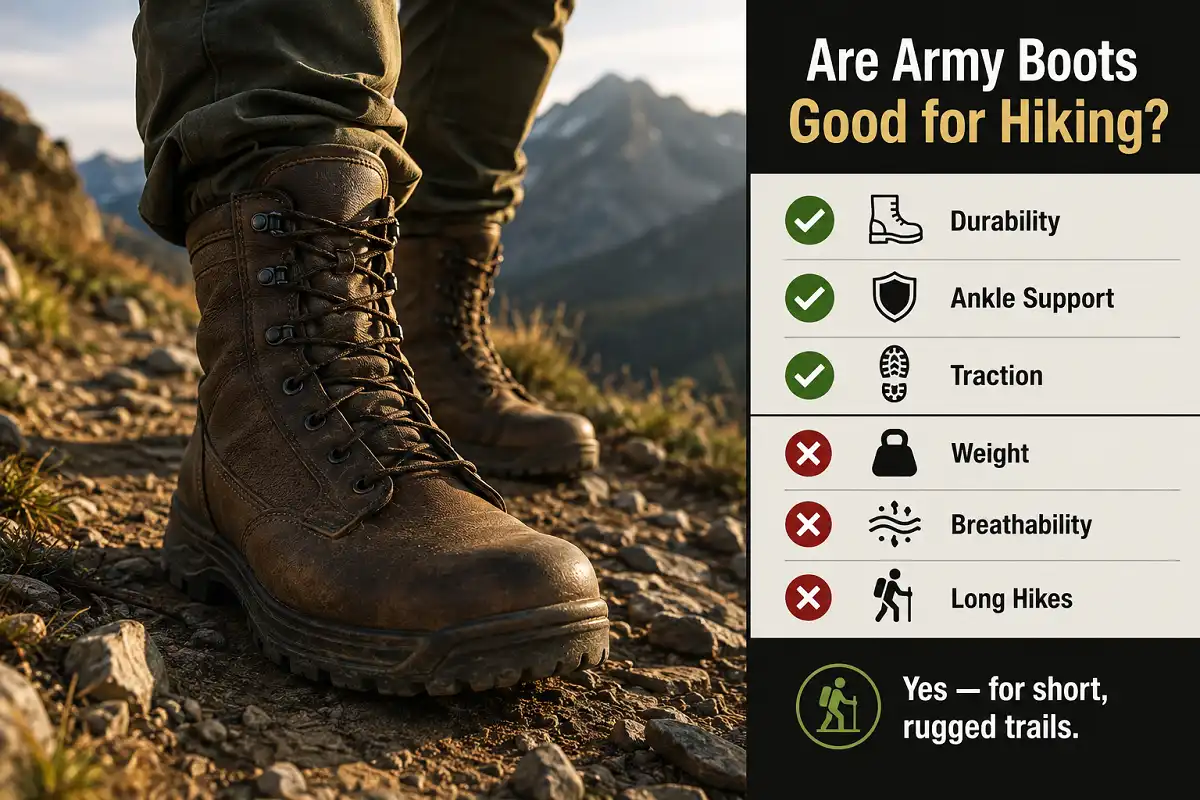
Are Army Boots Good for Hiking?
The honest answer is: it depends. Army boots weren’t built with hikers in mind they were built for soldiers carrying rifles and rucksacks across every kind of terrain on earth. That overlap with hiking is real, but it isn’t total. Below, we’ll break down exactly where army boots earn their keep on the trail, where they fall short, and how to decide whether yours belong on your next hike or in the closet where they’ve been living.
What Exactly Are Army Boots?
Army boots sometimes called combat boots or military boots are standard-issue footwear designed for soldiers operating in the field. They’re built around three priorities: durability, foot protection, and ankle support, in roughly that order. Comfort and breathability come further down the list, which already tells you a lot about how they’ll behave on a hiking trail and why so many people end up asking, “are army boots good for hiking?” in the first place.
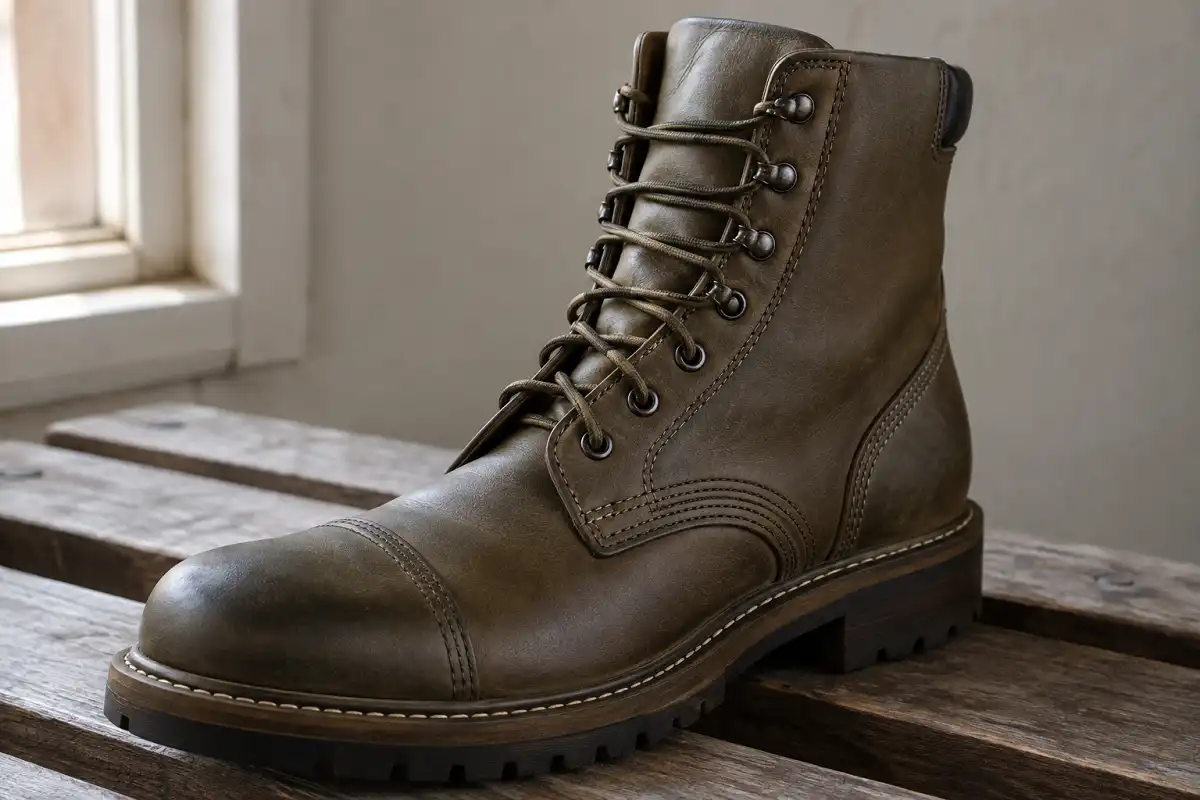
Most army boots are built from full-grain leather, ballistic nylon, or a combination of both, paired with a stiff shank and a reinforced toe box. It’s worth noting that not every “army boot” is built the same way lighter, more flexible versions are generally meant for training and everyday wear, while the heaviest, most reinforced versions are built specifically for combat zones and rough field conditions. If you want the full design history of this footwear category, the Wikipedia entry on combat boots is a solid starting point.
Because the military issues different boots for different climates and jobs, “army boots” isn’t really one product it’s a family of them, including:
All-purpose, mid-to-high cut, built for durability and all-day wear.
Lighter, with drainage holes and canvas panels for hot, wet environments.
Built for dry heat, usually lighter and more breathable than standard combat boots.
Heavily insulated and designed to keep feet warm in freezing conditions.
Whether army boots are good for hiking often comes down to which type you actually own.
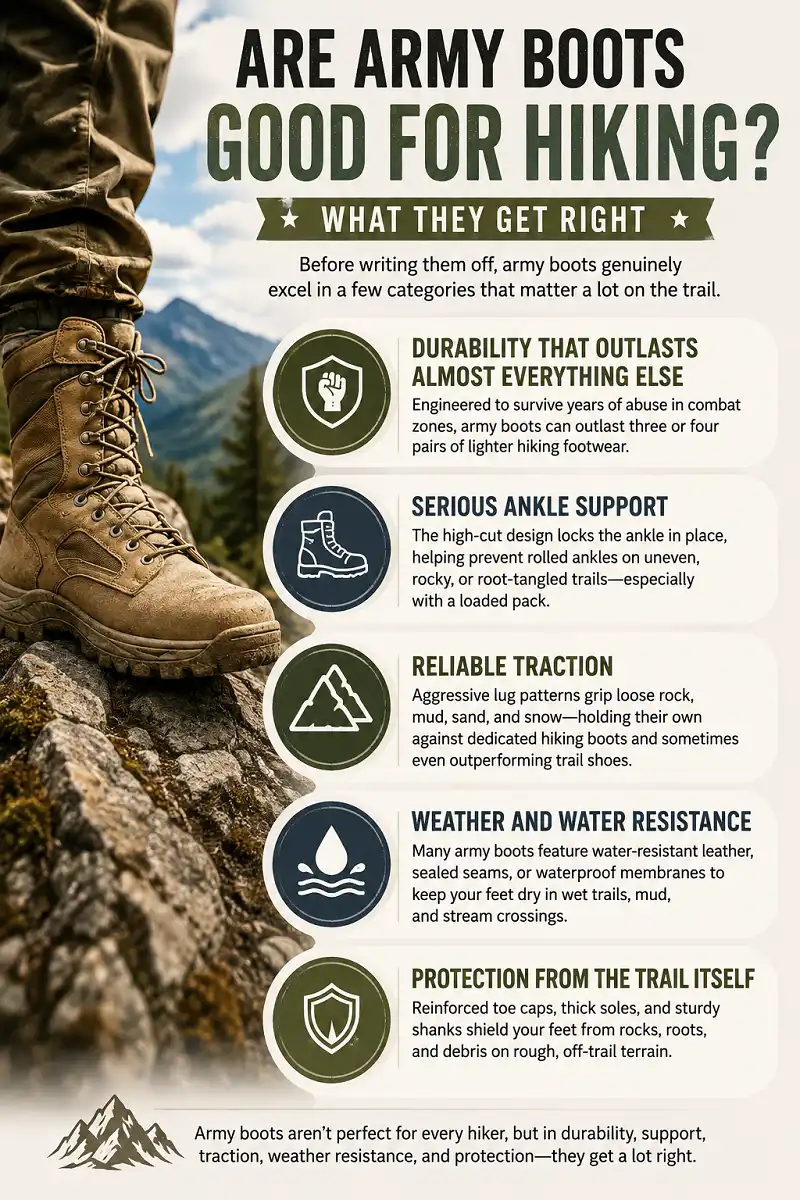
Are Army Boots Good for Hiking? What They Get Right
Before writing them off, it’s worth being fair: army boots genuinely excel in a few categories that matter a lot on the trail.
Durability That Outlasts Almost Everything Else
Army boots are arguably the most rugged footwear category available to civilians. They’re engineered to survive years of abuse in combat zones, which means rocky scrambles, root-covered switchbacks, and scree fields barely register. If you’re the kind of hiker who destroys a pair of trail shoes every season, army boots can genuinely outlast three or four pairs of lighter hiking footwear. On raw toughness alone, are army boots good for hiking? Absolutely.
Serious Ankle Support
Ask any backpacker who’s rolled an ankle on loose rock, “are army boots good for hiking terrain like this?” and you’ll get an earful about why ankle support matters so much. The high-cut design most army boots share does a real job of locking the ankle in place. On uneven, rocky, or root-tangled trails especially with a loaded pack that support helps prevent rolled ankles, which is one of the most common trail injuries. This is one of the strongest arguments in favor of army boots for hiking, particularly for backpackers carrying heavier loads.
Reliable Traction
Most modern combat boots ship with rubber or Vibram-style outsoles designed for grip on loose rock, mud, sand, and snow. That aggressive lug pattern generally holds its own against dedicated hiking boots, and in some cases outperforms lighter trail shoes on technical, unstable ground. When it comes to grip alone, are army boots good for hiking on loose or slick terrain? Yes this is one area where they consistently compete with, and sometimes beat, purpose-built trail footwear.
Weather and Water Resistance
Many army boots include water-resistant leather, sealed seams, or waterproof membranes, since soldiers can’t exactly turn back because of a stream crossing. For hikers who frequently deal with wet trails, mud, or river crossings, that built-in resistance is a genuine advantage. If your main concern is staying dry, are army boots good for hiking in rain and mud specifically? In most cases, yes.
Protection From the Trail Itself
Reinforced toe caps, thick soles, and sturdy shanks protect your feet from rocks, roots, and debris in a way that lighter hiking shoes sometimes can’t. If your hikes involve bushwhacking, loose scree, or off-trail scrambling, that extra armor is worth something another point in favor of army boots when the terrain gets rough.
Where Army Boots Fall Short on the Trail
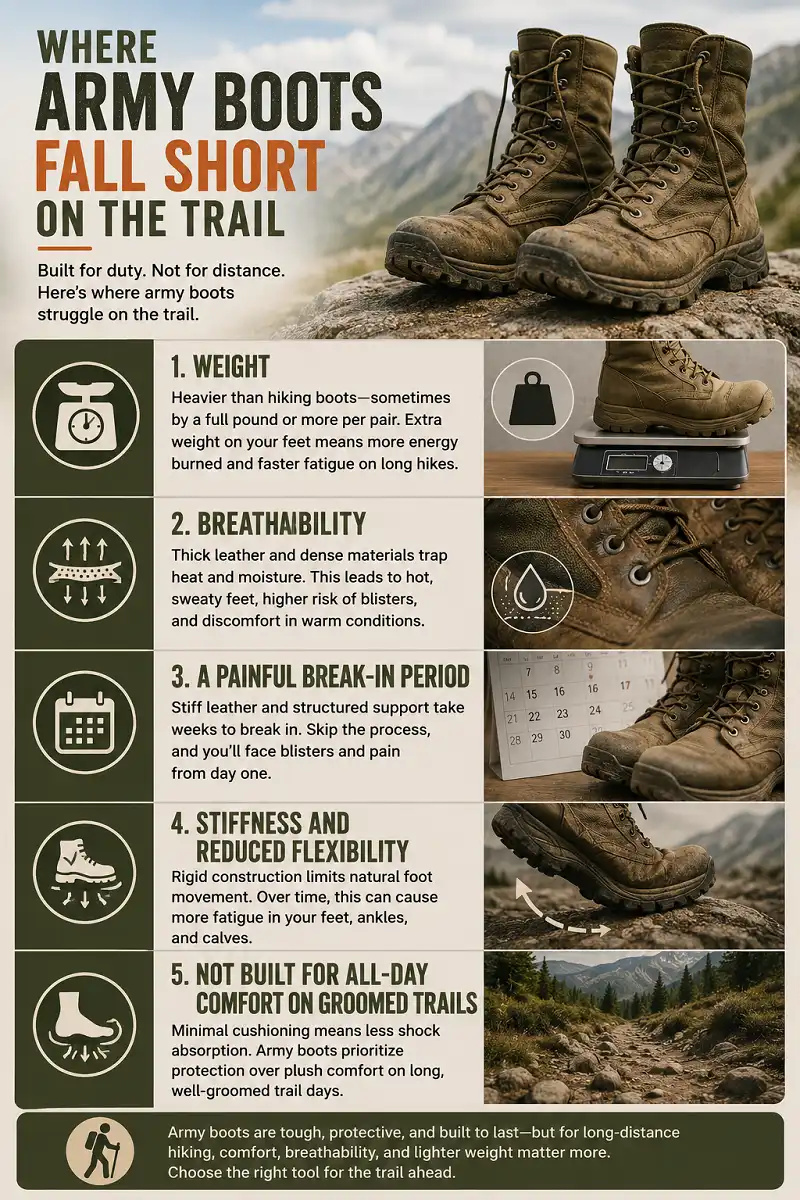
Now the other side of the ledger and it’s a longer list than most surplus-store salespeople will admit.
This is the single biggest strike against army boots for hiking. A pair of standard-issue combat boots often weighs noticeably more than a comparable pair of hiking boots, sometimes by a full pound or more per pair. On the trail, extra weight on your feet translates into significantly more energy burned over a long hike footwear weight has a much bigger fatigue impact than the same weight carried in a pack. When distance is the deciding factor, are army boots good for hiking all day? Usually not the extra weight adds up fast.
Army boots are built from thick leather and dense synthetic panels designed to resist punctures and abrasion, not to move air. That construction traps heat and moisture, which means hot, sweaty feet on warm-weather hikes and a higher risk of blisters and hot spots over long distances. In hot climates, are army boots good for hiking without overheating your feet? Rarely, unless you’re wearing a lighter jungle or desert variant.
Hiking boots are typically designed to feel reasonably comfortable within the first few wears. Army boots are not. The stiff leather and structured shank that make them so durable also make them slow to break in often requiring weeks of gradual wear before they truly conform to your feet. Skip that step, and you’re looking at blisters on day one of your hike. Straight out of the box, are army boots good for hiking? Not really they need real prep time first.
That same stiff construction limits how naturally your foot can flex with each step. Over a long hike, reduced flexibility can lead to more fatigue in your calves and feet compared to boots designed to move with your natural gait.
Army boots are optimized for surviving abuse, not for cushioning. Hiking boots typically include more advanced midsole cushioning, engineered specifically to absorb impact over 8, 10, or 15 miles of walking. Army boots, by comparison, prioritize protection over plush comfort. For all-day comfort on well-groomed trails, are army boots good for hiking the way dedicated boots are? Not quite that’s simply not what they were designed for.
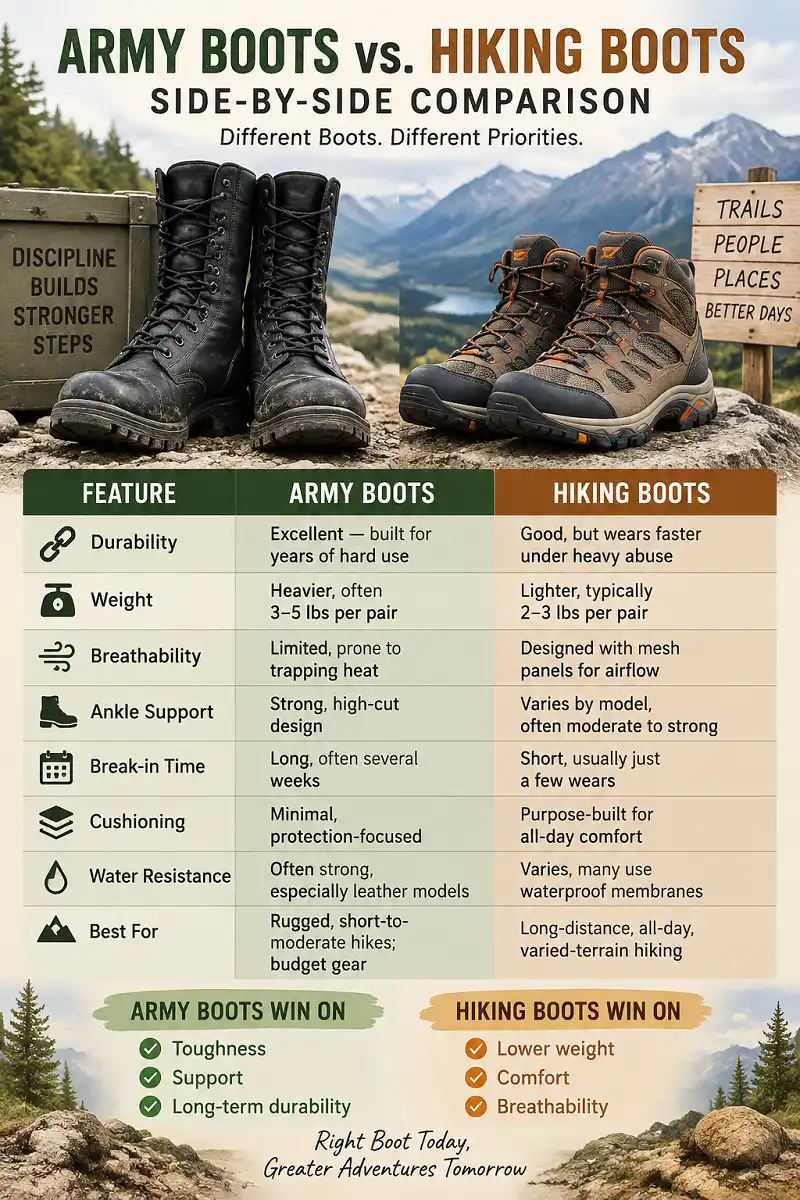
Army Boots vs. Hiking Boots: Side-by-Side Comparison
Army Boots
- Durability: Excellent — built for years of hard use
- Weight: Heavier, often 3–5 lbs per pair
- Breathability: Limited, prone to trapping heat
- Ankle support: Strong, high-cut design
- Break-in time: Long, often several weeks
- Cushioning: Minimal, protection-focused
- Water resistance: Often strong, especially leather models
- Best for: Rugged, short-to-moderate hikes; budget gear
Hiking Boots
- Durability: Good, but wears faster under heavy abuse
- Weight: Lighter, typically 2–3 lbs per pair
- Breathability: Designed with mesh panels for airflow
- Ankle support: Varies by model, often moderate to strong
- Break-in time: Short, usually just a few wears
- Cushioning: Purpose-built for all-day comfort
- Water resistance: Varies, many use waterproof membranes
- Best for: Long-distance, all-day, varied-terrain hiking
The Bottom Line
Looking at this comparison, it’s easier to see exactly where army boots are good for hiking and where they aren’t: they win on toughness and support, and lose on weight, comfort, and breathability.
So Are Army Boots Good for Hiking for You?
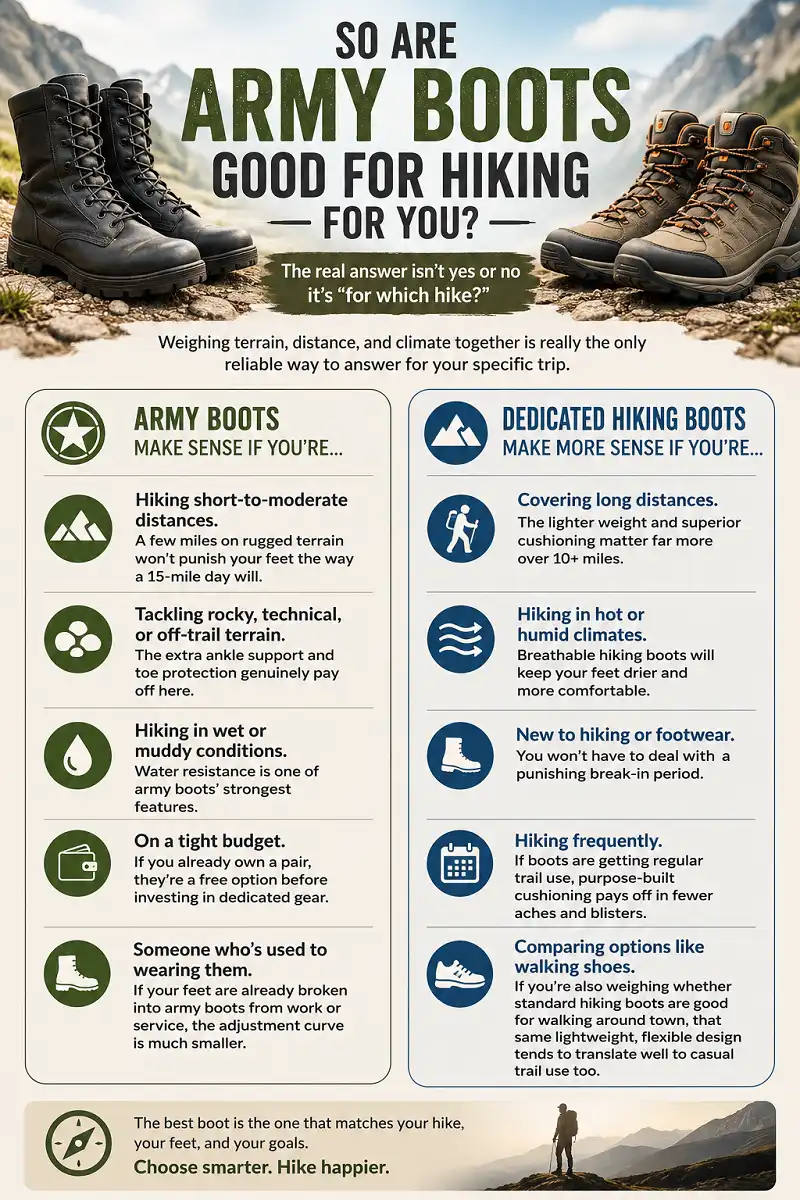
The real answer to “are army boots good for hiking” isn’t yes or no it’s “for which hike?” Here’s how to think it through.
Weighing terrain, distance, and climate together is really the only reliable way to answer “are army boots good for hiking” for your specific trip.
A few miles on rugged terrain won’t punish your feet the way a 15-mile day will.
The extra ankle support and toe protection genuinely pay off on rough, off-trail terrain.
Water resistance is one of army boots’ strongest features.
If you already own a pair, they’re a free option before investing in dedicated gear.
If your feet are already broken into army boots from work or service, the adjustment curve is much smaller.
The lighter weight and superior cushioning of dedicated hiking footwear matter far more over 10+ miles.
Army Boots Make Sense If You’re…
- Hiking short-to-moderate distances.
- Tackling rocky, technical, or off-trail terrain.
- Hiking in wet or muddy conditions.
- On a tight budget.
- Someone who’s used to wearing them.
Dedicated Hiking Boots Make More Sense If You’re…
- Covering long distances.
- Hiking in hot or humid climates.
- New to hiking or footwear.
- Hiking frequently.
- Comparing options like walking shoes.
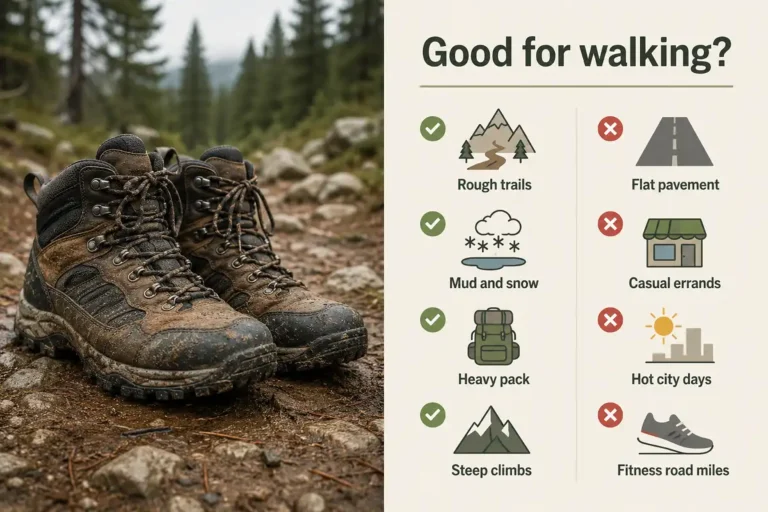
If you’re also weighing whether standard hiking boots are good for walking around town, that same lightweight, flexible design tends to translate well to casual trail use too.
How to Break In Army Boots for Hiking
If you’ve decided your army boots are worth trying on the trail, breaking them in properly is non-negotiable. Skipping this step is the number one reason people end up with blisters and swear off army boots for hiking forever.
Start Indoors
Wear them around the house for short stretches to let the leather begin flexing without pressure from a full day’s walk.
Take Short Walks First
Build up from 15–20 minutes to an hour, giving the boots time to gradually mold to your foot shape.
Wear Your Hiking Socks
Break-in should happen in the same conditions you’ll hike in, including the right hiking socks, so nothing shifts unexpectedly on trail day.
Use Boot Trees
Keeping the shape consistent while they’re off your feet speeds up the molding process.
Increase Distance Gradually
Move to short local trails before attempting a longer or more remote hike.
Treat Hot Spots Immediately
A hot spot today is a blister tomorrow address friction points with tape or moleskin before they become a problem.
Depending on the boot, this process can take anywhere from a couple of weeks to over a month of regular wear. Rushing it is exactly how “are army boots good for hiking” turns into “why are my feet destroyed.”
Tips to Make Army Boots More Trail-Friendly
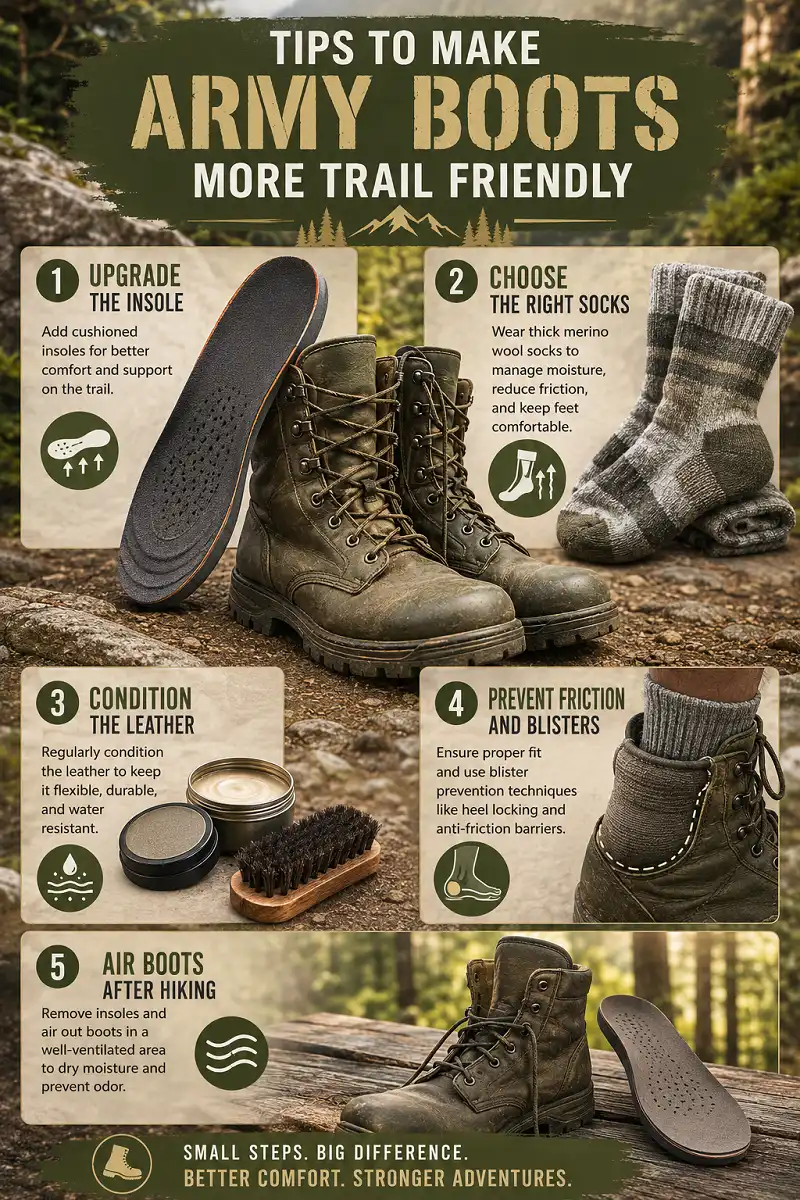
If your honest answer to “are army boots good for hiking” is “close, but not quite comfortable enough yet,” a few small adjustments can close a lot of that gap:
Upgrade the Insole
Factory insoles in most military boots are minimal. A quality aftermarket insole adds real cushioning without changing the boot’s durability or support.
Choose the Right Socks
Merino wool hiking socks manage moisture far better than standard-issue cotton or thin liners, which matters even more given how little army boots breathe. If you’re unsure whether it’s worth the switch, this breakdown of whether hiking socks make a difference is worth a read before your next trip.
Waterproof and Condition the Leather
Regular conditioning keeps leather flexible and water-resistant, which also helps reduce stiffness over time.
Watch for Friction Points Early
Since army boots are more prone to rubbing during break-in, learning how to avoid blisters while hiking is especially useful advice if you’re hiking in military-style footwear.
Air Them Out After Every Hike
Because army boots trap moisture more than hiking-specific designs, removing insoles and letting boots fully dry prevents odor and breakdown of materials.
Explore More Footwear Guides
For more comparisons like this one, our footwear guides cover other boot and shoe types side-by-side so you can figure out exactly what belongs in your pack.
Real Talk: What Hikers Actually Experience
Ask around and you’ll hear a consistent pattern. Hikers who use army boots on rocky, technical terrain especially with a heavy pack often report that the ankle support and durability genuinely earn their keep, even if the boots feel heavy by the end of the day. Hikers who try army boots on long, groomed trails in warm weather tend to report the opposite: sweaty feet, sore calves, and a strong preference for lighter footwear next time real proof that the answer to are army boots good for hiking changes with the trail itself. The pattern holds up: army boots are good for hiking short, rugged, technical routes, and less ideal for long-distance, warm-weather trekking.
FAQs About Army Boots for Hiking
Are army boots actually good for hiking?
Yes, army boots can be good for hiking, especially on short-to-moderate hikes, rugged terrain, rocky trails, and wet conditions. Their durability, ankle support, traction, and foot protection are major advantages. However, they are generally heavier and less breathable than purpose-built hiking boots, so they may be less comfortable on long-distance hikes.
Can you hike long distances in army boots?
You can, but they aren’t usually the best choice for long-distance hiking. Their extra weight, stiff construction, limited cushioning, and reduced breathability can contribute to foot and leg fatigue over longer distances. Dedicated hiking boots are generally better suited to all-day or 10+ mile hikes.
Do army boots cause blisters when hiking?
They can, particularly if the boots haven’t been properly broken in. Stiff leather and structured construction can create friction points during the first several weeks of wear. Gradually increasing walking time, using proper hiking socks, and treating hot spots early can help reduce the risk of blisters.
Are army boots good for hiking in rain and mud?
In many cases, yes. Water-resistant leather, sealed seams, and waterproof membranes found on some military boots can make them useful in wet and muddy conditions. The exact level of protection depends on the specific army boot model, so not every military boot will perform the same way in heavy rain.
Should I choose army boots or hiking boots?
Choose army boots if you prioritize durability, ankle support, trail protection, and rugged terrain performance, particularly for shorter hikes or if you already own a broken-in pair. Choose dedicated hiking boots if you prioritize lighter weight, cushioning, breathability, and comfort over long distances or in hot weather.
Final Verdict
Army Boots Can Work — If the Hike Matches the Boot
So, are army boots good for hiking? For rugged, technical terrain and shorter hikes, yes their durability, ankle support, and water resistance are hard to beat. For long-distance trekking or hot-weather trails, dedicated hiking boots will treat your feet better.
If you already own a pair, break them in properly and take them on a short trail first before deciding whether army boots deserve a permanent spot in your hiking kit.
The best hiking boot isn’t necessarily the toughest boot — it’s the one that matches your terrain, distance, climate, and feet.